Moroccan Beauty Secrets: 5 Ancestral DIY Skincare & Body Polish Recipes
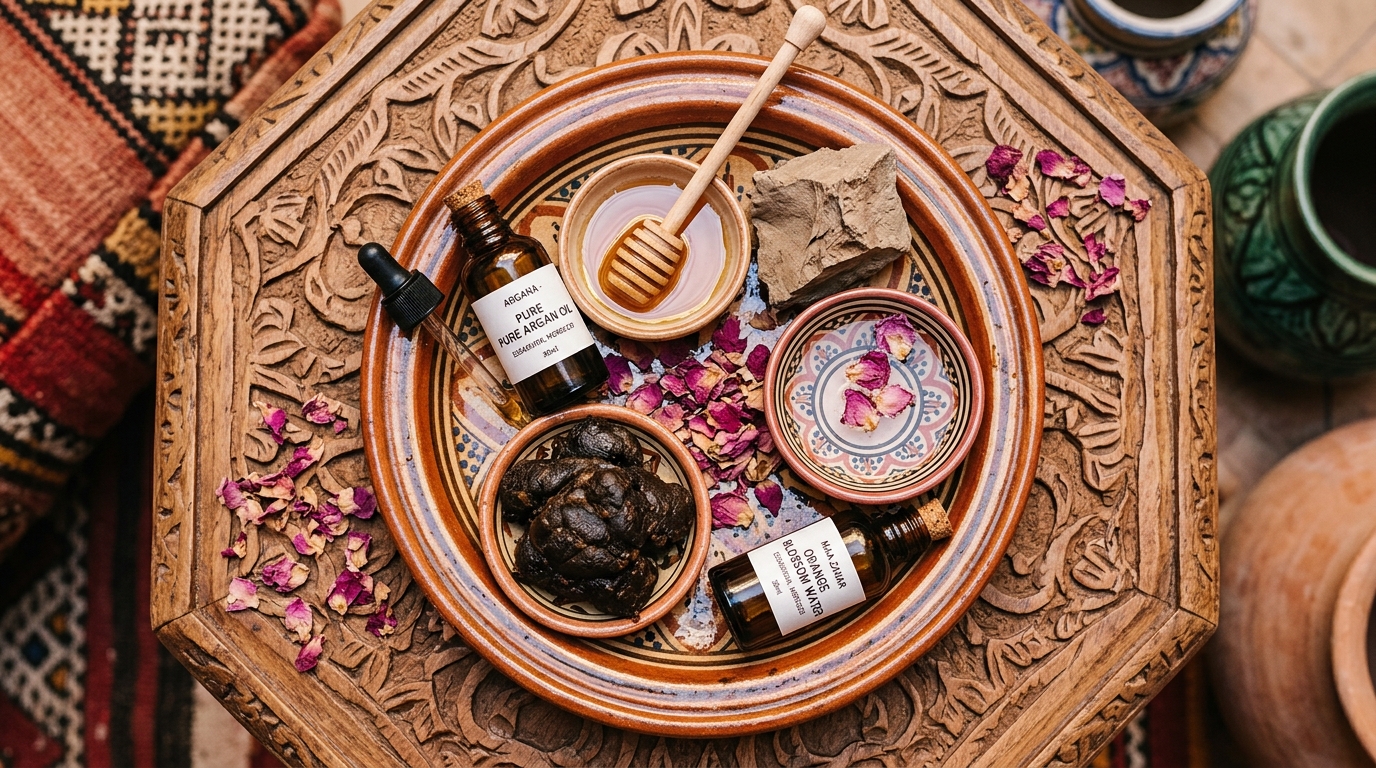
My grandmother never owned a single branded skincare product. Not one. Her bathroom shelf held a tin of argan oil she pressed herself, a lump of dark savon beldi wrapped in cloth, a small bottle of rose water, and a worn kessa mitt that had been in the family for years. Her skin, well into her seventies, was something people commented on.
She was not doing anything exotic. She was simply doing what Moroccan women had done for centuries — using what the land gave them, in the right order, at the right time. These are her recipes, and the recipes of thousands of Moroccan women before her.
Why Moroccan Skincare Works
The ingredients used in traditional Moroccan skin care diy routines are not trendy. They predate trends by several centuries. Argan oil comes from the argan tree, which grows almost exclusively in southwestern Morocco. Ghassoul clay is mined from the Atlas Mountains. Savon beldi — the black soap — is made from olives and olive oil. Rose water is distilled from the Damask roses of the Dadès Valley.
These are whole, single-ingredient, or minimally processed materials. There are no stabilizers, no synthetic fragrances, no fillers. That is one reason why moroccan beauty secrets translate so well to modern DIY — you are working with ingredients that do exactly one or two things, and they do them reliably.
Recipe 1: Argan Oil & Honey Face Mask
This is the simplest of all the moroccan skin care diy recipes, and possibly the most effective for dry or tired skin. Honey draws moisture into the skin. Argan oil seals it in and adds vitamin E and fatty acids that support skin barrier function. Together, they calm redness, add softness, and leave a subtle glow that no highlighter can replicate.
You will need:
- 1 tablespoon raw honey (unpasteurized if possible)
- 1 teaspoon pure argan oil (food-grade or cosmetic-grade, both work)
How to make it: Warm the honey very slightly — just enough to make it runny — by setting the jar in a bowl of warm water for a minute. Mix in the argan oil and stir until combined. Apply to a clean, slightly damp face. Leave for 15–20 minutes. Rinse with warm water.
When to use it: Once or twice a week, whenever skin feels tight or dull. This argan oil diy mask is especially useful in winter or after sun exposure.
Recipe 2: Ghassoul Clay & Rose Water Body Mask
Ghassoul clay is unlike other clays. It does not strip or over-dry the skin the way kaolin or bentonite can. It absorbs excess oil and impurities while leaving a softness that surprises people the first time they try it. When mixed with rose water — which tones and calms — the result is a body mask that leaves skin feeling genuinely clean, not squeaky or tight.
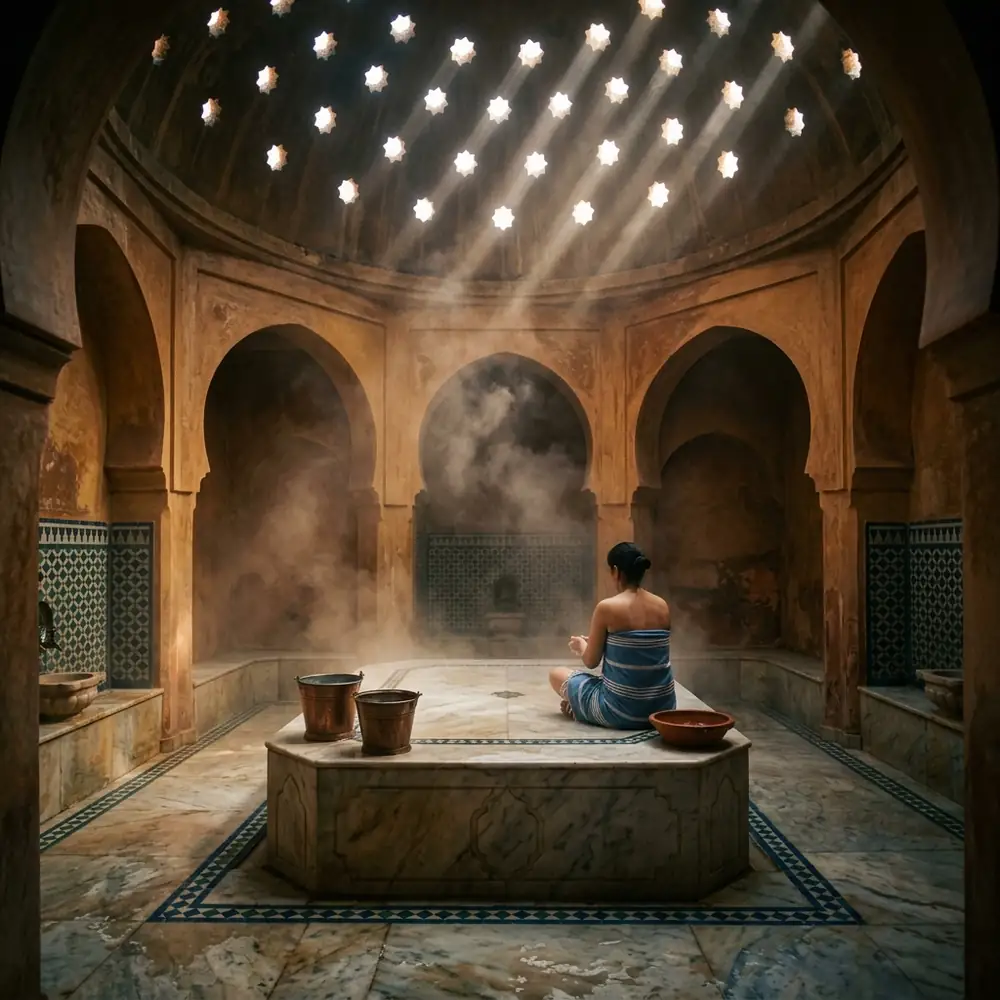
This is the mask Moroccan women use in the hammam before the scrubbing begins. It softens the dead skin and preps the body for the kessa mitt.
You will need:
- 3 tablespoons ghassoul clay powder
- Enough rose water to form a smooth paste (usually 3–4 tablespoons)
- Optional: a few drops of argan oil for extra richness
How to make it: Mix the ghassoul clay with rose water gradually, stirring as you go to avoid lumps. You want a consistency like thick yogurt — spreadable but not runny. Add the argan oil if you are using it.
How to use it: Apply generously to damp skin on the face or body. Let sit for 10 minutes. Rinse off thoroughly. Follow with a light moisturizer or a few drops of argan oil.
Note: For a face mask, use one tablespoon of clay and reduce rose water accordingly.
Recipe 3: Black Savon Beldi & Kessa Scrub
This is the heart of the hammam experience and the most famous of all moroccan beauty secrets. Savon beldi — black Moroccan soap — is made from olives, olive oil, and water. It is high in oleic acid, which loosens dead skin cells without irritating the skin. The kessa mitt (a rough exfoliating glove) then physically removes everything the soap has lifted.
The combination produces results that feel almost impossible the first time. Rolls of dead skin come away in seconds. What is underneath is softer and smoother than you imagined.
You will need:
- Authentic savon beldi (black Moroccan soap — sold in tubs or jars)
- A kessa mitt (a rough woven exfoliating glove)
- Warm water and steam (a warm shower works perfectly)
How to do it:
- Spend at least 10 minutes in a warm shower or bath before you start. The steam and heat are essential — they soften the dead skin.
- Apply a generous amount of savon beldi all over the body. Avoid the face unless your skin tolerates it well.
- Leave the soap on for 3–5 minutes.
- Wet the kessa mitt and scrub the skin in firm, circular motions. Work section by section — arms, legs, torso, back.
- Rinse thoroughly with warm water.
Do this once a week at most. Over-exfoliating damages the skin barrier. The first time you do it, results will feel dramatic — subsequent sessions are gentler maintenance.
After the scrub, while skin is still warm and open, apply argan oil all over. It absorbs immediately and leaves the skin soft for days.
Recipe 4: Orange Blossom Water Facial Toner
Orange blossom water — ma’ ward lzhar in Moroccan Arabic — is the most common toner in Morocco, though most women who use it would not call it a toner. It is just something they splash on their face after washing. It smells extraordinary, balances the skin’s pH, and has mild anti-inflammatory properties.
This moroccan face and body polish recipe step is easy to overlook because it is so simple. But regular use visibly tightens pores and adds luminosity over time.
You will need:
- Pure orange blossom water (check the label — it should be the only ingredient)
- A small spray bottle or a cotton pad
How to use it: After cleansing, mist orange blossom water onto the face or apply with a cotton pad. Let it absorb fully before applying any oils or moisturizer. Use morning and evening.
You can keep the bottle in the fridge for an extra cooling effect — particularly good on hot days or after the savon beldi scrub.
Recipe 5: Argan Oil & Sugar Body Polish
This is a quick, weekday-friendly alternative to the full savon beldi and kessa treatment. Brown sugar dissolves as you work it into the skin, making it gentler than salt. The argan oil moisturizes as you scrub, so there is no need for extra lotion afterward.
You will need:
- 3 tablespoons brown sugar
- 2 tablespoons argan oil
- Optional: a few drops of essential oil (rose, neroli, or lavender work well)
How to make it: Mix everything together in a small bowl until combined. The mixture will look oily and grainy — that is correct.
How to use it: In the shower, apply the mixture to damp skin and massage in circular motions for 1–2 minutes per area. Focus on knees, elbows, heels, and upper arms. Rinse well.
The argan oil can make the shower floor slippery — be careful stepping out. Use a bath mat.
A Few Notes Before You Start
Source matters. Cheap argan oil that smells like nothing or smells chemical is usually adulterated. Good argan oil has a faint, slightly nutty scent. Savon beldi should smell earthy and olive-ish, not perfumed. Ghassoul clay should feel silky when wet, not gritty.
Patch test first. Even natural ingredients can cause reactions in sensitive skin. Test any new recipe on the inside of your wrist and wait 24 hours before applying to your face.
Less is more. These recipes are potent. You do not need to use them daily. Once or twice a week, consistently, is how moroccan skin care diy actually works — the results build gradually and last.
FAQ
Is argan oil good for oily or acne-prone skin? Yes. Despite being an oil, argan oil is non-comedogenic — it does not clog pores. Its linoleic acid content can actually help balance sebum production. Start with a very small amount (2–3 drops) and see how your skin responds.
Where can I buy authentic savon beldi and ghassoul clay? Moroccan grocery stores, online retailers specializing in Moroccan or North African products, and some natural food stores carry both. Look for products with minimal ingredients and no added fragrances. If you are in Morocco, the souks and hammam supply shops are the best source.
Can I use these recipes on my face and body? Most of them, yes — but with adjustments. The kessa scrub is too rough for facial skin for most people. The ghassoul clay and argan oil masks work beautifully on both face and body. The orange blossom toner is gentle enough for daily facial use.
How long do these DIY preparations last? The argan oil and sugar scrub keeps for up to a week in a sealed jar in a cool spot. The ghassoul clay paste should be made fresh each time — it dries out quickly. Orange blossom water, if pure and kept refrigerated, lasts several months.
Experience the true heart of Moroccan heritage through its culinary traditions. Join us in preserving and honoring these ancestral recipes.
What People Are Saying
No comments yet. Be the first — we'd love to hear from you.
The Moroccan Food
Culturally Verified & Fact-CheckedThe Moroccan Food editorial team brings together native culinary researchers, heritage preservationists, and experienced home cooks across Marrakech, Fes, and Casablanca. Every recipe and cultural guide is reviewed against ancestral oral traditions and authentic regional practices.