Moroccan Cinema and Literature: From International Film Festivals to Contemporary Voices Shaping the Nation

Moroccan Cinema and Literature: From International Film Festivals to Contemporary Voices Shaping the Nation
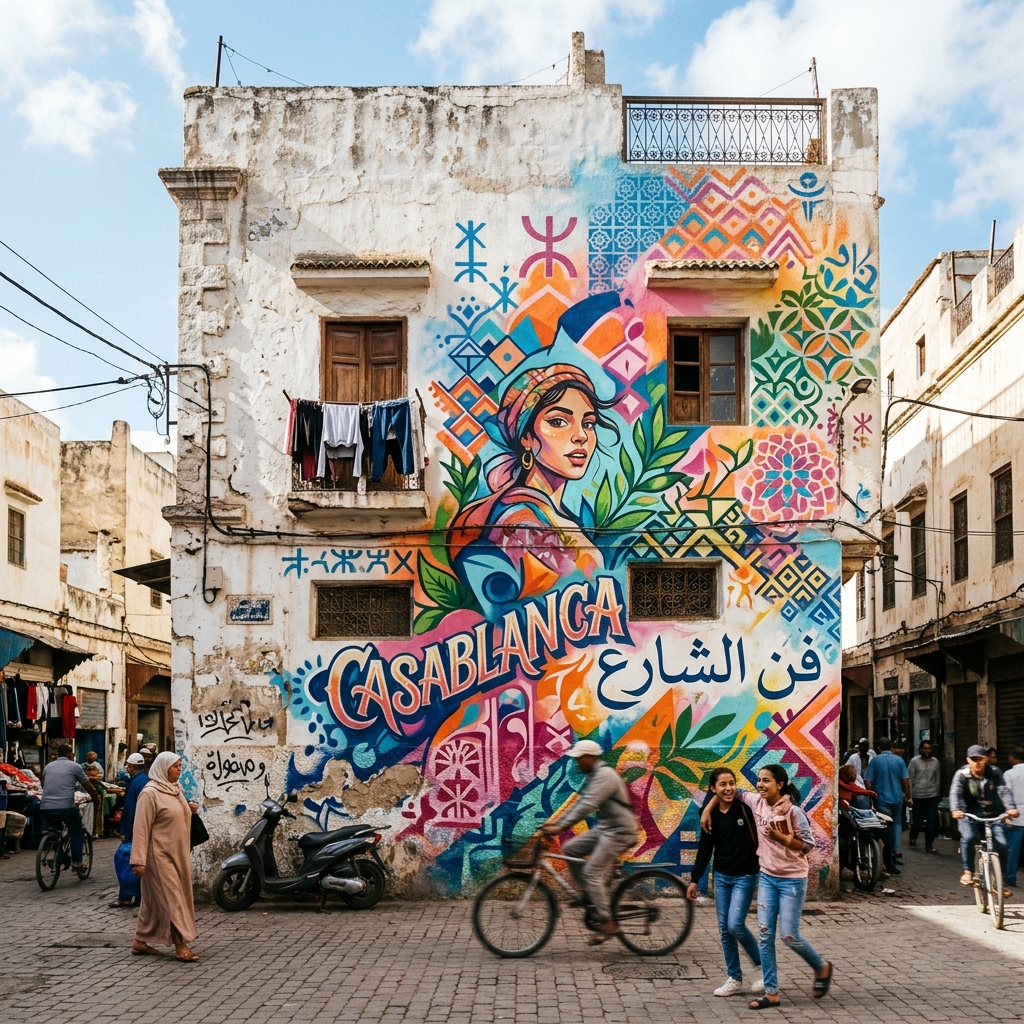
I’ve always been fascinated by what a country’s artists choose to examine when they’re given the freedom to look anywhere. In Morocco, the answers are consistently surprising. The films and novels coming out of this country don’t traffic in the exoticism that outsiders might expect — no romanticized medinas, no veiled women as symbols of mystery. Instead, what you find is a literature and cinema of genuine complexity: urban alienation, political memory, gender and body, migration and identity, the gap between official narratives and lived realities.
This is a country in the middle of becoming something new, rapidly and sometimes painfully, and its artists are documenting the transformation with a frankness that makes the work genuinely valuable — not just as cultural artifact but as social testimony.
The Marrakech International Film Festival
Founded in 2001, the Marrakech International Film Festival (FIFM) has established itself as Africa’s premier cinema event and one of the significant film festivals of the Global South. Held annually in December (usually the first or second week), it screens a mix of international competition films, Moroccan productions, and retrospectives, with a particular emphasis on African and Arab cinema.
The setting is extraordinary. Major screenings take place in the open air of Djemaa el-Fna, with tens of thousands of Marrakchi residents watching films under the stars alongside international critics and industry professionals. The contrast between the medieval square, the ancient minaret of the Koutoubia visible on the horizon, and the contemporary films being projected is striking in ways that say something meaningful about Morocco’s particular cultural position.
The festival has attracted extraordinary talent over its two decades: Martin Scorsese, Francis Ford Coppola, Cate Blanchett, Jeremy Irons, and dozens of other international figures have received lifetime achievement awards or served on juries. But what I find more interesting is its sustained commitment to Moroccan and African cinema — giving visibility to films that would otherwise struggle to find distribution.
The 2026 edition continues this tradition. If you’re in Morocco in December, attending even a single screening of the FIFM is an experience I’d strongly recommend.
Moroccan Cinema: The Directors Who Matter
Farida Benlyazid
One of Morocco’s most important filmmakers, Benlyazid has been working since the 1980s and has consistently explored subjects that the mainstream Moroccan cinema of her era avoided: female agency, mystical Islam, the complexity of women’s interior lives. Her film ‘Une Porte sur le Ciel’ (1988) remains one of the finest films ever made in Morocco — a quiet, technically accomplished work about a woman returning to Morocco from France and rediscovering Sufi spiritual practice.
Nabil Ayouch
The most internationally recognized Moroccan filmmaker currently working. Ayouch’s career has been defined by his willingness to address topics that other Moroccan directors approach carefully: jihadist radicalization (‘Les Chevaux de Dieu’, 2012, based on Mahi Binebine’s novel about the 2003 Casablanca bombings), youth unemployment and street crime (‘Ali Zaoua’, 2000), and most controversially, sex work in contemporary Casablanca (‘Much Loved’, 2015), which was banned in Morocco and acclaimed internationally.
‘Casablanca Beats’ (2021) is perhaps his most hopeful work — a fiction-documentary hybrid set in a hip-hop school in the Sidi Moumen neighborhood of Casablanca, following young people using music to process the violence and inequality of their city. It won the Jury Prize at Cannes.
Laila Marrakchi
Marrakchi’s debut film ‘Marock’ (2005) was a sensation — and a scandal. A largely autobiographical portrait of wealthy Casablanca youth, exploring first love between a Muslim girl and a Jewish boy, it was denounced in the Moroccan parliament and celebrated at international festivals. It remains one of the most honest portrayals of Morocco’s class stratification and religious tension.
Her later work, including ‘Rock the Casbah’ (2013), has continued to examine the contradictions of the Moroccan bourgeoisie with a precision that makes comfortable Moroccan audiences uncomfortable.
Moroccan Literature: The Tradition and the Contemporary
The Legacy of Mohammed Choukri
No conversation about Moroccan literature can begin anywhere other than Mohammed Choukri. His autobiographical novel ‘For Bread Alone’ (1973), written in colloquial Moroccan Arabic — a radical act at a time when literary Arabic was considered the only legitimate literary language — describes his childhood in grinding poverty in the Rif, his years as a street child in Tangier, and his gradual, difficult self-education.
Paul Bowles translated the novel into English, and it was published in French translation before being published in Arabic (where it was banned until 2000). It’s one of the most important North African literary texts of the 20th century — raw, honest, and completely without the self-pity that would have been easy and false.
Choukri died in 2003. His grave in Tangier has become a kind of literary pilgrimage site.
Fatima Mernissi
Sociologist, feminist theorist, and writer. Mernissi’s work — particularly ‘Beyond the Veil’ (1975), ‘The Harem Within’ (1994), and ‘Scheherazade Goes West’ (2001) — is among the most significant produced by any Moroccan intellectual of the 20th century.
Her particular achievement was to demonstrate, through rigorous textual analysis and sociological observation, that the oppression of women in Islamic societies is not inherent to Islam but the product of specific historical interpretations and political interests. She did this from within the tradition, with deep knowledge of Islamic jurisprudence and history, which gave her arguments a force that external critics could not replicate.
Mernissi died in 2015. Her legacy continues in the work of a generation of Moroccan feminist writers and academics who consider her foundational.
Contemporary Voices: The Generation of the 2000s and 2010s
The most interesting development in contemporary Moroccan literature is the emergence of writing in Darija — colloquial Moroccan Arabic — as a legitimate literary language. The older hierarchy that saw Darija as merely spoken and Modern Standard Arabic as the only serious written language is being actively dismantled by a generation of writers who grew up bilingual or trilingual and see no reason to choose.
The Moroccan literary magazine ‘Alifbata’ and the Casablanca literary scene around the Cinémathèque de Casablanca have become important incubators for this new writing.
In French, the novelists Leïla Slimani and Tahar Ben Jelloun represent Morocco to international audiences. Slimani won the Prix Goncourt in 2016 for ‘Chanson Douce’ (published in English as ‘Lullaby’) — a psychologically complex thriller about a nanny who murders the children in her care, which uses its crime story as a vehicle for examining class, race, and the invisible labor of domestic workers in France.
Ben Jelloun, who has won the Prix Goncourt (1987, for ‘La Nuit Sacrée’) and the IMPAC Dublin Literary Award, has spent his career as Morocco’s most internationally prominent literary voice, though his relationship with his country of origin is complex and has been the subject of considerable debate within Morocco.
How to Engage With Moroccan Culture as a Visitor
The Marrakech International Film Festival is the most obvious starting point — but it requires December travel. If you’re visiting at other times, the Cinémathèques in Rabat and Casablanca run regular screenings of Moroccan and international films with programming that’s consistently interesting.
For literature: the bookshops of Casablanca and Rabat carry far more contemporary Moroccan writing (in both French and Arabic) than you’ll find outside the country. The Librairie Kalila Wa Dimna in Rabat and the Librairie Libre Service in Casablanca are particularly good.
For Amazigh literature and cultural production specifically, the Institut Royal de la Culture Amazighe (IRCAM) in Rabat maintains a library and organizes public events.
And for cinema specifically: Nabil Ayouch’s Cinéma Belvédère in Casablanca, and the growing number of cultural spaces in Marrakech’s Gueliz neighborhood, host screenings and cultural events that put contemporary Moroccan creative work in front of audiences who care about it.
Engaging with Morocco’s artistic production — even partially, even imperfectly — transforms a trip from tourism into something closer to genuine encounter. These are not decorative arts for the visitor’s enjoyment. They’re the work of people trying to understand their own country. Which, if you’re honest, is what the best travel is also about.
Experience the true heart of Moroccan heritage through its culinary traditions. Join us in preserving and honoring these ancestral recipes.
What People Are Saying
No comments yet. Be the first — we'd love to hear from you.
Sanaa El Alaoui
Culturally Verified & Fact-CheckedThe Moroccan Food editorial team brings together native culinary researchers, heritage preservationists, and experienced home cooks across Marrakech, Fes, and Casablanca. Every recipe and cultural guide is reviewed against ancestral oral traditions and authentic regional practices.