Moroccan Cinnamon: The Spice That Perfumes Our Tagines, Pastries, and Morning Tea
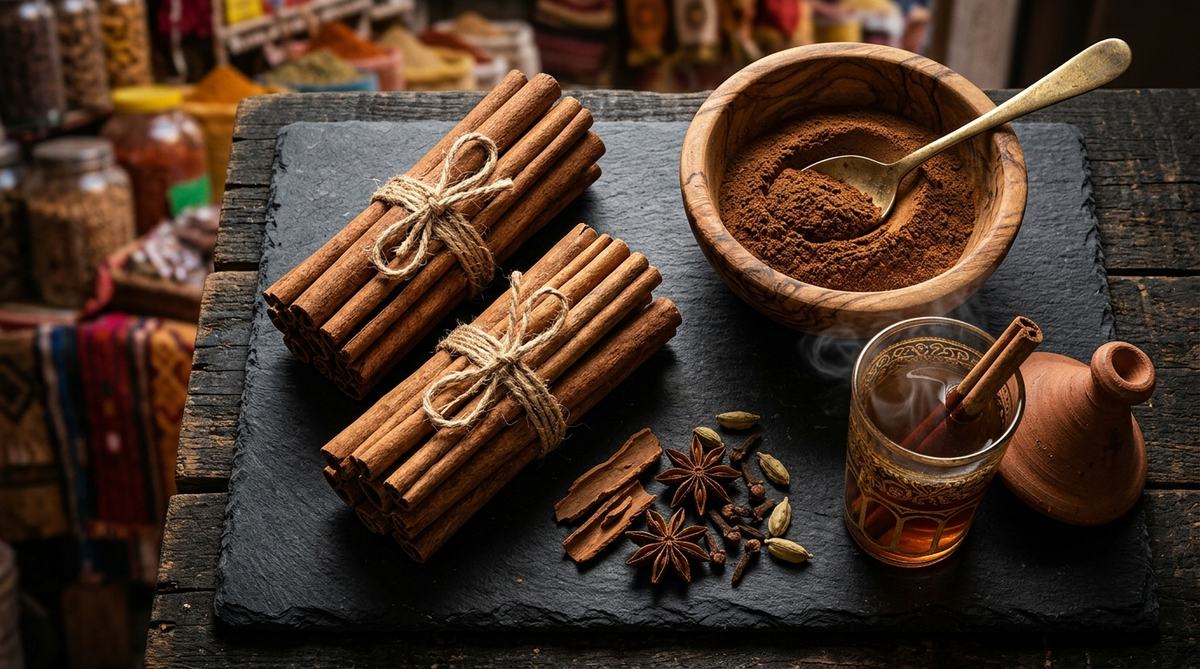
My grandmother kept her cinnamon in a small ceramic jar with a blue lid, and she guarded it with the quiet authority of someone who knew exactly what they had. Not the pre-ground dust that comes in supermarket packets and smells of almost nothing. Real cinnamon — qarfa in Moroccan Arabic — in scrolled, papery sticks that you could break with your fingers and smell for the better part of an afternoon. When she dropped a stick into the tagine pot, the whole house changed. Something in the air became warmer, more deliberate, more like home. That is what Moroccan cinnamon does. It does not merely flavour a dish. It changes the temperature of a room.
Ceylon or Cassia: The Question Every Cook Should Answer
Most of the world uses cinnamon without really knowing which cinnamon they are using, which is a shame, because the difference matters enormously in cooking. There are two main types: Ceylon cinnamon (Cinnamomum verum, sometimes called “true cinnamon”) and Cassia cinnamon (Cinnamomum cassia and its relatives), which is what fills most supermarket jars in Europe and America.
Ceylon cinnamon comes primarily from Sri Lanka and southern India. It is pale tan in colour, has a thin, papery bark that curls into delicate layers like parchment, and its flavour is subtle — sweet, slightly floral, with a warmth that lingers gently rather than asserting itself. Cassia is darker, harder, thicker, and significantly more pungent. Its flavour is intense and slightly medicinal, with a sharpness that can overwhelm more delicate dishes.
Morocco uses both, but the cinnamon you will find in the finest Moroccan cooking — particularly in traditional homes and the better medina kitchens — leans toward the gentler, more aromatic end of the spectrum. Many Moroccan spice merchants source their cinnamon from East Africa (particularly Madagascar and Tanzania), which produces a variety close to Ceylon in character, with a perfumed sweetness that pairs extraordinarily well with honey, orange blossom water, and slow-cooked lamb.
Walking the Attarine: How Moroccan Spice Merchants Grade Cinnamon
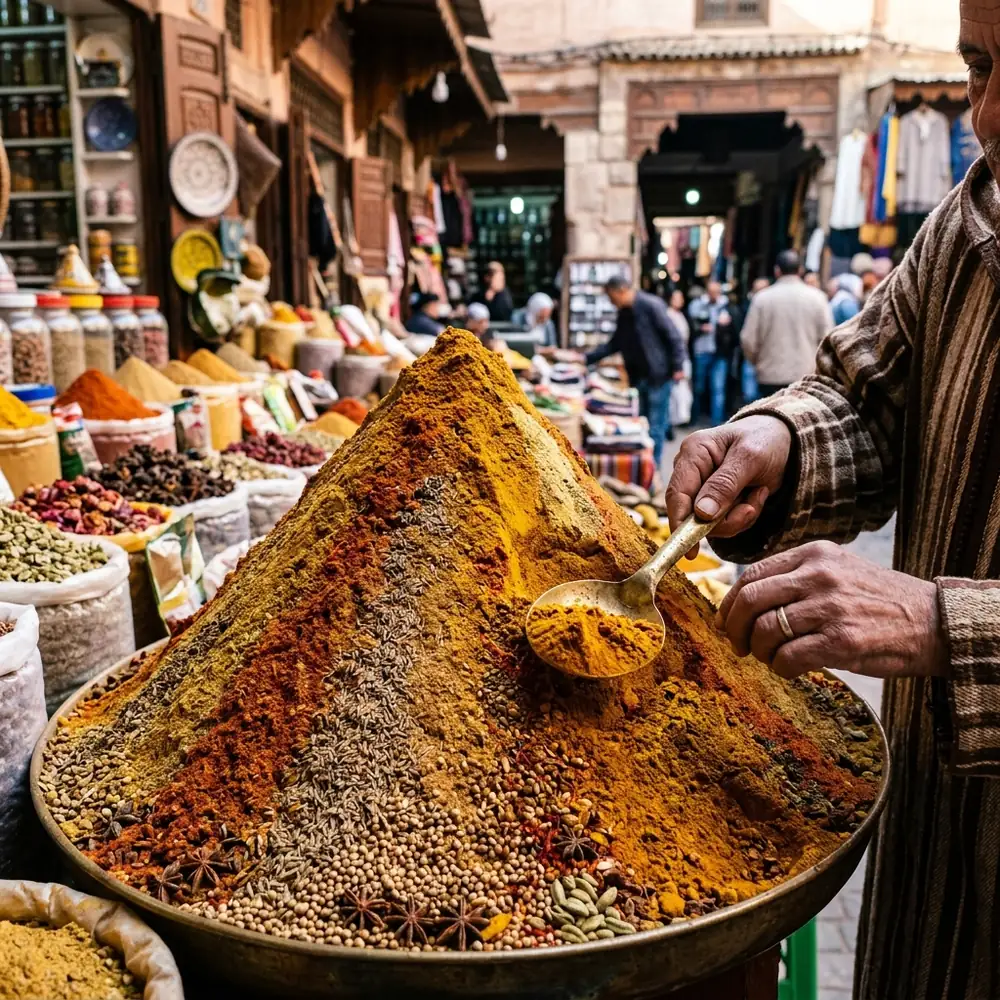
The attarine (from itr, perfume or spice — attarine literally means “the perfumers’ souk”) is the spice market of the Moroccan medina, and in the old cities of Fes and Marrakech, it is a place of genuine expertise. The merchants here are not shopkeepers. They are inheritors of a knowledge tradition that predates the modern spice trade by centuries. They can hold a cinnamon stick, snap it, smell the break, and tell you which season it was harvested, whether it is first or second grade, and how it will behave in a tagine versus a pastry.
When buying cinnamon in the souk, look for sticks that are a warm amber-brown, feel papery and light in your hand, and snap cleanly without excessive hardness. The smell should be immediate and complex — sweet, warm, slightly citrusy in the top notes, with a deep resonance underneath. If it smells flat or dominantly harsh, you are holding inferior Cassia. A good Moroccan spice merchant will often let you taste a tiny piece. Do it. The difference is unforgettable.
First-grade cinnamon sticks are used whole in cooking — dropped into tagines, into poaching liquids, into tea. Second and third grade are typically ground and sold as powder (mahjoun al-qarfa). For the finest pastry work, particularly m’hancha and sellou, experienced Moroccan cooks insist on grinding their own from quality sticks, since pre-ground cinnamon loses its volatile oils within weeks of grinding.
Cinnamon in the Tagine: Where Sweet Meets Savoury
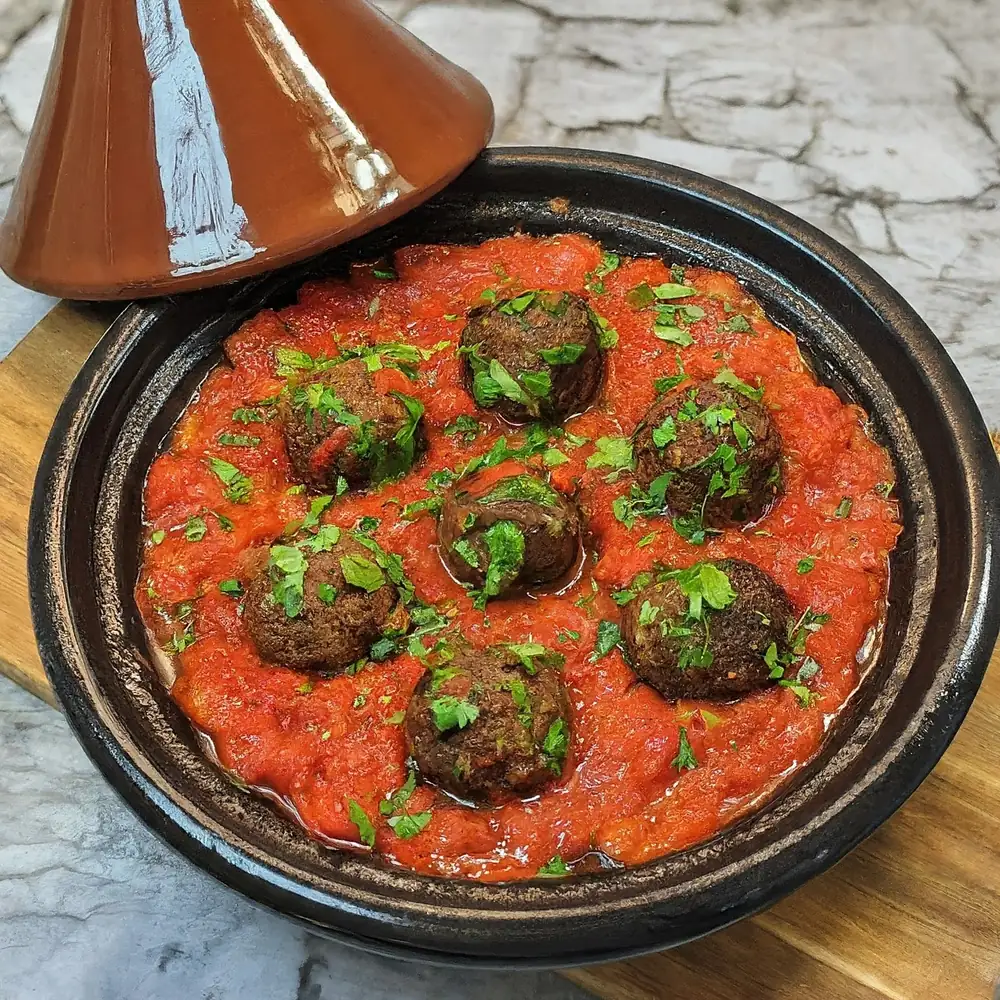
The most striking thing about Moroccan cooking for anyone encountering it for the first time is this: cinnamon appears in meat dishes without apology. A tagine of lamb with prunes and almonds (mrouzia) is perhaps the clearest demonstration of how Moroccan cooks think about cinnamon — not as a dessert spice, but as a bridge between the savoury depth of slow-cooked meat and the sweetness of dried fruit.
In mrouzia, lamb or mutton is cooked slowly with smen (aged preserved butter), saffron, ras el hanout, honey, cinnamon, ginger, and a generous quantity of raisins and prunes. The cinnamon here does several things simultaneously. It rounds the harshness of the mutton, it amplifies the honey without competing with it, and it ties the saffron and ginger together into something coherent and beautiful. Without the cinnamon, the dish would taste scattered. With it, everything is pulled into focus.
Bastilla: The Most Famous Use of Cinnamon in Moroccan Cooking
Bastilla (also called pastilla or b’stilla) is the great set piece of Moroccan ceremonial cooking — a pie of extraordinarily thin warqa (similar to filo) pastry filled with pigeon or chicken, eggs cooked in saffron and herb broth, almonds fried in butter, and then dusted generously on top with powdered sugar and cinnamon. The contrast of savoury meat filling and sweet cinnamon-sugar top is not an accident or a quirk. It is the entire point. The sweet dusting changes how you experience the first bite, softening the saffron, amplifying the almond. Cinnamon makes bastilla bastilla.
In Pastry: The Architecture of Sweetness
Moroccan pastry is, in many ways, a study in what cinnamon can do when given space to express itself.
M’hancha (meaning “the snake,” from the coiled shape) is a long roll of almond paste — ground almonds, sugar, orange blossom water, and butter — wrapped in warqa pastry, coiled into a spiral, baked until golden, and finished with honey and cinnamon. The cinnamon goes in two places: inside the almond paste, where it anchors the filling and keeps it from tasting flat, and on top, where it is dusted over the honey glaze in the final seconds. It is a double conversation, interior and surface.
Sellou (also called sfouf in some regions) is the dense, crumbly mixture of toasted flour, fried almonds, sesame seeds, honey, butter, and spice that appears at every celebration, particularly during Ramadan and after childbirth. It is considered deeply nourishing and warming — and cinnamon is one of its foundational flavours, alongside anise and sesame. A spoonful of sellou eaten with a glass of warm milk is one of the most comforting things a Moroccan kitchen can offer.
Ghoriba cookies, whether made with almonds, semolina, or coconut, frequently include cinnamon in their spice mix, and the scent that rises when a tray comes out of the oven is the smell of Moroccan family kitchens across generations.
In Tea: The Morning Ritual That Changes Everything
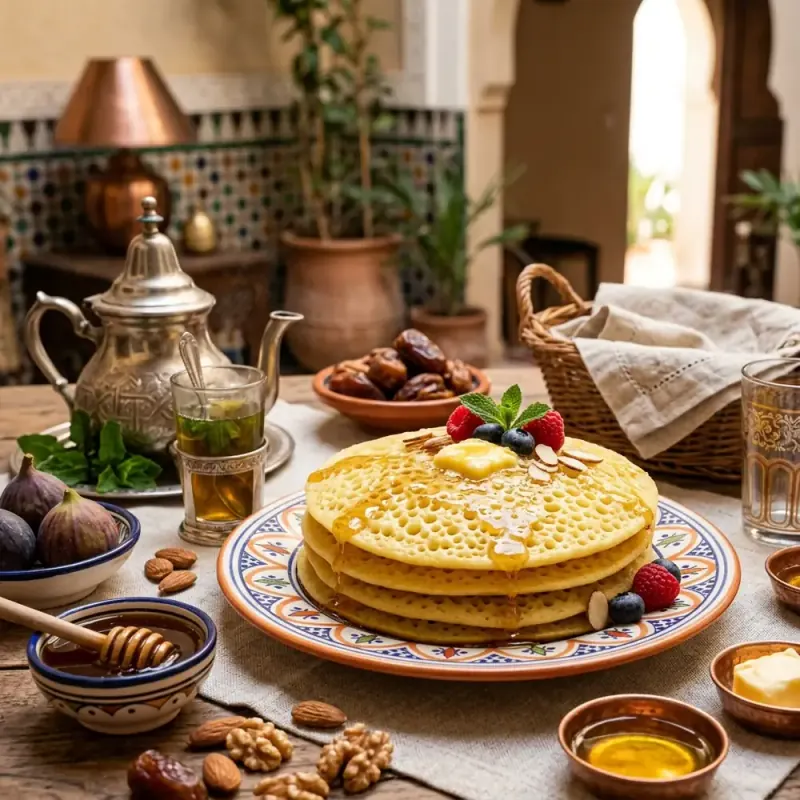
In Morocco, mint tea (atay bil naânaâ) is the foundation of hospitality, but there is another tea that serious Moroccan cooks know and love: tchicha, or spiced tea made with cinnamon, ginger, and cloves. This is not a restaurant invention. It is a home kitchen staple, particularly in winter, and particularly in the mornings before a hard day.
A cinnamon stick dropped into boiling water with a few coins of fresh ginger and a cardamom pod, steeped for ten minutes, then sweetened with honey and finished with a few drops of orange blossom water — this is what warms a Moroccan winter morning from the inside. It is also what harira soup, Morocco’s great Ramadan dish, owes some of its warmth to: cinnamon and ginger together in a tomato-lemon-lentil broth is a combination that seems like it should not work and then absolutely does.
Cinnamon as Medicine: Tibb al-Attar
Long before cinnamon was a flavouring, it was a medicine. In Moroccan tibb al-attar (traditional folk medicine, literally “the medicine of the spice merchant”), cinnamon has been prescribed for digestion, circulation, and cold since at least the medieval period. Ibn Sina (Avicenna), whose Canon of Medicine was the foundational text of both Arab and European medicine for centuries, wrote extensively about cinnamon as warming to the stomach, useful for nausea, and effective against cold and damp conditions.
Today in Moroccan markets, you can still buy cinnamon specifically for medicinal use from herbalists (attar) who distinguish between the culinary and therapeutic grades. Cinnamon tea is given to women after childbirth to help the body recover warmth. Ground cinnamon is stirred into warm milk for children with colds. These are not superstitions. They are practices with a coherent internal logic, sustained across centuries because they work.
How to Buy, Store, and Cook with Moroccan Cinnamon
When buying cinnamon for Moroccan cooking, buy sticks if at all possible. Ground cinnamon, however beautiful on the package, will have lost a significant portion of its volatile oils by the time it reaches you. At home, grind sticks in a small spice grinder or a mortar when you need powder. The difference in fragrance is startling.
Store cinnamon sticks in a tightly sealed glass jar away from light and heat. Whole sticks will hold their quality for two to three years. Ground cinnamon begins to fade within three months — this is why your spice rack should be restocked seasonally, not annually.
My grandmother’s tips, passed down: drop a cinnamon stick into the tagine in the first ten minutes of cooking, not at the end. The heat extracts the oils slowly, and they need time to marry with the meat and onions. For pastry, grind your own just before using. And for tea — never boil the cinnamon aggressively. A long, gentle simmer extracts the sweetness. A hard boil pushes out the bitterness.
Frequently Asked Questions
Which type of cinnamon should I use for Moroccan tagines? For tagines and savoury cooking, a medium-aromatic cinnamon — quality Cassia or East African Ceylon-style — works well. The most important thing is freshness: a fresh, fragrant stick will always outperform old pre-ground powder from any origin. Avoid very harsh, dark Cassia if your tagine also includes fruit (prunes, apricots, dates), as it can fight with the sweetness rather than complement it.
How much cinnamon goes in a typical Moroccan tagine? One whole cinnamon stick (roughly 5–7 cm) for a tagine serving four to six people is the standard starting point in most traditional recipes. Some cooks add half a teaspoon of ground cinnamon as well for additional depth. For sweeter preparations like mrouzia with prunes and honey, the quantity can be more generous — two sticks for a full pot is not unusual.
Is it true that ras el hanout always contains cinnamon? Yes, in every version of ras el hanout (meaning “head of the shop” — the best of what the spice merchant has), cinnamon is an anchor ingredient. A ras el hanout without cinnamon is not truly ras el hanout. The number of spices in the blend ranges from seven to thirty or more depending on the merchant and the occasion, but cinnamon, ginger, cumin, coriander, black pepper, turmeric, and cardamom are the core that holds everything together.
Why does Moroccan food use cinnamon in savoury dishes when in most Western cooking it is only for sweets? This is a question of culinary philosophy more than technique. Moroccan cooking inherited a medieval Arab spice tradition that made no rigid distinction between sweet and savoury applications — spices were chosen for how they interacted with specific foods and how they affected the body according to humoral medicine principles. Cinnamon in meat cooking was considered warming and digestive, and over centuries, what began as a practical-medicinal choice became an aesthetic one: Moroccan cooks simply discovered that the combination is extraordinary, and they have never had reason to stop.
Experience the true heart of Moroccan heritage through its culinary traditions. Join us in preserving and honoring these ancestral recipes.
What People Are Saying
No comments yet. Be the first — we'd love to hear from you.
The Moroccan Food
Culturally Verified & Fact-CheckedThe Moroccan Food editorial team brings together native culinary researchers, heritage preservationists, and experienced home cooks across Marrakech, Fes, and Casablanca. Every recipe and cultural guide is reviewed against ancestral oral traditions and authentic regional practices.