Desert Gastronomy: Nomadic Sand-Baking, Medfouna, and the Secret Flavors of the Moroccan Sahara
id: moroccan-desert-gastronomy-sahara-medfouna-cooking title: "Desert Gastronomy: Nomadic Sand-Baking, Medfouna, and the Secret Flavors of the Moroccan Sahara" slug: moroccan-desert-gastronomy-sahara-medfouna-cooking category: Food & Cuisine excerpt: "Beneath the fiery dunes of Merzouga and M'Hamid El Ghizlane: the subterranean art of Medfouna (Berber stuffed bread baked in hot sand embers), camel tagines with Tafilalet dates, and three-glass desert tea ritual." author: H. Elmrabet date: 2026-08-24
Desert Gastronomy: Nomadic Sand-Baking, Medfouna, and the Secret Flavors of the Moroccan Sahara
Salam Alaykum, traveler. Leave your heavy boots at the edge of the woven wool rug, take a seat against these camel-leather cushions, and let your eyes adjust to the amber glow of the fire.
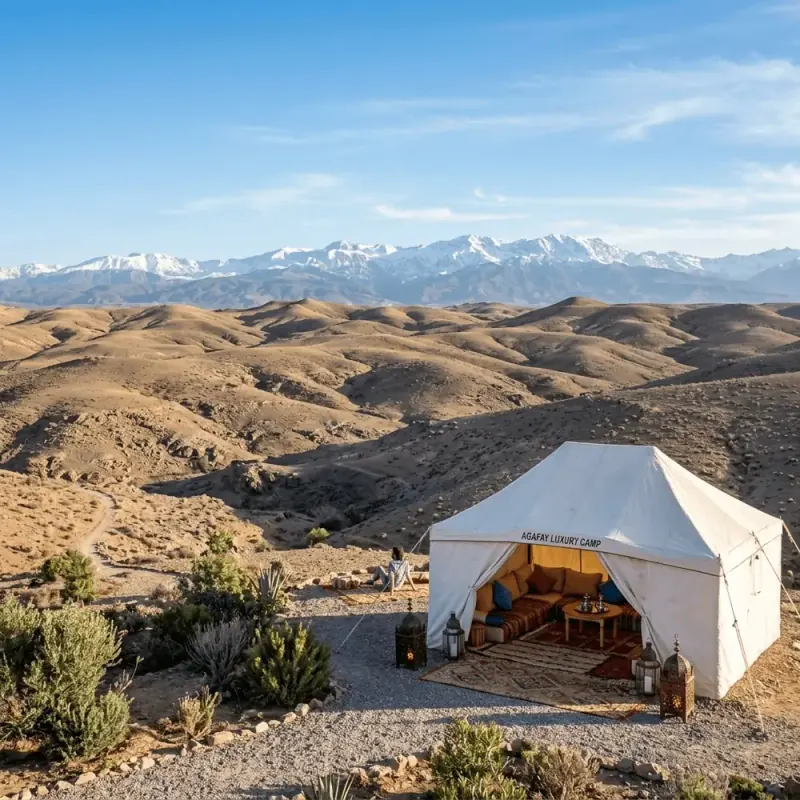
Out there, beyond the goat-hair walls of our nomad tent (el-khaima), stretches the infinite silence of the Moroccan Sahara. The winds of the Chergui whip across the golden crests of Erg Chebbi and the vast stone plateaus of M'Hamid El Ghizlane. To the untrained eye, this ocean of sand and wind looks like a barren wilderness—a place of beautiful, merciless emptiness.
       THE VAST SAHARAN PANTRY
 ┌───────────────────────────────────────────────────────────┐
 │  DUNES OF MERZOUGA: Subterranean Sand-Baking (Amoud)      │
 │  OASIS OF TAFILALET: Medfouna & Majhoul Date Caramelization│
 │  PLATEAUS OF ZAGORA: Desert Truffles (Terfez) & Wild Shih │
 │  CAMEL PASTURES: Vitamin-Rich Milk Fermentation & Droua   │
 └───────────────────────────────────────────────────────────┘
Let me tell you a secret that our people have known for thousands of years: the desert is not empty. It is an extraordinary, living culinary laboratory.
For the Amazigh and Sahrawi nomads who have navigated these dunes for millennia, the desert was never a barrier; it was a generous mother. In an environment where water is precious, firewood is scarce, and heavy cast-iron stoves are impossible to carry on camelback, our ancestors turned the very elements themselves—the blazing sand under their feet, the fragrant scrub brush of the wadis, and the resilience of the dromedary—into one of the world's most sophisticated, minimalist, and breathtaking cuisines.
Tonight, the coals of desert acacia are glowing white-hot. Let us uncover the hidden gastronomic soul of the Moroccan Sahara.
1. The Fire Beneath the Dunes: The Ancient Thermodynamics of Sand-Baking (Amoud & Taguella)
Have you ever watched a nomad bake bread without an oven, without a pan, and without a single grain of sand ruining the tender crumb? It looks like a miracle, but it is pure physics and deep geological wisdom.
This technique is known as Amoud among the Amazigh of the south, or Taguella across the Sahrawi and Tuareg tribes. It is the oldest form of baking known to humanity, preserved in its purest, most elegant form in the Moroccan desert.
┌────────────────────────────────────────────────────────────────────────────────────────┐
│                               THE ANATOMY OF SAND-BAKING                               │
│                                                                                        │
│  [1. PREHEAT]              [2. SWEEP COALS]       [3. DOUGH PLACEMENT]  [4. THERMAL CAP]│
│  Acacia (Talh) fire built  Embers pushed aside;   Flat semolina disc    Hot sand & fine │
│  directly on fine quartz   sand reaches 250°C+    laid directly on      embers shoveled │
│  desert sand for 1 hour    clean mineral bed      scorching sand bed    over the top    │
└────────────────────────────────────────────────────────────────────────────────────────┘
The Physics of Saharan Quartz Sand
The sand of the Erg Chebbi dunes in Merzouga is composed of ultra-fine, iron-rich quartz crystals. Quartz possesses an astonishing thermal conductivity and heat retention capacity.
When a nomad builds a fire of dry Talh (desert acacia) and Rtem (desert broom) directly on top of the sand, the mineral bed beneath absorbs the intense thermal energy. Within forty-five minutes, the sand reaches temperatures exceeding 250°C (480°F), forming a completely uniform, radiant subterranean baking chamber that distributes heat far more evenly than modern electric ovens.
The Sand-Baking Ritual Step-by-Step
- The Dough Preparation: The baker kneads durum wheat semolina, water, a pinch of salt, and a touch of wild sourdough starter (khamira baldiya) into a soft, elastic, circular disc roughly two inches thick.
- The Sand Clearing: The glowing acacia embers are gently swept to the perimeter with a palm frond, revealing a pristine, superheated depression in the sand.
- The Contact Crust: The raw dough is placed directly onto the scorching sand bed. In less than three seconds, the intense contact heat instantly gelatinizes the surface starches and vaporizes moisture from the outer dough, creating an impermeable, micro-thin golden crust. This instantaneous shell ensures that not a single grain of sand can penetrate into the dough.
- The Sand Blanket: Fine, hot sand and glowing embers are gently shoveled back over the top of the bread. The loaf is trapped in a 360-degree radiant thermal cocoon.
- The Unearthing and Tapping: After fifteen to twenty minutes, the bread is lifted from its sandy bed with two wooden sticks. It emerges as a magnificent, puffed, blistered golden disc. The baker takes a clean linen cloth and vigorously taps the loaf; any loose surface sand falls away completely with a sharp, resonant clack-clack that signals a hollow, perfectly baked crumb.
Torn open while steaming, Amoud has a shatteringly crisp exterior, a pillowy, airy interior, and a haunting, delicate smokiness imparted by the resinous desert acacia wood.
2. The Masterpiece of Rissani: The Subterranean Architecture of Medfouna
If the desert has an undisputed royal feast, it is Medfouna (المدفونة الفيلالية)—the legendary stuffed sand-pie of Rissani, the ancient desert gateway of the Tafilalet oasis.
Often nicknamed the "Berber Pizza" by travelers, Medfouna is far more intricate than any flatbread you have ever tasted. It is an edible vault of nomadic history, born at the crossroads where trans-Saharan gold caravans met the lush date groves of the Ziz Valley.
       TOP DOUGH LAYER                THE RICH INTERIOR FILLING             BOTTOM DOUGH LAYER
 ┌─────────────────────────┐     ┌────────────────────────────────────┐     ┌─────────────────────────┐
 │ Thin durum semolina     │ ──> │ Mince of tender beef/camel fillet, │ <── │ Hand-stretched, pinned  │
 │ crimped & blind-sealed  │     │ diced Droua (camel hump fat),      │     │ onto heated sand/tannour│
 │ with braided crust edge │     │ hard-boiled eggs, toasted almonds, │     │ to trap steam & basting │
 └─────────────────────────┘     │ onions, coriander & desert spices  │     └─────────────────────────┘
                                 └────────────────────────────────────┘
The Construction of the Saharan Vault
To build a true Medfouna, the master baker (El-M'allem) follows an exacting architecture:
- The Double-Layer Dough: Two large, translucent rounds of dough are hand-stretched from high-protein durum semolina.
- The Meat Base: The filling uses finely minced pasture-raised beef or tender camel fillet, mixed with an abundance of finely diced sweet oasis onions and fresh herbs.
- The Magic of Chahma (Desert Suet): Here lies the non-negotiable soul of Medfouna: small cubes of Chahma (the delicate, creamy suet from the kidney fat or camel hump). During baking, this fat melts completely into the minced meat, basting it from the inside out and turning the onions into a sweet, luscious compote.
- The Treasures of the Oasis: Over the experienced meat, the cook arranges wedges of farm-fresh hard-boiled eggs and golden fried almonds.
- The Desert Spice Alchemy: The filling is experienced with a proprietary desert blend—earthy cumin from Alnif, sweet paprika, ground dried ginger, a whisper of cinnamon, and Ras el Hanout.
- The Braided Seal: The top dough sheet is laid over the filling, and the edges are tightly folded and crimped into a decorative braided border (d'fira). The top is lightly pricked with a wooden skewer to allow just enough steam to escape without drying out the interior.
Traditionally baked buried under the hot sand (Medfouna means literally "the buried one") or baked against the volcanic clay walls of an underground Tannour oven, the finished pie emerges blistering hot. When sliced open, the golden crust yields to a rush of fragrant, spiced steam and rich, savory juices that soak into the bottom crust. It is a complete, magnificent banquet enclosed within a loaf of bread.
3. The Majesty of Camel Gastronomy: Desert Collagen, the Droua, and Date Alchemy
In the high gastronomy of northern Morocco, lamb and beef reign supreme. But once you cross south of the High Atlas into the pre-Saharan plains, the dromedary camel (el-ibil) is the undisputed king of the table.
┌────────────────────────────────────────────────────────────────────────────────────────┐
│                              THE FLAVOR CHEMISTRY OF CAMEL                             │
│                                                                                        │
│  [1. LEAN PROTEIN]         [2. THE DROUA FAT]     [3. SLOW COLLAGEN BRAISE] [4. DATE GLAZE]│
│  Dense, iron-rich muscle;  Pure, silky unsaturated Monounsaturated fat melts  Natural fructose │
│  lower cholesterol than    fat from camel hump;   at low temperatures,     from Majhoul dates │
│  beef, deeply savory       melts like bone marrow breaks down tough fibers creates thick dghira│
└────────────────────────────────────────────────────────────────────────────────────────┘
The Nature of Camel Meat
Camel meat is one of the healthiest, most flavorful red meats in existence. It is exceptionally lean, rich in bioavailable iron and glycogen, with a clean, slightly sweet, grass-fed beef flavor profile without any gaminess.
Because camels walk vast distances through harsh terrains, their muscle fibers are dense and packed with connective collagen. If cooked quickly over high heat, it will be tough; but if treated with the patience of a nomad, it transforms into an incomparable delicacy.
The Sacred Droua (Camel Hump)
The camel’s hump is not a reservoir of water; it is a massive storehouse of pure, silky, highly unsaturated fat. Unlike dense beef suet, Droua fat has a remarkably low melting point.
When rendered gently, it turns into a clear, golden, fragrant liquid that tastes of sweet cream and toasted hazelnuts. Sahrawi nomads use Droua as both cooking fat and a luxurious garnish, searing thin strips of it over white-hot embers to serve alongside tender camel liver (Kebda).
          CAMEL SHANKS                    TAFILALET DATES                  GLOSSY DGHIRA
 ┌─────────────────────────────┐     ┌───────────────────────┐     ┌────────────────────────────┐
 │ Slow-simmered 4+ hours in   │ ──> │ Majhoul / Boufeggous  │ ──> │ Pectin & sugar bond with   │
 │ clay tagine over acacia ash │     │ added in final 30 min │     │ camel collagen into glaze  │
 └─────────────────────────────┘     └───────────────────────┘     └────────────────────────────┘
The Camel and Majhoul Date Tagine
The peak of Saharan slow-cooking is the camel shank tagine simmered with Tafilalet dates (Majhoul and Boufeggous).
In a heavy clay tagine set upon dying coals, camel shanks are browned in Droua fat with sweet onions, cracked ginger, turmeric, saffron, and a stick of wild cinnamon bark. Water is added sparingly, and the vessel is sealed for four to five hours.
In the final thirty minutes, plump Majhoul dates are introduced. The natural fructose and pectin of the dates slowly dissolve into the collagen-rich braising broth, triggering a magnificent caramelization that reduces the liquid into a dark, syrupy, mahogany sauce (dghira) that clings lovingly to meat so tender it can be eaten with a spoon.
4. Nomad Herbology: Desert Artemisia (Shih), Truffles (Terfez), and Acacia Smoke
The Moroccan desert is far from a sterile landscape; after the brief, violent autumn rains (el-ghayt), the dry stony riverbeds (wadis) explode with intensely aromatic wild botanicals adapted to survive extreme aridity. Nomads possess a deep botanical lexicon:
┌─────────────────────────┬────────────────────────────┬──────────────────────────────┐
│ DESERT BOTANICAL        │ LOCAL NAME                 │ CULINARY & MEDICINAL USE     │
├─────────────────────────┼────────────────────────────┼──────────────────────────────┤
│ White Wormwood          │ Shih (الشيح)               │ Digestive bitter; tea & stews│
│ Wild Desert Thyme       │ Azukni / Za'atar Sahraoui  │ Curing camel meat; tagines   │
│ Desert Broom            │ Rtem (الرتم)               │ Aromatic firewood for bread  │
│ White Desert Truffle    │ Terfez (الترفاس)           │ Stewed in camel butter/saffron│
└─────────────────────────┴────────────────────────────┴──────────────────────────────┘
Shih (White Wormwood): The Bitter Perfume of the Dunes
Shih (Artemisia herba-alba) blankets the desert plateaus with silvery-green foliage. Rich in thujone and essential aromatic ketones, Shih has a piercing, herbal, pleasantly bitter fragrance.
Sahrawi cooks crush fresh Shih directly into camel meat marinades to aid digestion and balance rich fats. In the biting cold of Saharan winter nights, a sprig of Shih dropped into steaming green tea replaces garden mint, warming the chest and stimulating the spirit.
Terfez: The White Truffles of the Sahara
In late winter, after generous autumn rains, the desert yields its most precious gastronomic miracle: Terfez (الترفاس)—the white desert truffle.
       AUTUMN RAINS                    CRACKED SAND SOIL                 TERFEZ HARVEST
 ┌──────────────────────┐           ┌───────────────────┐           ┌──────────────────────┐
 │ Rare desert storms   │ ────────> │ Symbiosis with    │ ────────> │ White truffles dug   │
 │ soak sandy plateaus  │ 60-90 days│ Helianthemum roots│ Gently    │ by hand; stewed with │
 │ around Zagora        │           │ creates bulges    │ unearthed │ Smen & saffron broth │
 └──────────────────────┘           └───────────────────┘           └──────────────────────┘
Unlike dark European woodland truffles that grow deep under oak trees, Terfez grow just inches below the sandy crust in delicate mycorrhizal symbiosis with the roots of the wild desert sun-rose (Helianthemum).
Experienced Sahrawi foragers hunt Terfez by walking against the low morning sun, looking for tiny, telltale star-shaped fissures (chouq) where the swelling truffle has pushed the dry sand upward.
Terfez are smooth, pale ivory or golden-tan, with a delicate, earthy, mushroom-and-hazelnut aroma. They are never shaved raw; instead, they are gently peeled, sliced, and slow-poached in fresh camel butter (Smen d-Ibil) with chopped onions, a pinch of saffron, and sea salt. The truffles absorb the spiced fat like sponges, offering a succulent, melt-in-the-mouth texture that rivals any royal delicacy on earth.
5. The Liquid Gold of the Sahara: The Three-Glass Desert Atay Ritual
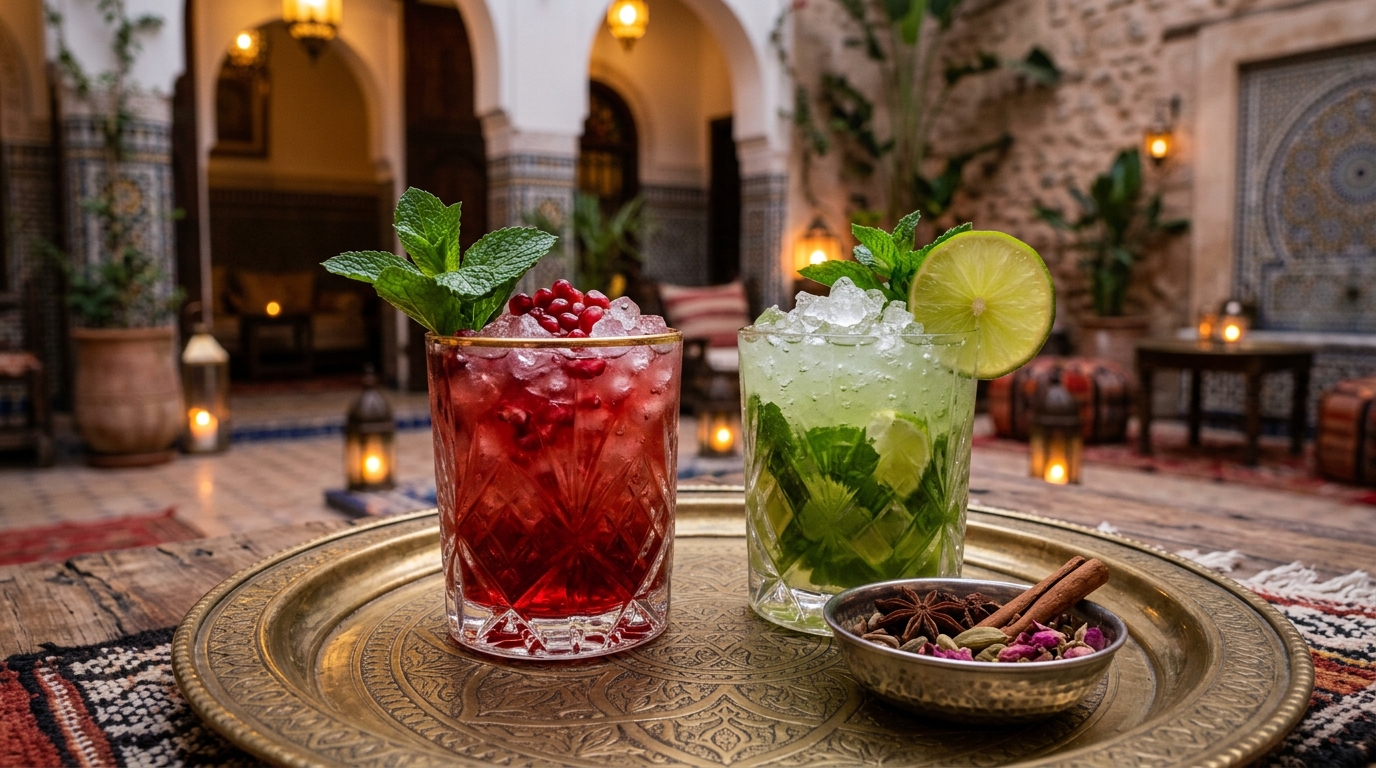
In the Sahara, tea is not a beverage. It is a sacred social covenant, an elaborate artistic performance, and the ultimate expression of hospitality. To refuse a glass of tea in a nomad tent is to refuse friendship itself.
Here, the tea ceremony is slower, deeper, and more reverent than in the northern medinas. A nomad will spend an entire hour tending the small charcoal brazier (el-kanoun), boiling Chinese Gunpowder green tea leaves repeatedly in water to extract every molecule of tannic strength before adding sugar.
┌────────────────────────────────────────────────────────────────────────────────────────┐
│                              THE THREE SACRED GLASSES                                  │
│                                                                                        │
│  [FIRST GLASS]                   [SECOND GLASS]                  [THIRD GLASS]         │
│  "Khafif b-hal el-Hayat"         "Qawi b-hal el-Houbb"           "Moorr b-hal el-Mawt" │
│  Gentle as Life                  Strong as Love                  Bitter as Death       │
│  Mild, sweet, amber,             Deep, rich, intensely sweet,    Dark, tannic, astringent,│
│  relieves desert thirst          heavily aerated with foam       lingering, meditative │
└────────────────────────────────────────────────────────────────────────────────────────┘
As the ancient Sahrawi proverb teaches:
"The first glass is as gentle as life. The second glass is as strong as love. The third glass is as bitter as death."
       HIGH METALLIC POUR                 COOLING STREAM                  CROWN OF FOAM
 ┌─────────────────────────────┐     ┌───────────────────────┐     ┌────────────────────────────┐
 │ Teapot lifted 3 feet high   │ ──> │ Tea cools gracefully  │ ──> │ Thick frothy Reghwa traps  │
 │ in steady, unbroken stream  │     │ as it falls in air    │     │ aromas & keeps out sand    │
 └─────────────────────────────┘     └───────────────────────┘     └────────────────────────────┘
The Aerodynamic Alchemy of the High Pour
Watch the nomad host (Moul Atay) lift the hammered tin teapot (el-berrad) high above the small glasses—two, sometimes three feet into the air—pouring a pencil-thin, shimmering stream of boiling amber liquid without spilling a single drop.
This high pour serves three crucial physical functions:
- Thermal Aeration: Falling through the desert air cools the boiling tea to the exact temperature where the palate can taste its complex sweetness without scalding.
- Tannin Oxygenation: The violent impact of the liquid against the base of the glass aerates the rich tannins, softening any harsh bitterness.
- The Protective Foam Crown (Reghwa): The pour builds a dense, creamy, frothy head of bubbles on top of the glass—the "turban." In the desert, this foam is functional: it traps the aromatic volatile oils inside the glass, while forming a physical shield that prevents blowing grains of fine desert sand from sinking into the tea.
6. The Nomad's Traveling Larder: Iggu, Zemmeta, and Camel Milk
How did ancient caravans survive forty-day crossings between Sijilmassa and Timbuktu? They carried no heavy water barrels and no fresh meats. They carried the genius lightweight inventions of the nomad larder:
┌──────────────────────────────────────┬──────────────────────────────────────┐
│ IGGU / ARIK (Dehydrated Buttermilk)  │ ZEMMETA (Parched Caravan Grain)      │
├──────────────────────────────────────┼──────────────────────────────────────┤
│ • Sun-dried rock-hard curd balls     │ • Roasted green barley & wild herbs  │
│ • Indefinite multi-year shelf-life   │ • Mixed with date syrup & olive oil  │
│ • Reconstituted with water for lben  │ • Calorie-dense, instant nourishment │
└──────────────────────────────────────┴──────────────────────────────────────┘
- The Rock-Hard Curds (Iggu / Arik): When nomads have excess buttermilk (lben) during the spring birthing season, they cook the whey until curds form, squeeze out every drop of liquid in woven cheesecloth, salt the curds heavily, and roll them into small, rock-hard white stones dried under the scorching sun. These stones keep for years. When crushed between two river rocks and whisked with water, Iggu instantly yields a refreshing, electrolyte-packed probiotic milk drink.
- The Caravan Fuel (Zemmeta / Bsissa): Whole grains of green barley are harvested, parched over fire to lock in nutrients, and stone-milled into a fine flour alongside wild fennel seeds, aniseed, and fenugreek. Carried in leather pouches, a traveler simply kneaded a handful of Zemmeta with a splash of water, a drizzle of olive oil, or date molasses (robb) to create an instant, highly digestible meal that provided sustained energy for twelve hours of desert trekking.
- Fresh and Fermented Camel Milk (Lben d-Ibil): Never boiled, raw camel milk is an extraordinary survival elixir. Naturally high in potassium, magnesium, and vitamin C (three times higher than cow's milk), it provided caravaneers with all the essential vitamins normally obtained from fresh vegetables and citrus fruits.
Grandmother's Secrets of the Desert (Asrar El-Khaima)
If you wish to bring the magic of Saharan cooking into your own home, heed these ancestral guidelines:
- Recreating Sand-Baking at Home (The Salt-Dutch Oven Technique): You do not need a Sahara dune in your backyard to experience sand-baking. Take a heavy cast-iron Dutch oven, pour two inches of coarse, unrefined sea salt into the bottom, and preheat it in your oven at maximum temperature (250°C / 500°F) for one hour. Place your flattened semolina dough directly onto the scorching salt bed, cover with the lid, and bake for twenty minutes. The salt mimics the radiant heat conductivity of desert sand perfectly, yielding a phenomenal, smoky crust.
- Rendering Camel Hump or Beef Suet: When making the filling for Medfouna, never grind the fat in a machine into a mush. Hand-dice your suet (chahma) into tiny, precise 3-millimeter cubes using a razor-sharp knife. This ensures that the fat pockets remain intact during assembling and melt slowly during baking, creating juicy flavor reservoirs throughout the meat.
- Cleaning Desert Truffles (Terfez): Never wash fresh desert truffles under running tap water! Like mushrooms, they are porous sponges and will absorb water, ruining their delicate texture and diluting their aroma. Clean them patiently using a dry, soft brush (traditionally camel hair) and a small paring knife to gently scrape away any exterior sand grains.
- Balancing Rich Camel Stews: If cooking camel or grass-fed beef shanks, always introduce dried fruits (dates, figs, or prunes) in the final stage of cooking. The rich, iron-dense flavor of the meat demands the sweet counterpoint of caramelized fruit sugars to achieve the legendary balance of southern Moroccan cuisine.
Frequently Asked Questions (FAQ)
1. How does sand-baking not leave sand in the bread? The secret lies in the extreme heat of the sand bed and the hydration of the dough. The sand must be at least 250°C (480°F). The moment the moist dough touches this scorching mineral bed, the outer surface starches instantly gelatinize and form a solid, micro-thin protective crust before individual sand grains can adhere. When the bread is finished baking, a brief, vigorous tapping and brushing with a dry linen cloth removes any loose surface dust entirely.
2. What makes Medfouna different from an Italian calzone or stuffed flatbread? While a calzone relies on leavened wheat dough baked with cheese and tomato sauce, Medfouna is built with high-protein durum wheat semolina dough and contains zero cheese or tomato. Its interior is an intricate, experienced layer of finely diced raw meats, delicate kidney or camel hump suet, hard-boiled eggs, toasted almonds, sweet oasis onions, and a complex mix of desert spices that steam and braise entirely inside the bread as it bakes.
3. Can camel meat be cooked like regular beef? Not quite. Camel meat is exceptionally lean and contains virtually no intramuscular marbling fat, but it has dense muscle fibers rich in collagen. If grilled quickly like a beefsteak, it will become tough and chewy. It must either be sliced paper-thin and seared with fat for just seconds, or braised low and slow for several hours in a heavy earthenware tagine with aromatics, allowing the rich collagen to break down into tender, gelatinous perfection.
4. Why is the tea ceremony in the Sahara so much longer than in northern Morocco? In nomadic Saharan culture, where human settlements are separated by vast distances, the arrival of a traveler is a momentous occasion. The extended tea ritual—which can last up to two hours for three separate rounds—serves as an essential social bridge. It allows travelers to rest, rehydrate gradually in the arid climate, exchange news of pastures and rainfall, and establish deep bonds of trust and mutual protection.
5. What do Terfez (desert truffles) taste like compared to French or Italian black truffles? European black and white truffles have an intense, pungent, garlicky aroma that is used sparingly as a raw shaving or finishing seasoning. Saharan Terfez are much milder, with a subtle, earthy, buttery fragrance reminiscent of wild porcini, sweet chestnuts, and damp earth. Because of their mildness, they are treated as a substantial culinary ingredient—cooked in hearty chunks, braised in spiced butter, or simmered in stews where they absorb the rich flavors of the broth.
Image Prompts for Visual Storytelling
Image 1: The Nomad Sand-Baking Ritual
- Subject: A dramatic, low-angle shot of a blue-turbaned Amazigh nomad in the golden dunes of Erg Chebbi, kneeling beside a glowing desert fire at dusk. Using two carved wooden sticks, he is lifting a steaming, perfectly round, golden-blistered loaf of Amoud bread directly out of a bed of hot red sand and white acacia embers. Glowing embers and wisps of fragrant smoke rise against the deep indigo desert twilight.
- Vibe: Ancient, mystical, elemental, raw culinary mastery, breathtaking silence.
- Style: National Geographic style documentary photography, dramatic warm firelight contrasting with the cool blue hour sky, tack-sharp focus on the textured bread crust.
- Format: 16:9
Image 2: The Slicing of the Golden Medfouna
- Subject: A close-up shot of a magnificent, freshly baked Medfouna resting on a rustic, hand-woven Sahrawi wool rug. A brass knife has just cut the bread into quarters, pulling back a triangular slice to reveal the piping-hot, aromatic filling inside: minced spiced meat glistening with juices, golden almond halves, slices of hard-boiled egg, and caramelized onions. Steam curls gracefully into the air.
- Vibe: Generous, mouthwatering, celebratory, deeply comforting desert feast.
- Style: High-end culinary photography, warm directional light from an open tent doorway, shallow depth of field, rich warm ochre and saffron tones.
- Format: 4:3
Image 3: The Three-Glass Atay Pour in the Dunes
- Subject: An intricate, hammered silver Moroccan teapot held high above a low brass tray set directly on the desert sand. An unbroken, sparkling stream of amber-gold tea cascades into a delicate, filigree glass, creating a thick, frothy crown of white bubbles (reghwa). In the soft-focus background, the sun sinks behind sweeping Saharan sand dunes, painting the horizon in shades of fiery orange and magenta.
- Vibe: Hospitable, graceful, iconic cultural ritual, tranquil desert majesty.
- Style: High-speed travel photography freezing the sparkling liquid droplets mid-air, backlit by the setting sun, rich golden-hour glow.
- Format: 1:1
Image 4: The Hunt for Desert Terfez
- Subject: A pair of weathered, sun-darkened nomad hands gently brushing away golden sand from around a freshly unearthed, pale ivory Terfez (desert truffle). The truffle rests nestled in the mineral soil beneath the dry roots of a wild desert flower. A small woven palm-leaf basket nearby holds several freshly gathered truffles under the morning desert sun.
- Vibe: Botanical discovery, earthiness, natural wonder, desert treasures.
- Style: Macro nature and food documentary photography, crisp morning side-lighting showing the fine granular texture of the sand and the organic skin of the truffle.
- Format: 3:2
Image 5: The Camel & Majhoul Date Tagine Feast
- Subject: An authentic, unglazed conical terracotta tagine pot resting on a small clay charcoal brazier inside a nomad tent. The conical lid is tilted back to reveal tender, fall-apart camel shanks bathed in a thick, glossy, mahogany-colored sauce, garnished with plump, glistening Majhoul dates, golden toasted almonds, and a sprig of fresh wild shih herb. A torn piece of crusty sand-bread rests on the rim.
- Vibe: Soul-satisfying, regal nomadic hospitality, rich savory-sweet harmony.
- Style: Moody rustic food photography, soft atmospheric shadows, rich textures of experienced clay and glistening reduction, warm inviting color palette.
- Format: 16:9
Experience the true heart of Moroccan heritage through its culinary traditions. Join us in preserving and honoring these ancestral recipes.
What People Are Saying
No comments yet. Be the first — we'd love to hear from you.
Lalla Fatima & The Medina Culinary Guild
Culturally Verified & Fact-CheckedThe Moroccan Food editorial team brings together native culinary researchers, heritage preservationists, and experienced home cooks across Marrakech, Fes, and Casablanca. Every recipe and cultural guide is reviewed against ancestral oral traditions and authentic regional practices.