Moroccan Desserts: 12 Timeless Sweet Delicacies from Royal Palaces to Medina Souks
Moroccan Desserts: 12 Timeless Sweet Delicacies from Royal Palaces to Medina Souks
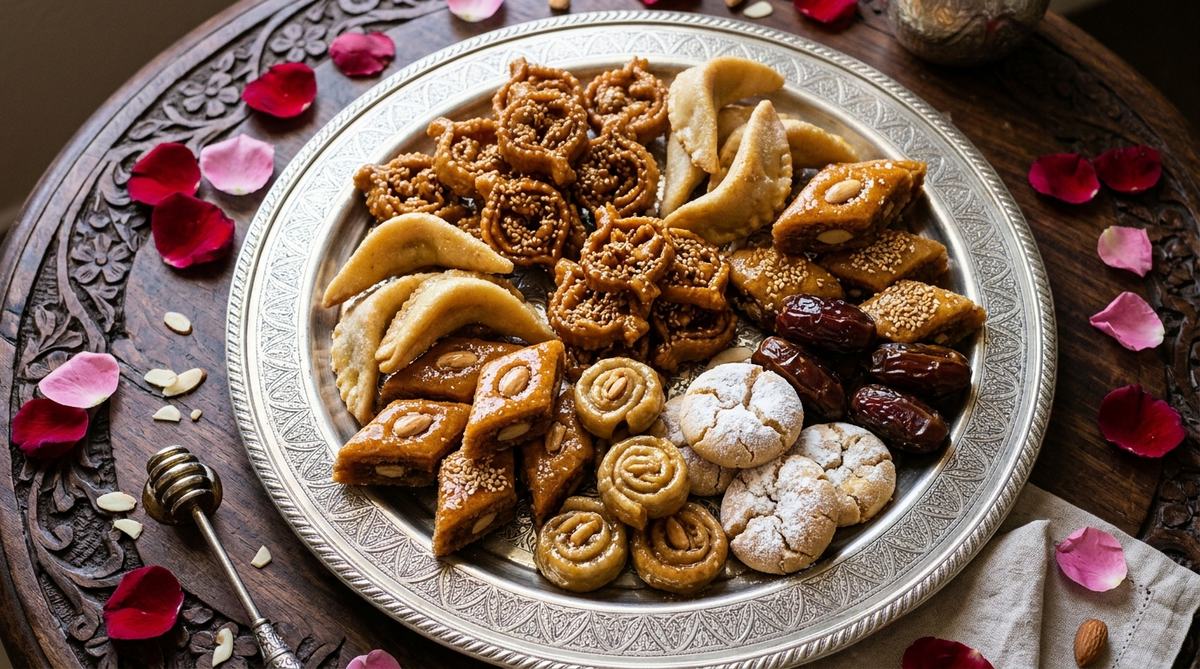
Step into a Moroccan home on a holiday morning or for an afternoon visit, and you will not find heavy buttercreams, chocolate tortes, or layers of sponge soaked in sugar syrup. Moroccan sweets inhabit a different culinary tradition. Refined over generations in the grand kitchens of Fes, Meknes, and Marrakech, our sweet repertoire rests on three pillars: hand-ground tree nuts, pure wild honey, and aromatic botanical waters.
In everyday Moroccan life, desserts do not finish a weekday meal. Everyday meals close with fresh fruit—chilled watermelon in July, sweet oranges dusted with cinnamon in December, or late-summer purple figs. Pastries belong to celebrations: weddings, newborn naming feasts, Eid, and the honorable reception of guests in the family salon.
Understanding these twelve iconic sweets offers a direct window into the patience, craft, and shared knowledge of the Moroccan home cook.
What Sets Moroccan Confections Apart?
The foundation of Moroccan pastry making draws from Moorish Andalusia, ancient trade routes, and Amazigh mountain traditions. Rather than depending on dairy creams that spoil in warm weather, our cooks relied on ingredients that keep at room temperature for weeks.
1. Whole Almonds as the Primary Foundation
Almonds from the High Atlas and Rif valleys are the foundation of our sweet trays. We blanch whole raw almonds, slip their skins by hand, dry them on clean cloths, and grind them with sugar into oqda d’louz—a silky, malleable almond paste scented with cinnamon and botanical essences.
2. Pure Mountain Honey Over Refined Sugar
While commercial bakeries sometimes use glucose syrups, traditional Moroccan home cooks soak pastries in pure wildflower, mountain thyme (asal z’aitra), or orange blossom honey. This imparts an earthy, floral sweetness that balances the rich dough.
3. Botanical Essences and Ancient Resins
The aroma of a Moroccan bakery comes from bitter orange blossom water (ma zhar), damask rose water (ma ward), and tears of mastic resin (meska horra) ground with sugar in a brass mortar. These elements provide depth without cloying sweetness.
The 12 Iconic Moroccan Desserts
Here are the twelve essential sweet delicacies that define our culinary heritage, from royal banquets to neighborhood tea tables.
1. Kaab el Ghazal (Gazelle Horns)
The aristocrat of Moroccan pastry tables, born in Fes and Rabat. Shaped like the slender curved horn of an Atlas gazelle, it features a translucent pastry wrapper enclosing smooth almond paste scented with cinnamon, orange blossom water, and mastic. It is pricked with a needle and baked slowly until pale ivory, with only the bottom turning golden.
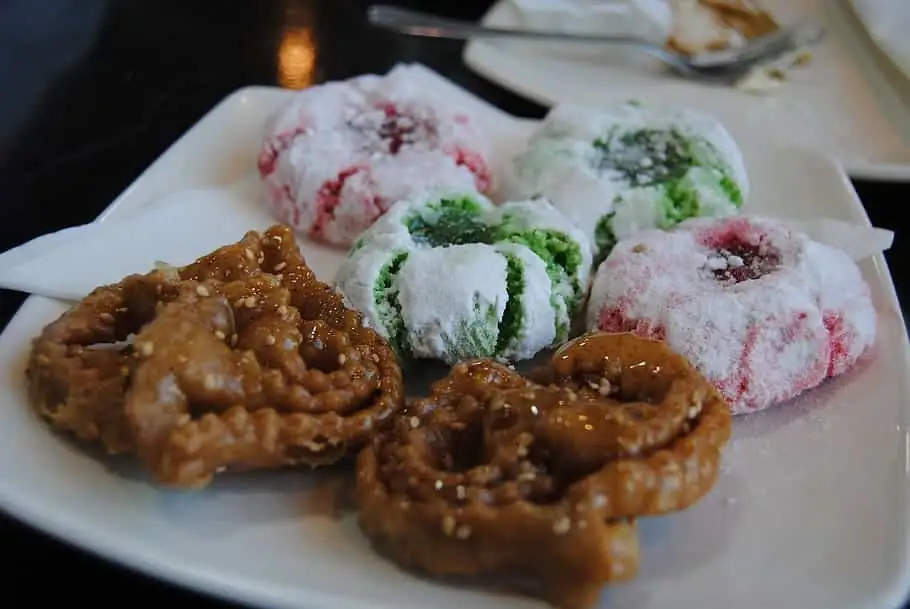
2. Chebakia (Mkharka)
The defining pastry of Ramadan. Made from a firm dough flavored with toasted sesame seeds, ground aniseed, cinnamon, saffron, and vinegar, the dough is cut into strips and folded by hand into a flower shape. Once fried in hot oil, the pastry goes directly into warm honey and is finished with toasted sesame seeds.
3. Briouates bi Louz (Honey Almond Triangles)
Crisp and dripping with honey, these bite-sized triangles are folded from paper-thin warqa pastry around spheres of scented almond paste. After folding into neat geometric triangles, they are fried until golden brown and steeped in honey for several hours so the syrup reaches the innermost layers.
4. M’hancha (The Coiled Serpent Pastry)
Named after the Arabic word for snake (hanash), m’hancha is an impressive centerpiece. Long ropes of cinnamon-scented almond paste are rolled inside sheets of buttered pastry and wound into a tight spiral. Baked until golden, it is glazed with warm honey and decorated with toasted almonds and cinnamon lines.
5. Sellou (Sfouf or Zamita)
An ancient unbaked restorative confection prepared for Ramadan and nursing mothers. Flour is slowly dry-roasted in a pot until hazelnut brown, then combined with crushed toasted almonds, toasted sesame seeds, ground anise, fennel seed, cinnamon, and honey. Bound with clarified butter or olive oil, it forms a rich, crumbly treat.
6. Ghoriba Bahla (Cracked Sesame Shortbread)
Bahla translates colloquially to “the silly one,” referring to the dramatic web of cracks across the top of these round cookies. Made with toasted sesame, ground almonds, flour, and butter, the dough is exposed to direct top heat during baking, forcing the surface to split open into a tender, sandy crumb.
7. Meskouta (Orange and Olive Oil Cake)
While royal pastries demand days of labor, meskouta is the comforting everyday sponge found in ordinary home kitchens. Beaten with fresh eggs, mild olive oil, freshly squeezed orange juice, grated zest, and orange blossom water, this tender cake is baked in a fluted pan and served warm for afternoon tea.
8. Ktefa / Pastilla au Lait (Crisp Layered Milk Pastilla)
An imperial dessert from Fes. Round sheets of paper-thin warqa pastry are fried or baked until shatteringly crisp. Right before serving, the pastry discs are stacked with warm milk cream perfumed with orange blossom water and dusted with crushed toasted almonds and cinnamon.
9. Fekkas (Twice-Baked Almond and Anise Biscuits)
The Moroccan cousin of biscotti, fekkas are crisp biscuits made with toasted whole almonds, golden sesame seeds, and fragrant aniseed. Loaves of dough are par-baked, cooled overnight under a damp towel so they slice cleanly, cut into thin fingers, and toasted again until crunchy.
10. Makrout (Semolina and Spiced Date Diamonds)
Originating in eastern Morocco and southern oasis valleys, makrout celebrates the desert date harvest. Coarse golden durum semolina is rubbed with butter and orange blossom water, wrapped around a spiced Medjool date filling, pressed into carved wooden molds, sliced into diamond cakes, fried, and soaked in honey.
11. Ghoriba d’Louz (Soft Chewy Almond Macaroons)
Unlike wheat-based shortbreads, ghoriba d’louz contains no flour. It is crafted from finely ground blanched almonds, powdered sugar, eggs, and lemon zest. Rolled in icing sugar before baking, the cookies spread in the oven, creating a cracked white exterior around a soft, chewy interior.
12. Stuffed Medjool Dates (Tmar M’ammer bi Louz)
In southern oasis valleys, Medjool dates are prized for their caramel flesh. For weddings and special receptions, premium dates are slit, pitted, and stuffed with freshly pounded almond paste tinted with natural floral essences, then topped with walnut halves and served alongside cold almond milk.
How to Store Moroccan Pastries for Long-Lasting Freshness
Traditional Moroccan sweets keep well without cold storage:
- Airtight Metal Tins: Store dry biscuits like fekkas and ghoriba in metal tins lined with parchment paper. Keep varieties separate so intense aromas like aniseed do not transfer into delicate almond cookies.
- Layering Honey Sweets: Store honey-soaked pastries like chebakia and briouates in deep containers, separating each tier with parchment paper. Keep in a cool pantry; avoid the refrigerator, which introduces moisture and makes fried pastry soggy.
- Freezing Technique: Both kaab el ghazal and briouates freeze well. Freeze them flat on a baking sheet, then pack into freezer bags. Bring to room temperature thirty minutes before serving.
The Tea Ritual: Pairing Sweets with Moroccan Atay
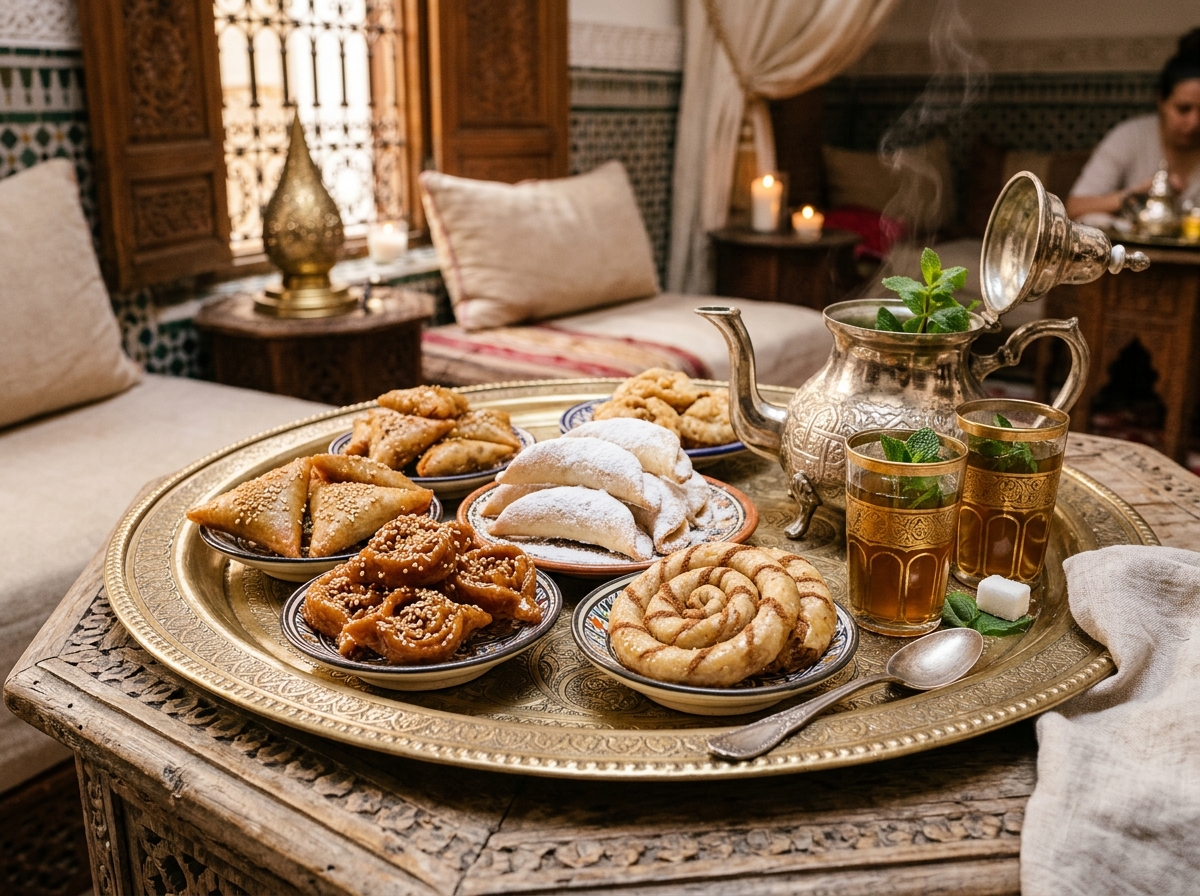
You cannot separate Moroccan sweets from the silver teapot (berrad). Because our pastries are rich with tree nuts and concentrated honey, they need the hot, astringent punch of green gunpowder tea to clear the palate between bites.
In warm months, sweets are paired with tea steeped with fresh spearmint (naanaa). In winter, hosts brew their tea with wild absinthe (chiba) or lemon verbena (louisa). The mild herbal bitterness of absinthe cuts through the honey of chebakia or makrout, refreshing the palate for the next taste.
Frequently Asked Questions
Why do traditional Moroccan desserts rely so heavily on almonds?
Morocco has cultivated almonds across the Atlas foothills for millennia. Almonds provide richness, healthy fats, and structural body without turning rancid quickly in warm climates, making them the ideal base for celebration pastries.
Can I make authentic Moroccan sweets using regular store-bought phyllo dough?
While authentic medina confectioners use handmade warqa, commercial phyllo dough serves as a practical substitute. Brush each sheet generously with melted clarified butter to achieve the necessary crisp flakiness.
What is the purpose of mastic gum (meska horra) in almond paste?
Mastic gum is a natural Mediterranean tree resin. Crushed into a fine powder with a spoonful of sugar, it acts as a binder that gives Moroccan almond paste its elastic texture while providing an earthy, faint pine aroma.
How long does chebakia stay fresh after honey soaking?
Stored in a sealed container at room temperature away from heat and light, well-made chebakia stays crisp, chewy, and fragrant for four to six weeks. The honey acts as a natural preservative.
Experience the true heart of Moroccan heritage through its culinary traditions. Join us in preserving and honoring these ancestral recipes.
What People Are Saying
No comments yet. Be the first — we'd love to hear from you.
The Moroccan Food
Culturally Verified & Fact-CheckedThe Moroccan Food editorial team brings together native culinary researchers, heritage preservationists, and experienced home cooks across Marrakech, Fes, and Casablanca. Every recipe and cultural guide is reviewed against ancestral oral traditions and authentic regional practices.