Moroccan Agriculture: Why Moroccan Citrus and Produce Lead Mediterranean Markets
archived: false
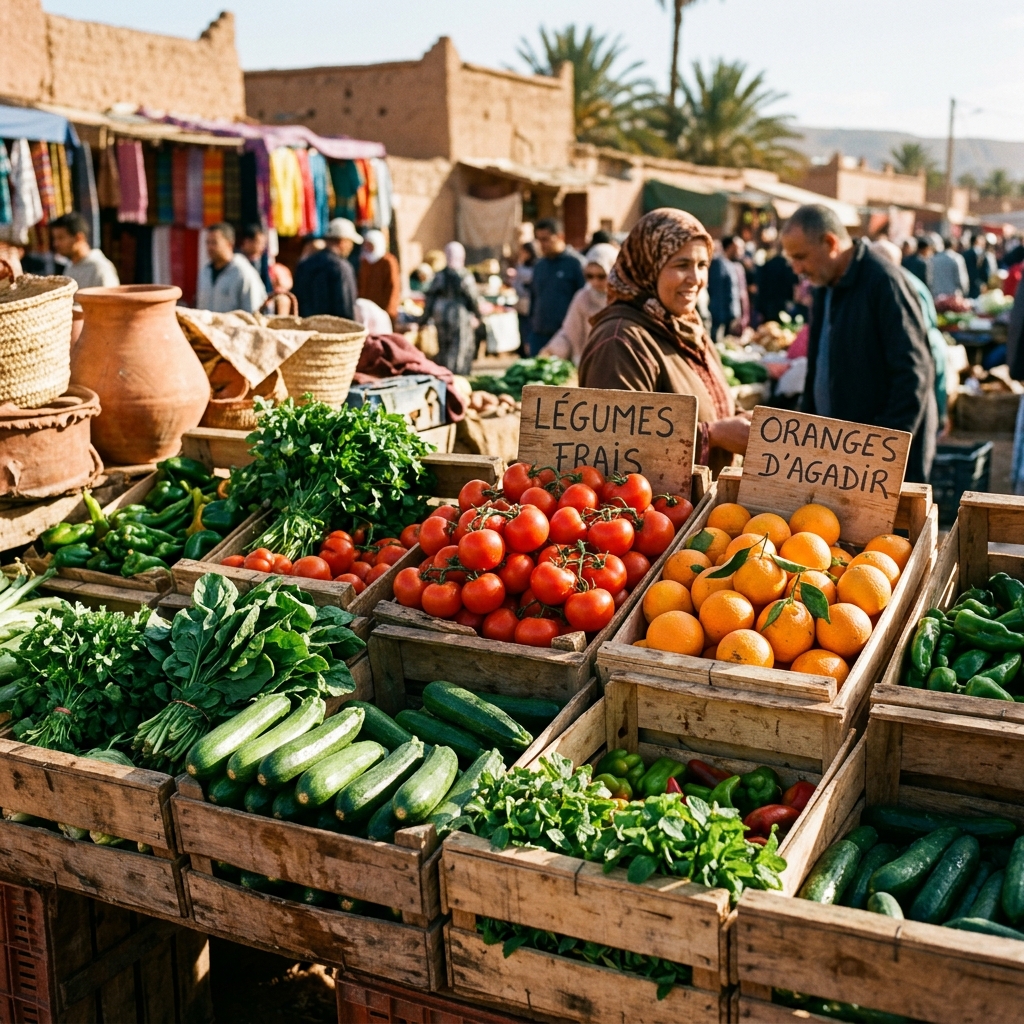
Walk into any leading supermarket or produce market in Paris, London, Berlin, or Madrid during the winter months, and you will notice an unmistakable pattern on the wooden fruit crates and fresh vegetable displays: ruby-red vine tomatoes, seedless sweet clementines, fresh strawberries, and dark zucchini proudly stamped with the origin label Produce of Morocco.
Over the past three decades, the Kingdom of Morocco has transformed its agricultural sector through monumental infrastructure investments, advanced drip irrigation engineering, and stringent international food-safety certifications. Today, Morocco stands as the leading non-European supplier of fresh fruits and vegetables to the European Union and the United Kingdom, exporting millions of tons of high-quality produce annually.
Understanding the territorial geography and economic engine behind Moroccan agricultural exports reveals how ancestral farming knowledge combined with modern agronomy to turn the Kingdom into the garden of the Mediterranean.
The Territorial Capitals of Moroccan Agriculture
Morocco’s export agricultural success is driven by distinct geographic regions, each enjoying specific climatic advantages:
1. The Souss-Massa Valley: The Vegetable Greenhouse of Europe
Anchored by the coastal city of Agadir, the fertile Souss-Massa plain enjoys over three hundred days of sunshine per year and mild winter maritime temperatures:
- Spanning tens of thousands of hectares of modern, computer-monitored greenhouses, the valley produces over eighty percent of Morocco’s export tomatoes (including cherry tomatoes, plum tomatoes, and round tomatoes), bell peppers, and early vegetables.
- Produce harvested in the Souss at dawn is loaded onto refrigerated logistics trailers, ferried across the Strait of Gibraltar via Tanger-Med port, and delivered to European distribution hubs in southern France or Spain within forty-eight to seventy-two hours.
2. Berkane and the Moulouya Valley: The Clementine Capital
In northeastern Morocco, the sun-drenched alluvial plains of Berkane are world-famous for producing the Berkane Clementine, a Protected Geographical Indication (PGI) citrus fruit celebrated across global markets:
- Known for its thin, bright orange peel, tender seedless segments, and intense natural sugar-to-acid ratio.
- Harvested from October through January, Berkane clementines dominate European winter fruit displays during the festive holiday season.
3. The Loukkos and Gharb Valleys: The Berry Boom
In northwestern Morocco around Larache and Ksar El Kebir, rich river soils and abundant Atlantic rainfall have fueled a massive export industry in soft fruits:
- Fresh strawberries, raspberries, and blueberries grown under protective polytunnels reach European consumers weeks before domestic European harvests begin, generating vital rural employment, particularly for women’s agricultural cooperatives.
Modern Hydraulic Engineering: Desalination and Drip Systems
The greatest challenge facing Moroccan agriculture is climate change and successive years of regional drought. To protect its export sector and conserve vital groundwater resources, Morocco has pioneered monumental water management projects:
- The Agadir Desalination Megaproject: Commissioned in 2022 near Chtouka Aït Baha, this monumental seawater reverse-osmosis desalination plant produces hundreds of thousands of cubic meters of fresh water daily, powered in part by renewable solar and wind energy. The plant supplies both potable drinking water for Greater Agadir and irrigation water for fifteen thousand hectares of high-value export farmland.
- Drip Irrigation (Goutte-à-Goutte): Under national agricultural strategies (Generation Green), farmers have converted over eighty percent of export acreage from wasteful flood irrigation to precision localized micro-drip systems, delivering exact water and nutrient volumes directly to plant root zones with minimal evaporative loss.
The Balance Between Export Markets and Domestic Food Security
The expansion of export agriculture is a subject of passionate domestic public discourse within Morocco. While exports generate billions of dollars in foreign exchange currency, sustain hundreds of thousands of rural agricultural jobs, and strengthen international trade partnerships:
- Domestic Market Balancing: Moroccan authorities actively monitor domestic vegetable market supplies, periodically adjusting export quotas for staple vegetables like onions and potatoes during peak domestic demand periods (such as the holy month of Ramadan) to ensure affordable produce for local Moroccan households.
- High Value-to-Water Ratios: Agricultural policies increasingly prioritize high-value crops (such as soft berries and specialty table vegetables) that generate substantial economic revenue per cubic meter of water consumed, while phasing out water-intensive low-value crops in arid zones.
Frequently Asked Questions
Are Moroccan agricultural exports certified for European organic and safety standards?
Yes. Moroccan export farms and packing facilities operate under rigorous international quality certifications, including GlobalG.A.P. BRC Global Standards, IFS Food, and European Organic Certification (Agriculture Biologique). Regular pesticide residue audits and strict sanitary inspections ensure full compliance with EU food-safety thresholds.
What is the primary route for Moroccan produce reaching European supermarkets?
Produce is transported in modern temperature-controlled refrigerated trucks (camions frigorifiques) that travel via Morocco’s high-speed expressway network to the world-class deepwater port of Tanger-Med. Roll-on/roll-off (Ro-Ro) cargo ferries cross the Strait of Gibraltar to Algeciras or Motril in Spain within ninety minutes, connecting directly into European motorway corridors.
Why do Moroccan tomatoes taste sweeter than greenhouse tomatoes grown in northern Europe?
Moroccan tomatoes ripen naturally under intense, year-round Mediterranean sunlight rather than under artificial electric grow lights in heated northern European glasshouses. Abundant natural ultraviolet solar radiation accelerates the development of natural fructose and volatile aromatic terpene compounds in the fruit flesh.
How does agriculture contribute to the Moroccan economy?
Agriculture remains a cornerstone of the Moroccan national economy, contributing approximately twelve to fourteen percent of national Gross Domestic Product (GDP) and employing roughly thirty to thirty-five percent of the country’s active labor force.
Experience the true heart of Moroccan heritage through its culinary traditions. Join us in preserving and honoring these ancestral recipes.
What People Are Saying
No comments yet. Be the first — we'd love to hear from you.
Houssam Elmrabet
Culturally Verified & Fact-CheckedHoussam Elmrabet is a Moroccan researcher in territorial marketing and cultural heritage preservation. His work documents regional gastronomic identities, local agricultural heritage, and how ancestral culinary traditions define authentic territorial branding across the Kingdom.