The Soul of Moroccan Food: A Culinary Journey Through 1,200 Years of Heritage
Walk into a Moroccan kitchen in the morning, and the first greeting is the steady simmer of onions melting into golden olive oil. The air carries the sharp bite of crushed ginger, the warm yellow comfort of ground turmeric, and the gentle musk of saffron steeping in warm water.
In Morocco, cooking is an act of memory. Recipes are rarely weighed with scales or written in books; they live in the hands, guided by the eye and the nose. Our culinary heritage was built over twelve centuries of empire, celebration, and migration. True Moroccan cooking rejects haste, demanding low heat, patience, and deep respect for the seasons.
A Twelve-Century Synthesis: Four Civilizations at One Table
Moroccan cuisine is the meeting point of four distinct traditions that shaped northwest Africa over twelve hundred years.
The Amazigh Foundation
The indigenous Amazigh people provided the true backbone of Moroccan gastronomy. Living between the rugged Atlas peaks and the pre-Sahara, they gave us the clay tagine: a cone-shaped cooking vessel built to braise tough mountain meats with minimal water. They pioneered durum wheat semolina, rolling couscous by hand, and cultivated the wild herbs of the hills. From them came aged butter (smen), sun-dried figs, and cold-pressed argan oil. Every fundamental cooking technique in Morocco begins with Amazigh ingenuity.
Arab Spices and Royal Feasts
In the late seventh and eighth centuries, Arab arrivals connected Morocco to Silk Road trade routes. They brought eastern culinary sophistication to the imperial courts of Fes and Marrakech: Persian saffron, Ceylon cinnamon, black pepper, and fragrant distilled rosewaters. The Arabs established our tradition of pairing savory braised meats with dried fruits, honey, and toasted almonds—a sweet and savory balance that still defines celebration banquets.
Andalusian Refinement
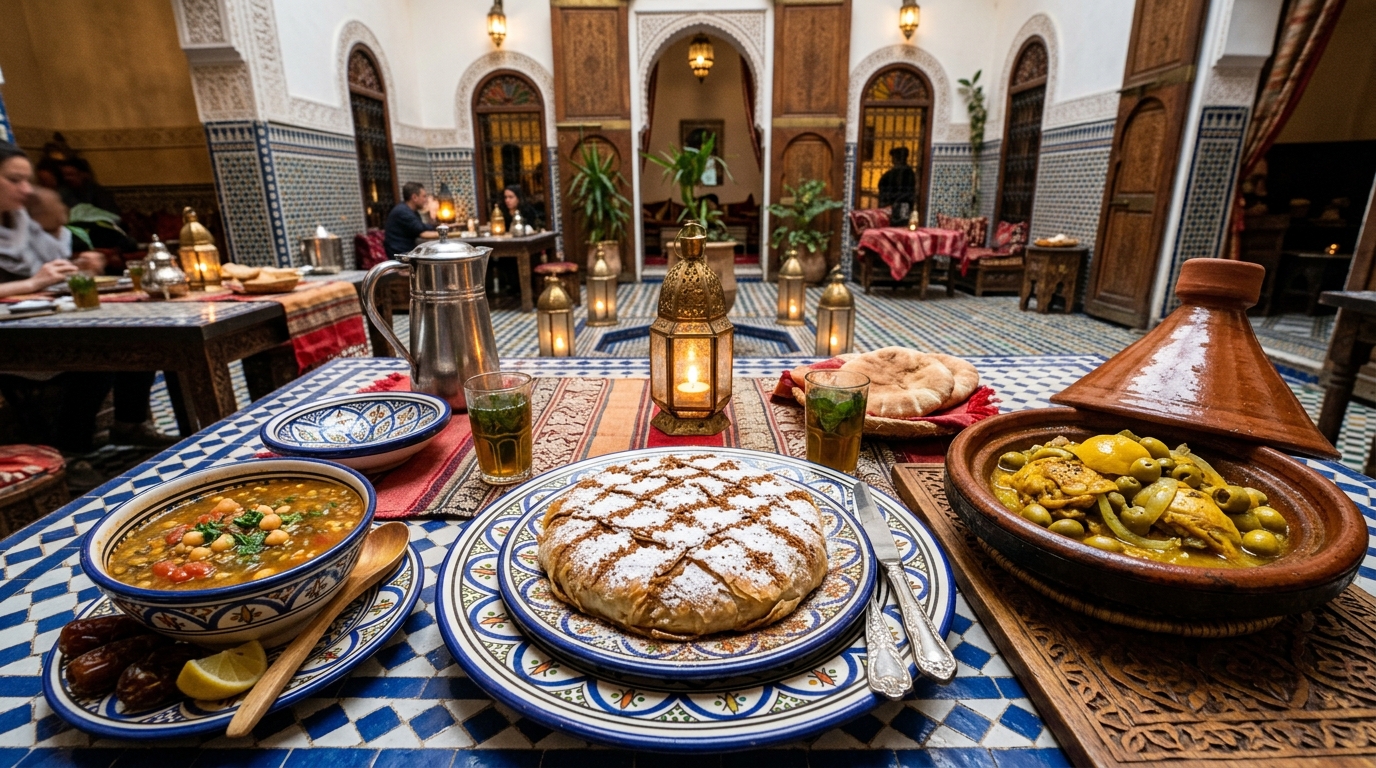
Following the fall of Granada in 1492, expelled Moors and Andalusian Jews settled in northern cities like Fes, Tetouan, and Rabat. They brought palace cooking techniques, including paper-thin warqa pastry dough, orange blossom water, and intricate almond pastries. This migration created pastilla, the celebrated pie layering spiced pigeon or chicken, eggs, and toasted almonds dusted with sugar and cinnamon.
The Moroccan Jewish Imprint
Moroccan Jewish communities lived alongside Muslim neighbors for generations, leaving an indelible culinary mark. They perfected the art of preserving whole lemons in salt and juice (lhamd mssayer), creating a salty, sour flavor base used in poultry and fish dishes. They also introduced slow-cooked Sabbath stews (sakhina or dafina), which simmer overnight over glowing coals.
The Holy Trinity: The Chemistry of Moroccan Spices
Foreign visitors often mistake Moroccan seasoning for spicy heat. Moroccan food is aromatic, not fiery. Hot chili paste (harissa) is merely an optional table side. Everyday seasoning rests on what grandmothers call the holy trinity:
- Skinjbir (Ground Ginger): The primary spice for chicken, rabbit, and light broths. Moroccan ginger is pale, sharp, and clean. It cuts through the fat of poultry and warms the palate without burning.
- Kharkoum (Ground Turmeric): Provides an earthy baseline and bright golden color. Traditional cooks use pure ground rhizome rather than artificial yellow powders.
- Kamoun (Cumin): Peppery, intense, and deeply aromatic. Moroccan cooks observe a strict rule: cumin is never used in traditional chicken dishes. It is reserved exclusively for beef, lamb, pulses like lentils and split peas, and cooked salads like zaalouk.
Supporting these three are sweet paprika (tahmira), true cinnamon bark (qarfa), and red saffron threads (zaafran horr) from Taliouine. Saffron is always toasted gently on the pot lid, crushed between dry palms, and bloomed in warm water before entering the sauce.
The Clay Tagine: Pre-Industrial Hydrology
A traditional tagine is not decorative tableware; it is a brilliant piece of pre-industrial engineering. Made from unglazed, low-fired clay, the vessel consists of a broad, shallow base and a conical lid.
As charcoal embers (majmar) warm the base, steam rises from meat and vegetables. When the hot vapor hits the cooler upper walls of the cone, it condenses and trickles back down into the food. This creates a closed hydrologic cycle where the stew continuously self-bastes.
Because moisture cannot escape, an authentic tagine requires almost no added water. The sauce forms naturally from the sweat of grated onions and meat juices. In a clay tagine, connective tissues melt down slowly without scorching, producing tender meat and a thick, concentrated sauce that metal cookware cannot match.
Sweet Meets Savory: The Art of Balance
While many global cuisines keep savory meals strictly separate from sweet desserts, Moroccan cooking thrives on their combination.
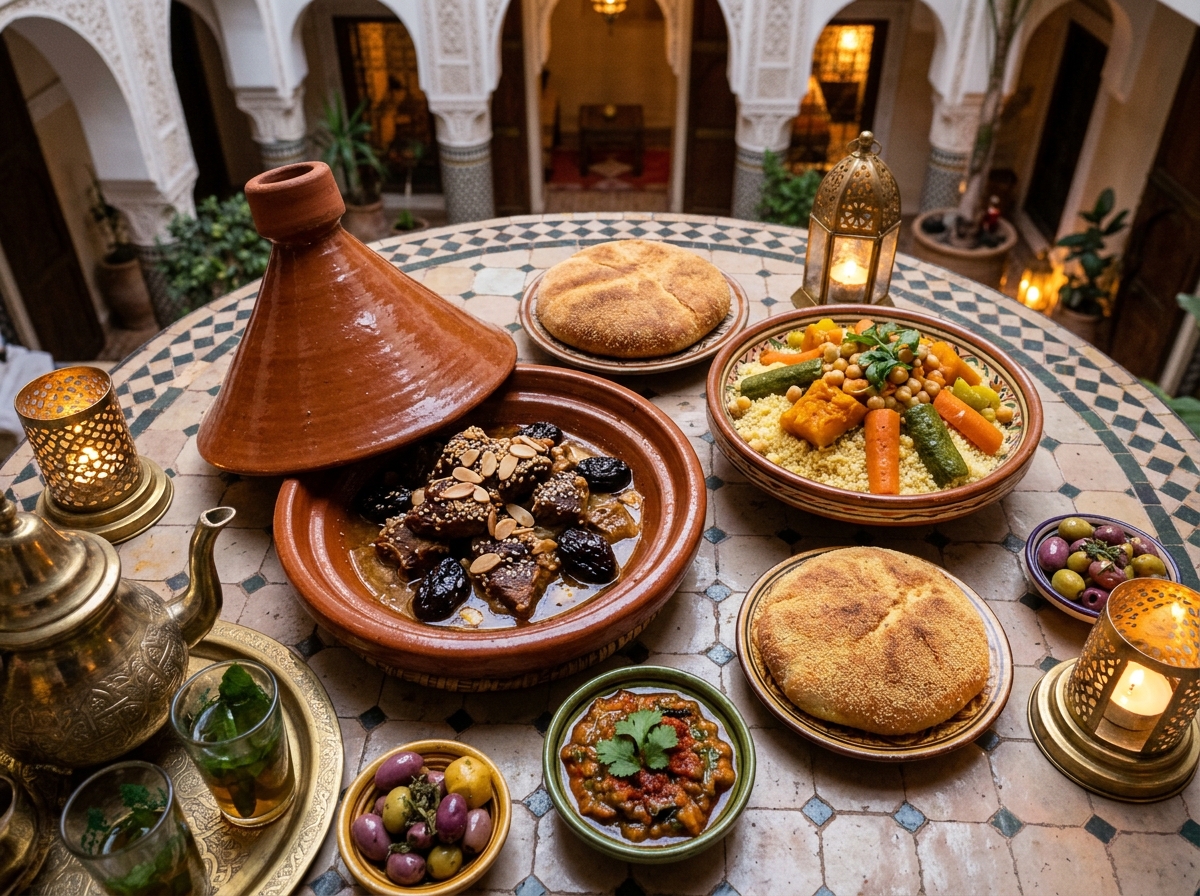
In Tajine Lham bil Barqouq, beef shank braises with ginger, onions, and saffron until meltingly soft. Alongside it, dried prunes simmer in honey, cinnamon, and a ladle of the meat broth until plump and glossy. The prunes are placed over the savory beef and finished with toasted sesame seeds and fried almonds. The interplay between honeyed fruit and savory meat is satisfying, rich, and balanced.
The Friday Ritual: Hand-Rolled Couscous
In Morocco, couscous is never dumped from a cardboard box into boiling water. Real couscous is a weekly family ritual prepared every Friday after midday prayers (Jumu’ah).
The cook begins with coarse durum semolina in a wide earthenware bowl called a gasaa. Sprinkling salted water with one hand, she works the semolina in sweeping circular motions, rolling the tiny pellets until uniform. The grains steam three consecutive times in a perforated pot (kesskass) over a rich broth of seven vegetables: pumpkin, turnip, zucchini, carrots, cabbage, chickpeas, and hot peppers.
Between steamings, the hot semolina is turned back into the gasaa, broken apart by hand, and rubbed with olive oil or aged smen. The finished grains are light, separate, and tender. The entire family gathers around the central platter, eating together using bread or rolling small balls of semolina with the right hand.
Grandmother Rules for Authentic Seasoning
To capture the true taste of a traditional Moroccan home, follow these essential principles:
- Build the Onion Bed (Deghmira): Always place a thick layer of grated yellow onions beneath your meat. The onions release water to prevent sticking, then slowly break down into a luscious, sweet sauce.
- Never Drown the Pot: Resist the urge to add pints of water. A tagine is a slow braise, not a soup. A quarter glass of warm water to dissolve the spices is all you need.
- Respect Garlic Boundaries: Garlic is an accent, not the main event. One or two crushed cloves are plenty for an entire dish. Too much garlic masks the delicate saffron and ginger.
- Use Smen Sparingly: Aged salted butter (smen) adds an earthy, cheese-like tang. Half a teaspoon transforms a pot of couscous or lentils; more than that will overwhelm the dish.
- Simmer Until the Oil Separates: A sauce is ready only when excess water has evaporated and clear, fragrant olive oil beads along the edges of the onion gravy.
Frequently Asked Questions
What makes Moroccan food distinct from other North African cuisines?
Moroccan cuisine emphasizes a delicate balance of warm spices like ginger, turmeric, and saffron paired with dried fruits, nuts, and preserved lemons. Unlike Tunisian cooking, which relies heavily on spicy harissa, Moroccan dishes focus on slow earthenware braising, low heat, and complex sweet-and-savory layers.
Can I cook a traditional tagine in a Dutch oven or standard pot?
Yes. A heavy cast-iron Dutch oven with a tight lid mimics the steady heat and steam retention of a clay tagine. Use very low heat and keep added liquids to a minimum so the vegetables and meat braise in their own juices.
Why is couscous traditionally eaten on Fridays?
Friday is the sacred day of communal gathering in Morocco. Because making authentic hand-rolled couscous takes several hours of steaming and resting, it became the centerpiece meal when extended families return home together from the mosque.
What are the most important spices to keep in a beginner Moroccan pantry?
Start with five essential spices: unbleached ground ginger (skinjbir), ground turmeric (kharkoum), whole cumin seeds to grind as needed (kamoun), sweet paprika (tahmira), and ground Ceylon cinnamon (qarfa). Add a small jar of whole saffron threads for celebratory dishes.
Experience the true heart of Moroccan heritage through its culinary traditions. Join us in preserving and honoring these ancestral recipes.
What People Are Saying
No comments yet. Be the first — we'd love to hear from you.
The Moroccan Food
Culturally Verified & Fact-CheckedThe Moroccan Food editorial team brings together native culinary researchers, heritage preservationists, and experienced home cooks across Marrakech, Fes, and Casablanca. Every recipe and cultural guide is reviewed against ancestral oral traditions and authentic regional practices.