Kefta: The Moroccan Spiced Ground Meat That Rewards the Correct Spice Quantities
Kefta: What Happens When You Put the Correct Amount of Spice in Ground Meat
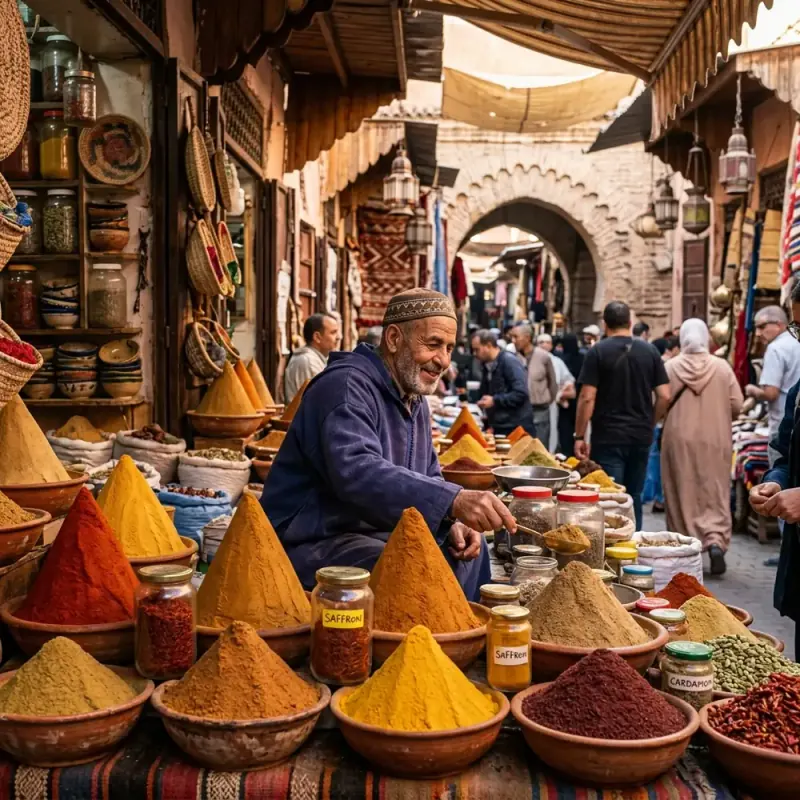
I have a specific memory of eating kefta from a charcoal grill in the Djemaa el-Fna at approximately midnight during a long summer visit to Marrakech, age twenty-two, standing at the grill because there was nowhere to sit, the smoke from the charcoal horizontal in the wind, the kefta arriving on a metal skewer still crackling from the heat. It was not subtle. It was cumin and paprika and fresh coriander and onion, present and assertive, the fat from the lamb rendering into the charcoal and flaming briefly each time the skewer turned, the exterior char providing a slight bitterness that contrasted with the spiced, juicy interior.
I have since made kefta many times in my kitchen, on a stovetop grill pan and in tagines and formed into patties for a pan, and none of it is quite that midnight Djemaa el-Fna kefta. Part of this is the charcoal — the specific flavor that charcoal combustion adds to grilled meat is real and not replicable on gas or electric. Part of this is the twenty-two-year-old appetite, which was genuinely more effective than the current model. But a significant part of the difference between forgettable kefta and memorable kefta is the spicing, and the spicing is something that can be controlled.
What Goes Into the Kefta Mixture and In What Proportions?
For 500 grams of ground lamb (or beef, or a mixture — the traditional kefta uses lamb for its fat content and flavor, but beef works, and the mixture is common): onion, grated rather than minced so that it incorporates into the meat without leaving texture; fresh flat-leaf parsley and fresh coriander, both finely chopped, in roughly equal proportions; cumin, paprika, salt, black pepper, cinnamon, dried chili flakes if you want heat.
The quantities that matter: one full teaspoon of cumin. One full teaspoon of sweet paprika. Half a teaspoon of hot paprika. Half a teaspoon of cinnamon. A full teaspoon of salt for 500 grams — this sounds like a lot and it is calibrated for the fact that kefta's seasoning is partially lost to the cooking surface, so the raw mixture should taste more experienced than you think it should.
The grated onion: half a medium onion, grated, the excess moisture squeezed out with your hands before incorporating. The moisture from the onion, if not partially removed, makes the kefta mixture too wet to hold its shape on a skewer and produces a steamed rather than grilled result.
The herbs: two tablespoons each of parsley and coriander, finely chopped, which is more than most recipes indicate and which is correct. The herbs are not a garnish in the mixture — they are a flavor component with the same weight as the dry spices.
Mix everything thoroughly — hands, not a spoon, because hands distribute more evenly and feel the texture of the mixture. The correctly mixed kefta should be cohesive enough to form a cylinder around a flat metal skewer and hold its shape without cracking or falling off when handled.
What Are the Different Kefta Preparations and When Does Each Appear?
Kefta mchewwer (grilled kefta): the street preparation, the bbq preparation, the one that requires charcoal to be at its best. Formed on flat metal skewers in cylinders approximately 15 centimeters long, grilled over live charcoal four to five minutes per side. This is the version that the Djemaa el-Fna stalls have been selling at midnight for generations.
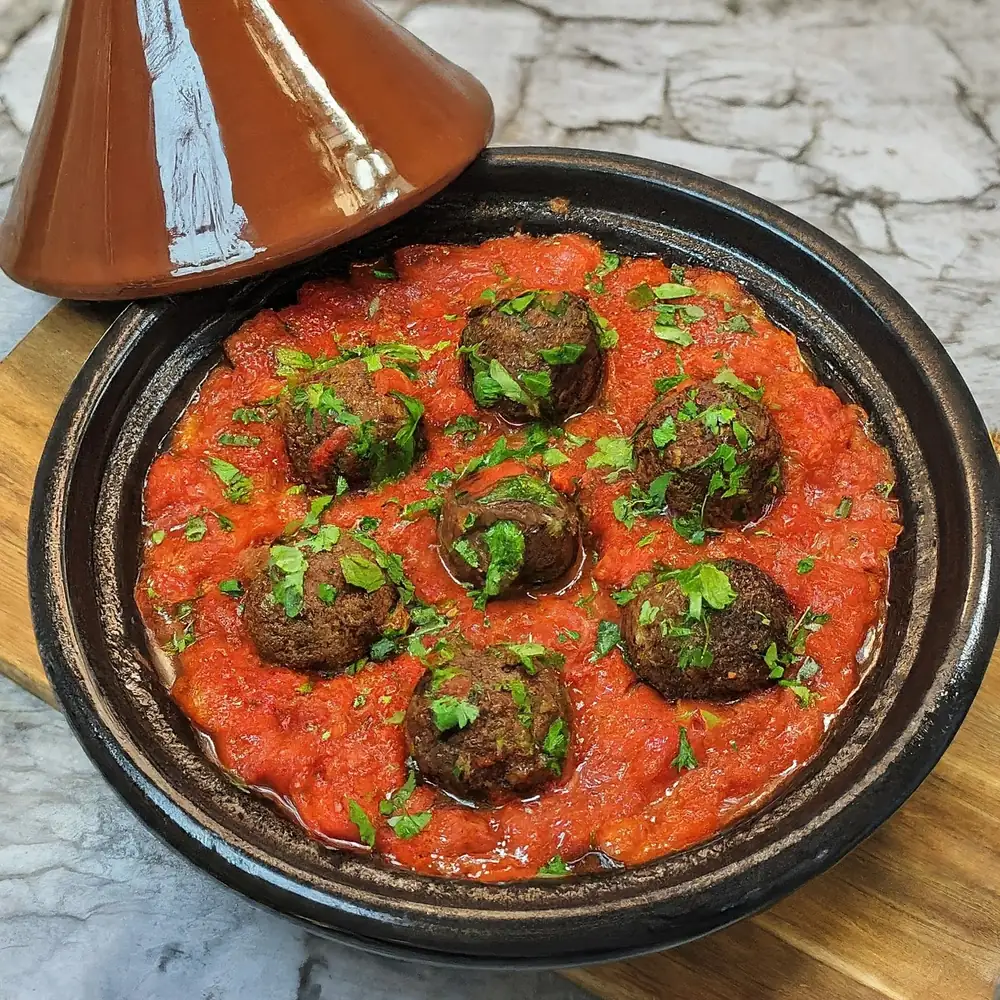
Kefta in tagine with tomato and eggs (kefta mkaouara): perhaps the most widely made kefta preparation at home. Small kefta balls — shaped between the palms into spheres the size of a large marble — are placed in a tagine with a tomato sauce made from grated tomatoes, olive oil, garlic, cumin, paprika, salt, and a small amount of coriander. The tagine is covered and cooked over medium-low heat for twenty minutes until the kefta are cooked through and the tomato sauce is concentrated. Then eggs are broken directly into the tagine — one or two per person — covered again, and cooked until the whites are just set but the yolks are still soft. This is the kefta tagine, and it is the best possible breakfast when eaten immediately from the tagine with bread, the egg yolk breaking into the tomato-kefta sauce.
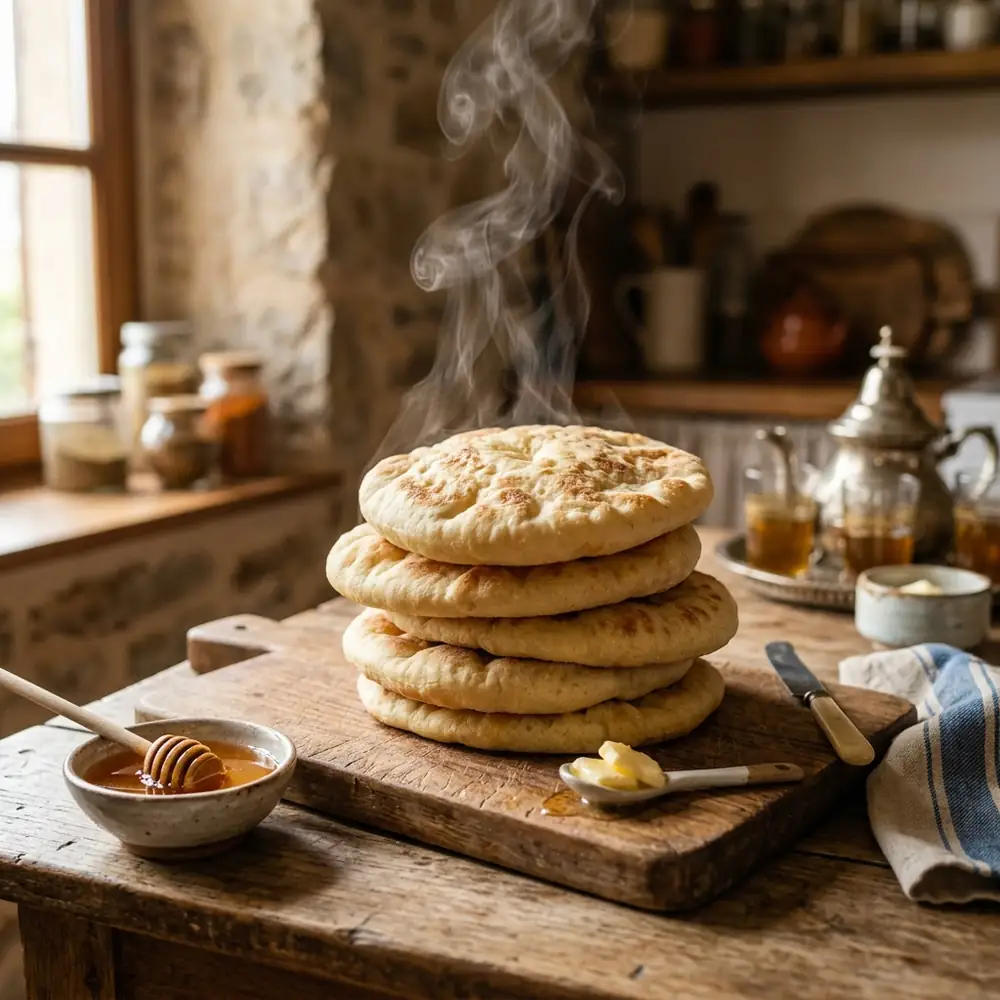
Kefta in flatbread (at the street level): a whole msemen or khobz opened and filled with freshly grilled kefta, harissa, and fresh tomato slice. The fat from the kefta soaks into the bread. This is the correct way to eat kefta at eleven in the evening from a street stall and there is nothing wrong with it.
Why Does Charcoal Make Such a Difference?
The difference between charcoal-grilled kefta and gas or pan-grilled kefta is not primarily the smoke flavor, as people typically say — though smoke is part of it. It is the heat profile. Charcoal produces intense radiant heat that sears the kefta surface rapidly while allowing the interior to cook more slowly, producing a specific texture gradient — a slightly crisp exterior, a juicy interior — that is difficult to achieve in a pan, which conducts heat through contact and tends to steam the meat in its own fat rather than searing it.
The fat that renders from the kefta during charcoal grilling falls onto the coals, ignites briefly, and the resulting flame touches the kefta for a moment, adding the slight char that is part of the flavor profile. This cannot happen in a pan. It can happen on a gas grill with the burners turned to high, but the flash-fire quality of it is different from charcoal combustion. The difference is real and is the reason that the best kefta you will ever eat is from a charcoal grill and not from your kitchen.
The Invisible Invitation
It is nine in the evening in the Djemaa el-Fna. The smoke from the charcoal grills is visible at head height across the square, moving in the direction the breeze is coming from tonight, which is northwest. Find a stall — any stall, because the quality variation between the stalls is smaller than the navigation effort — and order kefta. It arrives on a plate with bread and a small bowl of cumin and salt for dipping and a tomato and onion salad. The kefta is still crackling. Eat it with the bread, tearing pieces and wrapping them around pieces of kefta with the cumin and salt. The noise of the square, the smoke, the heat, the spice — it is an overwhelming combination in a way that makes it completely correct. The kefta at midnight in the Djemaa el-Fna is a specific experience. You cannot replicate it in a kitchen. You can come close enough that it is worth trying, and you can come here once to understand what you are trying to approach.
SEO Meta Description: How to make Moroccan kefta? The correct spice quantities, grated onion technique, charcoal vs pan grilling difference, kefta tagine with eggs preparation, and the Djemaa el-Fna midnight experience.
Experience the true heart of Moroccan heritage through its culinary traditions. Join us in preserving and honoring these ancestral recipes.
What People Are Saying
No comments yet. Be the first — we'd love to hear from you.
Khadija Tahiri
Culturally Verified & Fact-CheckedThe Moroccan Food editorial team brings together native culinary researchers, heritage preservationists, and experienced home cooks across Marrakech, Fes, and Casablanca. Every recipe and cultural guide is reviewed against ancestral oral traditions and authentic regional practices.