Loubia: The Moroccan White Bean Stew That Is Never Just Beans
Loubia: What White Beans Become When Moroccan Cooking Is Applied to Them
The white bean is not a glamorous ingredient. In most culinary traditions where it appears, it functions as background — the neutral, starchy presence that absorbs whatever is cooked around it and provides body and protein without asserting much of its own character. Moroccan cooking disagrees with this assessment and produces loubia — a white bean stew that is specific and assertive and that in its best form makes the bean itself taste like it has opinions.
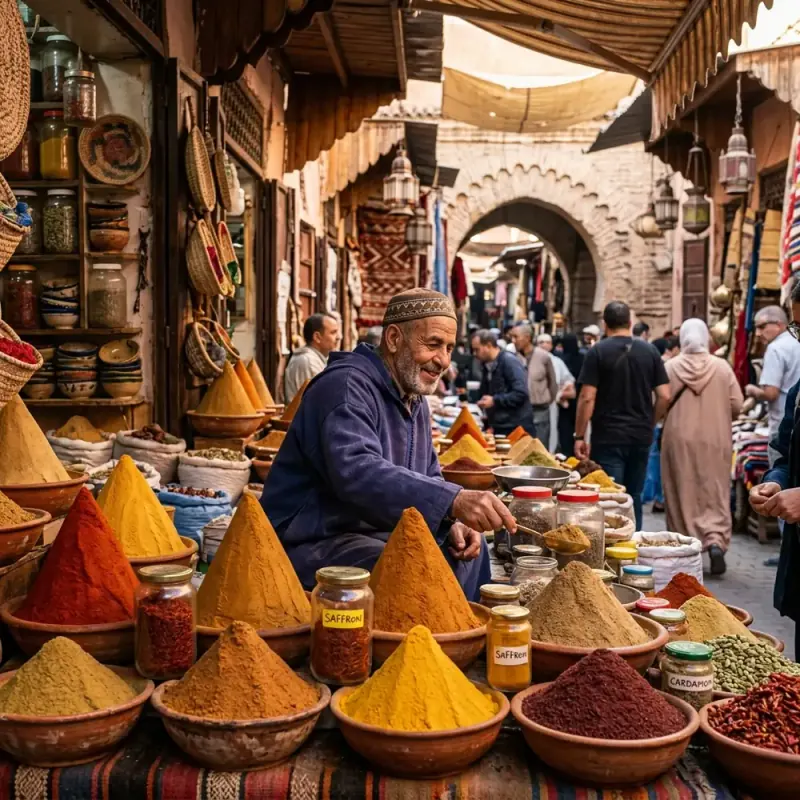
I am aware that saying a bean stew has opinions is not a precise culinary description. What I mean is this: a bowl of loubia, correctly made, has a flavor profile that is immediately identifiable as Moroccan — the cumin-paprika-tomato combination is specific, the preserved lemon rind adds a dimension that nothing else provides, the olive oil gives it a richness — and the beans are the vehicle for this flavor rather than the flavor itself. They absorb the spiced sauce and carry it through every bite. They are the best possible bean for this purpose precisely because of their neutrality. The cuisine has found the correct use for the ingredient.
What Goes Into Loubia and What Is the Foundation Step?
The foundation of loubia is the tomato-spice base, and it needs to be built correctly before the beans go anywhere near it.
Olive oil — enough to coat the bottom of the pot generously, three or four tablespoons — goes in with sliced onion over medium heat. The onion cooks until fully soft and translucent, approximately eight minutes. Garlic — four cloves, sliced — goes in for two minutes. Then the dry spices: one full teaspoon of cumin, one teaspoon of sweet paprika, half a teaspoon of hot paprika if you want heat, half a teaspoon of turmeric. The spices go directly into the hot oil with the onion and garlic, not into liquid — this blooms them, releasing their volatile compounds in fat rather than water, producing a depth that water-dispersed spice never achieves. Thirty seconds of constant stirring at medium heat, then tomatoes.
The tomatoes can be fresh and grated — the best in-season option — or tinned, crushed with your hand before going in. The amount should be generous: three large fresh tomatoes or one 400-gram tin, which produces a sauce that is genuinely tomato-forward rather than tomato-flavored. This tomato base reduces for fifteen to twenty minutes over medium heat until thick and concentrated, almost jammy. This reduction step is not negotiable — the flavor of the finished stew depends on having cooked the tomato down to a dense, sweet concentrate before any liquid is added.
When Do the Beans Go In and What Are the Options?
The beans — white beans, either haricot blanc or cannellini, both work — can be dried-and-soaked (best flavor, requires planning ahead) or tinned (faster, acceptable quality). If using dried, they need to have been soaked overnight and then cooked separately in water until almost fully tender before meeting the tomato base — the acid in tomatoes prevents dried beans from softening properly, so they must be nearly cooked before they go into an acid environment.
Tinned beans go directly into the tomato base along with water or light stock and the preserved lemon — a quarter of a preserved lemon, rind only, the pulp rinsed out, the rind cut into thin strips. The preserved lemon rind is not optional. Its contribution — fermented citrus salt, a dimension entirely different from fresh lemon — is specific to what loubia is. Fresh lemon squeezed at the end is an additional acid note, fine, but it does not replace preserved lemon in the cooking.
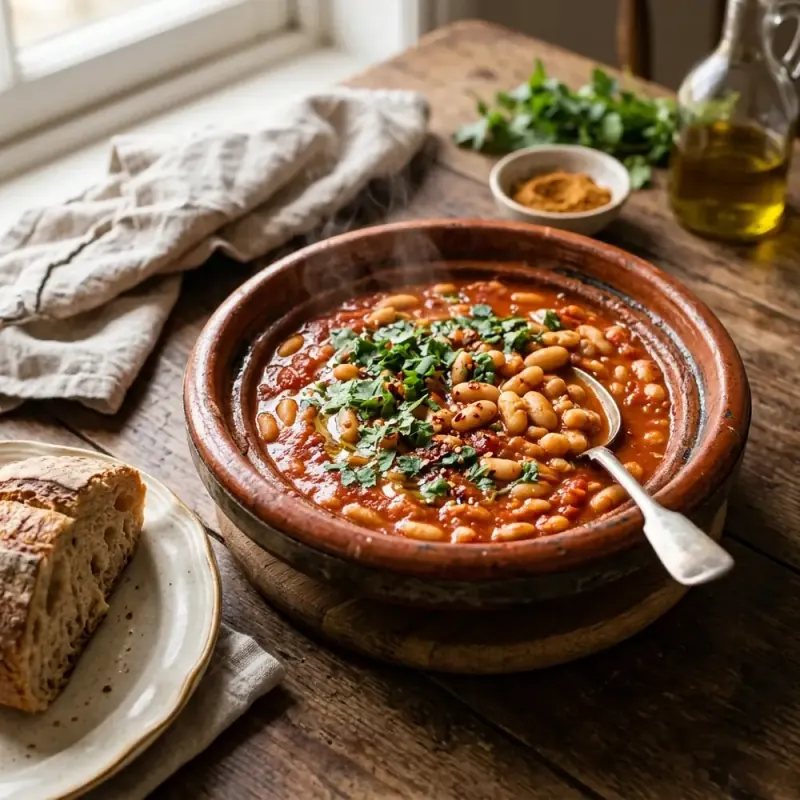
The stew simmers — covered, at low heat — for twenty to thirty minutes until the beans have fully absorbed the tomato sauce and the sauce has thickened around them to the point where a spoon drawn through the stew leaves a clear trail for a moment before the beans close in behind it. This is the consistency you are looking for: saucy enough to eat with bread, thick enough that it is a stew rather than a soup.
If you want to add meat — lamb on the bone, beef chuck, merguez sausage sliced into rounds — the meat goes in after the tomato base has reduced and before the beans and water are added, browned first in the spiced oil to develop surface color, then covered with water and simmered until nearly tender before the beans join it.
What Is Loubia Served With and When Is It Eaten?
Loubia is a weekday lunch dish in most Moroccan households — the kind of thing that is prepared in the morning, simmered slowly, and serves the family at noon. It is not a dinner party dish, not a celebration dish, not something you find at formal Moroccan meals. It is the food that sustains the household through the working week, and its quality depends entirely on the care taken with the foundation steps rather than on expensive ingredients.
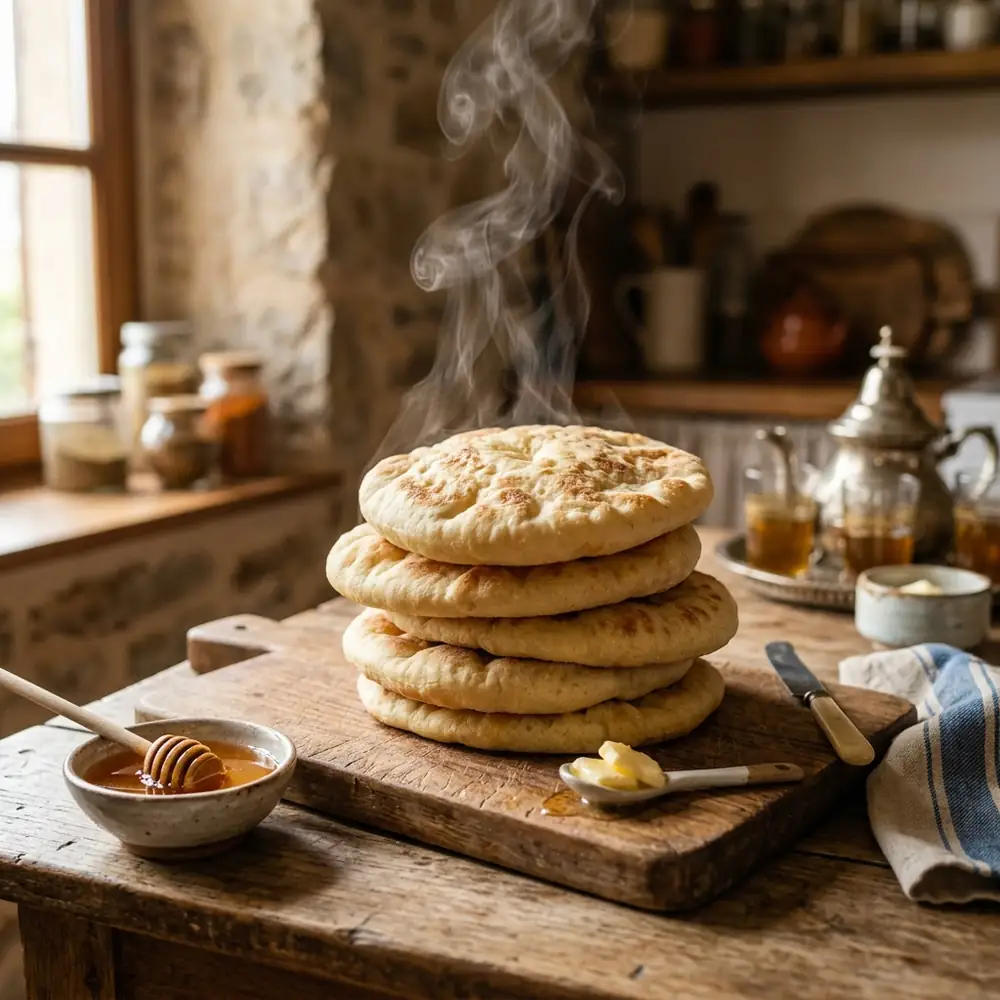
It is eaten with bread — khobz, torn and used to scoop the beans directly from a shared bowl or from individual portions. A second bowl of whole olives and perhaps a raw carrot salad alongside. A glass of buttermilk (lben) or water. This is lunch in most of the Moroccan households I know best, three or four days a week, and it has been for as long as I can remember and presumably longer.
The leftover loubia on the second day — reheated with a little additional water to loosen it — is arguably better than on the first day. The beans have continued absorbing the spiced tomato overnight and the flavor has integrated further. I always make more than I need for the first day specifically to have this second-day version, which I prefer, and I am not embarrassed about this.
The Invisible Invitation
The pot is on the stove from ten o'clock and the smell of the cumin-paprika-tomato base has been present in the kitchen since then, which is one of the smells that means Wednesday or Thursday at home rather than Friday's couscous or Sunday's tagine. Noon is when lunch happens. The bread is on the table. The loubia arrives in a ceramic bowl, the beans visible in their thick sauce, the preserved lemon rind strips across the top. Eat it with the bread, the bread doing the work that a spoon would do elsewhere. The beans are what they are. The sauce is the point. The bread carries both.
SEO Meta Description: How to make Moroccan loubia white bean stew? The cumin-paprika tomato base technique, preserved lemon's role, dried vs tinned beans, and why the second day is better.
Experience the true heart of Moroccan heritage through its culinary traditions. Join us in preserving and honoring these ancestral recipes.
What People Are Saying
No comments yet. Be the first — we'd love to hear from you.
Khadija Tahiri
Culturally Verified & Fact-CheckedThe Moroccan Food editorial team brings together native culinary researchers, heritage preservationists, and experienced home cooks across Marrakech, Fes, and Casablanca. Every recipe and cultural guide is reviewed against ancestral oral traditions and authentic regional practices.