Finally! The 100% Moroccan Nutritional Table: What’s Really Inside Harira, Couscous, and Tagine
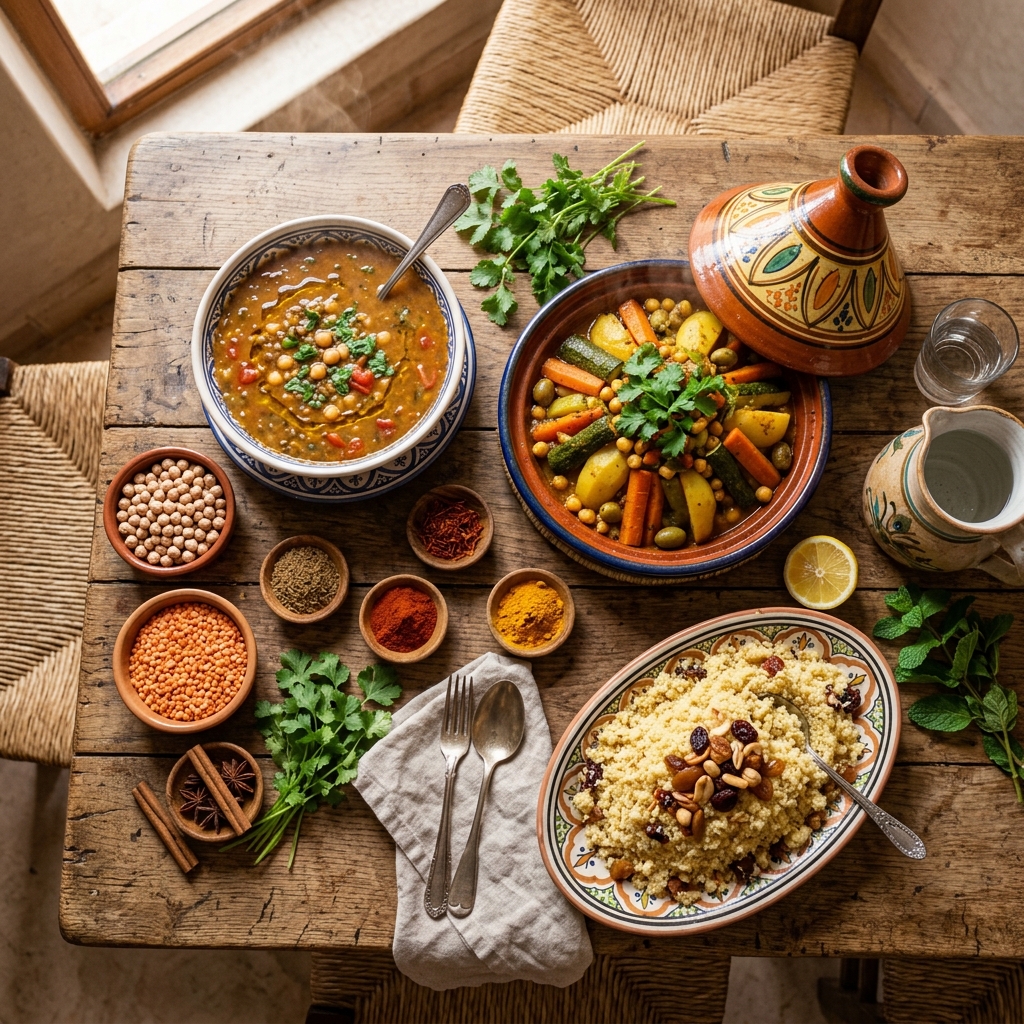
Let’s be completely honest for a second. When we sit down for a massive family Friday couscous, nobody is secretly counting calories. We eat it because it’s tradition, it’s comforting, and it just feels like home.
But recently, a friend asked me if Moroccan food is actually healthy. That got me thinking. We use a ton of olive oil, we eat bread with practically everything, and our sweets drip with honey. So, what’s the real nutritional breakdown of our everyday classics?
I did some digging, talked to a few nutritionists, and mapped out a 100% Moroccan nutritional table. The results might actually surprise you.
Harira: The Ultimate Superfood Soup
I always knew Harira was filling, especially during Ramadan, but I never realized it’s basically a nutritional powerhouse in a bowl.
Think about what goes into it: lentils, chickpeas, fresh celery, parsley, cilantro, and tomatoes. A standard bowl gives you a massive hit of plant-based protein and dietary fiber. It’s incredibly good for your digestion and heart.
The only catch? The tadouira. That’s the flour-and-water mixture our moms use to thicken the soup. It adds a quick burst of simple carbs. If you want a lighter version, some people are now thickening their Harira with grated vegetables or a tiny bit of oats instead. But honestly, a classic bowl of Harira is one of the healthiest things you can eat.
The Chicken and Olive Tagine
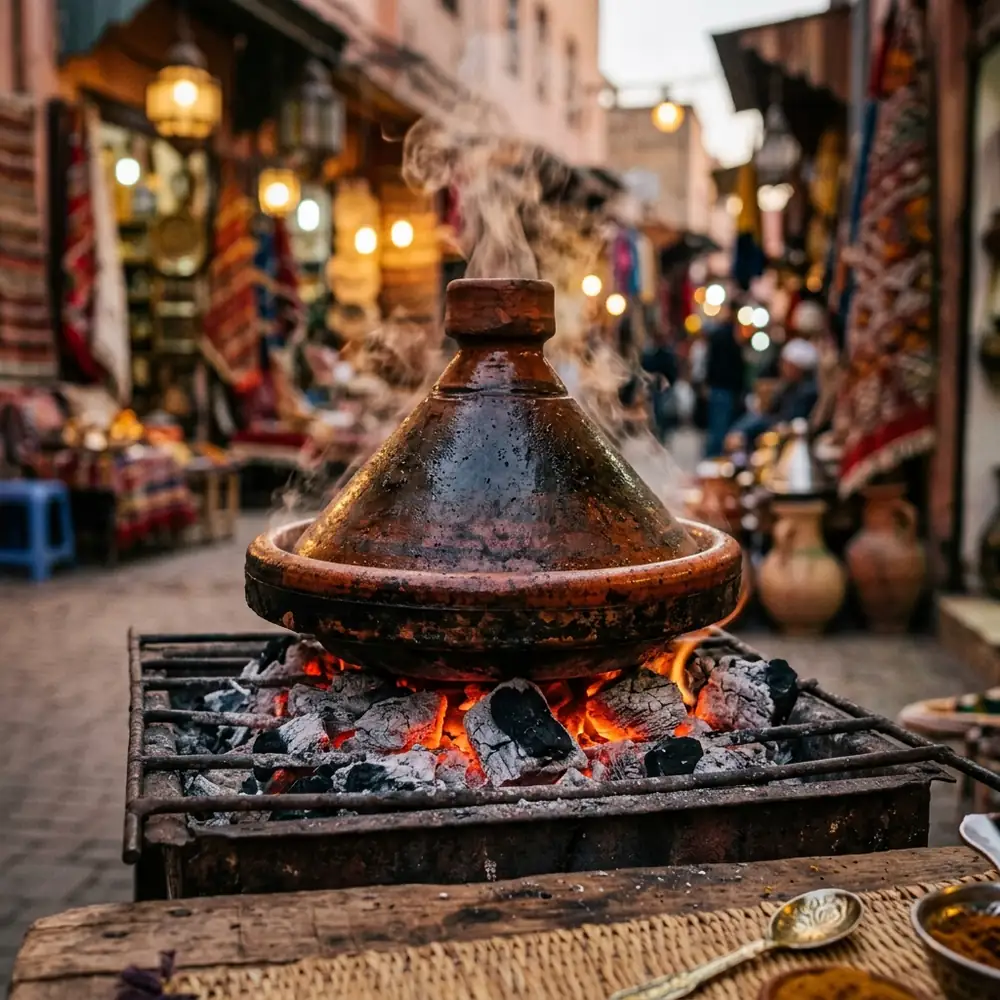
This is our midweek savior. You grab some chicken, throw in preserved lemons, a handful of olives, and let it simmer.
From a nutritional standpoint, this dish is fantastic. Chicken is a great source of lean protein. The olives? They bring in healthy monounsaturated fats. And let’s not forget the spices—turmeric and ginger are famous worldwide for fighting inflammation.
Where do we get into trouble with tagine? It’s never the tagine itself. It’s the bread. The sauce is so good that we end up eating half a loaf of Khobz just mopping it up. If you can control the bread dipping (which I admit is the hardest part), a chicken tagine is a completely balanced, low-carb meal.
The Legendary Friday Couscous
Ah, the king of the table. Couscous gets a bad reputation in the diet world because it’s a massive pile of semolina wheat. Yes, semolina is carb-heavy.
But look at everything else on that plate! A traditional seven-vegetable couscous is loaded with pumpkin, carrots, turnips, cabbage, zucchini, and chickpeas. You are getting vitamins A and C, potassium, and almost your entire daily requirement of vegetables in one sitting.
Plus, we pour that savory broth over the top, which is essentially bone broth packed with collagen and minerals. The trick with couscous is portion control on the semolina and going absolutely crazy on the vegetables and broth.
The Verdict
So, is Moroccan food healthy? Absolutely. Our traditional diet is heavily plant-based, rich in legumes, relies on olive oil instead of butter, and uses spices instead of heavy creams for flavor.
Next time someone tells you our food is too heavy, just remind them about the anti-inflammatory turmeric in their tagine or the fiber in their Harira. Eat with joy, share the plate, and maybe just keep an eye on how much bread you dip!
Experience the true heart of Moroccan heritage through its culinary traditions. Join us in preserving and honoring these ancestral recipes.
What People Are Saying
No comments yet. Be the first — we'd love to hear from you.
Diafa Editor
Culturally Verified & Fact-CheckedThe Moroccan Food editorial team brings together native culinary researchers, heritage preservationists, and experienced home cooks across Marrakech, Fes, and Casablanca. Every recipe and cultural guide is reviewed against ancestral oral traditions and authentic regional practices.