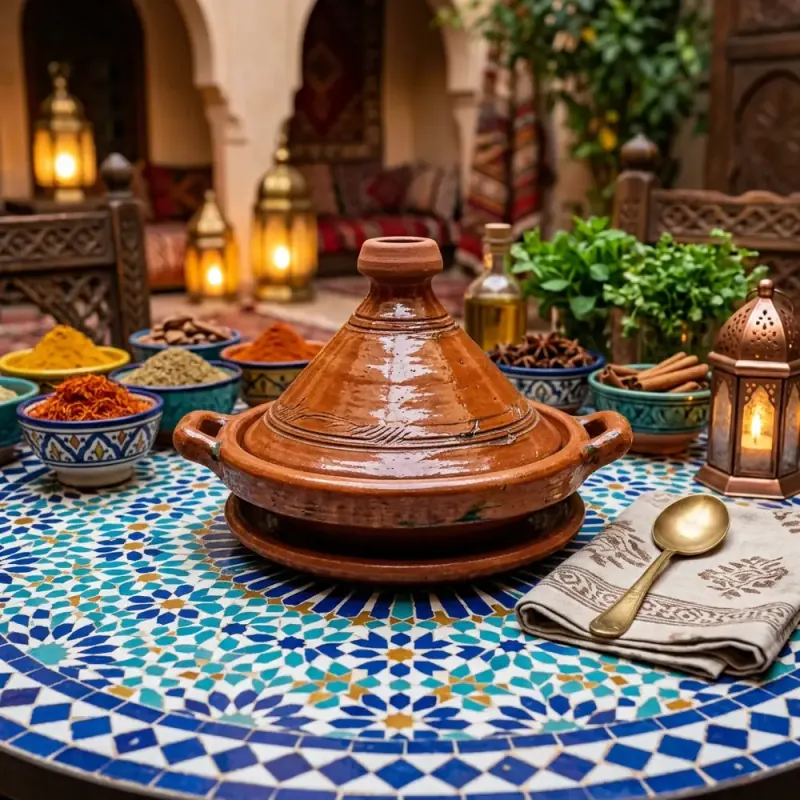
Pastilla (B'stilla): The Andalusian Pigeon Pie That Mastered the Balance of Sweet and Savory
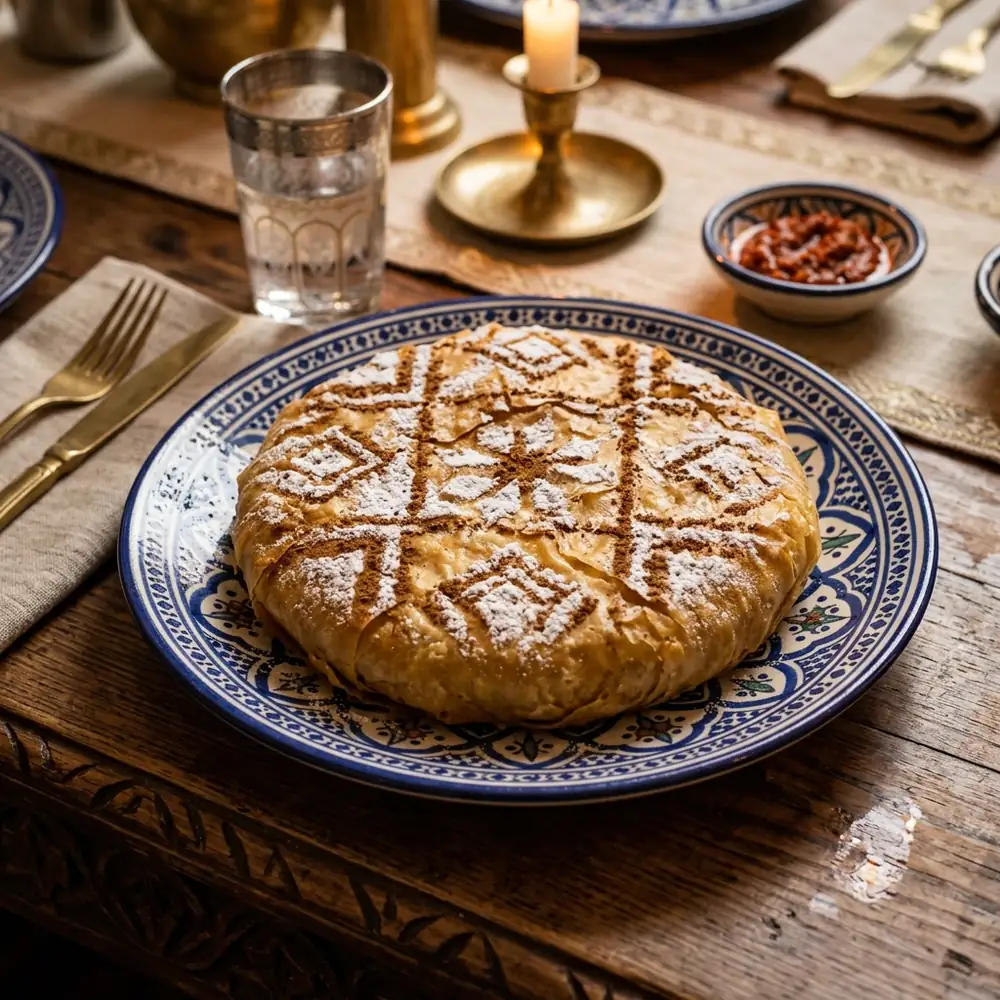
Pastilla: The Architecture of the Moroccan Royal Pie
If a Moroccan family invites you to a wedding, a major celebration, or an important dinner, the centerpiece of the feast will almost certainly be the Pastilla (often spelled B’stilla). It is the undisputed great piece of Fassi (from Fes) and royal Moroccan cuisine.
To a palate unaccustomed to North African flavor profiles, the concept of the Pastilla can sound deeply contradictory: a meat pie, heavily spiced, encased in crackling pastry, and completely covered in powdered sugar and cinnamon. But when executed correctly, it is a revelation. The Pastilla does not clash; it orchestrates. It manages the tension between savory and sweet, soft and crunchy, earthy and aromatic, with a sophistication that rivals the most complex French haute cuisine.
The Andalusian Origins
The origins of the Pastilla are heavily debated, but the consensus points to Al-Andalus (Islamic Spain). When the Moors and Sephardic Jews were expelled from Spain in the late 15th century, they fled across the Strait of Gibraltar to cities like Fes and Tetouan. They brought with them an aristocratic culinary tradition that prized the mingling of sweet fruits, nuts, and savory meats, heavily perfumed with expensive spices like saffron and cinnamon. The Pastilla is the direct descendant of this Andalusian palace cooking, preserved and refined in the kitchens of the Moroccan imperial cities.
The Three Layers of Architecture
A traditional Fassi Pastilla is built in three distinct layers, requiring days of preparation and an expert hand.
1. The Meat Layer (The Savory Base): Traditionally, Pastilla is made with pigeon (pigeonneau), which provides a dark, rich, slightly gamey meat. Today, chicken is frequently substituted for convenience, but pigeon remains the gold standard. The meat is slow-cooked in a broth dense with ginger, white pepper, cinnamon, turmeric, saffron threads, and massive amounts of grated onions. Once the meat falls off the bone, it is removed, shredded by hand, and set aside.
2. The Egg Layer (The Binder): The rich, spiced onion broth left in the pot is reduced until thick. Then, eggs are cracked directly into the bubbling sauce and scrambled quickly until they absorb all the liquid and spices. This creates a deeply savory, heavily spiced, moist layer that binds the pie together.
3. The Almond Layer (The Sweet Crunch): Raw almonds are blanched, peeled, fried in oil until golden, and then roughly crushed. They are mixed with powdered sugar, cinnamon, and a splash of orange blossom water. This layer provides the critical textural crunch and the sweet, floral counterpoint to the savory meat.
The Mastery of Warqa
The engineering marvel that holds these three layers together is the warqa (meaning “leaf” or “paper”). This is the Moroccan pastry dough, fundamentally different from Greek phyllo or French puff pastry.
Warqa is made by taking a ball of highly elastic dough and dabbing it repeatedly against a large, heated copper drum (tobsil). The dough cooks instantly, leaving a circular sheet so thin it is translucent. The pie is assembled by overlapping layers of warqa, brushing each layer generously with clarified butter (smen), packing the three fillings inside, and folding the pastry over to seal it into a large, round disc.
It is baked until the pastry is shattering and golden brown. Finally, the top is heavily dusted with powdered sugar, and geometric lines of ground cinnamon are drawn across the surface, often forming a diamond pattern.
The Invisible Invitation
Sit down at a low table in a riad in Fes. The Pastilla arrives on a large communal platter. It is hot, and the smell of toasted almonds and hot cinnamon fills the room. Do not use a knife. Using your thumb and first two fingers of your right hand, press down on the crackling crust. You will hear the sound of the warqa shattering. Pinch a piece of the pie, making sure to grab the shredded pigeon, the spiced egg, the crunchy almonds, and the sugared crust in a single bite. As you eat it, the powdered sugar will inevitably fall onto your fingers. The first taste is sweet and floral; the second is deeply savory, salty, and rich with saffron. You are eating the culinary memory of Al-Andalus, preserved in pastry.
SEO Meta Description: What is Moroccan Pastilla (B’stilla)? Discover the history of this Andalusian sweet and savory pie, made with pigeon or chicken, toasted almonds, saffron, and ultra-thin warqa pastry.
Experience the true heart of Moroccan heritage through its culinary traditions. Join us in preserving and honoring these ancestral recipes.
What People Are Saying
No comments yet. Be the first — we'd love to hear from you.
Fatima-Zahra Benali
Culturally Verified & Fact-CheckedThe Moroccan Food editorial team brings together native culinary researchers, heritage preservationists, and experienced home cooks across Marrakech, Fes, and Casablanca. Every recipe and cultural guide is reviewed against ancestral oral traditions and authentic regional practices.