The Art of Moroccan Preservation: M'siyar Lemons, Sun-Cured Olives, and Ancient Cellar Secrets
id: moroccan-preservation-msiyar-lemons-sweet-jams-olives title: "The Art of Moroccan Preservation: M'siyar Lemons, Sun-Cured Olives, and Ancient Cellar Secrets" slug: moroccan-preservation-msiyar-lemons-sweet-jams-olives category: Food & Cuisine excerpt: "Centuries before refrigeration: how Moroccan households captured the essence of sunshine with slow salt-fermented Doqq lemons, cracked Meslalla olives cured in mountain thyme, and fig-anise preserves." author: H. Elmrabet date: 2026-08-24
The Art of Moroccan Preservation: M'siyar Lemons, Sun-Cured Olives, and Ancient Cellar Secrets
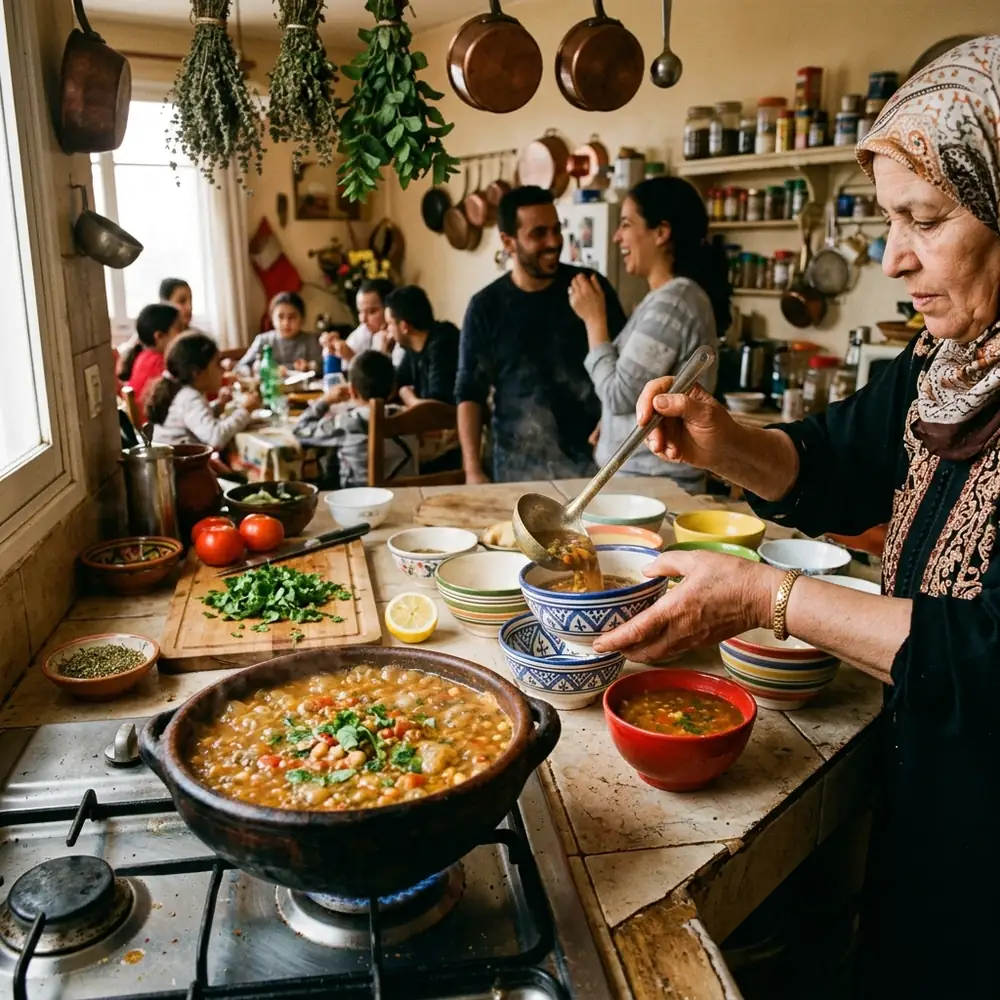
Marhaba, my dear friend. Step inside from the blinding afternoon sun, walk past the courtyard orange trees, and descend these cool tiled stairs with me. Welcome to my table—or rather, welcome to what lies beneath it.
Listen to the heavy wooden door creak open. Take a slow, deep breath. Do you smell that? It is a perfume unlike any other on earth: the sharp, floral tang of citrus peel cured in sea salt, the dark earthy brine of olives steeping in mountain oregano, the comforting warmth of sun-dried beef steeped in coriander, and the sweet, musky perfume of summer figs locked in jars of wild anise.
This is the Bayt el-Oula—the pantry room of the Moroccan home. For more than twelve centuries, long before electric currents or humming refrigerators ever reached our imperial cities or mountain villages, this room was the core of our civilization’s survival. It was here that our grandmothers captured the blazing summer sun in terracotta jars, transforming fleeting seasonal harvests into gold that would nourish generations through winter freezes, mountain snows, and arid desert droughts.
In Morocco, food preservation has never been a mere domestic chore. It is high culinary alchemy. It is an intricate science of lacto-fermentation, solar dehydration, osmotic pressure, and fat encapsulation, passed down silently from mother to daughter through the rhythm of song, touch, and intuition.
Pull up a stool beside me. Let me tell you the secrets of our ancient larder, and how you, too, can capture the magic of sunshine in a jar.
1. The Sacred Ritual of El-Oula: The Philosophy of the 1200-Year-Old Pantry
To understand Moroccan cooking, you must first understand the concept of El-Oula (الأولة). In our language, Oula translates literally to "the provision," but culturally, it represents a sacred pact between the household, the land, and the passage of the seasons.
                       THE CYCLE OF EL-OULA
  ┌──────────────────────────────────────────────────────────┐
  │  SPRING: Wild Mountain Herbs, Green Olives, Smen Churning│
  │  SUMMER: Solar Fig Dehydration, Tomato Confit, Apricots  │
  │  AUTUMN: Black Olive Curing, Pomegranate Molasses        │
  │  WINTER: Citrus Fermentation (M'siyar), Gueddid & Khlii  │
  └──────────────────────────────────────────────────────────┘
Throughout Moroccan history, from the early Idrissid dynasties in Fez to the vast agricultural domains of the Saadians in the Souss valley, an empty Bayt el-Oula was considered a grave domestic failing. A master homemaker—the matriarch we call Lalla el-Moulati—measured her wealth not in gold dinars, but in the gleaming rows of glazed earthenware vessels (khwabi) lining her cellar walls.
The provisioning followed the absolute calendar of nature:
- The Spring Awakening: Women gathered wild herbs from the foothills—pennyroyal (fllio), mountain thyme (za'atar), and wormwood (shih)—to clarify and ferment the spring butter into pungent Smen.
- The High Summer Sun: Roof terraces across the medinas transformed into seas of white linen, drying hand-rolled couscous grains, fiery chili peppers, and sweet purple figs from Chefchaouen and Taounate.
- The Autumn Harvest: Olives were gathered in the groves of Zerhoun and Beni Mellal, sorted by hand, cracked with river stones, and submerged in herbal brines.
- The Winter Citrus: Fragrant Doqq lemons from the Souss valley were hand-packed in coarse Atlantic salt to ferment through the cold months.
This seasonal rhythm created an extraordinary collective culture. Women gathered in family courtyards for weeks at a time, singing devotional poetry as they hand-cracked hundreds of kilograms of olives or rolled mounds of semolina. The food preserved during El-Oula was not emergency sustenance; it was an encyclopedia of concentrated flavor, developing complex umami notes that fresh ingredients could never hope to match.
2. L'hamd M'siyar: The Biology and Soul of Salt-Fermented Lemons
If there is a single ingredient that defines the aromatic signature of Moroccan savory cuisine, it is L'hamd M'siyar (الليمون المسير)—our ancient salt-preserved lemon.
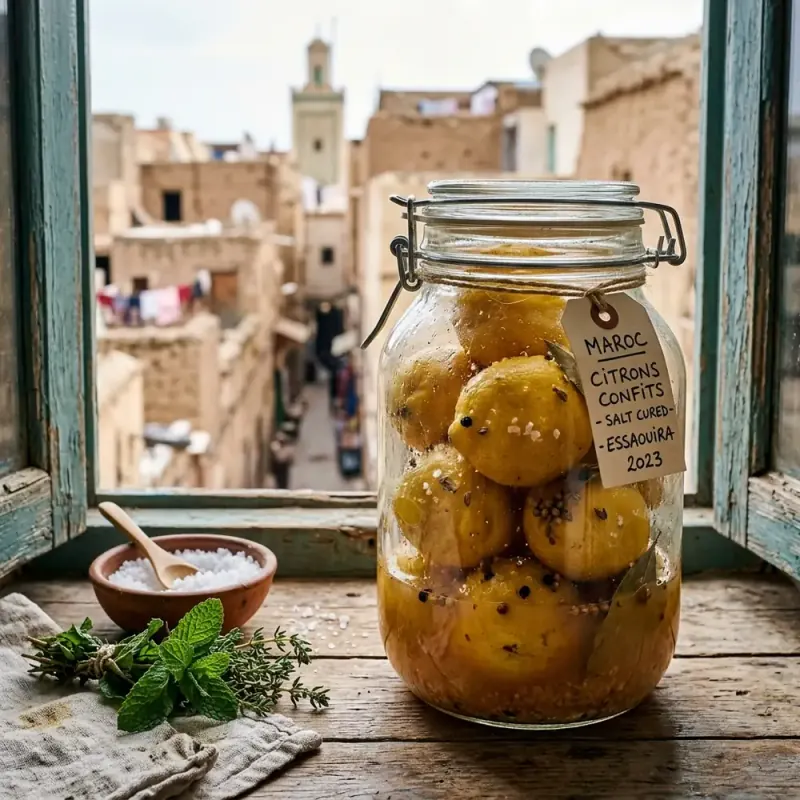
Do not mistake this for a quick pickle. A true Moroccan preserved lemon is not steeped in vinegar or boiled in sugar. It is a slow, living lacto-fermentation that transforms an aggressively sour, bitter citrus fruit into a velvety, floral, umami-laden condiment whose rind can be eaten whole.
       FRESH LEMON                     SLOW SALT CURE                  L'HAMD M'SIYAR
 ┌──────────────────────┐           ┌──────────────────┐           ┌────────────────────┐
 │ Bitter Limonoids     │ ────────> │ Salt extracts    │ ────────> │ Translucent Amber  │
 │ Tough Albedo (Pith)  │ 30-90 days│ moisture; Lactic │           │ Velvety Soft Skin  │
 │ Sharp Harsh Acidity  │           │ Acid Bacteria    │           │ Syrupy Umami Nectar│
 └──────────────────────┘           │ soften pectins   │           └────────────────────┘
                                    └──────────────────┘
The Noble Citrus: Limoun Doqq vs. Common Lemons
In the traditional markets of Marrakech, Taroudant, and Fez, you will hear connoisseurs asking specifically for Limoun Doqq (also known as Citrus limetta or Limoun Beldi). Unlike the thick-skinned, oblong Eureka or Lisbon lemons found in modern Western supermarkets, the Moroccan Beldi lemon is small, perfectly spherical, with a paper-thin rind and an intoxicating aroma reminiscent of bergamot, orange blossoms, and wild mint.
Its peel has a remarkably thin white pith (albedo), which contains very few of the harsh bitter limonoids found in commercial lemons. This allows the salt to penetrate the rind almost instantly.
The Chemistry of the Cure
The process of making M'siyar is pure biochemistry:
- Osmotic Extraction: When lemons are deeply quartered and packed under immense pressure with 10% to 15% coarse sea salt by weight, the salt draws out the cellular water from the pulp through osmosis.
- Submerged Anaerobic Environment: The extracted juice mixes with the salt to create a pristine, oxygen-free brine. In this anaerobic state, spoilage yeasts and molds cannot survive.
- Lactic Acid Fermentation: Beneficial halotolerant (salt-tolerant) lactic acid bacteria take over. Over 30 to 90 days in a dark cellar, these micro-organisms break down the rigid pectin bonds in the lemon peel.
- Enzymatic Transformation of Essential Oils: The volatile aromatic oils in the outer zest (flavedo)—primarily limonene, citral, and linalool—undergo slow oxidation and esterification. The harsh citric bite softens into a mellow, complex acidity, while the brine thickens into a golden, glossy, pectin-rich syrup we call el-âassel dial m'siyar (the honey of preserved lemons).
When you drop a sliver of aged M'siyar peel into a tagine of chicken or braised veal, the transformed pectin acts as a natural emulsifier, binding the olive oil and meat juices into that glossy, luxurious sauce known as el-dghira.
3. The Olive Almanac: From Green Meslalla to Sun-Wrinkled Zitoun M'khalel
Walk through the historic Bab Boujeloud in Fez or the olive souk of Meknes, and you will see mountains of olives glistening under brass lamps: jade-green, mottled purple, ruby-red, and velvet-black.
In Morocco, we do not treat olives as an afterthought out of a can. We treat them as an art form with distinct seasonal stages, each requiring a completely different preservation chemistry.
┌─────────────────────────┬────────────────────────────┬──────────────────────────────┐
│ VARIETY                 │ TECHNIQUE                  │ AROMATIC PROFILE             │
├─────────────────────────┼────────────────────────────┼──────────────────────────────┤
│ Green Meslalla (Cracked)│ Water-leached, herb-brined │ Crisp, herbaceous, peppery   │
│ Purple Zitoun Ahmar     │ Slit, lemon-salt fermented │ Tart, fruity, floral         │
│ Black Zitoun M'khalel   │ Dry salt-cured under stone │ Wrinkled, rich, intense      │
│ Spiced Mchermel         │ Tossed in harissa & cumin  │ Piquant, garlicky, warm      │
└─────────────────────────┴────────────────────────────┴──────────────────────────────┘
Green Meslalla: The Stone-Cracked Marvel
Green olives harvested in early autumn are packed with oleuropein, an intensely bitter phenolic compound that makes raw olives unpalatable. To cure them quickly without industrial lye, Moroccans invented Meslalla.
- The Bruise (Dagg): Each olive is placed on a clean wooden board and gently struck with a smooth river stone or wooden mallet just until the flesh cracks open without breaking the internal stone.
- The Cold Water Leaching: The cracked olives are soaked in clean, cold mountain water. For 10 to 14 days, the water is changed every single morning. The physical fissure allows the water-soluble oleuropein to leach out naturally into the water.
- The Wild Herbal Bath: Once the bitterness subsides to a pleasant vegetal sharpness, the olives are submerged in a brine infused with wild pennyroyal (fllio), crushed garlic cloves, fresh coriander seeds, lemon slices, and sprigs of mountain thyme. Within two weeks, they are ready to crown our famous Tagine Zitoun.
Black Zitoun M'khalel: The Stone-Pressed Sun Cure
For fully ripened, oil-rich black olives harvested in late November, Moroccan elders use zero water.
The olives are layered in porous woven palm-frond baskets or burlap sacks with generous handfuls of coarse rock salt. Heavy flat stones are placed on top. Over three to four weeks, the immense weight and salt draw out every drop of bitter, dark vegetation water, which drains away through the woven fibers.
The olives emerge delightfully shriveled, concentrated in flavor, and dense in healthy fats. They are laid out on rooftop linens for a single afternoon of solar drying, then gently massaged with unrefined, cold-pressed green olive oil and wild oregano. Stored in dark jars, they will remain flawless for up to two years.
4. Sweet Solar Alchemy: Fig-Anise Preserves, Quince Confit, and Orange Marmalade
While savory preservation relies on salt and lactic acid, our sweet pantry relies on the natural preservatives of the Mediterranean: sun, sugar, pectin, and whole spices.
       SUMMER SUN                     WILD ANISEED                    CLAY VESSEL
 ┌──────────────────────┐           ┌──────────────────┐           ┌────────────────────┐
 │ Whole Taounate Figs  │ ────────> │ Habat Hlawa      │ ────────> │ Thick Khafith      │
 │ Solar Dehydration    │ Simmered  │ Toasted Sesame   │ Sealed    │ Winter Confection  │
 │ Natural Sugar Rise   │           │ Mountain Honey   │           │ Spoon-Sweet        │
 └──────────────────────┘           └──────────────────┘           └────────────────────┘
Khafith (The Sun-Kissed Fig & Anise Jam)
In the Rif mountains around Chefchaouen and the hills of Taounate, the end of August brings a deluge of small, extraordinarily sweet green and purple figs (Karmous).
To make traditional Khafith (or Morabba d'Karmous), the figs are partially dried in the blazing sun for two days until their skins wrinkle and their internal sugars concentrate. They are then placed in a heavy brass cauldron (tass) with raw sugar, a splash of orange blossom water (ma zhar), and generous tablespoons of wild aniseed (habat hlawa) and toasted sesame.
As the mixture simmers over low olive-wood coals, the aniseed releases its essential oil (anethole), which cuts through the heavy sweetness of the fig and acts as a natural antimicrobial agent. The resulting preserve is dark, jammy, and studded with crunchy seeds—the ultimate winter companion to hot Harcha (semolina bread) and fresh goat cheese.
Maâjoune Sferjel: The Ruby Quince Confit
Quince (Sferjel) is the ancient fruit of Moroccan autumn—rock-hard, astringent, and covered in fuzzy down. Yet, in the hands of a Moroccan cook, it undergoes a breathtaking transformation.
Because quinces are extraordinarily rich in natural pectin and tannins, slow simmering with cinnamon sticks, cloves, and sugar causes the colorless proanthocyanins in the fruit to convert into anthocyanins, turning the yellow flesh a deep, translucent ruby red. Preserved in its own gelatinous, spiced syrup, Maâjoune Sferjel was traditionally stored in small earthenware pots to serve to honoured guests with mint tea.
5. The Fat & Salt Vaults: Khlii and the Eternal Ferment of Smen
No exploration of Moroccan culinary preservation is complete without bowing before the twin monarchs of the ancient larder: Khlii and Smen. These two preparations allowed our ancestors to traverse the arid Sahara for months with caravans, carrying rich protein and fat that never spoiled in 45°C heat.
┌────────────────────────────────────────────────────────────────────────────────────────┐
│                                 THE MAKING OF KHLII                                    │
│                                                                                        │
│  [1. THE MARINADE]       [2. GUEDDID DRYING]     [3. THE SLOW BOIL]     [4. FAT SEAL]  │
│  Beef/Camel strips       Hung on rooftop lines   Simmered in rendered   Poured into    │
│  rubbed with garlic,     in dry medina winds     suet, olive oil, and   jars; solidified│
│  coriander & cumin       until brittle-dry       water until H2O drops  fat seals out  │
│                                                  evaporate completely   all oxygen     │
└────────────────────────────────────────────────────────────────────────────────────────┘
Khlii: The Preserved Meat of the Caravaneers
Originating in the grand bourgeois kitchens of Fez and Marrakech, Khlii (الخليع) is made primarily following Eid al-Adha, when households have an abundance of beef, lamb, or camel meat.
- The Strip Cut: Lean muscle is sliced into long, uniform ribbons known as habrat.
- The Ancient Cure: The meat is vigorously massaged with an intoxicating marinade of crushed garlic, massive quantities of ground dried coriander seeds (qesbour yabes), toasted cumin, coarse sea salt, and a splash of vinegar. Coriander is essential here—it is not just for flavor; its essential oils are powerful natural antioxidants and antibacterials.
- The Gueddid Phase: The ribbons are draped over clean lines on sunny rooftops for up to a week. The dry desert winds desiccate the meat into brittle Gueddid.
- The Fat Immersion: The dried meat is gently simmered in a vast copper cauldron containing rendered animal suet (idri), extra virgin olive oil, and water. It cooks for hours until the meat is fork-tender.
- The Zero-Moisture Test: Here lies the grandmother’s secret: a piece of cotton or a droplet of water is introduced to the boiling fat. If it sputters, moisture remains. The cooking continues until the liquid is 100% pure, silent, clear fat.
Poured into terracotta jars, the fat solidifies into a protective white mantle around the mahogany meat. Stored in a cool cellar, Khlii keeps for up to three years. Scrambled with farm-fresh eggs (Khlii bil-Bayd) in an earthenware tagine, it provides a savory, garlicky, deeply comforting breakfast that has fueled Moroccan mornings for centuries.
Smen: The Fermented Butter of the Gods
Smen (السمن الحار) is to Moroccan cuisine what aged Parmigiano-Reggiano is to Italy or fish sauce is to Southeast Asia: pure, unadulterated umami.
To make Smen, raw butter (traditionally made from the spring milk of cows or sheep) is thoroughly washed in multiple changes of ice-cold water to squeeze out every trace of buttermilk, which contains lactose that could spoil.
The washed butter is then vigorously kneaded with coarse sea salt and a strong, strained infusion of boiled mountain thyme (za'atar). The salted, herb-infused butter is packed tightly into an unglazed clay jar (qlofa), pressing out every pocket of air. The jar is sealed with waxed linen and parchment, then buried underground or placed in the coldest corner of the cellar.
       FRESH SPRING BUTTER               1 YEAR CURE                    5+ YEARS CURE
 ┌─────────────────────────────┐     ┌───────────────────┐     ┌────────────────────────┐
 │ Washed in cold thyme water, │ ──> │ Piquant, sharp,   │ ──> │ Deep amber color,      │
 │ kneaded with sea salt,      │     │ blue-cheese notes,│     │ intense medicinal funk,│
 │ sealed in terracotta pot    │     │ silky texture     │     │ used as rare medicine  │
 └─────────────────────────────┘     └───────────────────┘     └────────────────────────┘
Over months and years, lipolytic enzymes and micro-organisms break down the milk triglycerides into free fatty acids. The butter turns a pale ivory, developing a sharp, blue-cheese pungency and a velvety, melt-in-the-mouth texture. A single half-teaspoon of aged Smen stirred into a pot of Friday couscous or festive Rfissa imparts a haunting, ancient depth that cannot be replicated by any modern seasoning.
6. The Vessel Matters: The Science of Terracotta Khwabi and Mountain Cellars
Our grandmothers never possessed temperature-controlled refrigeration units, yet their preserves never spoiled. How? Because they understood the physics of terracotta.
Traditional Moroccan preservation relies on two types of earthen vessels:
┌──────────────────────────────────────┬──────────────────────────────────────┐
│ UNGLAZED TERRACOTTA (Evaporative)    │ GLAZED POTTERY (KHwabi / Hermetic)   │
├──────────────────────────────────────┼──────────────────────────────────────┤
│ • Porous walls allow micro-breathing │ • Non-reactive glass-like glaze      │
│ • Natural evaporative cooling        │ • Impermeable to air and moisture    │
│ • Perfect for Smen and Olive Oil     │ • Ideal for Lemons, Olives, & Jams   │
└──────────────────────────────────────┴──────────────────────────────────────┘
- The Porous Clay Pot: Unglazed clay breathes. When stored in a shaded cellar with slight airflow, microscopic amounts of moisture seep through the porous walls and evaporate on the exterior surface, keeping the interior contents 5°C to 8°C cooler than the ambient room temperature. This was essential for the stable, slow aging of Smen.
- The Glazed Khabia: For high-acid and high-salt ferments like M'siyar and Meslalla, lead-free, brightly glazed amphorae (khwabi) were used. The impermeable glaze prevented the salt brine and citric acid from degrading the clay, while the wide neck allowed airtight sealing with olive-oil-soaked cloth and heavy wooden stoppers.
Combined with the architectural design of Moroccan riads—thick mud-brick (pisé) or stone walls that insulate against exterior heat—the cellar remained a constant, naturally climate-controlled sanctuary year-round.
Grandmother's Secrets: Timeless Preservation Wisdom (Asrar Lalla)
Let me whisper a few priceless rules passed down from my grandmother’s kitchen in the old medina:
- The Floating Fresh Egg Test (Tajribat el-Bayda): When preparing a salt brine for olives or peppers, how do you know if you have enough salt without a scale? Place a thoroughly washed, fresh raw egg into your water. Add sea salt and stir until the egg floats to the surface, showing a circle of shell the size of a Moroccan Dirham (about a quarter). If it sinks, add more salt; if it bobs too high, add more water. It is the perfect 10-12% salinity every single time.
- The Olive Oil Seal (El-Ghta dial Zit): Never leave the top layer of your fermented lemons, olives, or jams exposed to the air inside the jar. Always pour a generous half-inch layer of good Moroccan olive oil over the surface before sealing. Oil is lighter than water; it floats and creates an impenetrable, natural oxygen barrier that prevents aerobic mold (kahla) from forming.
- The Sacred Dry Wooden Spoon: Never, under any circumstances, reach into a jar of M'siyar, Smen, or olives with your bare fingers or a wet metal spoon. Introduce a single drop of unboiled tap water or skin bacteria, and you will break the delicate microbiological equilibrium, ruining a year’s worth of patient aging. Use a dedicated, bone-dry wooden spoon (mghorfa dial khshob).
- The Sun’s Rhythm: When drying meat for Gueddid or fruit for Khafith, bring your trays inside before the sunset call to prayer (Maghrib). The evening humidity and falling dew (n'da) will rehydrate the food and invite mold. Let the sun bake it by day, and let it sleep inside by night.
Frequently Asked Questions (FAQ)
1. Can I use standard supermarket lemons to make authentic Moroccan M'siyar? Yes, you can, but with two important adjustments. Supermarket Eureka or Lisbon lemons have thick, bitter white pith (albedo) and a wax coating. Choose organic, unwaxed lemons. Scrub them thoroughly under warm water to remove any residues. When slicing them, make deep incisions and rub generous amounts of coarse sea salt directly into the flesh. Give them an extra month of curing time (at least 60 to 90 days) to allow the thicker peel to fully soften and lose its bitterness.
2. How long can properly prepared Khlii and Smen keep without refrigeration? When prepared with strict traditional technique—meaning 100% of moisture is cooked out of the Khlii fat, and Smen is thoroughly washed and salted—both will keep at room temperature in a cool, dark pantry for two to three years without spoiling. In fact, many connoisseurs believe Smen only reaches its true aromatic peak after three years of cellar aging.
3. Why has a white film developed on top of my preserved lemon jar, and is it dangerous? A thin, white, powdery film on the surface of your brine is usually Kahm yeast, a harmless wild yeast that thrives when a small amount of oxygen enters the jar. It is not toxic. Simply skim it off with a clean, dry spoon, wipe the inner rim of the jar with a paper towel dipped in vinegar, and top with a fresh layer of lemon juice or olive oil to restore the anaerobic barrier. However, if you see fuzzy green, black, or blue mold, moisture contamination has occurred, and the jar should be discarded.
4. What is the difference between green Meslalla olives and commercial pickled olives? Commercial pickled olives are typically cured rapidly in sodium hydroxide (lye) to chemically strip their bitterness in hours, which destroys their natural texture and complex flavors. Moroccan Meslalla is cracked by hand and water-leached slowly over two weeks, preserving the natural crunch, healthy polyphenols, and vibrant green color of the fruit, before being steeped in wild mountain herbs.
5. How do preserved lemons chemically alter a tagine sauce compared to fresh lemon juice? Fresh lemon juice contains sharp, unbuffered citric acid that thins out sauces and gives an aggressive, sour bite. Preserved lemons have had their pectins broken down and concentrated into a gelatinous syrup. When cooked into a tagine, the peel releases savory, complex esters and natural pectins that emulsify the cooking fats and broth into a thick, glossy, velvety sauce (dghira) while imparting a mellow, floral citrus perfume without harsh acidity.
Image Prompts for Visual Storytelling
Image 1: The Medina Cellar Vault
- Subject: An atmospheric, wide-angle shot inside a historic, arched Moroccan cellar (Bayt el-Oula) in Fez. Rows of large, glazed earthenware khwabi jars in ochre and emerald green stand on low terracotta shelves. Sunbeams stream through a high carved plaster lattice window, illuminating floating dust motes and highlighting glass jars filled with whole preserved lemons glowing like amber jewels.
- Vibe: Ancient, mystical, serene, rich with culinary history and timeless heritage.
- Style: Chiaroscuro fine-art photography, warm earthy tones, deep shadows, cinematic golden-hour side lighting, exceptional textural detail on rustic lime-plaster walls.
- Format: 16:9
Image 2: The Art of Packing M'siyar
- Subject: A close-up, top-down shot of weathered, henna-tinted hands slicing small, round Limoun Beldi lemons into quarters and stuffing them generously with coarse grey sea salt. A large, vintage glass canning jar sits beside them, tightly packed with glossy, salt-encrusted yellow lemons submerged in their own thick, syrupy juices. Wooden bowls of rock salt and bay leaves surround the workspace.
- Vibe: Artisanal, tactile, grandmotherly wisdom, raw culinary authenticity.
- Style: Editorial documentary food photography, natural window lighting, shallow depth of field, vibrant yellow and terracotta color palette.
- Format: 4:3
Image 3: The Olive Harvester's Spread
- Subject: A rustic wooden table outdoors under an olive grove, displaying four traditional painted ceramic Moroccan bowls. One bowl holds cracked green Meslalla olives with fresh thyme and lemon slices; another contains wrinkled, dry-cured black Zitoun M'khalel tossed in extra virgin olive oil; the third holds purple olives in spicy harissa; the fourth has whole cloves of purple garlic. A cruet of unrefined, cloudy green olive oil glistens in the sunlight.
- Vibe: Mediterranean bounty, sun-drenched, rustic, mouthwatering freshness.
- Style: High-end culinary lifestyle photography, bright natural sunlight casting soft olive-leaf shadows, high sharpness, rich textures.
- Format: 1:1
Image 4: The Solar Dehydration Terrace
- Subject: An expansive shot across a whitewashed medina rooftop under a brilliant cobalt blue Moroccan sky. Long wooden trestle tables are covered in pristine white linen, upon which thousands of ripe purple figs are split open and drying in the blazing sun alongside strands of crimson dried chili peppers and trays of hand-rolled golden couscous. In the background, medina minarets rise into the horizon.
- Vibe: Abundant, sun-soaked, traditional seasonal rhythm, vibrant cultural life.
- Style: Travel documentary photography, vibrant high-saturation colors, wide angle with incredible depth, crisp atmospheric clarity.
- Format: 16:9
Image 5: The Sacred Smen & Khlii Pot
- Subject: A moody, macro close-up of a small, antique unglazed clay jar (qlofa) containing pale ivory aged Smen, with a vintage carved olive-wood spoon resting across its rim holding a small, glistening dollop of the fermented butter. In the soft-focus background, an earthenware dish holds shreds of dark mahogany Khlii preserved in rich golden fat, garnished with fresh wild rosemary.
- Vibe: Deep umami heritage, ancestral craftsmanship, comforting luxury.
- Style: Dark rustic food photography, dramatic directional lighting, rich textures of porous clay and glistening fat, shallow depth of field.
- Format: 3:2
Experience the true heart of Moroccan heritage through its culinary traditions. Join us in preserving and honoring these ancestral recipes.
What People Are Saying
No comments yet. Be the first — we'd love to hear from you.
Lalla Fatima & The Medina Culinary Guild
Culturally Verified & Fact-CheckedThe Moroccan Food editorial team brings together native culinary researchers, heritage preservationists, and experienced home cooks across Marrakech, Fes, and Casablanca. Every recipe and cultural guide is reviewed against ancestral oral traditions and authentic regional practices.