Moroccan Ramadan Recipes: The Complete Iftar Table with Harira, Chebakia & Sellou
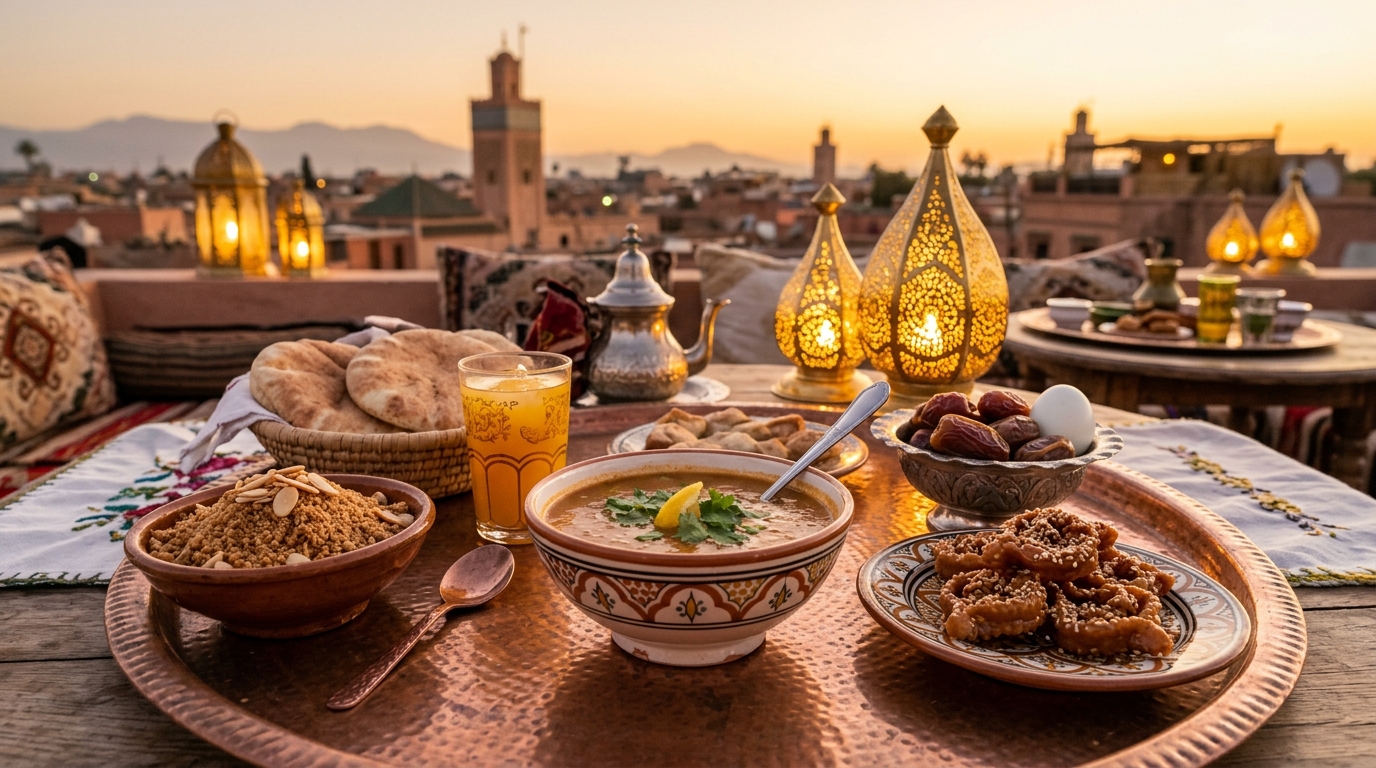
In Morocco, the setting of the sun during the holy month of Ramadan is announced by the call to prayer and, in many cities, the firing of a cannon. At that exact moment, millions of people sit down to break their fast.
This meal, called the Iftar (or Ftour in Moroccan Arabic), is not just a dinner. It is a highly specific, generational sequence of foods designed to gently wake up the digestive system, restore energy, and bring families together. The Moroccan Iftar table is beautiful, heavy with tradition, and relies on a few core recipes that every household perfects weeks in advance.
Here is exactly what goes on the Moroccan Iftar table, and the recipes that define the month of Ramadan.
Step 1: Breaking the Fast with Dates and Milk
You do not immediately start eating a heavy meal. Following the tradition of the Prophet Muhammad, the fast is broken with a few odd numbers of dates (usually one or three) and a sip of milk or water.
Moroccan tables will feature a beautiful silver or ceramic bowl piled high with Majhoul dates, known for their large size and caramel-like sweetness. The natural sugars provide an immediate, necessary spike in energy after 14 to 16 hours of fasting.
Step 2: The Holy Soup (Harira)
Once the fast is broken, the centerpiece of the table is served: Harira.
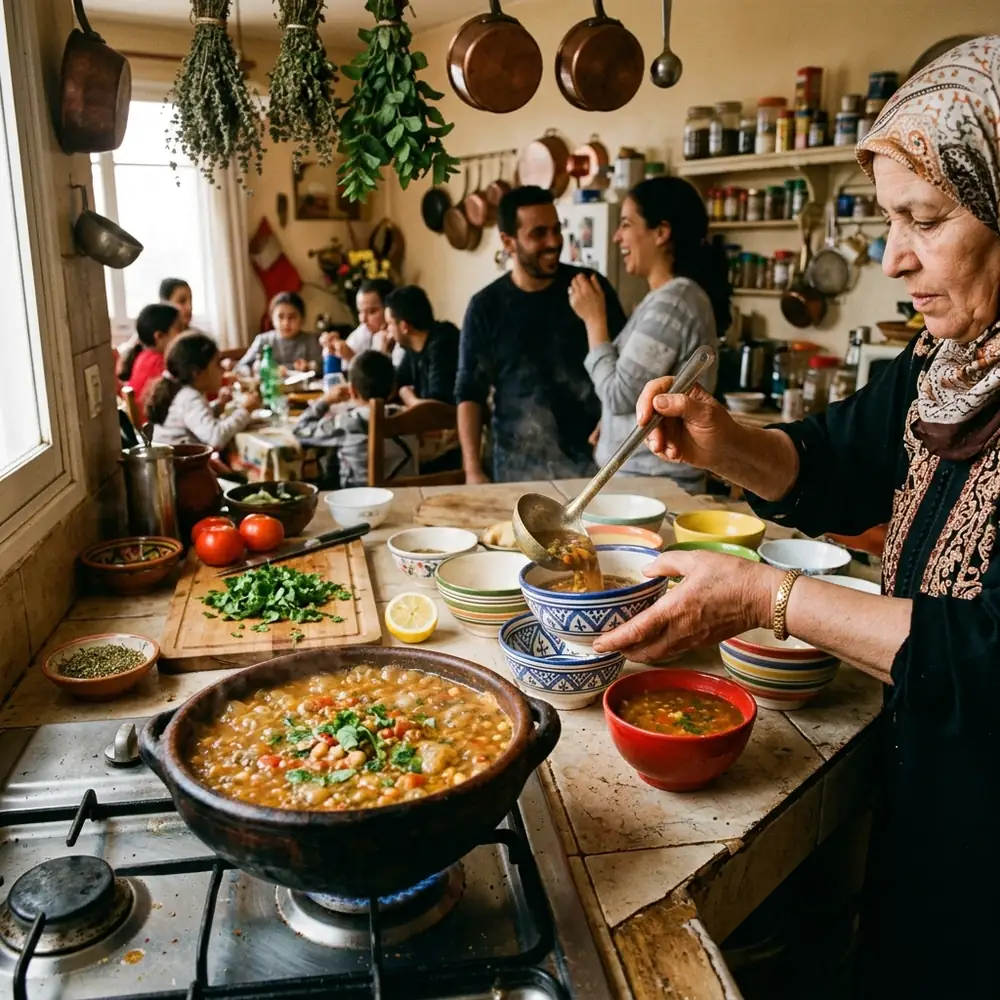
This is a thick, incredibly comforting tomato-based soup. But calling it tomato soup is an injustice. A proper Ramadan harira is packed with soaked chickpeas, lentils, fine vermicelli noodles, and small, tender cubes of lamb or beef. The flavor comes from a massive handful of fresh celery leaves, cilantro, and parsley, blended with ginger and turmeric.
What makes harira unique is the tadouira—a thickening mixture of flour and water stirred in at the very end of the cooking process, giving the soup a velvety, heavy texture that fills the stomach perfectly.
Step 3: The Sweet Accompaniments (Chebakia and Sellou)
Here is where the Moroccan Iftar becomes uniquely Moroccan. You do not eat harira alone. You eat it alongside incredibly sweet pastries.
Chebakia is a sesame cookie shaped like a rose, deep-fried until golden, and immediately submerged in boiling honey flavored with orange blossom water. The contrast of taking a sip of savory, salty harira and then a bite of sticky, sweet chebakia is the defining flavor of a Moroccan Ramadan.
Beside the chebakia sits a bowl of Sellou (also called Sfouf). This is an unbaked, crumbly sweet paste made from toasted flour, fried almonds, toasted sesame seeds, anise, cinnamon, and melted butter and honey. It is incredibly nutrient-dense, meant to provide long-lasting energy. Families spend days before Ramadan peeling almonds and toasting flour to make massive batches of sellou to last the entire month.
Step 4: The Protein and Bread
Also scattered across the table are hard-boiled eggs. These are peeled, dipped in a mix of salt and ground cumin, and eaten alongside the soup for a protein boost.
For bread, you will find Msemen (square, flaky, pan-fried flatbreads) and Baghrir (spongy semolina pancakes filled with hundreds of tiny holes, perfect for soaking up melted butter and honey).
Step 5: The Actual Dinner (Later in the Night)
Everything listed above is just the breakfast. After the Iftar table is cleared, families will pray, rest, and perhaps watch the special Ramadan television sitcoms.
Later in the evening, usually around 10:00 PM or 11:00 PM, a proper dinner is served. This is typically a traditional Tagine (like chicken with preserved lemons) or a roasted chicken. Finally, before dawn, families wake up for the Suhoor—a light meal usually consisting of yogurt, water, dates, and leftover sellou to sustain them for the fasting day ahead.
Frequently Asked Questions
Can I visit Morocco during Ramadan? Yes, but be prepared for a different rhythm. Cafes and most restaurants are closed during the day. However, the evenings are incredible. The streets come alive at night, and many hotels and restaurants offer massive, beautiful Iftar buffets for tourists to experience the tradition.
How long does it take to make Chebakia? Chebakia is incredibly labor-intensive. Shaping the dough into the traditional “rose” pattern requires practice. Most families dedicate a full weekend before Ramadan to make hundreds of cookies together, forming an assembly line of frying and honey-dipping.
Is Harira vegetarian? Traditionally, no, it contains a small amount of lamb or beef for the broth base. However, you can easily make a vegetarian version by using a rich vegetable stock and letting the chickpeas, lentils, and herbs do the heavy lifting for flavor.
Why is Sellou so important? Sellou is essentially a survival food. Because it is made of roasted nuts, toasted flour, and honey, it does not spoil easily. It is packed with calories, protein, and fat, making it the perfect food to eat before dawn to keep hunger away during the long fasting hours.
Experience the true heart of Moroccan heritage through its traditions. Join us in preserving these ancestral rituals.
What People Are Saying
No comments yet. Be the first — we'd love to hear from you.
The Moroccan Food
A Moroccan cultural writer dedicated to documenting the authentic voice, history, and heritage of the Kingdom. Writing from within — to share what truly makes Morocco extraordinary.
Our Mission →