Moroccan Sardines: Why the Atlantic Sardine Is Morocco's Most Important Fish and How to Cook It Correctly
Sardines: Morocco's Most Important Fish and the Preparations That Honor It
Morocco is the world's largest exporter of canned sardines — approximately 50% of global sardine exports in recent years, primarily from the processing facilities in Agadir, Safi, and Tan-Tan. This industrial-scale export production is what Morocco's sardines are most famous for internationally, and it is precisely the wrong starting point for understanding what Moroccan sardines actually are as food.
The Atlantic sardine (Sardina pilchardus) caught off Morocco's coast — from the cold, upwelling-rich waters between Agadir and the Saharan south — is, in the season of peak condition (autumn and early winter, when the fish have been feeding on the upwelling plankton blooms and are at their fattiest), one of the most flavorful oily fish available anywhere. A fresh sardine eaten within twelve hours of leaving the water, grilled over charcoal with chermoula, is not remotely related to the tinned sardine of the international market. The species is the same. The eating experience is separated by whatever the distance is between the best possible version of a thing and a preserved industrial approximation of it.
The people who know this best are the fishing communities of Safi, Essaouira, and Agadir — the towns whose economies are built around sardine fishing and processing — where fresh sardine in season is available cheap, abundant, and cooked with the knowledge that comes from generations of proximity to the fish.
What Makes a Fresh Sardine Good and What Signals Quality?
A fresh Atlantic sardine should have: bright, clear eyes (clouded eyes signal age); firm flesh that springs back when pressed (soft flesh means the fish has been sitting too long); bright silver scales with an iridescent blue-green sheen on the back (dull scales signal deterioration); a fresh, clean sea smell rather than a strong "fishy" smell (which is the smell of decomposition products, not freshness).
In Moroccan fish markets — particularly the covered fish halls of Agadir and Safi — sardines are sold from shallow rectangular trays, typically by weight, and the quality variation across different vendors on the same morning is immediately apparent to the eye. The freshest fish are at the front of the stall, nearest the ice. The fish at the back have been there longer. This is universal.
The fat content of the sardine varies by season: sardines caught in autumn, after feeding heavily on the summer plankton bloom, are significantly fattier than sardines caught in spring. The fat content is what determines flavor in oily fish — a lean sardine is mild, a fat sardine is intensely sardine, with the rich, slightly funky depth that makes oily fish the most satisfying eating. Buy sardines in October or November if you want the best.
What Is Stuffed Sardine (Sardines Farcies) and Why Is It the Best Preparation?
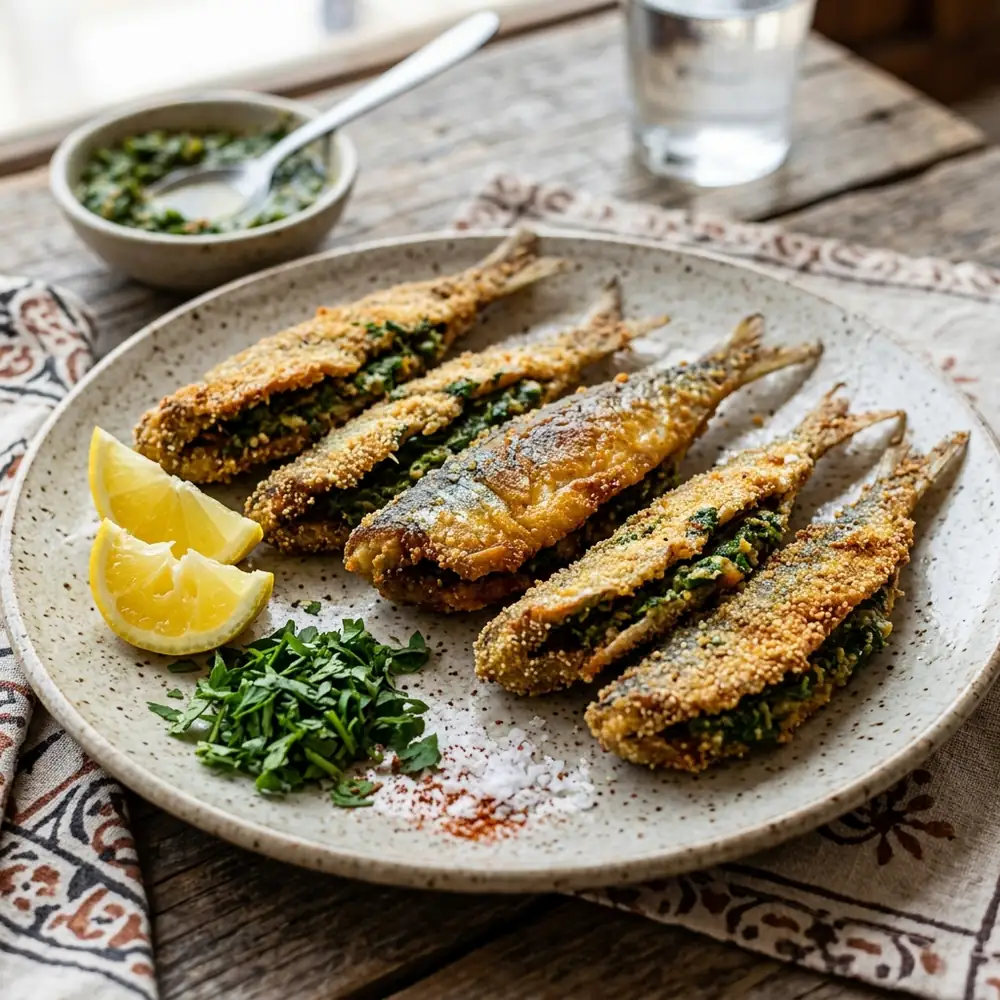
Sardines farcies — sardines opened along the spine, deboned, filled with fresh chermoula, pressed closed, and either grilled or fried — is the preparation that most completely expresses what fresh sardine and fresh chermoula do to each other. The chermoula (cilantro, parsley, garlic, cumin, paprika, preserved lemon, olive oil, lemon) flavors the flesh from the interior rather than only the surface, and the cooking seals the filling inside as the fish cooks.
The preparation: butterfly the sardines by cutting along the spine on the back, opening each fish flat, and removing the backbone with your fingers (it comes away cleanly in fresh sardines). The opened, deboned sardines are spread flat. A generous spoonful of chermoula goes on one half; the other half is folded over to enclose the filling. The stuffed sardine is pressed gently to consolidate. Then either:
Grilled: on a charcoal grill, the stuffed sardines cook quickly — three to four minutes per side — the chermoula herbs charring slightly on the surface in contact with the grill, producing the specific char-freshness contrast of chermoula over direct heat. This is the outdoor, communal preparation — made in quantity, shared among the people sitting around the grill.
Fried: dredged in flour, fried in olive oil until golden on both sides. The flour crust seals the fish and the chermoula inside, producing a more contained version with a different textural quality — the crust providing resistance that the direct-grilled version doesn't have. The fried version holds together better for serving individually; the grilled version is the one you eat from the grill directly.
What Is the Cultural Relationship Between Morocco's Coastal Communities and the Sardine?
In Safi — Morocco's primary sardine port, where the fish processing industry employs a significant portion of the city's population — the sardine is not simply a food item or an export commodity. It is the economic foundation of the city's contemporary identity, visible in the murals and sculpture of the port area, in the sardine festival that the city has organized, in the casual reference to sardines in local conversation the way that people in other cities reference whatever crop or product defines them.
The same relationship exists in Essaouira, where the wooden fishing boats — the blue-painted barques that have become one of the city's visual signatures — go out for sardines and bring them back to the harbor market where they are sold within hours of landing. Buying sardines from the Essaouira harbor market in the morning and cooking them for lunch is the basic transaction of the Atlantic coastal culinary culture, and it is a transaction that eliminates all the intermediaries between the fish in the sea and the fish on the plate.
The Invisible Invitation
You are at the Agadir or Essaouira fish market at eight in the morning. The boats have come in. The sardines are on the trays in their thousands, the ice still cold beneath them, the silver of the scales vivid under the market lights. Buy a kilogram — this is perhaps fifteen to twenty sardines, enough for three or four people. Take them to wherever you are staying. Make the chermoula: the cilantro and parsley and garlic and cumin and paprika and preserved lemon and lemon and olive oil, chopped and combined, exactly as described. Butterfly the sardines — a small knife, one cut along the back, the backbone pulled out. Fill each fish. Press closed. Grill, or fry if you have a pan and oil. Eat them immediately, with bread and perhaps some of the leftover chermoula as a sauce. The sardine you are eating was in the water this morning. This is the correct way to eat sardines and there is no equivalent to it available from any tin.
SEO Meta Description: How to cook fresh Moroccan sardines? Sardines farcies with chermoula stuffing — grilled vs fried preparation, seasonal fat content, how to identify freshness at the market, and Morocco's Atlantic sardine export context.
Experience the true heart of Moroccan heritage through its culinary traditions. Join us in preserving and honoring these ancestral recipes.
What People Are Saying
No comments yet. Be the first — we'd love to hear from you.
Khadija Tahiri
Culturally Verified & Fact-CheckedThe Moroccan Food editorial team brings together native culinary researchers, heritage preservationists, and experienced home cooks across Marrakech, Fes, and Casablanca. Every recipe and cultural guide is reviewed against ancestral oral traditions and authentic regional practices.