Sellou: The Ramadan Energy Paste Made From Toasted Flour, Almonds, and Sesame That Keeps for Three Months
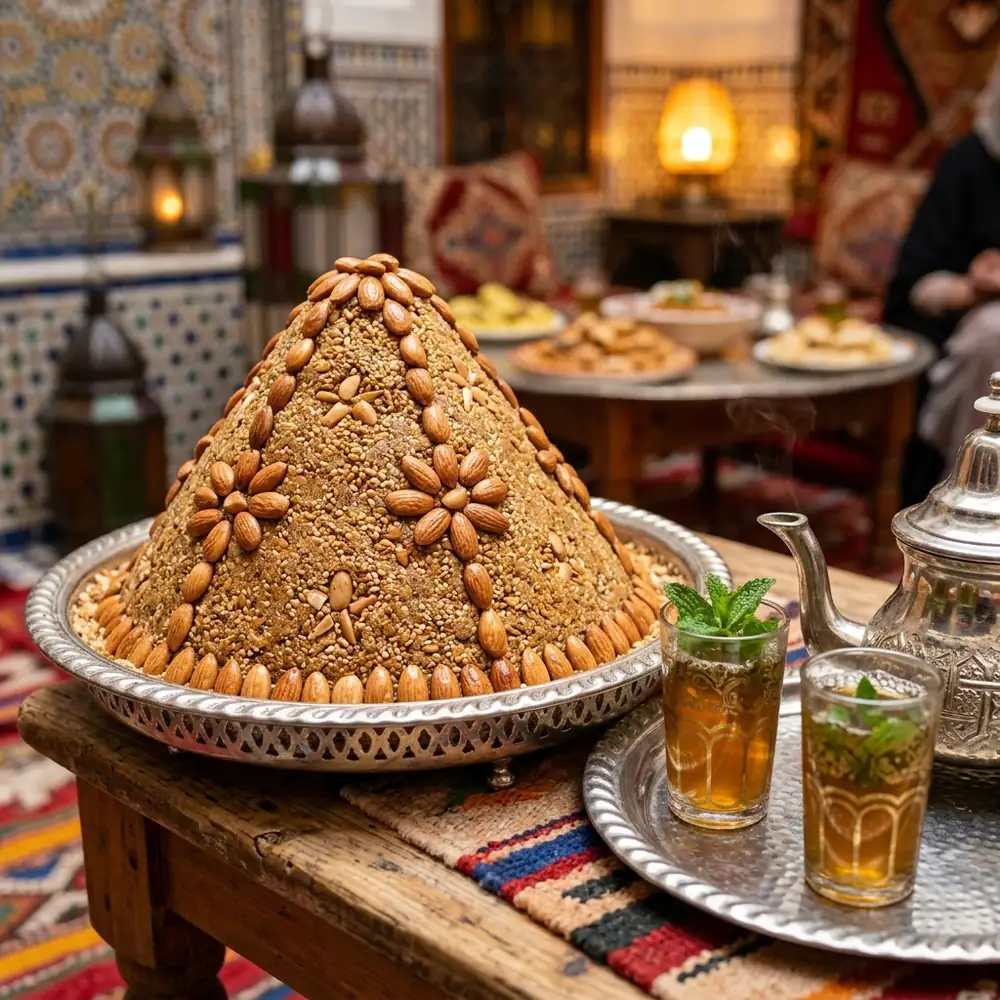
Sellou: The Preparation That Takes an Entire Morning and Lasts Three Months
Sellou is made once per Ramadan — usually in the week before the month begins, in a production session that takes a full morning and involves a quantity of work that is calibrated to the household's size and the number of Ramadan months it takes to deplete the batch. A family of six might make three or four kilograms of sellou at the beginning of Ramadan. It will last the full thirty days and likely into the weeks beyond.
The preparation has a specific logic that is not immediately obvious: every ingredient is processed before the final assembly, and the processing of each is where the flavor is created. The flour is toasted in a dry pan until it is a deep ivory-to-light-brown, the raw-flour taste cooked out completely and replaced by a nutty, almost biscuity flavor. The sesame seeds are toasted separately until golden, filling the kitchen with the specific smell of toasting sesame that is one of the better kitchen smells available. The almonds are fried in oil or smen until deep golden, drained, and cooled. Each of these three things — toasted flour, toasted sesame, fried almond — is the best version of itself before it goes into the sellou, and the final paste is the combination of three things that have each been maximally developed.
This is the principle behind sellou, and it is also a principle that applies more broadly: you cannot shortcut the toasting. Pale-toasted flour in sellou tastes raw and flat. Deeply toasted flour tastes like the thing sellou is supposed to be. The difference is fifteen minutes of attention over a dry pan.
What Are the Full Sellou Ingredients and Their Functions?
For a standard household batch — approximately 1 kilogram finished sellou:
Flour (500g): toasted in a dry heavy pan over medium heat, stirring continuously, until deep ivory-brown and nutty-smelling. This takes twenty to twenty-five minutes and requires continuous stirring to prevent burning at the edges. The toasted flour is the structural base of the sellou.
Sesame seeds (300g): toasted in a dry pan until golden, then ground — traditionally in a hand mill, practically in a food processor — to a coarse-to-fine powder depending on preference. The ground sesame contributes fat, flavor, and a slightly grainy texture.
Blanched almonds (300g): fried in smen or oil until deep golden, cooled, then ground to a rough powder — not as fine as almond flour, but broken down enough that no large almond pieces remain. The fried almond flavor is specific to this process: deeper, more caramelized than raw or simply-toasted almond.
Anise seeds, fennel seeds, cinnamon, white pepper, sesame seed powder: the spice component, in quantities that vary by household tradition. The anise-fennel combination is typical of the northern Moroccan sellou tradition; the southern version uses more cinnamon and sometimes ginger.
Honey and smen: the binding agents. The honey is added warm — heated briefly to thin it — and poured over the dry ingredients while they are mixed. The smen is softened and incorporated simultaneously. The quantity of honey and smen determines the final consistency: more binding agents produces a paste that can be formed into balls, less produces a crumblier mixture that is eaten with a spoon. Both versions are correct; the ball-forming version travels better.
The mixing is done by hand — clean hands worked through the dry mixture as the honey and smen are added, ensuring even distribution. The mixture should come together into a paste that holds its shape when pressed but is not as firm as a dough. Taste and adjust: more honey if too dry, more spice if flat, more sesame if the nuttiness needs emphasis.
What Does Sellou Taste Like and Why Is It Specifically Good at Iftar?
Sellou's flavor is dense and complex in the specific way that preparations with many toasted, processed ingredients are dense and complex: you taste the toasted flour's nuttiness first, then the sesame's warmth, then the almond's caramelized sweetness, then the spice combination (anise or cinnamon depending on the version), all held together by honey's sweetness and smen's savory depth. It is a flavor that requires a moment to resolve — not a single dominant note but a cluster that reveals itself over several seconds of eating.
The reason sellou is specifically suited to iftar — the meal breaking the fast — is practical and physiological. After a day without food, the body needs energy that is quickly available but that also sustains. Sellou provides this: the honey provides immediately available glucose, the fat from the smen and the almonds slows absorption and sustains energy for the hours after breaking fast, the protein from the almonds and sesame contributes to satiety. Two tablespoons of sellou — a small quantity, eating from a shared bowl with a small spoon — provides enough nutrition to take the immediate edge off the fast's hunger while the harira is served and the full meal assembles.
This is not folklore. The specific combination of quickly-absorbed and slowly-absorbed energy sources is exactly what nutritional reasoning would design for breaking a long fast. The Ramadan food tradition, developed across centuries of collective experience with fasting, arrived at this combination empirically and correctly.
How Is Sellou Stored and For How Long?
Sealed in a ceramic or glass container at room temperature, sellou keeps for two to three months without refrigeration. The low moisture content (the flour and sesame are both dry, the honey acts as a preservative), the smen's natural preservation qualities, and the absence of any ingredient that deteriorates quickly at room temperature all contribute to this shelf stability. A batch of sellou made in the week before Ramadan will still be good in quality at the end of Ramadan and for several weeks beyond.
The sellou container is typically brought out at iftar and put away again afterward — it is specifically a Ramadan food in its symbolic role even if it is technically edible year-round. The appearance of the sellou bowl on the iftar table is a signal as much as a food: we are in Ramadan, we have prepared, we are breaking fast together.
The Invisible Invitation
Your hands are covered in the mixture — flour and sesame and honey, the smen visible as a slightly different texture in the paste, everything coming together slowly as you work it. The kitchen smells of everything that was toasted this morning — the flour at the beginning, the sesame in the middle, the almonds frying in the smen at the end. The smell is warm and dense and it is the smell of preparation, of a month being made ready. The sellou will be finished in another ten minutes. It will sit in its ceramic jar until the first evening of Ramadan. Your grandmother made this. Your mother made this. You are making this. The recipe has not changed because the recipe is correct.
SEO Meta Description: How to make Moroccan sellou (sfouf)? The toasted flour technique, fried almond processing, honey-smen binding, spice combinations by region, and why sellou works so well at Ramadan iftar.
Experience the true heart of Moroccan heritage through its culinary traditions. Join us in preserving and honoring these ancestral recipes.
What People Are Saying
No comments yet. Be the first — we'd love to hear from you.
Khadija Tahiri
Culturally Verified & Fact-CheckedThe Moroccan Food editorial team brings together native culinary researchers, heritage preservationists, and experienced home cooks across Marrakech, Fes, and Casablanca. Every recipe and cultural guide is reviewed against ancestral oral traditions and authentic regional practices.