Babbouche & Ghlala: The Medicinal 15-Herb Snail Broth of Moroccan Nights
Babbouche & Ghlala: The Medicinal 15-Herb Snail Broth of Moroccan Nights
When November winds sweep down from the snow-capped High Atlas and chill the stone alleys of Marrakech, Fes, and Rabat, an unmistakable aroma claims the evening air. It is not the smoke of charcoal-grilled kefta, nor the orange blossom perfume drifting from a bakery. It is something ancient and wild: a sharp herbal steam carrying the peppery warmth of wild thyme, dried bitter orange peel, crushed licorice root, and fiery bird’s eye chilies.
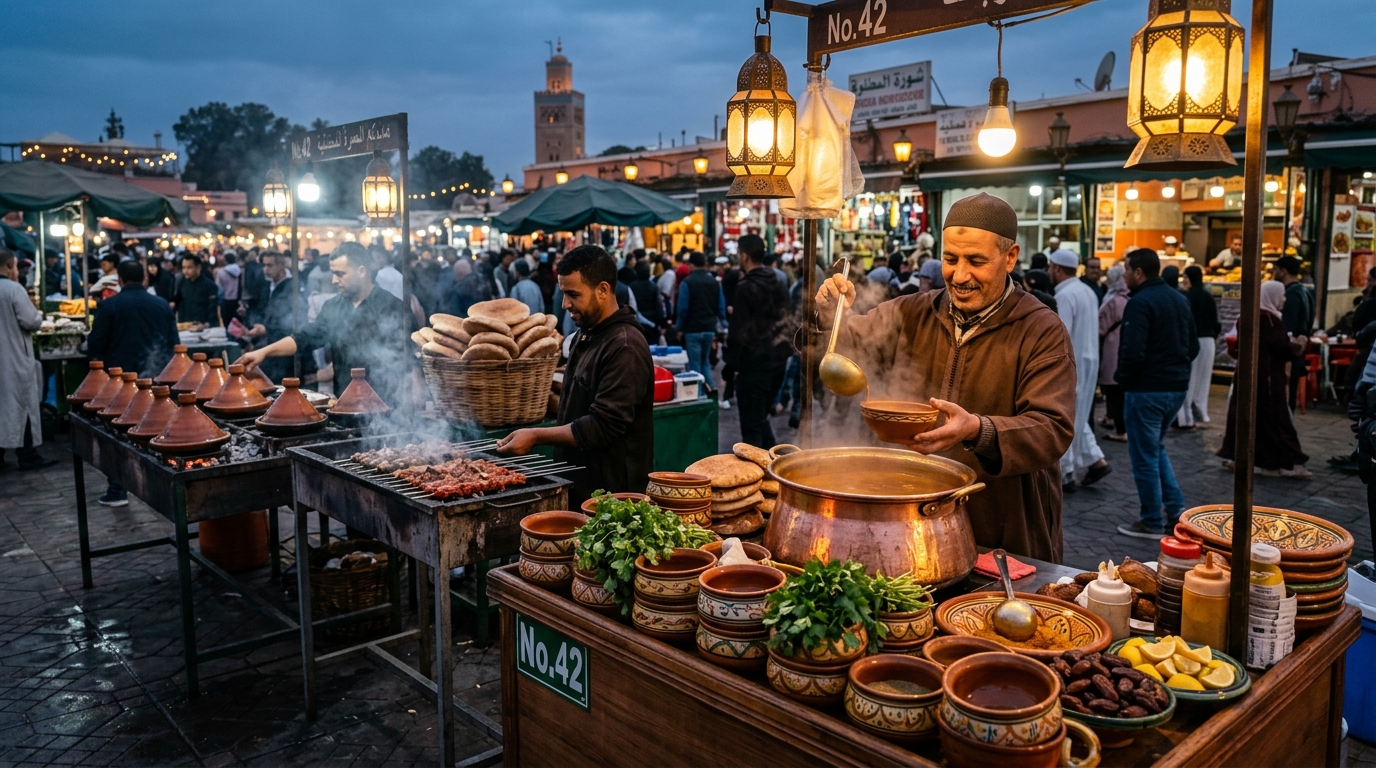
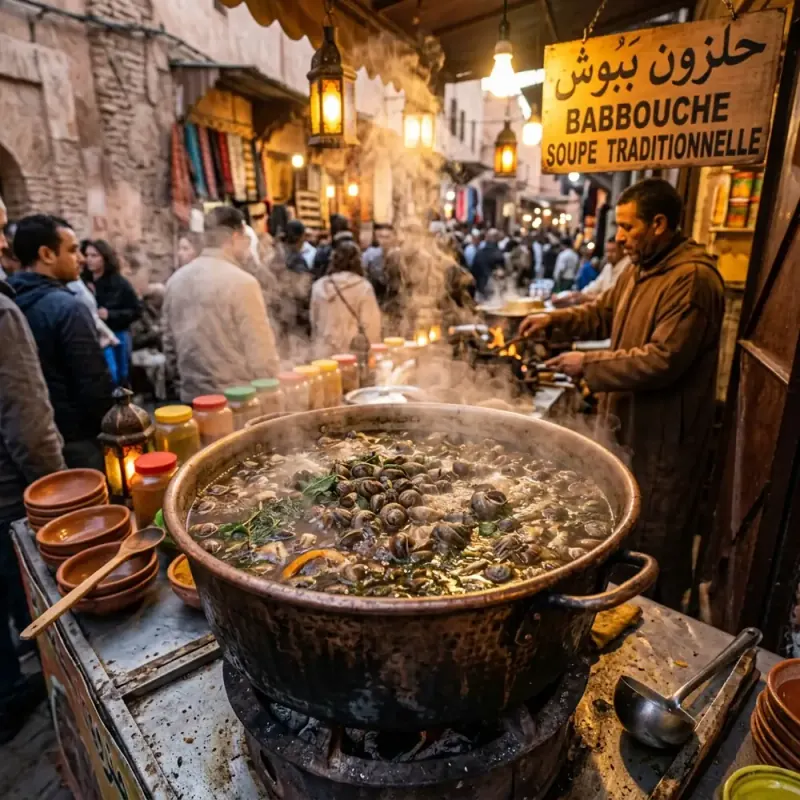
Follow that fragrant steam down any medina street and you will find a crowd gathered around a wooden handcart. At the center sits a giant copper or aluminum cauldron, bubbling under the warm yellow glow of a bare bulb. Inside swim thousands of speckled brown land snails, glistening in an amber broth so dark and aromatic it looks like a medieval apothecary remedy.
In France, snails arrive baked under garlic parsley butter. In Morocco, snails—called ghlala in northern coastal cities and babbouche across central plains—belong entirely to the sidewalk, the cold night air, and an age-old tradition of herbal medicine.
The Autumn Rains and Wild Mountain Foraging
Morocco’s snail season does not begin in commercial breeding farms. It begins on the rocky limestone slopes of the Rif Mountains, the cedar plateaus around Ifrane, and the wild scrublands of the Haouz plain.
During the dry heat of midsummer, Moroccan land snails—principally Helix aspersa and Otala lactea—enter a state of dormancy called aestivation. They seal their shell openings with a chalky barrier and cling to olive trunks, wild fennel stalks, and rock crevices to escape the heat.
Everything changes when the first autumn showers arrive, known locally as chta d-lkhrif. The parched earth drinks the rain, wild herbs awaken, and millions of snails slide into the open to feed. At dawn the next morning, Berber foraging families set out across the hills carrying hand-woven palm baskets called guffas.
Foraging requires practiced eyes. Experienced pickers bypass tiny snails and avoid bitter weeds. They seek plump snails that have grazed on wild thyme (za’atar), lavender, and fresh mountain grasses. By afternoon, burlap sacks are loaded onto rural buses headed for the wholesale markets of Casablanca, Meknes, and Marrakech.
The Sacred Fast: How Moroccan Grandmothers Purge the Harvest
Any master snail maker (moulay l-babbouche) will tell you that great snail broth begins long before lighting the fire. You cannot cook snails straight from the mountain slopes. Doing so yields a bitter, muddy taste that ruins the broth.
The snails undergo a mandatory purification ritual lasting five to seven days. They are spread across ventilated wooden crates in a cool, shaded room. For the first two days, they fast to empty their digestive tracts. On the third day, the grandmother or vendor provides a nourishing diet of fine wheat semolina (smida), clean wheat bran, and generous handfuls of wild thyme or pennyroyal (fliou).
The snails feed on the sweet grains and herbs, which cleanses them while perfuming their meat from within. After this herbal diet, the cleaning begins. The snails are transferred into large tubs and washed through seven separate changes of cold water, scrubbed with coarse rock salt to strip away surface residue. Only when the rinse water stays crystal clear are they ready for the cauldron.
The Cauldron of Fifteen Herbs: An Ancient Medina Remedy
Moroccan snail broth is an ancient botanical tonic rooted in classical Andalusian-Arab herbal medicine. Before modern clinics, families relied on the neighborhood herbalist (‘attar) for a healing blend designed to soothe winter chests, warm stiff joints, and drive out stubborn chills.
A master cook relies on fifteen botanicals:
- Licorice Root (‘Arq Souss): Woody sticks releasing sweetness, coating throats.
- Dried Bitter Orange Peel (Qshour el-Lchin): Sun-dried Seville orange skins for bright citrus bitterness.
- Wild Mountain Thyme (Za’atar): Hand-picked from Atlas ridges, delivering a deep woodsy herbal base.
- Pennyroyal (Fliou): Sharp wild mint opening breathing passages instantly.
- Sweet Aniseed (Nafa’a) & Caraway (Karwiya): Calming seeds that aid digestion.
- Crushed Ginger (Skkinjbir): Sharp dried root bringing radiant warmth.
- Bird’s Eye Chilies (Soudaniya): Small dried chilies delivering heat to clear congestion.
- Mastic Tears (Meska Horra): Pure aromatic resin pounded with salt to bind broth perfume.
- Grains of Paradise (Gouza Sahraouia): Peppery seeds carrying warm cardamom notes.
- Lavender Blossoms (Khzama): Dried purple buds adding a faint floral whisper.
- Ceylon Cinnamon (Qarfa): Bark pieces providing aromatic depth.
- Coriander Seeds (Qasbour Yabes): Citrus-scented cracked seeds balancing herbs.
- Sweet Fennel Seeds (Habbat Hlawa): Enhances sweetness and relaxes digestion.
- Bay Laurel Leaves (Warqat Sidna Moussa): Adds savory undertones.
- Black Peppercorns and Cubeb (Kababah): Spicy berries lingering pleasantly.
The botanicals are bundled into a clean muslin pouch called a kemoussa, while thyme and pennyroyal simmer freely in the water. After whispering Bismillah, the cook adds the snails. The cauldron simmers gently for nearly three hours until the broth turns amber and the snails turn tender.
The Sidewalk Ritual: Toothpicks and Steaming Bowls
Eating babbouche on a chilly sidewalk is an intimate local experience. There are no tables, no printed menus, and no silverware—only a bowl of wooden toothpicks (khelal) resting on the cart.
A small bowl costs five dirhams, while a large portion costs ten. The vendor sweeps a slotted ladle through the pot, fills an earthenware bowl with snails, and ladles spicy broth over the top.
The method requires simple precision:
- Hold the Shell: Grip the shell firmly between your fingers.
- The Twist: Insert the toothpick into the opening, pierce the dark foot, and turn the shell clockwise while easing outward. The tender meat releases cleanly in a single curled piece.
- The Bite: Eat the snail whole. The texture is tender and clean, similar to cooked button mushrooms, carrying the flavor of mountain thyme.
- The Discard: Drop the empty shell into the bucket below, joining the steady clatter of shells.
When the snails are gone, lift the warm clay bowl with both hands and drink the broth while hot. The first sip brings the sweetness of licorice and orange peel. The second sip sends pennyroyal through your chest. By the third sip, hot chilies awaken your throat, sending warmth down to your fingertips and toes.
Grandmother Wisdom: Folk Medicine in a Bowl
Speak with any Moroccan grandmother and she will praise babbouche with pride. In traditional households, this broth is celebrated as an essential winter defense.
“When cold weather (l-berd) settles into your chest and your throat hurts, don’t look for pills,” grandmothers tell their families. “Go to the corner cart, bring home a jar of fresh babbouche broth, drink it down hot, and wrap yourself in heavy wool blankets to sweat out the fever.”
The lean protein and natural minerals in the snails, matched with the warming qualities of wild thyme, ginger, licorice, and pennyroyal, create a restorative soup. Around the cart, social barriers disappear. At nine in the evening, a bank clerk stands next to a market porter and a student, all sharing toothpicks, warm broth, and friendly conversation.
Frequently Asked Questions
What is the true texture and flavor of Moroccan snails?
Moroccan snails are never slimy or rubbery when prepared correctly. They have a tender chew reminiscent of simmered button mushrooms or baby calamari. Their flavor is mild and earthy, absorbing the rich accents of mountain thyme, licorice root, aniseed, and hot pepper from the cooking broth.
How do vendors ensure the snails are clean and safe?
Vendors follow strict traditional protocols. Snails are quarantined and fed a clean diet of semolina and wild herbs for several days to empty their digestive tracts. They are then scrubbed repeatedly in multiple changes of salt water until the water is completely clear before simmering for hours in a hot herbal broth.
Can you order only the broth without the snails?
Yes, ordering just the broth is common across Morocco. Anyone needing a hot herbal tonic can order a kass d-loul (a glass of broth) for two or three dirhams. In winter, neighborhood residents regularly bring their own thermal bottles for vendors to fill with hot broth for relatives resting at home.
When is the traditional season for babbouche in Morocco?
The authentic season starts in October with the arrival of autumn rains and continues through April. While some tourist stalls keep snails year-round, locals seek them out during the coldest months when wild snails are at their plumpest and hot medicinal broths are most needed.
Experience the true heart of Moroccan heritage through its culinary traditions. Join us in preserving and honoring these ancestral recipes.
What People Are Saying
No comments yet. Be the first — we'd love to hear from you.
The Moroccan Food
Culturally Verified & Fact-CheckedThe Moroccan Food editorial team brings together native culinary researchers, heritage preservationists, and experienced home cooks across Marrakech, Fes, and Casablanca. Every recipe and cultural guide is reviewed against ancestral oral traditions and authentic regional practices.