Moroccan Street Art and Contemporary Culture: From Graffiti in Casablanca to Emerging Artists
Moroccan Street Art and Contemporary Culture: From Graffiti in Casablanca to Emerging Artists
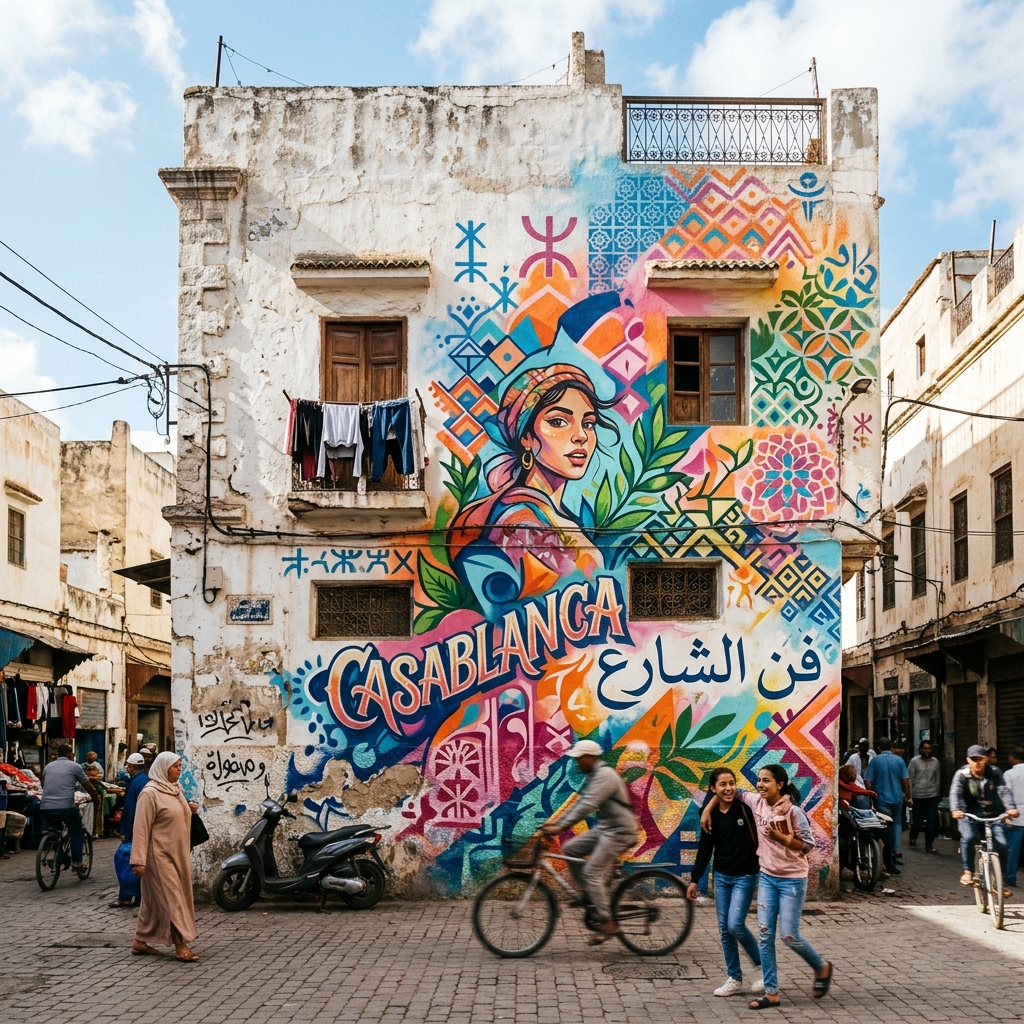
If you walk through the Les Abattoirs neighborhood in Casablanca or take the tramway through the center of Rabat, you will see something that challenges every traditional postcard image of Morocco. Towering across the blind walls of six-story apartment blocks are massive, hyper-realistic murals. A giant portrait of an Amazigh woman with traditional face tattoos rendered in neon colors. A sprawling, abstract piece of Arabic calligraffiti that looks like it was painted by a glitching computer.
This is not vandalism. This is the new Moroccan cultural establishment.
Over the past decade, Morocco has experienced an unprecedented explosion of street art and contemporary urban culture. What started as an underground, highly marginalized graffiti scene in the early 2000s has evolved into one of the most dynamic and state-supported public art movements in the Arab world.
The Catalyst: Festivals and Legal Walls
The turning point for Moroccan street art was the institutional realization that urban art could revitalize neglected neighborhoods.
The most significant catalyst has been the Jidar - Rabat Street Art Festival, launched in 2015. Every year, Jidar invites top international muralists to collaborate with emerging Moroccan talent. They are given massive public walls across Rabat (which proudly claims the title of the ‘City of Light, Moroccan Capital of Culture’). The result is that Rabat has become an open-air museum; you can take guided street art tours that map out dozens of monumental works across the city.
In Casablanca, the Sbagha Bagha festival has performed a similar function, bringing color to the dense, concrete heavy industrial capital.
These festivals did something crucial: they legitimized the medium. They took spray paint out of the shadows and proved to the Moroccan public that contemporary street art requires huge technical skill and vision.
The Artists Defining the Scene
The Moroccan street art scene is distinctly local. While the artists are globally connected via Instagram, their visual language is deeply rooted in Moroccan identity, history, and social issues.
Morran Ben Lahcen: Often considered one of the pioneers of Moroccan contemporary urban art. He started in the underground graffiti scene of the late 90s and has evolved into a highly respected contemporary artist whose work bridges the street and the gallery. His style often deconstructs traditional Moroccan motifs into abstract, almost digital topographies.
Rebel Spirit: Known for his comic-book influenced style, Rebel Spirit’s work is deeply embedded in the culture of Casablanca. His art often pays homage to the working-class heroes of the city — the mechanics, the street vendors, the musicians — rendering the grit and energy of Casa with deep affection.
Ed Oner: A master of portraiture, Ed Oner’s large-scale murals often feature striking, hyper-realistic faces of ordinary Moroccans, forcing the city to look at the people who actually inhabit it.
The Calligraffiti Movement: Perhaps the most uniquely regional development is the fusion of traditional Arabic calligraphy with urban graffiti styles. Artists use the fluid, geometric rules of classical Arabic script but execute it with spray cans, markers, and wild, abstract energy. It is a perfect metaphor for modern Morocco: ancient structures remixed for the 21st century.
Beyond the Walls: The Broader Contemporary Culture
The explosion of street art is just one visible symptom of a much broader contemporary cultural movement in Morocco.
The youth of Casablanca and Rabat are building an entirely new aesthetic. You see it in the rise of Moroccan streetwear brands that combine traditional fabrics (like the heavy wool of a winter djellaba) with modern skate silhouettes. You hear it in the massive popularity of Moroccan drill and trap music, where artists rap in a dense, hyper-local slang that mixes Darija, French, and English, addressing the realities of urban unemployment and ambition.
Places like L’Uzine in Casablanca (a massive cultural foundation offering studio space to dancers, musicians, and artists) or the Hiba Foundation are providing the infrastructure for this contemporary scene to professionalize.
Where to Experience It
If you want to see this side of Morocco, you have to step away from the medina.
- In Rabat: Download the map from the Jidar festival website and spend a morning tracking down the murals in neighborhoods like Agdal and Hassan. Visit the Mohammed VI Museum of Modern and Contemporary Art (MMVI), which frequently bridges the gap between urban art and high culture.
- In Casablanca: Walk around the old slaughterhouses (Les Abattoirs), which were briefly converted into a sprawling urban culture center and remain covered in historic graffiti. Look for the massive murals in the city center near the Twin Center.
- In Marrakech: While heavily traditional, the new city (Gueliz) is home to the MACAAL (Museum of African Contemporary Art Al Maaden), which showcases cutting-edge contemporary work from Morocco and across the continent.
The beauty of Moroccan street art is that it proves the culture is not frozen in time. The mosaics and the cedar carving of the 14th century are magnificent, but the spray-painted walls of 2026 are just as vital, just as authentic, and just as Moroccan.
Experience the true heart of Moroccan heritage through its culinary traditions. Join us in preserving and honoring these ancestral recipes.
What People Are Saying
No comments yet. Be the first — we'd love to hear from you.
Youssef El Alaoui
Culturally Verified & Fact-CheckedThe Moroccan Food editorial team brings together native culinary researchers, heritage preservationists, and experienced home cooks across Marrakech, Fes, and Casablanca. Every recipe and cultural guide is reviewed against ancestral oral traditions and authentic regional practices.