The Ziz Valley and Erfoud: Morocco's Date Capital, Its Fossil Market, and the Desert That Starts Here
The Ziz Valley: Between the Atlas and the Sahara, Where the Dates Grow
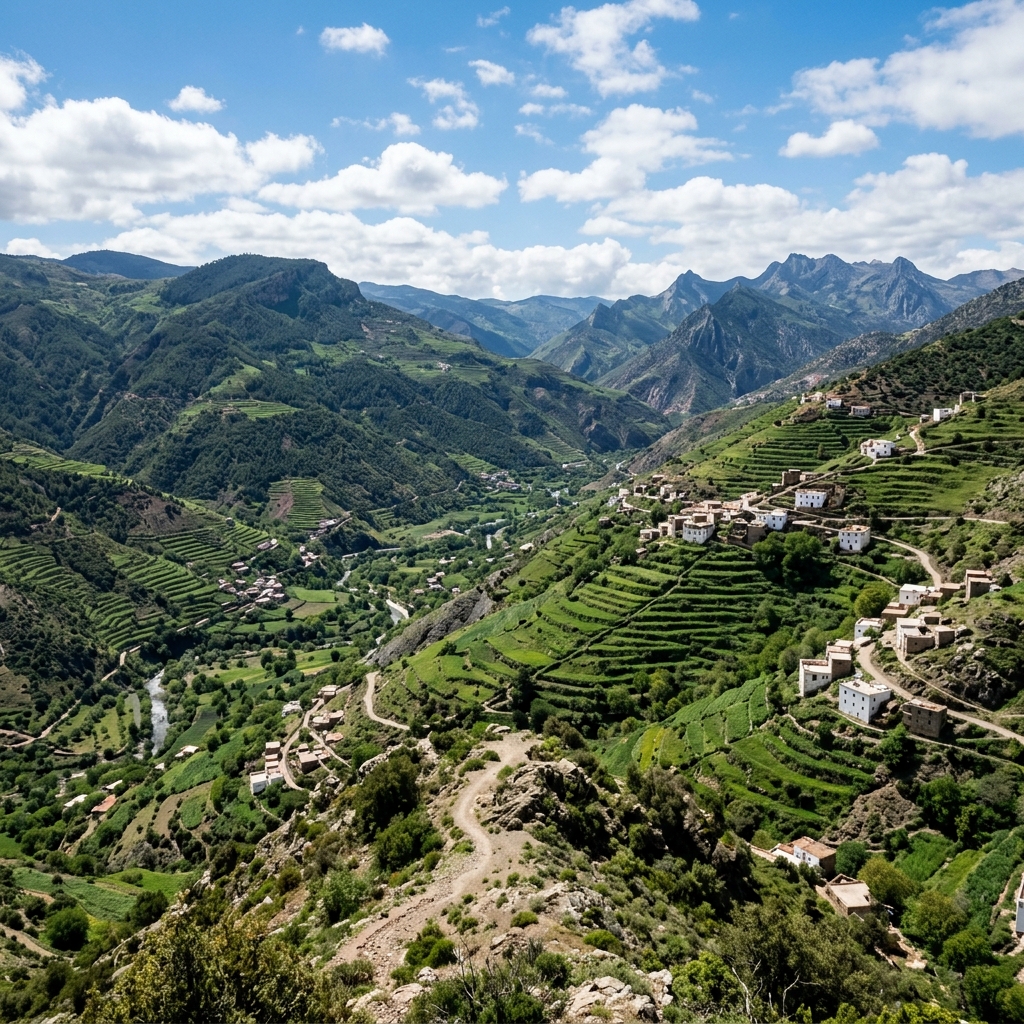
The approach to the Ziz Valley from the north — coming south from Midelt through the High Atlas — is one of the more dramatic landscape transitions in Morocco, and I want to describe it precisely because the drama is not theatrical but geological, and understanding what you are looking at makes the view more interesting rather than less.
The road descends from the Atlas plateau through a series of gorges — the Gorges du Ziz, carved by the Oued Ziz through sedimentary limestone and sandstone that was deposited as seabed before the Atlas uplift raised it to its current elevation. The gorge walls, hundreds of meters high at the narrowest points, show the sedimentary layering in horizontal bands that correspond to different geological periods — the pale limestone of shallow marine deposits, the darker mudstone of deeper water, the occasional red-orange of iron-rich continental sediments from periods when the sea had retreated and rivers were depositing their load.
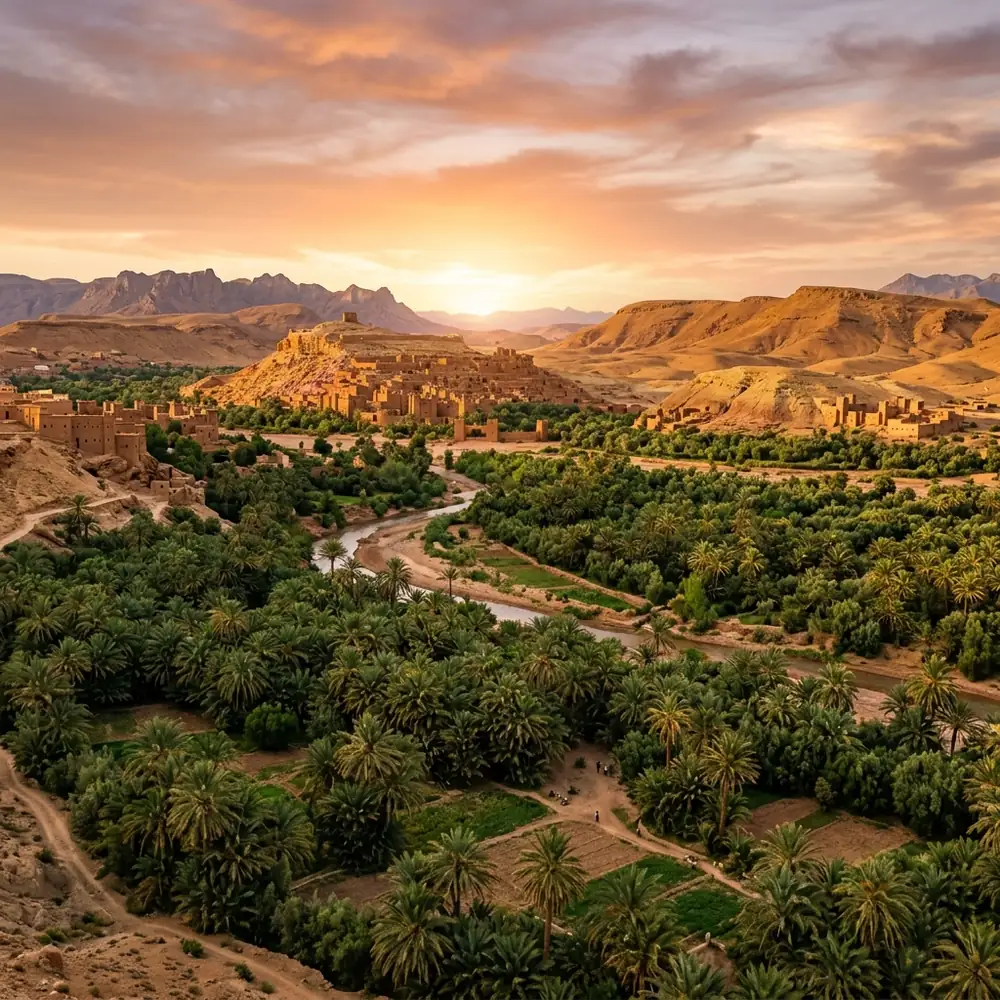
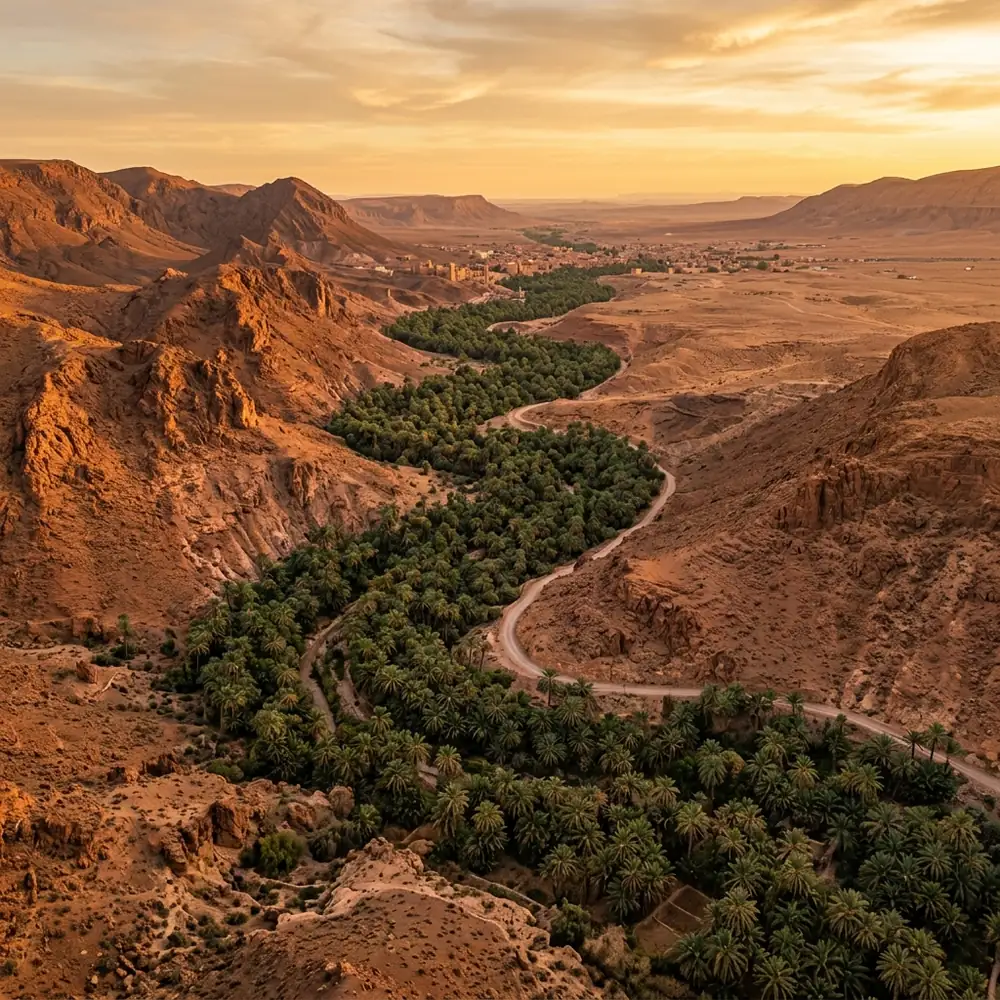
At the southern end of the gorges, the walls open and the Ziz Valley suddenly expands: a wide plain framed by low desert ridges, the palm groves of the date oases visible as dark green against the ocher and rose of the surrounding hamada (rocky desert). The transition from the rocky, dramatically cut canyon to the cultivated palm valley is one of those landscape moments that produces the specific combination of relief and wonder — the canyon's severity giving way to the valley's productivity — that makes landscape travel meaningful.
What Are the Ziz Valley's Dates and Why Are They Significant?
The Ziz Valley, along with the Tafilalet region it encompasses, is Morocco's primary date-producing zone — producing approximately 80,000 to 100,000 tonnes of dates annually from a variety of cultivars whose quality ranges from the internationally prized Medjool to the everyday Boufegous and the lesser-known but locally prized Jihel and Bousekri varieties.
Medjool dates: the internationally famous large, soft, caramel-flavored date that has become a premium product in European and American specialty markets. The Moroccan Medjool — particularly from the Erfoud and Alnif regions — is considered among the best produced anywhere, with a sweetness and a flesh texture (soft, slightly chewy, almost creamy at the perfect ripeness) that the Israeli and Californian production that has expanded in recent decades cannot fully replicate because of the specific combination of climate, soil, and traditional cultivation practice.
Boufegous dates: a more common, less expensive variety with a distinct sweet-and-slightly-astringent flavor that Moroccans often prefer for everyday eating. They are smaller, firmer, and less consistently available in international markets but are what most Moroccan families eat daily rather than the Medjool, which is expensive enough to be a gift item rather than a daily food in Morocco itself.
The date harvest season — October primarily — brings the Erfoud region to life with the activity of harvest: the clusters cut from the palm crowns by workers who climb the trees using traditional foot-loop techniques, the sorting and grading by size and quality at the packing stations, the specific smell of ripe dates in quantity that has no comparison in any other food context.
What Is the Fossil Market at Erfoud and What Are the Fossils?
Erfoud is the regional center for what has become a significant artisan industry: the quarrying, cutting, and polishing of fossil-rich marble — limestone containing abundant fossil marine invertebrates from the Devonian period (approximately 350-400 million years ago, when the region was a shallow tropical sea) — and the fabrication of decorative and craft objects from this material.
The fossils are real: primarily ammonites (the distinctive spiral-coiled cephalopods), orthoceras (elongated nautiloid shells), trilobites, and brachiopods, all preserved as calcified replacement of the original shell material within the limestone matrix. When the limestone is cut, polished, and buffed, the fossils appear as high-contrast patterns against the black or grey matrix — the ammonite spirals and the orthoceras cross-sections creating compositions that are both geologically accurate and visually striking.
The Erfoud fossil market ranges from small tourist-facing shops selling polished decorative pieces at inflated tourist prices to the actual quarry workshops where the material is cut and processed, where prices are significantly lower and the production process is visible. The distinction between the two is worth knowing before purchasing.
What to verify when buying fossil pieces: the fossils should be genuine rather than reproduced in resin (genuine fossils have a slightly irregular surface texture and the calcite replacement material has a specific visual quality that resin copies don't fully achieve). The better workshops will be clear about the difference and will not mix genuine and reproduction pieces without labeling.
What Is the Experience of Arriving at the Erg Chebbi from the Ziz?
Erg Chebbi — the large Saharan dune field near Merzouga, approximately 50 kilometers from Erfoud — is the visual culmination of the eastern pre-Saharan route and the destination that most visitors to the Ziz Valley are ultimately heading toward. The approach to Erg Chebbi from Erfoud through Rissani is across a flat, rocky hamada — the desert that is not dunes but is definitively Saharan in character — and the appearance of the dunes on the horizon, growing from a faint orange smear at distance to the full scale of a 150-meter erg at arrival, is one of those visual experiences that photographs consistently understate.
The dunes are genuine Sahara — not a theatrical approximation, not a tourist installation, but an actual Saharan erg that is climatically and geographically continuous with the desert that extends south and east for thousands of kilometers without significant change.
The Invisible Invitation
Drive south from Erfoud toward Merzouga in the late afternoon, timed so that you arrive at the Erg Chebbi perimeter as the sun is approaching the western horizon. Park at the edge of the hamada where the first dune begins — the hard, flat rock surface giving way to the first loose sand in a transition that happens in a single step. Stand at that transition. Put one foot on the rock and one foot on the sand. The rock is the hamada, which extends north for hundreds of kilometers. The sand is the Sahara, which extends south for thousands. You are standing on the boundary. The specific quality of the late-afternoon dune light — the shadows sharp, the sand color deepening from pale gold to orange to rose as the sun drops — is what this valley and this approach have been building toward. The Ziz's palm groves, the Atlas gorges, the Erfoud fossils from 380 million years ago — all of it has led to this particular boundary in this particular light. Stay until the light is gone. Then, in the dark, the stars over the Erg Chebbi are what the dark sky over the Sahara always is: more stars than the eye expects, in a darkness deep enough that the stars cast shadow.
SEO Meta Description: What is the Ziz Valley and Erfoud in Morocco? Medjool date varieties, date harvest season, Devonian fossil marble market, and how to approach Erg Chebbi at the correct time of day.
Experience the true heart of Moroccan heritage through its culinary traditions. Join us in preserving and honoring these ancestral recipes.
What People Are Saying
No comments yet. Be the first — we'd love to hear from you.
Youssef Amazigh
Culturally Verified & Fact-CheckedThe Moroccan Food editorial team brings together native culinary researchers, heritage preservationists, and experienced home cooks across Marrakech, Fes, and Casablanca. Every recipe and cultural guide is reviewed against ancestral oral traditions and authentic regional practices.