Morocco's Coastal Road Food Guide: Sardines, Seafood and Roadside Gems from Tangier to Agadir
The Atlantic coast of Morocco stretches nearly 2,500 kilometers from the Strait of Gibraltar to the Western Sahara border. The road that runs alongside most of it — stitching together fishing ports, ancient walled towns, lagoon beaches, and sardine cannery towns — is one of the most underrated drives in the world, and one of the most rewarding food itineraries anywhere on the continent.
I have done this route in sections and in full, in an old diesel sedan and in a borrowed campervan, in July and in October. The October version wins by a significant margin. The summer crowds are gone, the sea is calmer, the catch is at its richest, and the light on the Atlantic in autumn is extraordinary — the kind of flat, silver-white light that makes everything look both ancient and immediate.
Here is the route that matters, and what to eat at each stop.
Tangier: The Northern Gate
Tangier has more food energy than it is usually given credit for. The city’s long history as an international zone — occupied by successive European powers, then running as an independent international territory until 1956 — left a food culture that is slightly distinct from the rest of Morocco. You find Spanish influences (fideos-style pasta dishes in some older cafés), French pâtisserie alongside Moroccan msemen, and a fish tradition anchored in the Strait of Gibraltar’s particular waters.
The port market is where you start. Tangier’s fishing fleet works the Strait daily, pulling in sea bass, bream, red mullet, and Atlantic mackerel depending on the season. The port-side restaurants — simple places with plastic chairs and open charcoal grills visible from the street — serve the catch of that morning, grilled whole with chermoula (the Moroccan herb and spice marinade of parsley, coriander, garlic, cumin, lemon, and olive oil). Order by pointing. Eat quickly. Move south.
Asilah: White Walls and Grilled Fish
Asilah, 46 kilometers south of Tangier, is one of the most beautiful small towns in Morocco — a Portuguese-fortified medina painted white and blue, on a promontory above the Atlantic. In August it fills entirely with visitors. In October, you can walk the ramparts in near-solitude and eat at the port at a table with an unobstructed view of the sea.
The fish restaurants at Asilah’s small harbor are among the most reliable on the entire coast. Nothing elaborate: whatever came in that morning, grilled over charcoal, served with bread, olives, Moroccan salad (cucumber, tomato, onion, with cumin and olive oil), and harissa on the side. The grilled sardines here deserve special mention — Asilah sardines in September and October, when they are at their fattiest before winter, are an argument for nothing else being on the plate.
Larache and Moulay Bousselham: Lesser-Known and Worth It
Most travelers skip Larache. This is an error. The town has a functioning port, a small but excellent fish market, and a medina with almost no tourist presence. The seafood restaurant culture here is entirely local — small places that fill for lunch with fishermen, truck drivers, and municipal workers who know the food is good. Grilled mullet, squid in tomato sauce, fried anchovies dusted with cumin. Order the house fish soup — a loose, brothy affair with saffron and a piece of whatever is in season — before anything else.
Moulay Bousselham, twenty minutes further south, sits on a lagoon that is one of Morocco’s most important wetlands and bird sanctuaries. The lagoon is also a productive oyster and mussel nursery. Local fishermen run small boats to the oyster beds and sell directly from the dock. This is not the organized, tourist-facing oyster experience of Oualidia further south — it is more informal, more negotiated, and more rewarding for it. Point to what you want, agree on a price, and eat on the dock with a squeeze of lemon.
Rabat: Capital City, Underrated Seafood
Rabat has a political reputation that somewhat overshadows its food. The capital is genuinely excellent for seafood, anchored by the Kasbah des Oudayas district where the Bou Regreg river meets the Atlantic. The fish market in the Kasbah area is small but selective — fewer vendors than Casablanca, better average quality.
The Salé side of the river (Rabat’s sister city, connected by bridge) has a more working-class fish restaurant culture and significantly lower prices for the same quality of fish. If you are spending a night in Rabat, eat your fish dinner in Salé.
Casablanca: The Port That Means Business
Casablanca’s port is the largest in Africa. It is a working industrial port, not a scenic one, but the fishing sector that operates alongside it produces remarkable volume and variety. The central fish market near the port sells swordfish, tuna, shrimp, cuttlefish, monkfish, and the full range of Atlantic species in quantities that make the markets further north look like corner shops.
The seafood restaurant culture in Casablanca is split between the expensive marina establishments (good but not exceptional for the price) and the port-side holes in the wall where dock workers eat (exceptional for almost no price). El Bahia port area restaurants are the most frequently recommended. Skip the formal ones with hostesses and laminated menus. Find the one with the handwritten chalkboard and a charcoal smell that reaches you from thirty meters away.
El Jadida: The Portuguese Cistern Town
El Jadida, a coastal town two hours south of Casablanca, is worth a stop for its remarkable Portuguese Manueline cistern and its position as the last major town before the oyster coast begins. The fish market here is excellent, and the restaurant culture serves the fishing families who run the Atlantic sardine boats in and out of the harbor.
The local specialty worth seeking: sardines prepared not just grilled, but stuffed with chermoula paste, pan-fried until crisp, and served stacked with a bowl of harissa on the side. This preparation requires fresh, large sardines — the kind you get in October when the fish have been fattening all summer. Do not try to replicate it with small, thin sardines.
Oualidia: The Oyster Lagoon
Oualidia is the highlight of the entire coastal route for many travelers, and it deserves the reputation. The lagoon here — sheltered from the Atlantic by a sand bar, fed by tidal channels — produces oysters that have been celebrated since the 1950s when King Mohammed V reportedly ate them regularly. The designation “Oualidia oysters” carries genuine prestige in Moroccan fine dining, and the source is worth visiting.
The oyster farm experience at Oualidia is available to visitors: small boats take you out to the beds, where you watch the grading and harvesting process before returning to eat. Some farms sell directly from simple shacks at the lagoon edge — a foam cooler of ice, a knife, a squeeze of lemon, nothing else. The oysters are briny, clean, and cold in a way that nothing from a restaurant kitchen quite replicates.
The lagoon also produces excellent mussels and clams. The small restaurants at the lagoon edge serve them simply: steamed with garlic and white wine, or in a tomato-saffron broth with bread for dipping. Prices at the water’s edge are significantly lower than at the more formal restaurants near the beach road. Sit at the water if you can.
Safi: The City That Runs on Sardines
Safi is Morocco’s sardine capital in an almost literal sense — the cannery industry here processes a significant portion of Morocco’s sardine catch, and the town’s economy, architecture, and social life are inseparably linked to the Atlantic fishery.
The sardine culture in Safi deserves more attention than it gets. Fresh sardines from the Safi fleet, eaten the same day, have a richness and depth of flavor that justifies Morocco’s status as one of the world’s top sardine producers. The fat content of Atlantic sardines is at its peak in autumn — the fish have been feeding heavily before the winter — and a Safi sardine grilled over charcoal in October is a singular eating experience.
The fish market at the port opens early. The grills outside it are operational before eight in the morning. Eat breakfast here: sardines, bread, a glass of sweet mint tea. You will understand immediately why this fish is taken so seriously by the people who live with it.
Essaouira: The Port of Winds
Essaouira is the most visited stop on this coastal route and, despite that, still manages to be genuinely good for seafood. The port is active and visible from the city walls — fishing boats come and go through a gap in the fortifications in a constant stream. The fish grill stalls immediately inside the port entrance are one of Morocco’s most photographed food scenes, and justifiably so.
The stalls work like this: you walk the line, look at what is displayed on ice, choose by pointing, agree on a price per piece (prices are fixed per item and usually clearly marked), and the grill man cooks it in front of you while you find a plastic stool. Calamari, shrimp, dorade, sea bass, sole — everything is paid for separately and arrives as it is ready. The total for a generous seafood lunch for two, with bread and drinks, runs to 150 to 220 dirhams at the time of writing.
The thing to avoid at Essaouira’s port stalls: the upselling that some stalls engage in with tourists, adding items you did not specifically select. Choose everything yourself before they start cooking, count the items, and confirm the price before sitting down.
Agadir: Journey’s End
Agadir was rebuilt after a catastrophic earthquake in 1960 and lacks the historical architecture of the towns further north. It makes up for it with a wide Atlantic beach, a competent restaurant scene, and the Souss-Massa agricultural plain behind it that produces a large proportion of Morocco’s citrus, tomatoes, and fishing catch.
The fish restaurants along the Agadir marina district are polished and good, particularly for grilled fish and seafood pasta. The local specialty worth ordering: fresh shrimp from the Agadir fleet, grilled simply with butter and parsley, which is humble but excellent when the shrimp are straight off the boat.
Roadside Shack Culture: The Best Meals on the Route
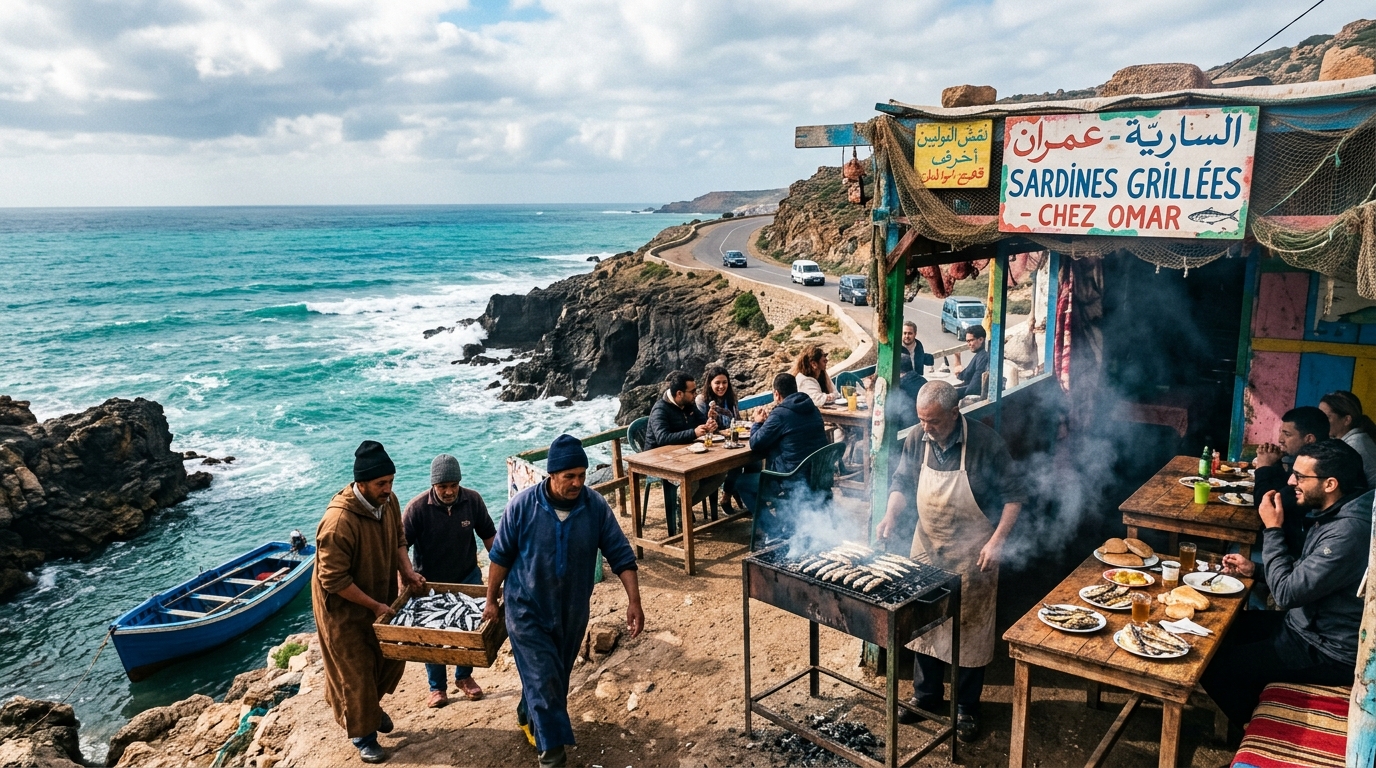
Do not skip the roadside shacks. Seriously. Between Asilah and El Jadida, there are dozens of small roadside stops — concrete structures with open grills, plastic tables, a handwritten price list, and whatever fish came in that morning. These places feed truck drivers, construction workers, and local families. They are not scenic. They are often the best meal of the day.
The formula is consistent: grilled fish (whatever is available), bread baked that morning, a simple salad, and a glass of tea. Price is usually 30 to 50 dirhams per person. Stop at the ones where trucks are parked outside. Truck drivers in Morocco have no incentive to eat somewhere bad, and they know every road stop on every route in the country.
Campervan Tips for the Coastal Route
If you are doing this route in a campervan, a few practical points:
The stretch between Moulay Bousselham and Oualidia has several wild camping spots above the cliffs that are extraordinary. Larache and El Jadida have designated campsites with facilities. Essaouira has one good campsite within walking distance of the port.
Buy fish at the port markets and cook on your own grill. The fish is cheaper, fresher, and the experience of grilling sardines at sunset above the Atlantic costs nothing additional. Bring chermoula paste (easily made in advance: blended parsley, coriander, garlic, cumin, paprika, lemon, olive oil) and store it in a sealed jar in the cooler.
The best season for this route in a campervan is September to November: warm enough to be comfortable, cool enough to keep food without ice constantly, and calm enough that the coastal roads are not congested with summer traffic.
FAQ
How long should I allow for the full Tangier to Agadir coastal road? Without rushing, six to eight days is comfortable. This allows a full stop at each major point without the feeling that you are ticking boxes. If you have only four days, prioritize Asilah, Oualidia, and Essaouira — these three alone are worth the drive.
Is it safe to eat oysters at the Oualidia lagoon? The Oualidia oysters are farmed in a controlled environment and have a strong safety record. The farms operate under Moroccan fisheries health standards. The important thing is freshness — buy from an established farm seller rather than an unverifiable roadside vendor, and eat them immediately. Standard oyster-eating caution applies: if one does not smell right, do not eat it.
What is the best way to handle the language barrier at roadside fish stalls? Pointing, smiling, and counting on your fingers works universally. Prices are often marked or can be indicated with a phone calculator. The word “hoot” (fish) and “sardine” are universally understood along the Moroccan coast. Darija (Moroccan Arabic) learning curve is steep, but almost no transaction at a fish grill requires more than a few words.
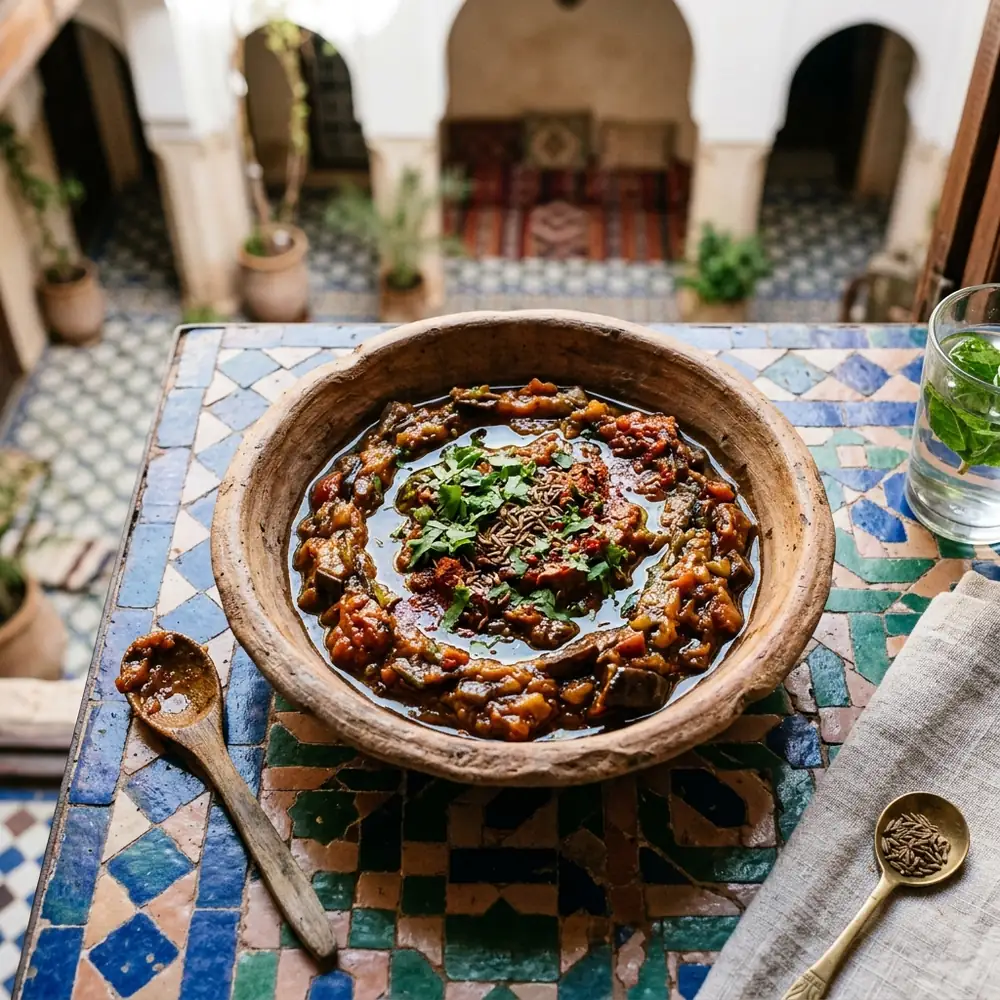
Are there vegetarian options along the coastal route? This is a coast road defined by seafood, but vegetarian food is available everywhere. Moroccan salads (zaalouk, taktouka, carrot, beet), khobz, olives, eggs, and fresh fruit make up a perfectly good vegetarian road-trip diet. Most towns have a small hanout (corner shop) where you can buy provisions for the road between stops.
Experience the true heart of Moroccan heritage through its traditions. Join us in preserving these ancestral rituals.
What People Are Saying
No comments yet. Be the first — we'd love to hear from you.
The Moroccan Food
A Moroccan cultural writer dedicated to documenting the authentic voice, history, and heritage of the Kingdom. Writing from within — to share what truly makes Morocco extraordinary.
Our Mission →