Morocco E-Visa 2026: Which Countries Need One, What It Costs, and How to Get It in 48 Hours
Morocco E-Visa 2026: Which Countries Need One, What It Costs, and How to Get It in 48 Hours
Let us start with the good news. Most people reading this do not need a visa to visit Morocco.
Morocco maintains visa-free entry agreements with over 68 countries — covering the vast majority of Western European nationals, North Americans, Australians, Japanese citizens, and travellers from most of Latin America. If your passport is from the EU, the UK, the US, Canada, or Australia, you simply arrive, show your passport, and you are in. No paperwork. No fees. No problem.
But if you are not in that group — or if you are simply not sure — read this carefully.
Who Actually Needs a Visa?
No visa required (90-day stay):
- All EU member state citizens
- UK citizens
- US, Canadian, and Australian citizens
- GCC nationals (Saudi Arabia, UAE, Kuwait, Qatar, Bahrain, Oman)
- Most Latin American citizens (Argentina, Brazil, Chile, Colombia, Mexico and more)
- Japanese and South Korean citizens
Visa required:
- Indian nationals
- Pakistani nationals
- Nigerian and most West African nationals
- Most Central Asian nationalities
- Chinese nationals (bilateral discussions ongoing as of 2026, not yet finalised)
The full official list is at marocvisas.gov.ma. If you have any doubt at all, check your specific passport there before you book anything.
Morocco’s E-Visa: What It Is and How It Works
Morocco’s electronic visa allows eligible nationals to apply online before travel, instead of queuing at a consulate. It is a genuine convenience — when the system works.
The e-visa covers:
- Tourism (most common use)
- Short business visits
- Transit through Moroccan territory
Documents you need to apply:
- Valid passport (6+ months remaining, at least 2 blank pages)
- Digital passport-size photograph meeting standard specs
- Confirmed accommodation booking or formal invitation letter
- Return flight ticket or proof of onward travel
- Travel insurance covering the full duration of your stay
- Bank statement showing sufficient funds (minimum ~500 USD or equivalent)
- The application fee
The fee: Approximately 85 USD. There is an express processing option for an additional 30 USD.
How to Apply: Step by Step
1. Official portal only: Go to marocvisas.gov.ma. Do not use any third-party “visa service” site — they charge extra for nothing.
2. Create your account with email and password.
3. Fill in the application form. Take 25–30 minutes and have all documents ready. Any mismatch between your form and your passport details causes delays.
4. Upload your documents. PDFs and JPEGs accepted. Compress large files before uploading.
5. Pay the fee. Major cards accepted. Keep your payment receipt.
6. Wait for processing. Standard: 3–5 working days. Express: 48 hours (for the additional fee).
7. Download and print your e-visa. Some airlines check visas at check-in. Having a physical copy avoids any confusion.
The Most Common Rejection Reasons
Incomplete documents. By far the most frequent cause. Check every item on the list twice.
Inconsistent information. If your hotel booking shows June 5–15 but your return flight is June 18, explain the gap. Do not leave unexplained holes in your itinerary.
Private accommodation without proper documentation. If you are staying with a friend, you need a formal invitation letter from them including their national ID and address. Airbnb confirmations are generally accepted.
Prior immigration issues. Morocco checks records. A previous overstay anywhere can complicate your application.
At the Border: What to Expect
Officers will check your passport against their digital visa record, verify your return ticket, and sometimes ask a few questions about your stay. Answer clearly. Have your hotel confirmation accessible.
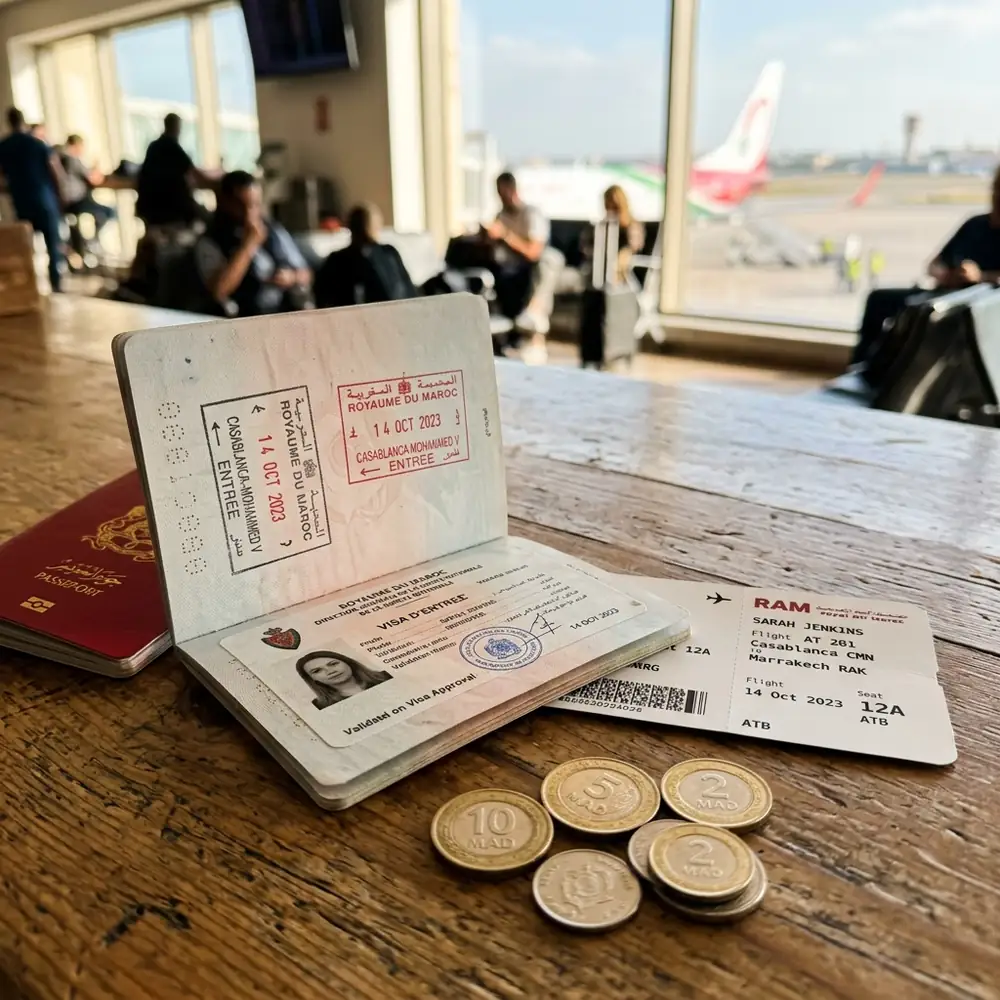
You will receive a 30-day entry stamp in your passport. This is the operative legal document — the stamp you have, not the e-visa. If you want to stay beyond 30 days, visit the local police station (Direction de la Sûreté Nationale) to request an extension before your stamp expires.
Frequently Asked Questions
Can I extend my stay once I am in Morocco? In theory yes — visit the local Sûreté with your passport, photo, accommodation proof, and financial documents. Extensions are granted but the process can take 1–2 weeks and is not guaranteed.
Is the e-visa valid for multiple entries? Standard e-visas are single-entry. Multi-entry requires a consulate appointment.
Does the e-visa cover Dakhla and southern Morocco? Yes. The same entry requirements apply throughout Moroccan-administered territory including the southern regions.
My express application was not processed in 48 hours — what do I do? Contact the Ministry’s support team via the official portal immediately and document everything. If travel is genuinely disrupted by a processing failure, check your travel insurance policy.
Experience the true heart of Moroccan heritage through its traditions. Join us in preserving these ancestral rituals.
What People Are Saying
No comments yet. Be the first — we'd love to hear from you.
The Moroccan Editorial Team
A Moroccan cultural writer dedicated to documenting the authentic voice, history, and heritage of the Kingdom. Writing from within — to share what truly makes Morocco extraordinary.
Our Mission →