Morocco's Green Hydrogen Bet: Why Europe Is Looking at the Sahara With Envy
Morocco’s Green Hydrogen Bet: Why Europe Is Looking at the Sahara With Envy
After Russia’s invasion of Ukraine exposed Europe’s catastrophic dependence on Russian gas, energy ministers across the continent started looking at maps with new eyes. One country kept coming up in those conversations: Morocco.
The reason: Morocco has something Europe desperately needs. Enormous quantities of sunshine, significant wind resources, proximity to European markets, and — critically — political stability and an existing infrastructure relationship with the EU.
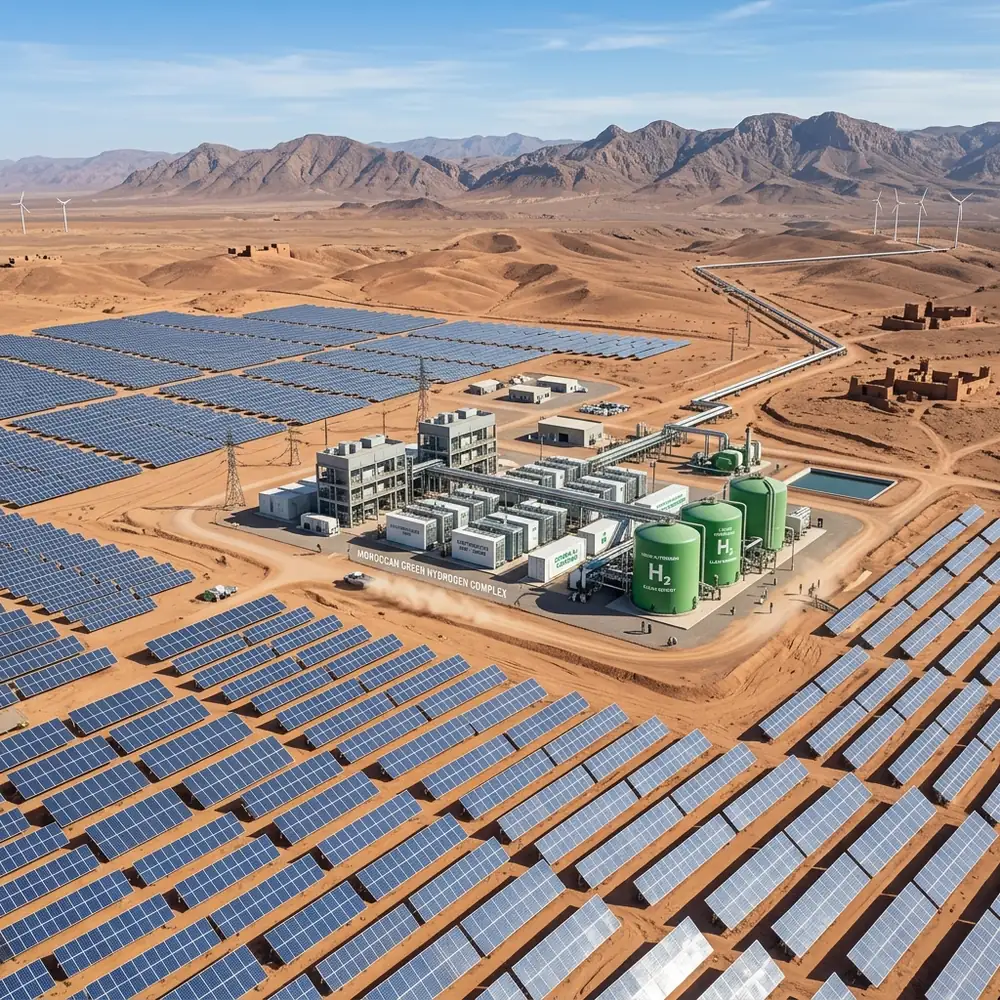
Green hydrogen is the mechanism through which Morocco aims to translate these geographical advantages into economic reality.
What Is Green Hydrogen and Why Does It Matter?
Hydrogen is the most abundant element in the universe. The problem is that on Earth, it almost always comes bonded to something else — water (H₂O) or fossil fuels (hydrocarbons). Extracting pure hydrogen requires energy.
Grey hydrogen (the current dominant form) is made from natural gas via steam methane reforming. It produces significant CO₂ emissions.
Green hydrogen is made by passing electricity through water (electrolysis), splitting it into hydrogen and oxygen. If the electricity comes from renewable sources — solar or wind — the process produces no greenhouse gas emissions. It is genuinely clean.
Green hydrogen can:
- Replace fossil fuels in industrial processes (steel production, cement, fertilisers)
- Power fuel cell vehicles and trains
- Be stored and transported, unlike raw electricity
- Be combined with CO₂ to create synthetic aviation fuel (e-fuels) — critical for decarbonising aviation
The problem: green hydrogen is currently 2–4 times more expensive than grey hydrogen. The goal is to bring costs down through scale.
Why Morocco Specifically?
Morocco’s solar radiation in the Saharan south is among the highest in the world — over 2,600 kWh/m²/year in some areas. This is significantly higher than the best European locations.
More importantly, Morocco already has:
- Existing renewable energy infrastructure: The Noor Ouarzazate complex is one of the world’s largest CSP installations. The Tarfaya wind farm is Africa’s largest. There is a track record.
- Proximity to Europe: A Morocco-to-Europe undersea electricity cable (the Xlinks project) would connect Moroccan solar farms directly to the UK grid. Existing cables to Spain already carry some power.
- Phosphate exports: Morocco controls 70%+ of the world’s accessible phosphate reserves. Green ammonia (hydrogen + nitrogen) is a key input for fertiliser production. Morocco is already a major fertiliser producer — green hydrogen would decarbonise this existing industry.
- Port infrastructure: Casablanca, Tanger Med, and Agadir are established export ports.
Projects Currently in Development
Noor Green Hydrogen (MASEN / Siemens Energy)
The Moroccan Agency for Sustainable Energy (MASEN) is developing a green hydrogen production pilot at the Noor Ouarzazate site. Target capacity in the initial phase: 1 MW electrolyser, producing green ammonia for export to Europe.
OCP Green Hydrogen Initiative
OCP (Office Chérifien des Phosphates), Morocco’s state phosphate company and one of the world’s largest fertiliser producers, has committed to becoming carbon neutral by 2040 and to producing green ammonia for its fertiliser operations. A partnership with international electrolyser manufacturers is in advanced stages.
The German-Moroccan Partnership
Germany signed a bilateral green hydrogen cooperation agreement with Morocco, part of the EU’s H2Global initiative. Germany is structuring long-term purchase agreements for Moroccan green hydrogen and derivatives (ammonia, methanol), providing the demand-side certainty that makes large investments viable.
Dakhla Offshore Wind
The far south of Morocco has exceptional offshore wind potential. A significant offshore wind farm proposed for the Dakhla coast would generate electricity specifically for electrolysis, with the green hydrogen pipelined or shipped to European ports.
The Real Obstacles: An Honest Assessment
Here is where the optimism needs to meet reality.
Cost competitiveness: As of 2026, green hydrogen costs approximately 4–7 USD/kg to produce in Morocco. For European demand to materialise at scale, this needs to fall below 2 USD/kg. The trajectory is downward — electrolyser costs have fallen 70% in a decade — but reaching cost competitiveness requires time and scale.
Water requirements: Electrolysis requires water. Significant water. In a country already facing water stress, using desalinated water for hydrogen production creates a direct competition with agricultural and domestic use. The additional energy cost of desalination must be included in honest production cost calculations.
Infrastructure investment: A hydrogen export economy requires pipelines, shipping terminals for liquid hydrogen or ammonia carriers, and European import infrastructure. None of this exists at scale yet.
European ambivalence: Europe’s hydrogen import strategy is still evolving. Different member states prioritise different supply sources (North Africa vs. Scandinavia vs. Australia). Morocco is well-positioned but not guaranteed to be the primary supplier.
What This Means in Practice
The green hydrogen story is real, genuinely important, and deserves the attention it is getting. But the timelines are measured in decades, not years.
By 2030: Morocco will have pilot projects and commercial-scale production beginning, likely measured in hundreds of megawatts of electrolyser capacity.
By 2040: If the economics work as projected, Morocco could be exporting several million tonnes of green hydrogen equivalent (as ammonia or methanol) per year. This would be transformative for Morocco’s economy.
The bet is large. The upside is enormous. The execution risk is real.
Frequently Asked Questions
What does green hydrogen have to do with my visit to Morocco? Directly, nothing. But the green energy transformation is reshaping parts of the Moroccan landscape — particularly the south — and explains much of the economic dynamism visible in Agadir and Dakhla.
Is Morocco the only North African country pursuing this? No. Algeria, Tunisia, and Egypt all have announced green hydrogen programmes. Morocco’s advantage is its existing renewable energy track record, established European relationships, and port infrastructure.
Will green hydrogen lower energy prices in Morocco? Not directly and not immediately. The production is primarily targeted at export markets. Domestic benefits will come primarily through renewable energy expansion, not hydrogen specifically.
What is e-fuels and how does Morocco fit in? E-fuels (synthetic aviation and shipping fuels made from green hydrogen + CO₂) are seen as essential for decarbonising aviation and maritime transport. Morocco could become a production hub for e-fuels for European airlines — Air France and Lufthansa have both signed letters of interest with Moroccan counterparts.
Experience the true heart of Moroccan heritage through its culinary traditions. Join us in preserving and honoring these ancestral recipes.
What People Are Saying
No comments yet. Be the first — we'd love to hear from you.
The Moroccan Editorial Team
Culturally Verified & Fact-CheckedThe Moroccan Food editorial team brings together native culinary researchers, heritage preservationists, and experienced home cooks across Marrakech, Fes, and Casablanca. Every recipe and cultural guide is reviewed against ancestral oral traditions and authentic regional practices.