Morocco's local spots: Underrated Villages, Lagoons, and Waterfalls Beyond Marrakech and the Sahara
Morocco’s local spots: Underrated Villages, Lagoons, and Waterfalls Beyond Marrakech and the Sahara
I have a complicated relationship with the phrase ‘local spot.’ Used carelessly, it signals that the person writing has discovered something precious and is now — paradoxically — telling thousands of people about it. The gem stops being hidden the moment the article is published. I know that. You know that.
But here’s what I actually mean when I use those words about Morocco: not places without infrastructure or visitors, but places where the infrastructure exists without the crushing mass, where there’s still room for your own experience to breathe, where you can sit in a café for two hours without anyone trying to sell you something. Places where the wonder hasn’t been commodified yet.
Morocco is vast, complex, and deeply layered. Most tourist itineraries touch four or five cities and tick the Sahara. That’s a beautiful trip. But it’s barely a fraction of what this country contains.
Moulay Idriss Zerhoun: The Town That Sleeps on a special Hill
Two thousand years ago, this was a Roman city called Volubilis. Then, in the 8th century, the great-great-grandson of the Prophet Mohammed arrived here, established the first Moroccan dynasty, and was buried in the hill town above the ruins. Moulay Idriss Zerhoun has been holy ever since.
Until 2005, non-Muslims were not permitted to sleep overnight in the town. Today, a small number of guesthouses welcome all visitors — and the effect of this relative isolation is extraordinary. The town has the bones of mass tourism somewhere in its future but hasn’t arrived there yet. The main square is alive with local life: old men playing cards, children chasing each other through the narrow white lanes, women carrying bread back from the communal oven.
Go on a Tuesday, which is market day. Eat briouat filled with minced lamb from the stall near the lower fountain. Climb to the round minaret — unique in Morocco — and look out over the patchwork of olive groves and Roman columns below.
What I find astonishing about this place is the way special and ordinary coexist here without performance. The moussem — the annual pilgrimage festival — in late August is one of the most extraordinary cultural events in North Africa.
Oualidia: Where Morocco Keeps Its Oysters
Three hours south of Casablanca on the Atlantic coast, Oualidia is Morocco’s best-kept culinary secret. The town wraps around a sheltered lagoon of such improbable beauty — green water, pink flamingos, white sandbars — that your first view of it feels slightly unreal.
The lagoon is an oyster paradise. The cool Atlantic currents, the brackish mix where sea meets river, the particular mineral quality of this stretch of coast — it all produces oysters that serious food people make deliberate pilgrimages to eat. The local producers serve them in simple shacks right on the lagoon, with lemon and rough bread and local white wine if you want it. Eaten like that, watching the flamingos, an oyster tastes like the definition of the Atlantic.
The swimming is exceptional in the lagoon — calm, warm by summer, sheltered from the Atlantic swell. Kayaks and small boats can be rented. The town itself is small and quietly dignified, with a few excellent small hotels that cost a fraction of their Essaouira equivalents.
I’ve always been fascinated by how little press Oualidia gets compared to Essaouira, given that the seafood is arguably better and the lagoon more beautiful.
The Cascades d’Ouzoud: Africa’s Most Spectacular Waterfall
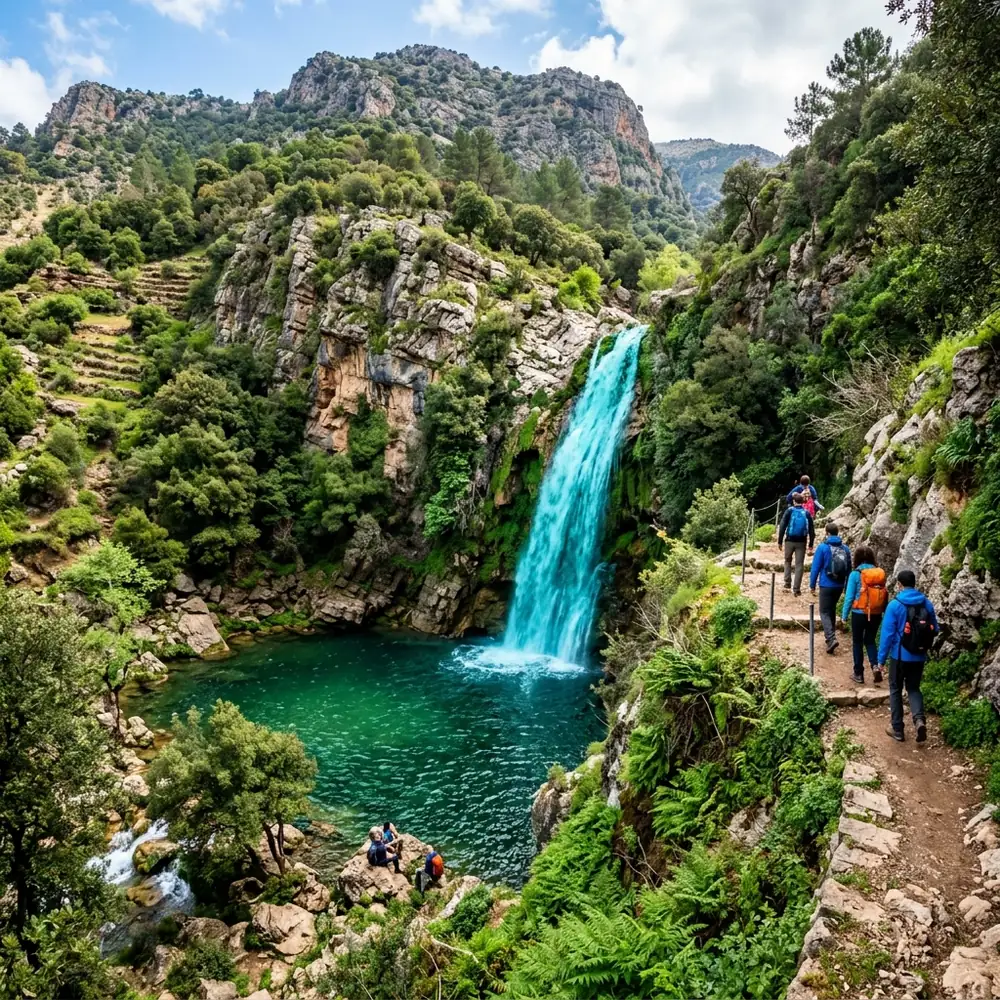
In a country that the world associates with desert and medinas, the Cascades d’Ouzoud come as a deep visual shock. Dropping 110 meters in three enormous tiers through rose-red rock into a river gorge below, these are the highest waterfalls in North Africa and among the most beautiful I’ve seen anywhere on earth.
The name comes from the Berber word for olive, and the hillsides are thick with ancient olive trees. Barbary macaques — wild monkeys — pick their way through the branches overhead.
You can take a small rowboat across the pool at the base and look up at all three tiers simultaneously, with the spray cooling your face. Go in spring (March–May) when the water volume is highest. Avoid midsummer weekends when Marrakech day-trippers arrive in full force.
Asilah: The Atlantic Town That Reinvented Itself Through Art
Once a pirate port, once a Spanish colonial city, now one of the most quietly beautiful coastal towns in Morocco. Asilah’s medina is painted white and blue in a style that nods to both its Atlantic setting and its Andalusian heritage.
What makes Asilah genuinely unusual is that for forty years, every August, the town has hosted an international cultural festival that invites artists from across the world to paint its walls. Walking through the medina, you encounter massive, intricate murals covering entire building facades. It’s the most successful example of public art as urban transformation I’ve seen anywhere in Morocco.
The beach — a long, clean Atlantic stretch — is excellent. The seafood in the local restaurants is as fresh as you’d expect from a place where the fishing boats go out every morning.
Azrou: Cedar Forests and Monkey Territory in the Middle Atlas
The Middle Atlas is one of Morocco’s least-visited and most beautiful landscapes. Rolling highlands, oak forests, the High Atlas visible in the distance, Berber market towns that function entirely for local agricultural purposes rather than tourists.
Azrou sits at 1,500 meters altitude in the heart of this landscape. But the reason to come here is the cedar forest just outside town. Ancient cedars, some of them over 400 years old, grow in cathedral-like groves. And within the forest: Barbary macaques — dozens of them, living semi-wild, accustomed enough to humans that they’ll investigate your bag with alarming confidence.
Taroudant: Marrakech from a Generation Ago
I’ve heard Taroudant described as ‘Marrakech without the tourists’ so many times that I almost stopped saying it. But it remains the most accurate description available. The same orange-pink walls, the same souks full of leather and spices and silver, the same medina architecture, the same mountain backdrop. But quieter by an order of magnitude.
The ramparts of Taroudant are extraordinary — some of the best-preserved in Morocco — and renting a bicycle or a caleche to ride their full length (six kilometers) is one of the most pleasant afternoons available anywhere in the south.
How to Approach Morocco’s Hidden Places
The honest advice: slow down. None of these places work if you’re trying to tick them off in a jam-packed itinerary. Rent a car for at least part of your trip. Stay longer than you think you need to. The best moments happen on the second day, when the shopkeeper who ignored you yesterday invites you for tea.
These are Morocco’s local spots. Go carefully. Go slowly.
Experience the true heart of Moroccan heritage through its culinary traditions. Join us in preserving and honoring these ancestral recipes.
What People Are Saying
No comments yet. Be the first — we'd love to hear from you.
Nadia Chraibi
Culturally Verified & Fact-CheckedThe Moroccan Food editorial team brings together native culinary researchers, heritage preservationists, and experienced home cooks across Marrakech, Fes, and Casablanca. Every recipe and cultural guide is reviewed against ancestral oral traditions and authentic regional practices.