Morocco Safety Guide for Tourists: Scams, Petty Crime, Police, and What Locals Wish You Knew
Morocco Safety Guide for Tourists: Scams, Petty Crime, Police, and What Locals Wish You Knew
I’ve watched thousands of tourists arrive in Morocco over the years — at Casablanca airport, at the train station in Marrakech, at the ferry terminal in Tangier. I’ve noticed something consistent: the ones who have the best trips are not necessarily the most adventurous or the most experienced travelers. They’re the ones who arrived informed. Not paranoid. Informed.
Morocco is genuinely safe. I want you to know that clearly, before everything else. The vast majority of visitors leave having experienced nothing more alarming than a slightly aggressive carpet seller or getting briefly lost in a medina. But there are realities here that differ from Western Europe, and knowing them upfront means you spend your time enjoying the country rather than getting frustrated by it.
The Big Picture: How Safe Is Morocco Really?
Let’s anchor this properly. Morocco consistently ranks as one of the safer countries in North Africa and the Middle East for tourists. Violent crime against tourists is rare to the point of being genuinely uncommon. Morocco’s tourism economy is enormous — it welcomed over 17 million visitors in 2024 — and the government takes tourist safety seriously as a strategic priority.
What makes Morocco different from, say, France or Portugal is not the level of danger but the type of low-level friction you may encounter: persistent touts, occasional overcharging, unofficial guides, and a few well-rehearsed scams that target newcomers. None of these are life-threatening. All of them are avoidable with basic knowledge.
The Classic Scams — And How to Recognize Them
The false guide: Someone approaches you near a major site and offers to show you around ‘as a local, not a tourist.’ After an hour, they bring you to a carpet shop where they receive a commission. Book a licensed guide through your riad or via the ONMT instead.
The wrong restaurant recommendation: ‘The place you’re looking for is closed today — I know a better one.’ It’s misdirection to a restaurant where the recommender receives a cut. If a restaurant you planned to visit is supposedly closed, verify it yourself. Walk to the door.
The henna artist: A woman begins applying henna to your hand before you’ve agreed. By the time you realize, she’s finished and demands 200 dirhams or more. Do not let anyone touch your hand without a clear prior discussion of price.
The currency confusion: Some vendors quote prices in ‘old rials’ rather than current dirhams. Always clarify: ‘En dirhams?’
The taxi without a meter: In cities, petit taxis should always use their meter. If a driver says the meter is broken, find another taxi or use the Careem or InDriver app.
What About the Police?
Morocco’s police presence in tourist areas is significant and generally there to help. The tourist police exist specifically to assist visitors and handle complaints. Many tourists don’t realize they can and should report scams to the tourist police — Morocco takes these complaints seriously.
Interactions with police at checkpoints are almost always routine. Stay calm, be respectful, have your passport or a clear photo of it accessible. Keep a photo of your passport on your phone and the original locked in your riad safe.
Petty Crime: What’s Actually Worth Worrying About
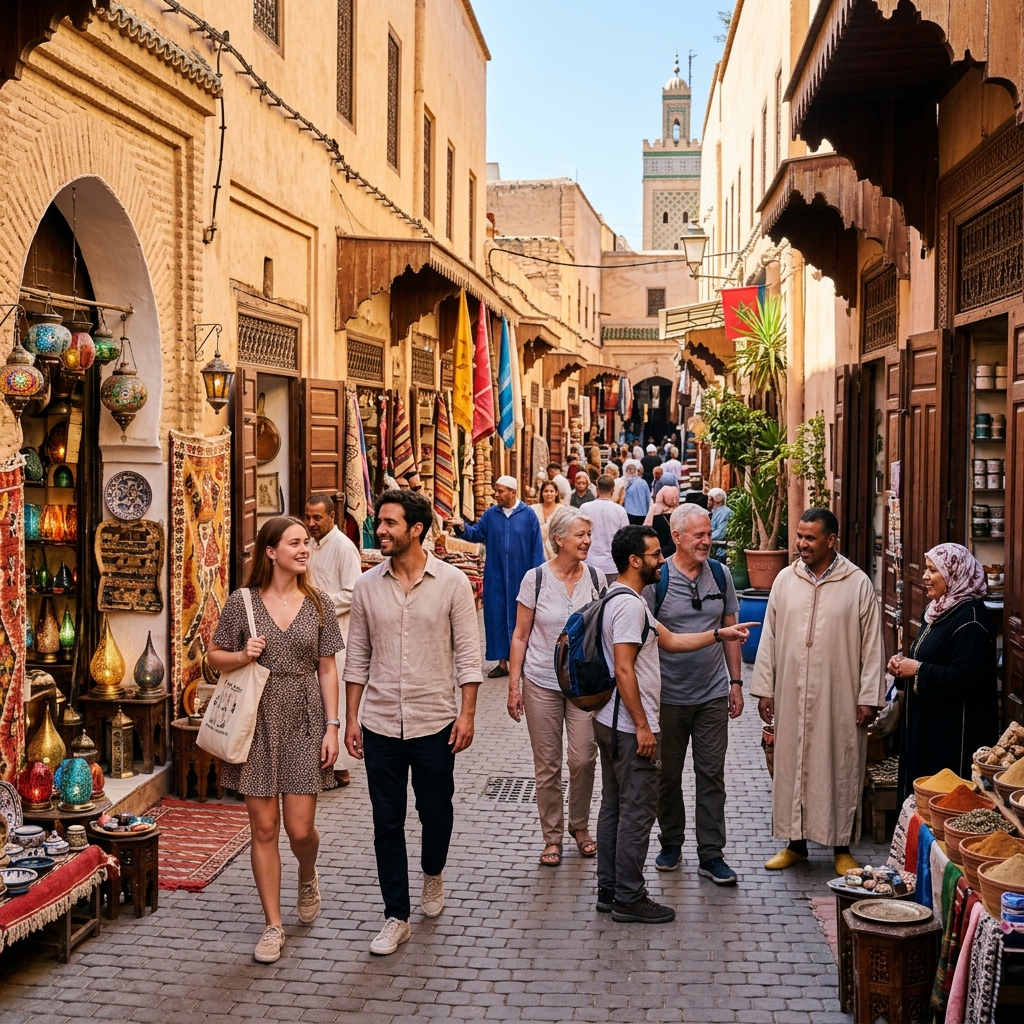
Pickpocketing in crowds: Djemaa el-Fna during peak hours, the Fes medina, bus stations, and train stations are the places to be vigilant. Use a front pocket or a zipped internal bag. Don’t leave your phone on a café table unattended.
Bag snatching: Rare but does happen in larger cities. Wear bags across your body. Don’t walk through narrow alleys while looking at your phone.
Fake goods sold as authentic: The leather bag that ‘is real camel leather’ may be synthetic. The saffron that costs almost nothing may be safflower dyed yellow. If the price is too good to be true, it probably isn’t. Buy from cooperatives and established shops.
What Locals Wish You Knew
Bargaining is a social exchange, not a war. When you negotiate aggressively and then walk away having paid almost nothing, the vendor often loses money. The goal is a price both parties find fair, with warmth on both sides.
The ‘no thank you’ that works: A firm, warm ‘La shukran’ or ‘Non merci’ with no eye contact is the magic phrase. Adding ‘Je regarde seulement’ (I’m just browsing) works brilliantly in the medinas.
Don’t photograph people without asking. Morocco is not a museum. People live here. Ask permission before photographing individuals. Most people will say yes warmly.
The touts are desperate, not dangerous. What looks like aggression in a medina entrance is usually economic anxiety. Firmness works. Aggression on your part is unnecessary and unkind.
Learn five words of Darija: ‘Shukran’ (thank you), ‘La shukran’ (no thank you), ‘Bzef’ (too expensive), ‘Bsaha’ (cheers), and ‘Labas’ (I’m okay). The moment you use even one of these, the whole atmosphere of an interaction shifts.
Emergency Contacts Worth Saving
Police: 19. Ambulance: 15. Gendarmerie (outside cities): 177. Tourist police are visible at tourist sites or reachable via your riad. Look up your country’s consulate before you travel and save the number.
The Honest Summary
Morocco is a country where being uninformed is more costly than being in the wrong place. Almost every negative experience tourists report comes from situations that were preventable with basic knowledge.
Go. Walk confidently. Learn a few words of Darija. Use the InDriver app for taxis. Eat from the places that have local customers. Photograph with permission. Bargain with warmth and humor.
And if someone tells you the restaurant you’re heading to is closed today — just keep walking. It’s open. It’s always open.
Experience the true heart of Moroccan heritage through its culinary traditions. Join us in preserving and honoring these ancestral recipes.
What People Are Saying
No comments yet. Be the first — we'd love to hear from you.
Karim El Mansouri
Culturally Verified & Fact-CheckedThe Moroccan Food editorial team brings together native culinary researchers, heritage preservationists, and experienced home cooks across Marrakech, Fes, and Casablanca. Every recipe and cultural guide is reviewed against ancestral oral traditions and authentic regional practices.