Morocco's Tech Startup Scene in 2026: Real Companies, Real Funding, Real Ambitions
Morocco’s Tech Startup Scene in 2026: Real Companies, Real Funding, Real Ambitions
Not long ago, if you told someone you were building a tech startup in Casablanca, the most common response was a polite version of “why?” The implication being: the talent is fine, but the market is small, the capital is thin, and the regulatory environment will defeat you.
That conversation is changing. Not because of hype — because of evidence.
The Numbers Behind the Story
Morocco’s tech ecosystem is not Lagos or Cairo in terms of raw volume. But consider what it has built:
- 50,000+ engineering and tech graduates per year from Moroccan universities
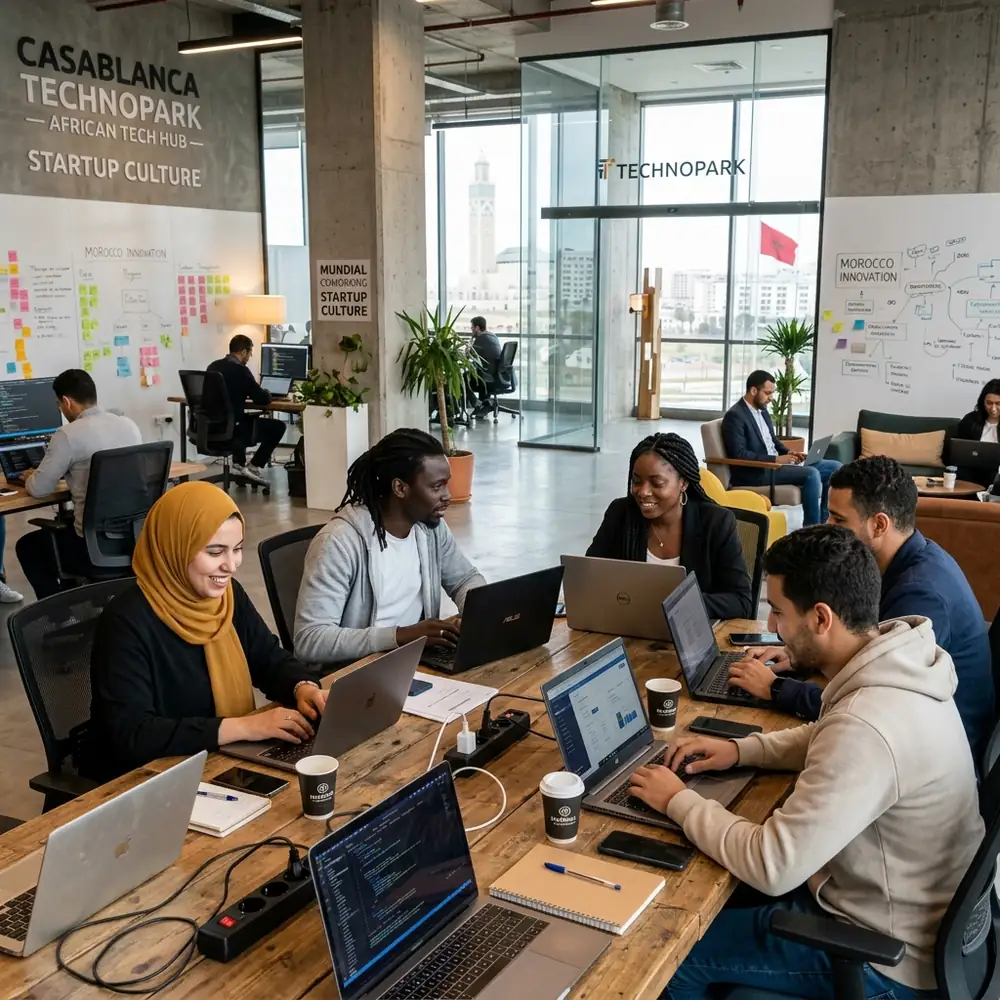
- 300+ companies housed in the Casablanca Technopark alone
- Casablanca Finance City (CFC): 200+ multinationals using Morocco as their African hub, creating a captive market for B2B tech services
- Software engineering salaries at 15–25% of Western European equivalents for comparable quality — making Morocco one of the most competitive nearshore tech locations in the world
- Growing VC ecosystem with Al Mada Ventures, Maroc Numeric Fund, and several France-Morocco cross-border funds active
The strategy that has emerged organically is clear: build in Morocco, serve Europe and Africa.
The Companies Worth Knowing About
Chari (B2B E-commerce)
The most-cited success story of Morocco’s startup scene. Chari digitises the supply chain for the fragmented Moroccan informal retail sector — the hundreds of thousands of small épiceries (corner shops) that account for a huge share of FMCG distribution in Morocco and West Africa.
They raised over 5 million USD in early rounds and expanded into Ivory Coast and Tunisia. Their model — an app that allows small retailers to order from distributors with next-day delivery — is being replicated across Africa. Morocco-first, Africa-next.
WafaCash / Barid Bank Digital (Fintech Infrastructure)
Morocco’s largest financial institutions are partnering with fintech startups to digitise payment infrastructure. Mobile money penetration is growing rapidly — from near-zero in 2019 to significant transaction volumes by 2026.
The central bank (Bank Al-Maghrib) has been relatively progressive in creating sandbox environments for fintech experimentation, though licensing for anything touching payments still requires patience.
Intelcia / Webhelp Morocco (BPO and Tech Services)
Not startups in the classic sense, but the backbone of Morocco’s digital economy: large-scale business process outsourcing and nearshore tech services for French, Spanish, and Belgian companies. Intelcia alone employs over 20,000 people in Morocco.
This sector is often dismissed as “just call centres” — which is outdated. Today it includes software development, data analytics, AI training data services, and cloud infrastructure management.
Emerging sectors attracting investment:
- Agritech (precision irrigation, crop monitoring for Moroccan agriculture — a natural fit given water stress)
- Edtech (remote learning platforms targeting French-speaking Africa)
- Healthtech (telemedicine and pharmacy digitalisation, accelerated by COVID-19)
- Legaltech (document management for Moroccan and French legal firms)
The Casablanca Technopark: What It Actually Is
The Technopark in the Casablanca suburb of Belvédère is Morocco’s original tech hub, founded in 2001. It has expanded significantly and now includes three sites in Casablanca plus outposts in Rabat and Agadir.
What you get there:
- Hot desks from 1,500 MAD/month
- Dedicated offices from 4,000 MAD/month
- Meeting rooms, event spaces, and a coworking lounge
- Access to a community of 300+ companies
- Proximity to OFPPT (vocational training) and several engineering schools nearby
The atmosphere is functional rather than glamorous — no slides or ping-pong tables, more like a well-managed business park. This is appropriate for Morocco’s startup culture, which trends pragmatic.
The Real Challenges: What Founders Actually Deal With
Regulatory friction
Starting a company in Morocco requires navigating multiple administrative layers. Company registration can be done in days online via the Centre Régional d’Investissement (CRI). Actually operating — getting a business bank account, navigating tax registration, hiring and managing payroll — takes weeks to months.
Foreign-founded companies face additional complexity around transferring capital in and out of Morocco (the dirham is not freely convertible). This is a genuine barrier for international investors.
Small domestic market
With ~37 million people and a GDP per capita of around 4,000 USD, Morocco’s domestic market limits the ceiling for B2C consumer tech. The companies that scale go regional or European from day one.
Talent retention
Morocco’s best engineers are in high demand — from Moroccan companies and from French tech companies hiring remotely. Competitive salary offers from abroad create retention challenges for early-stage startups with constrained budgets.
Banking friction for fintech
Despite progressive rhetoric, getting regulatory clearance for any financial product involving stored value or payments requires a long process with Bank Al-Maghrib. Moroccan fintech founders often express frustration at this, even while acknowledging that the situation is improving.
The June 2026 Smart City Summit: What Was Actually Announced
The Casablanca Smart City Summit in June 2026 brought together government officials, tech companies (including Microsoft, AWS, and Oracle), and African city administrators.
Key announcements:
- AWS Local Zone in Casablanca: AWS committed to establishing a local data centre, reducing latency for cloud services across North and West Africa. This is significant for any startup needing low-latency cloud infrastructure without routing to European servers.
- Morocco AI Strategy 2030: A government commitment to train 10,000 AI specialists and establish Morocco as a regional AI hub. The mechanics are vague but the political commitment is real.
- Casablanca-Paris Tech Corridor: A bilateral programme facilitating Moroccan startup access to French VC networks and accelerators, and French companies exploring Moroccan nearshore talent.
Frequently Asked Questions
Can foreign entrepreneurs start companies in Morocco? Yes. Morocco allows 100% foreign-owned companies in most sectors. The CRI (Centre Régional d’Investissement) offers a streamlined registration process. The main complexity is currency controls — importing investment capital and later repatriating profits requires Bank Al-Maghrib authorisation.
What is the corporate tax rate in Morocco? Standard corporate tax is 20–31% depending on profit level. Casablanca Finance City offers a preferential rate of 15% for qualifying companies with CFC status. Technopark companies receive certain exemptions in early years.
Is Morocco a good place for a European company to set up a nearshore development team? Very much so — for French-speaking companies particularly. The talent quality is high, time zone alignment is excellent (UTC+1), and costs are significantly below France, Spain, or Portugal for equivalent skills.
What accelerators or startup support programmes exist? Key ones include: Impulse by CIH Bank, Bidaya (BMCE Bank), Maroc Numeric Fund (government VC), UM6P Ventures (Mohammed VI Polytechnic University), and several French-backed programmes through Business France and the French Embassy.
Experience the true heart of Moroccan heritage through its culinary traditions. Join us in preserving and honoring these ancestral recipes.
What People Are Saying
No comments yet. Be the first — we'd love to hear from you.
The Moroccan Editorial Team
Culturally Verified & Fact-CheckedThe Moroccan Food editorial team brings together native culinary researchers, heritage preservationists, and experienced home cooks across Marrakech, Fes, and Casablanca. Every recipe and cultural guide is reviewed against ancestral oral traditions and authentic regional practices.