Tanjia, Mrouzia & Seffa: The Unforgiving Art of Moroccan Slow-Charcoal Feasting
title: "Tanjia, Mrouzia & Seffa: The Unforgiving Art of Moroccan Slow-Charcoal Feasting" slug: "mrouzia-tanjia-seffa-slow-charcoal-feasting" category: "Food & Cuisine" excerpt: "From the underground ash-furnaces of Marrakech public hammams to the 24-hour honey-and-Ras-el-Hanout lamb glaze of Eid: step inside Morocco's ancient, high-technique ceremonial feasting traditions."
Tanjia, Mrouzia & Seffa: The Unforgiving Art of Moroccan Slow-Charcoal Feasting
Welcome to my table. Sit down, wash your hands with orange blossom water, and let me tell you a secret that twelve centuries of Moroccan culinary civilization have etched into stone: Moroccan food does not bow to haste.
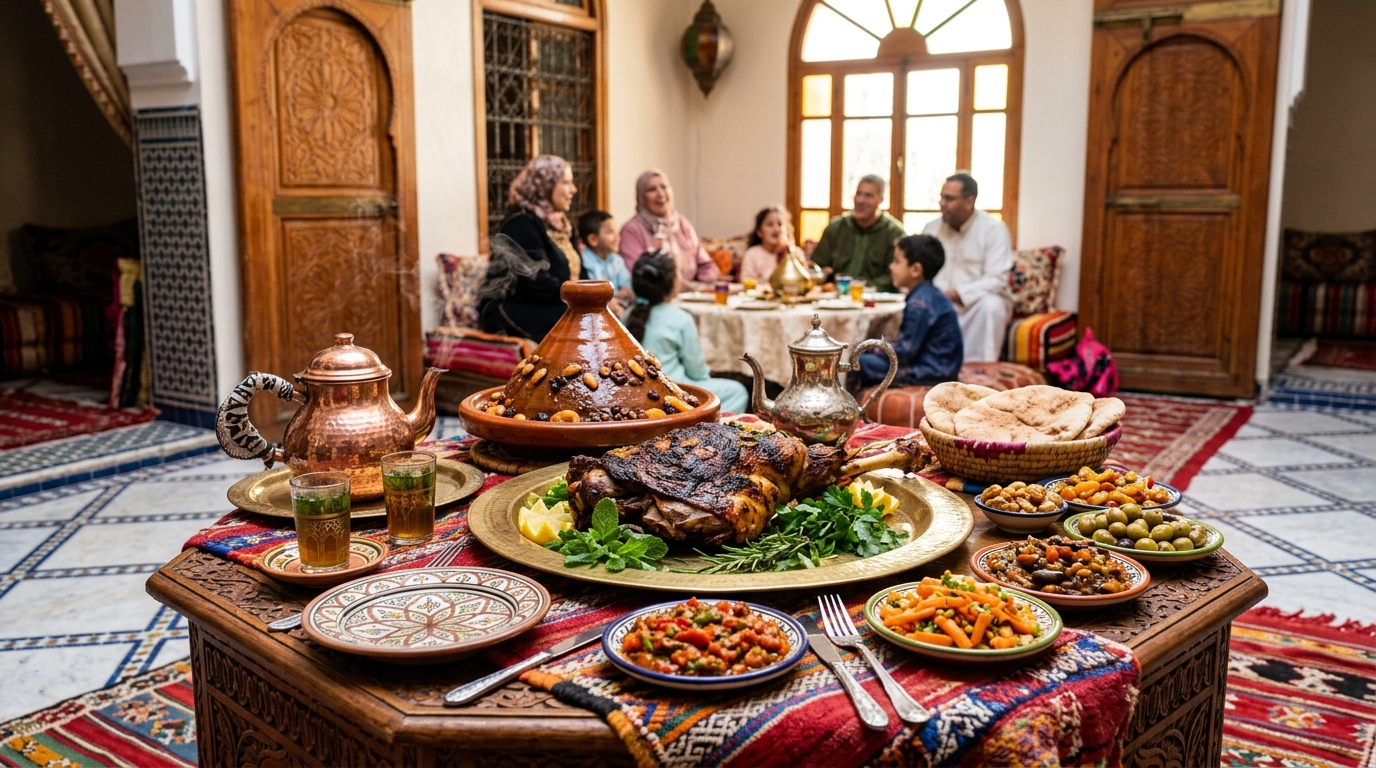
In the West, speed is celebrated; in modern kitchens, pressure cookers hiss with impatient fury. But in the ancient imperial capitals of Fes, Marrakech, and Meknes, fire is treated not as a blast furnace, but as a living conversational partner. True Moroccan feasting—the sacred culinary heritage passed down through generations of dadas (master court cooks) and medina artisans—is an unforgiving art of time, thermal inertia, and the quiet surrender of tough meat to gentle, smoldering heat.
Today, we leave behind the everyday quick tagines and step into the high-ceremony sanctum of our gastronomy: the unglazed clay amphora of the Tanjia Marrakchia, buried in the sleeping ashes of the hammam; the medieval Andalusian alchemy of Mrouzia, where lamb melts into a dark lacquer of wild honey and thirty-spice Ras el Hanout; and the cloud-like architectural wonder of Seffa Medfouna, where succulent saffron-perfumed meat lies secretly buried beneath mountains of gossamer, butter-drenched vermicelli.
Draw your chair close. Let us unravel the science, the history, and the ancestral wisdom of Morocco's slow-charcoal masterpieces.
1. The Alchemy of Ash: Tanjia Marrakchia and the Fernatchi Underground
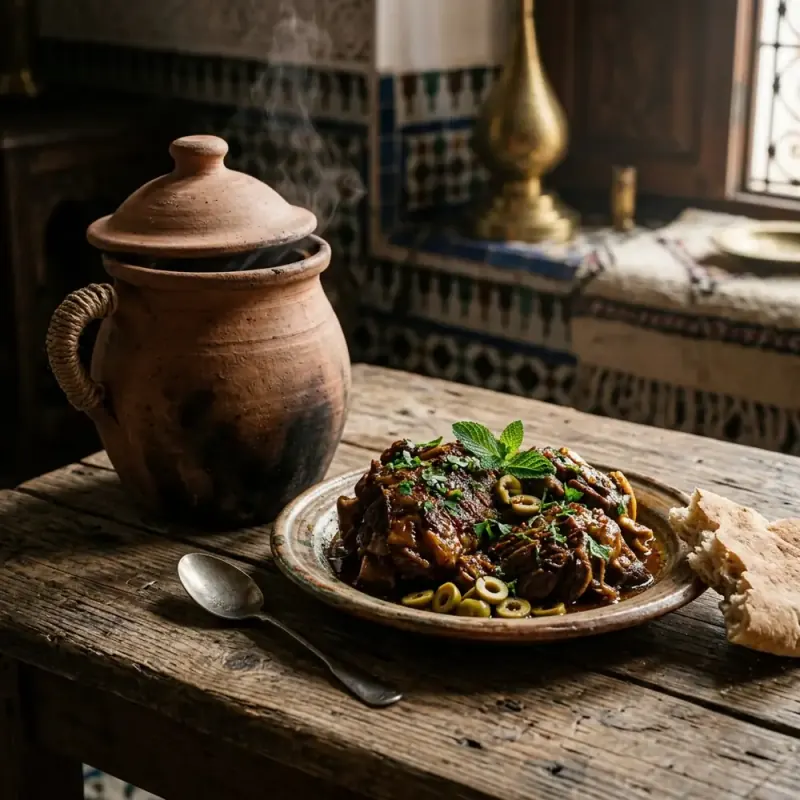
To understand the Tanjia, you must walk through the ochre alleys of Marrakech’s medina in the early morning, before the tourist stalls awaken, when the only sound is the rhythmic sweeping of palm brooms. You will see an artisan—perhaps a leather tanner or a wood turner from the souk—carrying a stout, unglazed terracotta urn cinched tightly at the neck with heavy parchment and wire.
He is not heading home. He is heading to the Fernatchi.
       [ Unglazed Clay Urn (Tanjia) ]
       [ Double Parchment & Twine Seal ]
                      │
  (Submerged in conductive residual ash)
                      ▼
 ┌─────────────────────────────────────────┐
 │   RAMAD (Smoldering Grey Ash Bed)       │
 │   80°C - 85°C Equilibrium Temperature   │
 ├─────────────────────────────────────────┤
 │   UNDERGROUND HAMMAM FURNACE            │
 │   Fueled by Olive Pits & Cedar Shavings │
 └─────────────────────────────────────────┘
The Fernatchi is the subterranean furnace room that heats the public bathhouse (the hammam). Here, the furnace master feeds sawdust, olive pressings (grignon d’olive), and dry cedar wood shavings into roaring underground flues. But beside the roaring fire lies the ramad—a vast, dormant sea of fine grey ash.
The Physics of Conductive Ash Cooking
The Fernatchi master digs a crater in this glowing ash bed, nestles the clay jar deep within it, and banks the warm grey powder around its belly. For six to eight hours, the Tanjia experiences no direct flame. Instead, it absorbs pure, uniform radiant heat maintained at an exact thermodynamic sweet spot between 80°C and 85°C.
At this precise temperature:
- Collagen Hydrolysis: The dense, gristly connective tissues (moussala or beef shank and knuckle) slowly convert into gelatin without muscle fibers seizing or drying out.
- Fat-Aroma Matrix: Bone marrow liquefies, leaching its rich lipid core into the unctuous emulsion.
- Sealed Micro-Environment: Because the clay pot is sealed with parchment paper (kaweed) pierced with only a single pinhole, water vapor cannot escape rapidly; it condenses on the tapered upper neck and rains back down, basting the meat in a perpetual, self-contained convection loop.
When the jar is unearthed at noon, the Fernatchi master wipes away the ash with a coarse towel. The artisan carries it back to his workshop, cuts the twine, and in one swift, practiced motion, shakes the jar with the percussive rolling snap of a derbouka drum before pouring it onto a wide copper plate. What emerges is not stew; it is meat that has ceased to fight the bone, resting in a deep mahogany sauce so rich in gelatin that it leaves your lips sticky with savory luxury.
2. Anatomical Anatomy of Tanjia: Cuts, Spices, and Zero-Water Chemistry
The greatest rookie mistake in Moroccan cooking is treating a Tanjia like a stew and adding water.
[!IMPORTANT] The Golden Law of Tanjia: Never let a single drop of cold tap water enter the jar. The meat must braise exclusively in its own cellular moisture, rendered bone marrow, extra virgin olive oil, and the acidic juice of aged preserved lemons.
       ┌────────────────────────────────────────────────┐
       │             THE TANJIA INGREDIENT MATRIX       │
       ├────────────────────────────────────────────────┤
       │ 2.0 kg  │ Beef or Veal Shank (Jarret / Shankle)│
       │ 100 g   │ Cut Femur Bone Marrow Rings          │
       │ 1.5 tbsp│ Whole Cumin Seeds (Kamoun Beldi)     │
       │ 1.0 g   │ Saffron Tassels (Za'frane el Horr)   │
       │ 1 whole │ Garlic Head (cloves unpeeled/cracked)│
       │ 2 whole │ Aged Preserved Lemons (L'hamd M'rakad)│
       │ 2 tbsp  │ Aged Fermented Smen (Smen Harr)      │
       │ 120 ml  │ First-Press Extra Virgin Olive Oil   │
       └────────────────────────────────────────────────┘
The Spice Blueprint
- Kamoun Beldi (Wild Moroccan Cumin): Not the dusty, pre-ground powder of supermarkets, but whole, pungent cumin seeds harvested from the arid plains of Alnif. The cook rubs the seeds vigorously between their palms over the mouth of the jar, crushing the seed hulls just enough to release their volatile terpene oils (cuminaldehyde) directly onto the raw meat.
- L'hamd M'rakad (Aged Salted Lemons): The peel must be translucent, aged for a year in sea salt until its citric bite mellows into an intense, floral umami funk. The pulp is pulled apart with fingers; the rinds are sliced into ribbons that melt during the long braise.
- Smen Harr (Aged Fermented Butter): This is Morocco’s secret culinary weapon. Clarified butter infused with wild mountain thyme (za'atar) and salt, then buried in clay jars in dark cellars for anywhere from six months to five years. It develops a sharp, blue-cheese-like lactic depth governed by butyric acid that acts as a natural glutamate amplifier.
- Za'frane el Horr (Pure Taliouine Saffron): Steeped in a splash of warm olive oil to awaken the crocin and safranal compounds before being massaged into the meat.
When these elements sit inside the sealed amphora for eight hours, the acid of the lemon cuts the unctuous marrow fat, the smen anchors the earthy cumin, and the saffron paints every collagen fiber with luminous amber gold.
3. Mrouzia: The Imperial Honey-Spice Preservation Masterpiece of Eid al-Adha
If Tanjia belongs to the working men of Marrakech’s souks, Mrouzia is the ancient queen of court cuisine, whose lineage stretches straight back to the 12th-century Almohad dynasty and the medieval banquets of Muslim Spain (al-Andalus).
   ┌─────────────────────────────────────────────────────────────┐
   │             THE DUAL PRESERVATION NATURE OF MROUZIA         │
   ├────────────────────────────────────────┬────────────────────┤
   │ OSMOTIC PRESERVATION (SUGAR & ACID)   │ LIPID BARRIER      │
   ├────────────────────────────────────────┼────────────────────┤
   │ Pure wildflower honey (70° Brix) draws │ Thick layer of     │
   │ moisture out of bacterial cells.       │ rendered sheep fat │
   │ Antimicrobial cinnamon & Ras el Hanout │ & smen seals out   │
   │ inhibit fungal and bacterial growth.   │ ambient oxygen.    │
   └────────────────────────────────────────┴────────────────────┘
Historically, Mrouzia was not merely a celebration dish for Eid al-Adha (the Feast of Sacrifice); it was an ingenious high-culinary technology of preservation in an era with no refrigeration. During the scorching North African summer, the family’s sacrificed lamb had to be preserved before spoilage set in.
The matriarchs took the prized collar, neck (el-ongra), ribs, and shank cuts, and slowly simmered them in a massive copper qidra until the meat reached absolute tenderization, then bathed it in raw mountain honey, plump golden raisins (zbib), and a profound dosage of Ras el Hanout.
The Anatomy of Imperial Ras el Hanout
Ras el Hanout translates literally to "Head of the Shop"—the apothecary's masterwork blend containing up to 35 botanicals:
- Top Notes (Aromatic & Floral): Damask dried rosebuds (ward beldi), green cardamom pods, lavender blossoms (khzama).
- Heart Notes (Warm & Woody): Ceylon cinnamon, mace (bsibisa), freshly grated nutmeg (gouza sahrawia), ginger rhizome.
- Base Notes (Pungent & Ancient): Grains of paradise, cubeb pepper, long pepper (dar felfel), monk's pepper, ash tree keys (lisan et-tayr), and wild orris root.
       LAMB NECK & COLLAR CUTS
                 │
                 ▼
  [ Simmered in Copper Qidra with Ras el Hanout & Saffron ]
                 │
                 ▼ (After 3 hours: Meat fully tenderized)
  [ Add Soaked Raisins (Zbib) & Wild Mountain Honey ]
                 │
                 ▼ (Low charcoal reduction)
  [ Caramelization Phase: Water evaporates completely ]
                 │
                 ▼
  GLAZED MAHOGANY LAMB IN PURE HONEY-FAT EMULSION
  (Shelf-stable for weeks in glazed earthenware jars)
The Culinary Science of the Mrouzia Glaze
The magic happens in the final hour of cooking. As the cooking liquid gently reduces over dying coals, the water completely evaporates, leaving only the pure, rendered sheep fat, smen, and honey.
Under the gentle heat of the majmar (charcoal brazier), the natural fructose in the honey and the amino acids in the lamb undergo the Maillard reaction, forming a shiny, crackling, dark mahogany glaze. The raisins swell with the spiced nectar until they burst.
When served, the dish is crowned with a blizzard of blanched Marcona almonds fried in cold oil to an audible crunch. You do not eat Mrouzia with a fork; you scoop it with a shard of fresh crusty semolina bread, experiencing an intoxicating collision of savory lamb, ancient woodsy spice, tongue-coating honey, and shattering almond crispness.
4. Seffa Medfouna: The Architecture of Sweet-Savory Mystery
In the hierarchy of Moroccan celebratory dining, Seffa Medfouna is the supreme test of a cook’s technical skill and delicate touch. It represents the height of the Andalusian aesthetic: the art of el-medfouna—the buried secret.
To the eyes of an unsuspecting guest, a grand platter of Seffa looks like a pristine, snow-covered volcanic mountain of gossamer steamed angel-hair vermicelli (chaariya) or ultra-fine semolina, meticulously decorated with geometric lines of ground Ceylon cinnamon, powdered sugar, and toasted ground almonds.
                      ▲
                     / \   <-- Snow-like dusting of Powdered Sugar
                    /   \  <-- Geometric diagonals of Ceylon Cinnamon
                   /     \ <-- Crushed Toasted Marcona Almonds
                  /       \
                 /  SEFFA  \  <-- Triple-Steamed, Butter-Infused Vermicelli
                /───────────\
               │   BURIED    │ <-- Shredded Saffron Chicken / Pigeon Braised in
               │  MEDFOUNA   │     Caramelized Onion Daghmira & Smen Gravy
               └─────────────┘
Only when you break through the steaming, butter-scented vermicelli with your right hand do you discover the treasure within: succulent shreds of chicken, squab, or lamb braised to perfection in a golden daghmira (a reduction of sweet onions, saffron, ginger, cinnamon sticks, and smen).
The Chemistry of the Triple Steam (Et-Tefouar)
You cannot simply boil pasta or vermicelli to make Seffa. Boiling saturates the wheat starch with excess water, turning it into a soggy, gelatinous clump. True Seffa requires the time-honored discipline of the Keskas (the two-tiered Moroccan steamer):
 ┌────────────────────────────────────────────────────────┐
 │            THE FOUR-TIER STEAMING PROTOCOL             │
 ├─────────┬──────────────────────────────────────────────┤
 │ PASS 1  │ Dry vermicelli coated with neutral oil.      │
 │         │ Steam 20 mins over aromatic broth.           │
 ├─────────┼──────────────────────────────────────────────┤
 │ AERATION│ Dump into large Gsa'a (earthenware bowl).    │
 │         │ Rake with fingers while splashing salted cold│
 │         │ water to hydrate without bursting starch.    │
 ├─────────┼──────────────────────────────────────────────┤
 │ PASS 2  │ Steam 20 mins until strands stand upright.   │
 ├─────────┼──────────────────────────────────────────────┤
 │ INFUSION│ Dump into Gsa'a. Work in orange blossom      │
 │         │ water (Ma Zhar), cold water, and let rest.   │
 ├─────────┼──────────────────────────────────────────────┤
 │ PASS 3  │ Final steam 15 mins. Fold in generous slabs │
 │ & ENRICH│ of cold sweet butter & powdered sugar.       │
 └─────────┴──────────────────────────────────────────────┘
The resulting vermicelli strands are completely distinct, feather-light, and shimmering with butter fat, carrying a delicate perfume of orange blossom and cinnamon. When layered over the savory, onion-rich poultry, every bite delivers an ethereal balance between sweet, savory, tender, and crisp.
5. The Majmar: Why Moroccan Grandmothers Refuse the Gas Stove
If you ask my grandmother why she refuses to cook her feast-day tagines on a modern gas stove, she will tap her temple and say: "El faham 3andou 3aql" ("The charcoal has a mind").
             ┌────────────────────────────────┐
             │       THE MAJMAR SYSTEM        │
             └────────────────────────────────┘
                             │
            [ Glazed Clay Tagine / Copper Qidra ]
                             │
            [ Broad Flanged Clay Brazier (Majmar)]
                             │
            [ Sinking Hardwood Embers (Holm Oak) ]
                             │
   ┌─────────────────────────────────────────────────────┐
   │ THERMAL DYNAMICS:                                   │
   │ 1. Zero hot-spots due to low heat conductivity clay.│
   │ 2. Steady declining temperature curve mimics the    │
   │    natural cooling phase of collagen breakdown.     │
   │ 3. Infusion of microscopic woodsmoke volatiles.    │
   └─────────────────────────────────────────────────────┘
Cooking aala l-faham (over charcoal embers) in a traditional clay brazier (majmar) provides physical advantages that no gas burner or induction hob can replicate:
- Parabolic Thermal Gradient: Clay tagines and earthenware cooking vessels have high thermal mass but low thermal conductivity. They absorb the radiant energy of glowing coals and release it evenly across the entire surface of the pot, preventing the scorching of delicate onions and spices at the base.
- The Natural Declining Curve: As the feast cooks, the coals slowly exhaust their oxygen and burn down. This natural decrease in temperature perfectly mirrors the biological requirement for braising tough meats: high initial heat to bring the core up to temperature, followed by a long, slowly decaying gentle heat that allows gelatin to set into a silky sauce.
- Subtle Pyrolysis Aroma: The faint, sweet smoke of citrus wood, olive wood, or Mediterranean holm oak (chêne vert) permeates the breathable micro-pores of unglazed clay tagines, imparting an earthy terroir impossible to manufacture with stainless steel and gas.
6. Grandmother's Secrets: Sacred Rules for the Charcoal Feast
Listen closely. Write these down in your recipe book, for these are the rules guarded by generations of medina matriarchs:
Secret 1: Curing the Maiden Tanjia Pot
Never cook in a brand new, raw terracotta Tanjia or Tagine straight from the potter. It will crack and impart a harsh, chalky flavor.
- Submerge the entire pot in cold water for 48 hours.
- Allow it to dry completely in the sun for 24 hours.
- Rub the interior and exterior walls vigorously with a paste of sheep tail fat, crushed garlic cloves, sweet paprika, and olive oil.
- Place it in a low oven or beside a dying charcoal hearth for 4 hours until the fats bake into the pores, seasoning the clay like a cast-iron skillet.
Secret 2: The Cold-Oil Almond Rule
Never drop blanched almonds into hot oil. The exterior will burn instantly while the interior remains soggy and raw. Always submerge blanched almonds in stone-cold oil in a shallow pan, then place over medium-low heat. As the oil gradually heats, the almonds cook evenly from core to surface, yielding an amber-golden color and a crispness that lasts for days.
Secret 3: The Smen Moderation Threshold
Aged smen is potent. A single teaspoon of two-year-old smen adds the umami complexity of a three-star restaurant sauce; two tablespoons will make your dish taste like rancid livestock fat. Add half the smen during the initial spice marinade, and stir in the remaining half five minutes before removing the dish from the heat to preserve its floral thyme aromatics.
Secret 4: The Onion Sweat (Daghmira) Discipline
In dishes like Seffa Medfouna and Mrouzia, onions must never be browned quickly. They must be finely grated or minced, then slowly sweated in fat and spices until their cellular structure dissolves into a thick, jammy paste known as daghmira. This onion paste is what thickens Moroccan festive sauces—flour and cornstarch are forbidden in authentic Moroccan court cooking.
7. Frequently Asked Questions
Can I replicate an authentic Tanjia at home without a hammam?
Yes, with the right thermal technique. Use a heavy enameled cast-iron Dutch oven or a deep unglazed clay pot. Seal the lid tightly with a strip of dough (flour and water paste) or double-thick parchment and foil to prevent steam loss. Bake in your home oven at 135°C (275°F) for 5 to 6 hours. Do not open the lid until the cooking time has elapsed.
What is the exact difference between Ras el Hanout for Mrouzia and everyday tagine spices?
Everyday tagine spice blends rely heavily on cumin, sweet paprika, ginger, turmeric, and black pepper. Authentic Ras el Hanout for Mrouzia contains almost no paprika or cumin; it is heavily weighted toward sweet, floral, and woody aromatics—nutmeg, mace, rosebuds, cardamom, ginger, cubeb, and cinnamon—specifically formulated to harmonize with honey, dried fruit, and rich lamb fat.
Why is Marrakech Tanjia historically cooked almost exclusively by men?
The Tanjia is the quintessential bachelor and artisan dish of Marrakech. Souk craftsmen (leather tanners, weavers, carpenters) had Friday as their day of rest. On Thursday afternoon, the male workers pooled their money, purchased meat and spices, assembled the Tanjia at the butcher’s stall, dropped it off at the neighborhood hammam furnace, and picked it up on Friday after communal prayers to enjoy a picnic in the Menara or Agdal gardens.
How do I prevent vermicelli from sticking together when making Seffa?
The secret is coating the raw, dry vermicelli thoroughly with a thin film of neutral oil before it ever touches steam. This oil barrier prevents the starch grains on the surface of the pasta from fusing together when the steam first hits them. also, always use fine durum wheat vermicelli (cheveux d'ange), never soft-wheat pasta.
How long does traditional Mrouzia keep without a refrigerator?
When cooked according to the ancestral method—where all water is completely boiled off and the meat is submerged in a rich suspension of honey, spices, and rendered lamb fat—Mrouzia can be poured into sterilized ceramic crocks (khabia) and kept in a cool, dark pantry for up to three months. The fat cap hardens on top, creating a sterile, anaerobic barrier that prevents bacterial spoilage.
8. Detailed Image Prompts for the Visual Storyteller
Prompt 1: The Hammam Fernatchi Pit
- Subject: A weathered Moroccan furnace master (fernatchi) with soot-dusted hands carefully pulling a glowing terracotta Tanjia urn from a vast bed of smoldering grey ashes using long iron tongs.
- Vibe: Atmospheric, ancient medina subterranean mood, warm ember glow, floating dust motes and wisps of aromatic cedar smoke.
- Style: Cinematic editorial culinary photography, rich Rembrandt lighting, deep chiaroscuro shadows with amber highlights.
- Format: Horizontal 16:9, shot on 50mm f/1.4 lens, shallow depth of field focusing on the cracked parchment seal of the urn.
Prompt 2: The Golden Pour of Tanjia
- Subject: Slow-motion action shot of rich, dark amber Tanjia sauce, gelatinous beef shank, whole unpeeled garlic cloves, and preserved lemon peels pouring from the mouth of an unglazed red clay jar onto a hand-hammered vintage brass platter.
- Vibe: Visceral, mouth-watering luxury, steaming hot, glistening bone marrow fat, rustic medina setting.
- Style: High-speed gourmet food photography, crisp focus on flying droplets of golden saffron jus and steam curls.
- Format: Vertical 4:5, overhead 45-degree angle, rustic zellige tile table backdrop.
Prompt 3: The Imperial Mrouzia Platter
- Subject: An opulent Moroccan feasting plate piled with dark mahogany-glazed lamb neck, plump swollen golden raisins glistening with honey glaze, crowned with a generous cascade of freshly fried, golden-blanched almonds and toasted sesame seeds.
- Vibe: Royal imperial banqueting, 1001 nights opulence, rich, warm, inviting.
- Style: Fine-art culinary photography, soft diffused natural daylight mixed with warm candlelight, rich color grading.
- Format: Horizontal 3:2, styled with antique silver Moroccan teapot, intricately carved cedar wood, and vintage linen napkin.
Prompt 4: The Construction of Seffa Medfouna
- Subject: A traditional Moroccan grandmother’s hands using delicate fingertips to fluff a towering mountain of steaming, butter-glistening angel hair vermicelli over a large hand-painted Fassi ceramic dish (Gsa'a), with geometric lines of dark cinnamon and powdered sugar partially drawn.
- Vibe: Ancestral wisdom, warmth, generational kitchen intimacy, celebratory craft.
- Style: Documentary-style food portraiture, warm golden tones, natural window light illuminating rising curls of fragrant steam.
- Format: Square 1:1 or 4:5 portrait, focused sharply on the grandmother's rings and the delicate strands of steaming pasta.
Experience the true heart of Moroccan heritage through its culinary traditions. Join us in preserving and honoring these ancestral recipes.
What People Are Saying
No comments yet. Be the first — we'd love to hear from you.
Lalla Fatima & The Medina Culinary Guild
Culturally Verified & Fact-CheckedThe Moroccan Food editorial team brings together native culinary researchers, heritage preservationists, and experienced home cooks across Marrakech, Fes, and Casablanca. Every recipe and cultural guide is reviewed against ancestral oral traditions and authentic regional practices.