Nutmeg (Gouza): The Sedative Spice of the Fassi Medina Kitchen
archived: false
In the spice cupboards of Fez and Rabat, stored in tiny velvet-lined drawers or glass apothecary jars, rests a handful of hard, wrinkled, dark brown wooden pebbles that give off a warm, intoxicatingly sweet scent when scratched with a fingernail. In Moroccan Darija, this is Gouza (Nutmeg, Myristica fragrans).
While modern Western cooks think of nutmeg primarily as a holiday baking spice for pumpkin pies or eggnog, the imperial culinary culture of Morocco treats Gouza as a potent botanical instrument: a delicate flavoring agent for royal tagines, an essential sedative nightcap to soothe restless children and elders, and a master harmonizer in thirty-spice blends. But above all, Moroccan grandmothers understand that Gouza demands supreme culinary discipline: a single extra stroke of the grater can turn an exquisite banquet into a medicinal sleep potion.
Historical Lineage: The Long Caravan Journey to the Maghreb
Nutmeg is native exclusively to the tiny Banda Islands of eastern Indonesia. During the golden age of Mediterranean trade, Arab and Andalusian navigators purchased nutmeg from Javanese sailors in Malacca, transporting the precious whole nuts across the Indian Ocean to Alexandria and the Maghreb.
By the twelfth century, Moorish physicians in Andalusia and the royal dispensaries of Fez recognized nutmeg (Jawz at-Tib, literally “The Fragrant Nut”) for its potent neurological, carminative, and digestive properties. It was celebrated in medieval Arabic pharmacological texts for relieving rheumatic pains, stimulating sluggish livers, and inducing tranquil sleep during feverish nights.
The Chemistry of Calm: Myristicin and Essential Oils
The distinct physiological effects of Gouza are driven by its complex volatile oil chemistry:
- Myristicin: A naturally occurring phenylpropene compound that acts as a weak central nervous system sedative in small culinary doses.
- Elemicin and Safrole: Aromatic compounds that work synergistically with myristicin to provide deep, comforting warmth to muscle tissues.
- Borneol and Terpineol: Pinene derivatives that impart fresh woody undertones beneath the heavy sweetness.
In microscopic culinary amounts (less than one-eighth of a teaspoon per multi-serving tagine), these compounds promote digestive enzyme secretion, ease intestinal bloating, and impart a luxurious sweetness that rounds out pungent garlic and ginger.
Master Culinary Applications in Moroccan Gastronomy
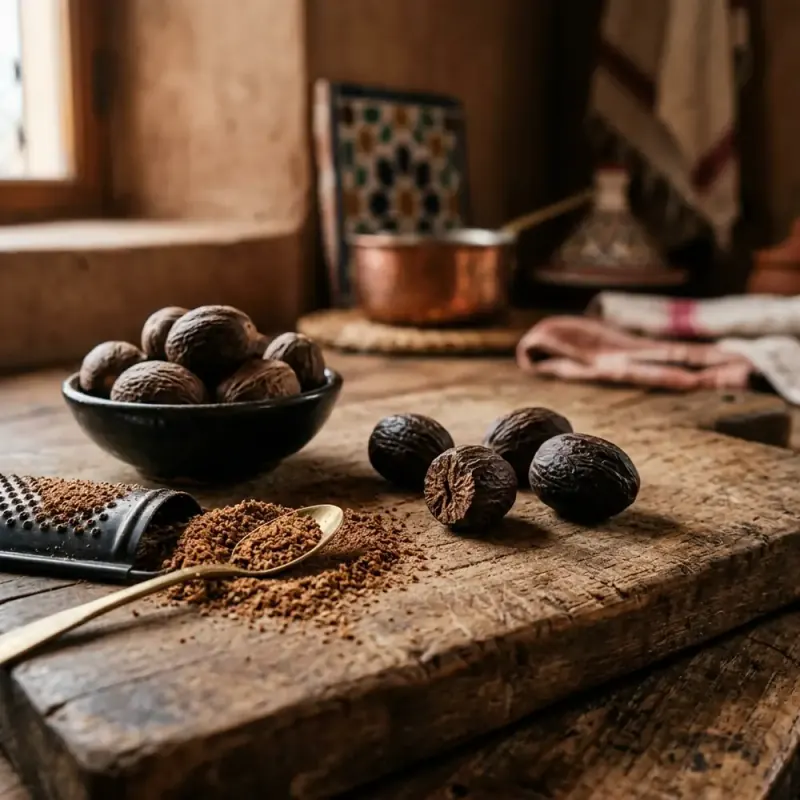
In authentic Moroccan cuisine, Gouza is always purchased as whole nuts and grated fresh using a specialized miniature brass nutmeg grater (Hakkaka):
1. The Fassi Squab and Chicken Tagine
When braising tender chicken or pigeon with baby turnips, sweet onions, and saffron, cooks add a microscopic pinch of freshly grated Gouza toward the very end of cooking. The spice bonds with the melted onion sugars, creating a glossy, intoxicatingly aromatic sauce (Dghmira).
2. The Evening Calming Milk (Hlib bil-Gouza)
On cold winter nights in the Atlas foothills, grandmothers heat fresh, unpasteurized cow’s milk with a whisper of freshly grated Gouza, a single green cardamom pod, and a spoonful of wild orange blossom honey. Consumed warm thirty minutes before bed, this traditional nightcap relaxes tense muscles and promotes deep, restorative sleep.
3. Harira Ramadan Night Soups
In many traditional Fassi homes, the rich tomato and legume soup Harira is finished not only with fresh cilantro and lemon juice, but with two strokes of fresh Gouza across the pot. The spice cuts through the acidity of the tomatoes and provides a comforting aromatic baseline.
The Rule of Restraint: Safety and Respect
Unlike mild spices like paprika or cumin that can be measured with generous tablespoons, Gouza is subject to strict culinary limits. High doses of nutmeg (several whole nuts) contain enough concentrated myristicin to cause unpleasant intoxication, dizziness, nausea, and tachycardia.
Moroccan culinary wisdom is rooted in the ancestral proverb: “A whisper of Gouza heals and delights; a mouthful sends you wandering into the clouds.” A single whole nut should last an active home kitchen several months, grated one or two strokes at a time.
Frequently Asked Questions
Why should I never buy pre-ground nutmeg in a jar?
Pre-ground nutmeg sold in commercial plastic or glass containers loses its volatile myristicin and delicate floral oils within weeks of factory grinding, leaving behind flat, stale, sawdust-like powder. Whole nutmeg seeds remain fresh, potent, and intensely fragrant for up to five years in an airtight jar.
How do I grate whole Gouza without scraping my fingers?
Use a traditional microplane grater or a dedicated miniature tin nutmeg grater with a curved rasp. Hold the hard nut firmly between thumb and forefinger, and grate with light, gentle strokes over the cooking pot. Two or three quick passes across the grater are typically all that is needed for an entire four-person tagine.
What is the difference between Gouza and Bsibisa?
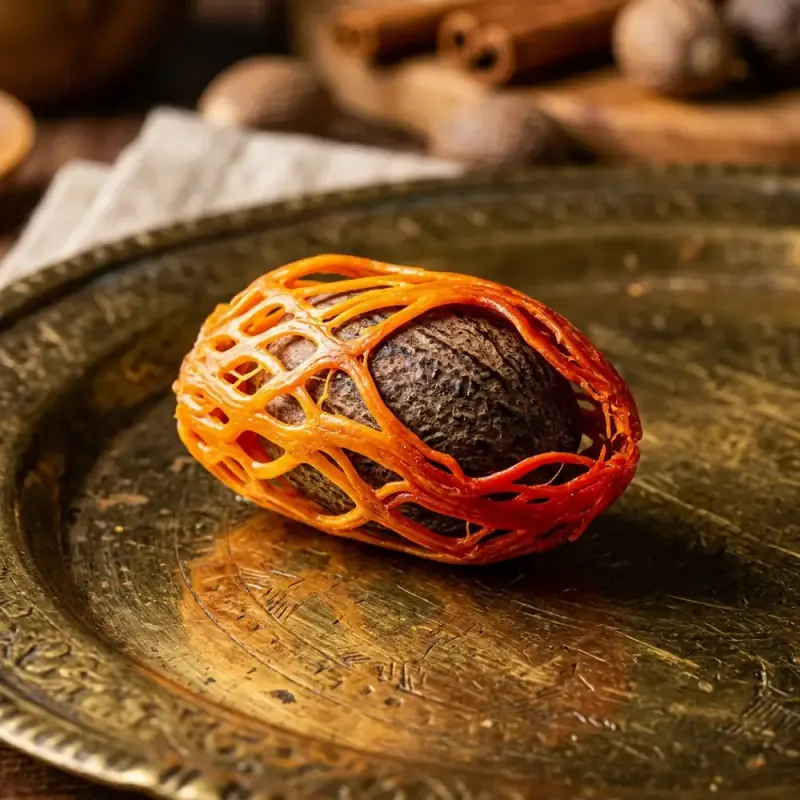
Both come from the exact same tree (Myristica fragrans). Gouza is the hard inner seed (nutmeg), which is sweet, dense, and warming. Bsibisa is the delicate, lacy orange aril (mace) that wraps around the shell, which is lighter, more citrusy, distinctly floral, and used for delicate poultry dishes.
Can Gouza be used in sweet Moroccan pastries?
Yes, but sparingly. Freshly grated Gouza is frequently paired with Ceylon cinnamon in sweet almond fillings for Cornes de Gazelle, festive M’hancha snake pastries, and walnut-filled dates during wedding banquets.
Experience the true heart of Moroccan heritage through its culinary traditions. Join us in preserving and honoring these ancestral recipes.
What People Are Saying
No comments yet. Be the first — we'd love to hear from you.
Sara
Culturally Verified & Fact-CheckedSara studies the nutritional and functional science of Moroccan ingredients, from pure argan oil and Taliouine saffron to wild medicinal herbs.