Preserved Lemons: The Golden Secret Behind Our Best Chicken Tagines
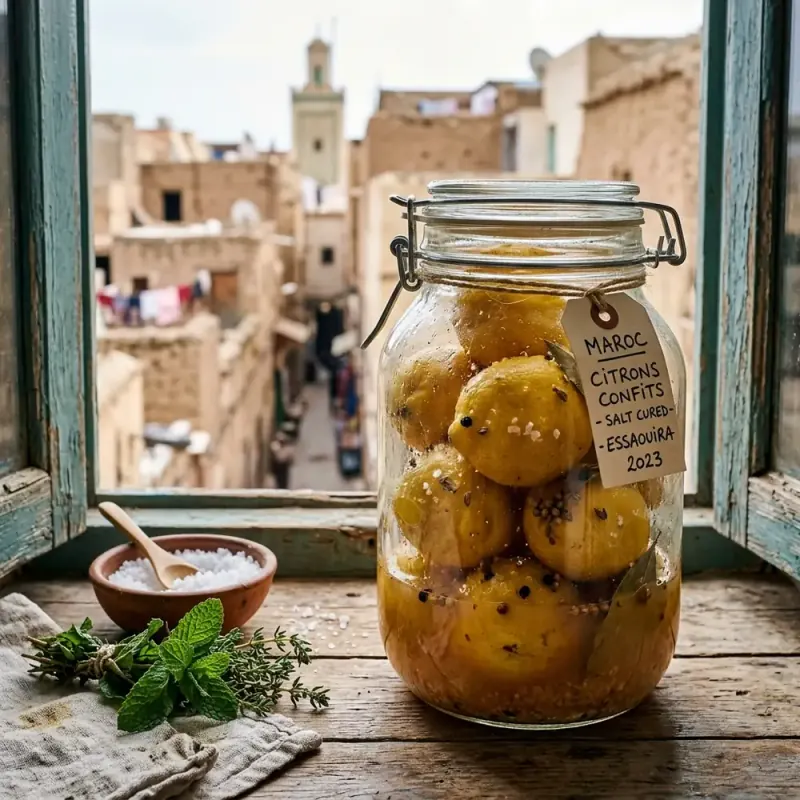
Step into any Moroccan home kitchen from Tangier to Taroudant, and look toward the highest shelf of the pantry. Sitting beside stoneware crocks of aged smen, you will always find large glass jars packed with golden orbs suspended in an amber, syrupy liquid. These are preserved lemons, known across Morocco as L’hamd Mssayer (or simply L’hamd Marqed).
To outsiders, they might look like pickled citrus. But to anyone who has stood over a bubbling charcoal brazier watching a whole chicken braise into a thick, glossy golden gravy (d’ghmira), preserved lemons are nothing short of culinary alchemy.
Raw fresh lemon juice brings sharp, stinging citric acid that curdles sauces and masks delicate spices. Preserved lemons do the exact opposite. Through weeks of natural salt curing, the sharp acidity mellows, the bitter white pith softens into translucent jelly, and the essential oils in the yellow rind concentrate into an intoxicating fragrance that tastes floral, savory, and packed with natural umami.
Here is the complete culinary breakdown of Morocco’s golden staple: which citrus varieties to choose, the biology of the salt curing process, how to age lemons from young to vintage, and how to cook with them without ruining your stew with excess salt.
The Citrus Heirloom: Why Beldi Lemons Rule
In Western supermarkets, lemons are bred for thick, leathery rinds and abundant liquid juice (such as Lisbon or Eureka varieties). While these commercial lemons can be preserved in a pinch, they bear little resemblance to what Moroccan cooks use.
In Morocco, preserving season begins in late autumn when local markets overflow with Citrus limetta and native wild lemons known as Limoun Beldi or Doqq:
- Size and Shape: Small, spherical, and about the size of a golf ball or small plum, often with a slight nipple at the flower end.
- Rind Texture: Extremely thin, smooth, and delicate. There is almost no spongy white pith beneath the yellow skin.
- Aroma: Beldi lemons possess an intensely floral fragrance reminiscent of bergamot, orange blossom, and wild thyme.
Because the skin is so thin and tender, salt penetrates to the core of the fruit within days, softening the peel into a melt-in-the-mouth texture that thick-skinned supermarket lemons can take months to achieve.
The Science of the Jar: Salt, Pressure, and Time
Making authentic preserved lemons requires only three physical elements: lemons, coarse uniodized sea salt, and clean glass jars. No vinegar, no boiling water, and no artificial preservatives are ever introduced.
When you cut a cross deep into a lemon and pack the cavity with coarse salt, osmotic pressure goes to work immediately:
- Juice Extraction: The salt draws out the lemon’s natural intracellular juices, breaking down cell walls. As you pack the fruits tightly into a jar and push down with your fist, the lemons submerge under their own concentrated juice.
- Pectin Breakdown: Over the first two weeks, the high salinity and citric acid break down the tough pectin in the rind. The bitter compound limonin is neutralized, replacing harsh sharpness with complex, savory notes.
- The Syrupy Brine: By week four, the liquid inside the jar thickens into an unctuous, golden syrup. This brine is liquid gold; seasoned Moroccan cooks never discard it, using spoonfuls to season pan sauces, roasted fish, and salad dressings.
The Three Ages of L’hamd Mssayer
Like fine cheeses or cured meats, preserved lemons evolve dramatically as they age in dark cupboards:
1. Mssayer Ftiy (Young Lemons: 4 to 8 Weeks)
At this early stage, the lemons are bright sunny yellow. The rind is soft enough to slice with a butter knife, but still retains a firm bite and lively citrus acidity. This young stage is ideal for cold and cooked salads like Zaalouk (eggplant dip), Taktouka (roasted bell peppers), or finely diced in seafood marinades (chermoula).
2. Mssayer Qdim (Mature Lemons: 6 Months to 1 Year)
This is the benchmark of Moroccan gastronomy. The rind has deepened to warm amber, becoming silky, soft, and translucent. The salty brine has turned thick like honey. This is the exact maturity needed for classic stovetop dishes: chicken tagine with green cracked olives, lamb tagine with artichoke hearts, and steamed couscous broths.
3. Mssayer M’khammar (Vintage Dark Lemons: 2+ Years)
In old families in Fes and Marrakech, jars are kept for two, three, or even five years. Over years of slow enzymatic changes, the lemons turn dark bronze or mahogany, resembling dried figs or dates. The flavor is deeply fermented, savory, and balsamic. These vintage lemons are reserved for ceremonial dishes like Tanjia Marrakchia (the bachelor’s clay urn stew) or slow-simmered beef shank with saffron.
How to Cook with Preserved Lemons: The Kitchen Rules
Many home cooks outside North Africa ruin dishes because they treat preserved lemons like fresh lemons. Here are the practical kitchen rules followed by experienced Moroccan cooks:
Rule 1: Always Separate the Pulp from the Rind
The lemon consists of two distinct components that serve different culinary purposes:
- The Translucent Rind: This is the star ingredient. Cut away the soft rind, rinse it briefly under cold running water to remove surface salt if desired, and slice it into slender ribbons (julienne) or small dice. Stir it into tagines during the final 15 minutes of cooking so it retains its fragrant oils.
- The Salty Inner Pulp: Do not throw the pulp away! Scrape the pulp off the rind with a paring knife. Mash this pulp into your garlic, cumin, coriander, and olive oil paste (chermoula) to marinate raw chicken or fish before cooking. It tenderizes the meat fibers and distributes salt evenly.
Rule 2: Cut Back on Salt in Your Recipe
Preserved lemons carry substantial salt. When preparing a tagine with preserved lemons and olives, cut the salt in your cooking pot by at least half, or skip adding extra salt entirely until the very end. Taste the reduced sauce once the lemons and olives have simmered together; nine times out of ten, the natural salinity from the lemons is all the seasoning the dish needs.
Master Recipe: Preserving Lemons at Home
This recipe fills one standard 1-liter glass canning jar (approximately 7 to 9 medium lemons).
Ingredients and Equipment:
- 8 to 10 fresh, unwaxed organic lemons (preferably small, thin-skinned Meyer lemons or Eureka lemons)
- 100 g coarse sea salt (kosher salt or natural gray sea salt; avoid table salt containing iodine or anti-caking agents)
- Extra freshly squeezed lemon juice (from 3 or 4 additional lemons, if needed to cover)
- 1 clean 1-liter glass jar with a tight-fitting rubber gasket or non-metallic lid
Step-by-Step Instructions:
- Sterilize and Clean: Wash the lemons thoroughly with warm water and a vegetable brush to remove any orchard dust or natural wax. Dry them thoroughly with a clean towel. Scald your glass jar with boiling water and let it air-dry.
- Cut the Cross: Trim a paper-thin slice off the stem end of each lemon. Standing the lemon upright on its base, make a vertical slice straight down through the center, cutting about four-fifths of the way through, stopping about 1 cm before the bottom base so the quarters stay attached. Rotate the lemon 90 degrees and make a second vertical cut. You will have four quarters joined at the base like flower petals.
- Pack with Salt: Pry open the four quarters of the lemon. Spoon one generous tablespoon of coarse sea salt directly into the center cavity. Squeeze the lemon back shut between your palms, letting the salt distribute across the flesh.
- Pack Tightly into the Jar: Place one tablespoon of coarse salt at the bottom of the clean jar. Place the first salted lemon inside, pushing down firmly with a wooden pestle or your knuckles to crush the fruit and release its juices.
- Layer and Compress: Continue salting and packing the remaining lemons one by one. Press down hard with each addition. The goal is to pack the lemons so tightly that the extracted juices rise to completely cover the fruit.
- Top with Extra Juice: If, after packing all the lemons, the juice does not completely submerge the top layer of fruit, squeeze fresh lemon juice over the top until all fruit is entirely submerged under liquid. Any rind left exposed to air can develop mold.
- Seal and Rest: Seal the jar tightly. Let it sit on your kitchen counter at room temperature for the first 3 to 4 days, turning the jar upside down once a day to help the salt dissolve.
- Age in the Dark: Move the jar to a dark, cool pantry cupboard. Leave it undisturbed for at least 4 weeks (preferably 6 to 8 weeks) before opening. Once opened, always use a clean, dry spoon or tongs to remove a lemon; never touch the brine with bare fingers.
Common Troubleshooting Tips
- White Film on Top (Fleur de Sel): Occasionally, a faint white, lace-like film develops across the surface of the brine. If the film is flat, white, and smells pleasantly acidic, it is harmless wild yeast (kahm yeast). Simply spoon it off and ensure the lemons stay pushed below the brine line. If you see fuzzy, colored mold (green, black, or blue), discard the batch.
- Bitter Taste: If your preserved lemons taste bitter after four weeks, they simply need more time. Thick commercial rinds take longer for the bitter compounds to break down. Let the jar sit for another four weeks in your cupboard.
Frequently Asked Questions
Can I reuse the leftover brine after the lemons are finished?
Yes! The thick, salty lemon brine left in the bottom of an aged jar is an incredible secret ingredient. Use a teaspoon of it in vinaigrettes, stir it into mayonnaise for roasted fish, add a splash to chicken marinades, or use it to deglaze a pan after searing lamb chops.
Do preserved lemons need to be refrigerated after opening?
Traditionally in Morocco, jars remain in a cool, dark kitchen cupboard for years without refrigeration, provided the lemons remain fully submerged beneath the salty acidic brine. However, in modern centrally-heated apartments, storing the opened jar in the refrigerator door helps maintain a firm texture and preserves their pale golden color.
Can I substitute fresh lemon juice or lemon zest for preserved lemon?
Fresh lemon juice cannot replace preserved lemons. Fresh juice provides sharp acidity without the deep savory, umami, and floral qualities of cured rinds. If you cannot find preserved lemons, the closest temporary substitute is the finely grated zest of two fresh lemons tossed with a half-teaspoon of sea salt and massaged between your fingers for five minutes before adding to the stew.
Why do my lemons need to stay completely submerged in juice?
Air is the primary cause of spoilage. While bacteria and harmful molds cannot survive in the high-acid, high-salt brine environment, any piece of lemon peel poking above the surface liquid into the air gap can dry out and develop surface mold. Always ensure the fruit stays submerged, pressing it down with a clean glass fermentation weight if necessary.
Experience the true heart of Moroccan heritage through its culinary traditions. Join us in preserving and honoring these ancestral recipes.
What People Are Saying
No comments yet. Be the first — we'd love to hear from you.
Chef Rachid
Culturally Verified & Fact-CheckedChef Rachid is a Moroccan culinary specialist with decades of kitchen experience across coastal Morocco, specializing in Atlantic seafood, tagines, and traditional charcoal braising.