Ramadan in Morocco for Visitors: What to Expect, How to Respect Traditions, and Where to Join the Spirit
Ramadan in Morocco for Visitors: What to Expect, How to Respect Traditions, and Where to Join the Spirit
I often receive emails from travelers panicking because they’ve just realized their booked trip to Morocco coincides with Ramadan. They ask if they should cancel. They ask if they will starve. They ask if the country shuts down entirely.
The short answer is: Do not cancel. You will not starve. The country does not shut down; it simply shifts its rhythm.
Visiting Morocco during Ramadan is an invitation to see the country at its most spiritual, its most communal, and eventually, its most festive. But it requires you, the visitor, to adjust your expectations and your schedule. If you try to force a standard tourist itinerary onto Ramadan in Morocco, you will be frustrated. If you lean into the rhythm of the month, it can be the most rewarding trip you will ever take.
Understanding the Rhythm of the Fast
During Ramadan, observant Muslims abstain from food, water, smoking, and sexual relations from dawn (Fajr) until sunset (Maghrib). In Morocco, this is not just a personal religious choice; it is a deep collective undertaking that dictates the pace of the entire society.
Here is what the day actually looks like:
The Morning: The mornings are very slow. Because people have been up late eating and praying, the cities wake up much later than usual. Shops that normally open at 9:00 AM might not open until 11:00 AM.
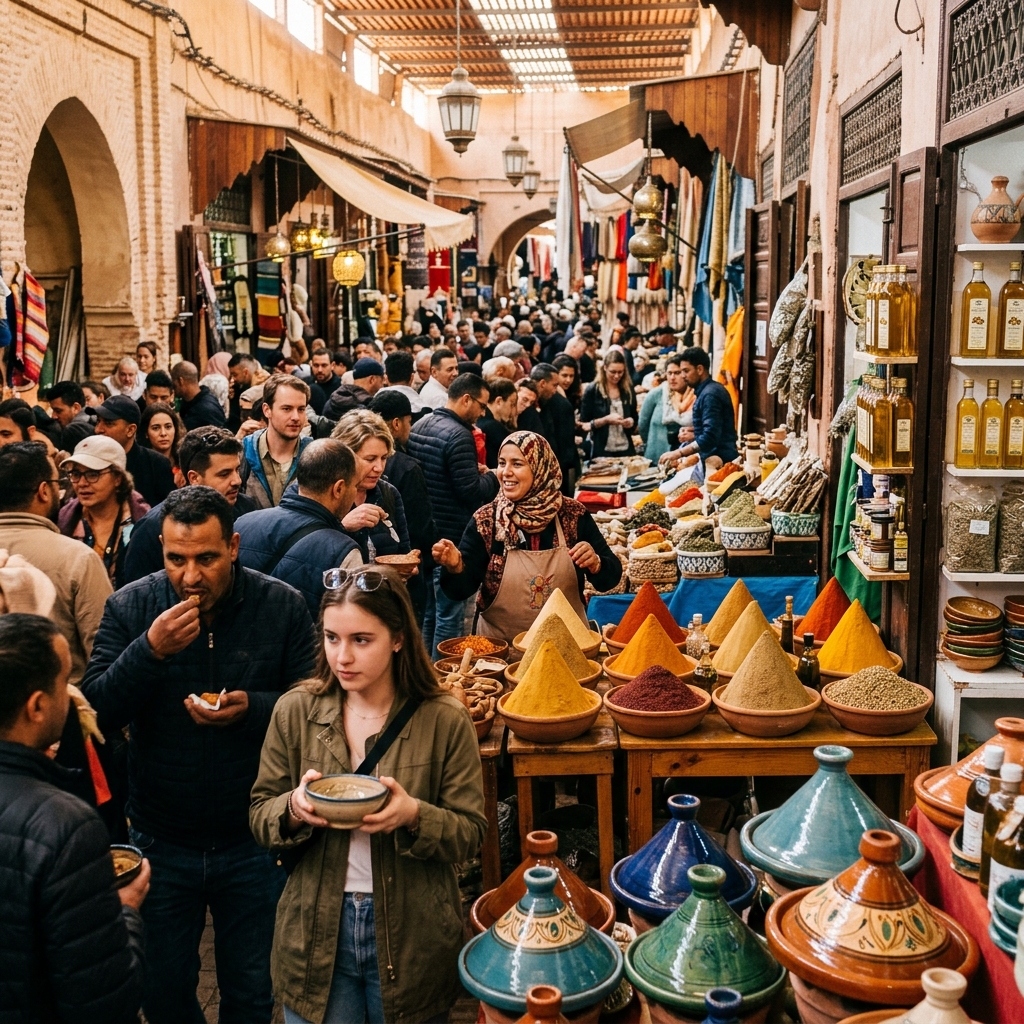
The Afternoon: As the day progresses and the lack of water and caffeine sets in, the energy drops. By 4:00 PM, the streets are often crowded and chaotic as people rush to buy fresh bread (khobz), sweets (chebakia), and produce for the evening meal. Tempers can occasionally fray in the traffic.
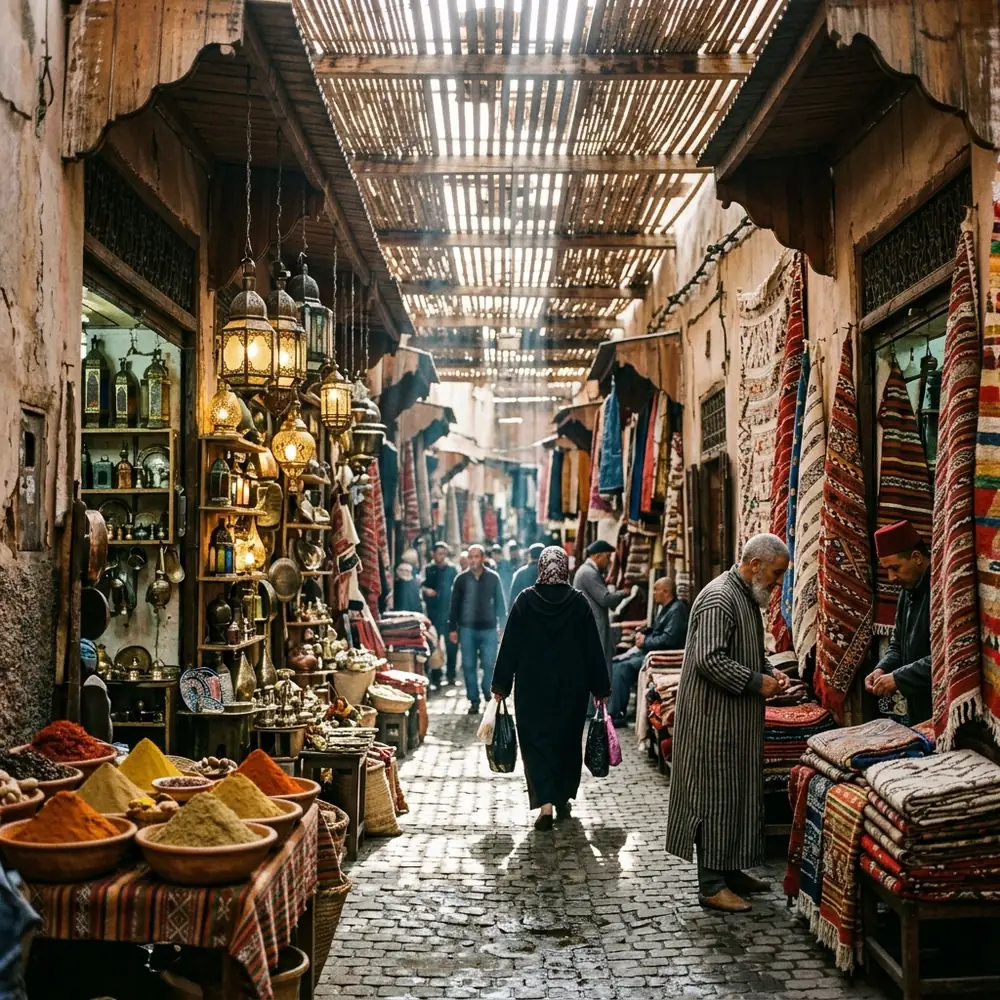
The Silence (Maghrib): This is the most extraordinary moment of the day. About twenty minutes before sunset, the streets empty completely. The chaotic medinas fall totally silent. Everyone is at home or in a café, sitting in front of a table laden with food, waiting. Then, the call to prayer sounds, a cannon fires in some cities, and a siren wails. The fast is broken with a date and a glass of milk or water.
The Night: After the initial meal (Iftar/Ftour) and the evening prayers (Tarawih), the cities come alive. The streets are packed, cafés are full of people drinking tea and smoking, children are playing outside until 1:00 AM. The atmosphere is festive and joyful.
How to Eat During the Day as a Tourist
You are not expected to fast. However, eating, drinking, or smoking in public during daylight hours is highly disrespectful and technically illegal under Moroccan law (though this is rarely enforced against non-Muslim foreigners).
So, how do you eat?
- Hotels and Riads: Your accommodation will serve breakfast and lunch as normal, often behind closed curtains or in an interior courtyard.
- Tourist Restaurants: In major hubs like Marrakech, Fes, and Essaouira, restaurants catering to tourists remain open. They may pull the blinds down or seat you on an upper terrace out of public view.
- Supermarkets: Carrefour and Marjane remain open. You can buy snacks and water to consume privately in your room.
- Water: Carry water in your bag, not in your hand. If you need a drink in the 40°C heat, step into a quiet alley, turn away from the main street, and drink quickly and discreetly.
The Magic of Iftar (Ftour)
The meal that breaks the fast is called Ftour in Morocco (rather than the Middle Eastern term, Iftar). It is a culinary event.
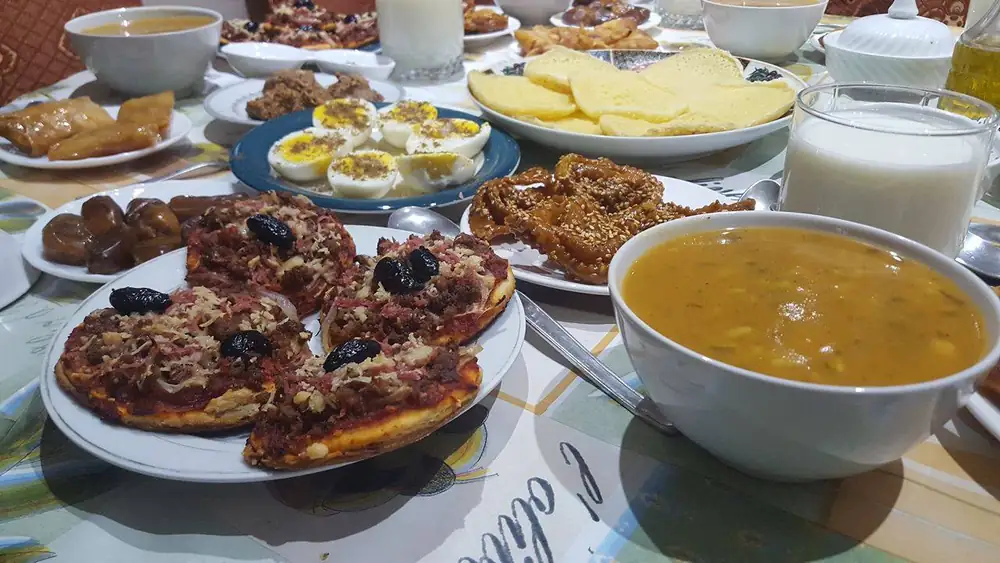
A traditional Moroccan Ftour is heavy on sugar and carbs to restore energy quickly. It revolves around Harira (a rich tomato, lentil, and chickpea soup), hard-boiled eggs with cumin, Chebakia (deep-fried dough coated in honey and sesame seeds), Harsha (semolina bread), stuffed dates, and endless mint tea or avocado-and-milk smoothies.
As a visitor, you must experience this.
- Accept Invitations: If a Moroccan invites you to share Ftour in their home, accept it. It is an honor and a gesture of deep hospitality.
- Cafés and Restaurants: Many cafés offer a set Ftour menu. Sit down at 6:30 PM, order the menu, and wait with everyone else. Do not touch the food until the call to prayer sounds. Breaking the fast simultaneously with hundreds of people around you is a powerful communal experience.
Practical Tips for Your Itinerary
- Shift your schedule: Do your sightseeing early in the morning before the heat and the fatigue of the fast set in for the locals.
- Expect delays: Everything operates at half-speed. Tourist sites may have shorter hours (often closing at 3:00 PM). Transport schedules can be erratic.
- Avoid the final hour: The hour before sunset is not the time to be haggling in the souk or trying to flag down a taxi. People are hungry, thirsty, and want to get home.
- Alcohol: The sale of alcohol to Moroccans is strictly prohibited during Ramadan (and often in the weeks leading up to it). While licensed international hotels and some high-end restaurants will still serve alcohol to foreigners upon presentation of a foreign passport, the availability is drastically reduced. Do not expect to find a casual beer easily.
- Eid al-Fitr: The festival marking the end of Ramadan is a major holiday. For three days, almost everything shuts down as people visit family. Travel during these days is extremely difficult as buses and trains are fully booked.
The Honest Truth
Ramadan requires patience. You will not get the typical, fully-caffeinated, 24/7 hustle of Morocco. You will have to work a little harder to find lunch.
But in return, you get to witness a deep spiritual discipline that unites an entire nation. You get to hear the extended Tarawih prayers echoing from every mosque in the cool night air. You get to see the generosity of people offering soup and dates to strangers on the street at sunset.
It is not the easiest time to visit, but for the traveler who cares about culture more than convenience, it is arguably the best.
Experience the true heart of Moroccan heritage through its culinary traditions. Join us in preserving and honoring these ancestral recipes.
What People Are Saying
No comments yet. Be the first — we'd love to hear from you.
Sanaa El Alaoui
Culturally Verified & Fact-CheckedThe Moroccan Food editorial team brings together native culinary researchers, heritage preservationists, and experienced home cooks across Marrakech, Fes, and Casablanca. Every recipe and cultural guide is reviewed against ancestral oral traditions and authentic regional practices.