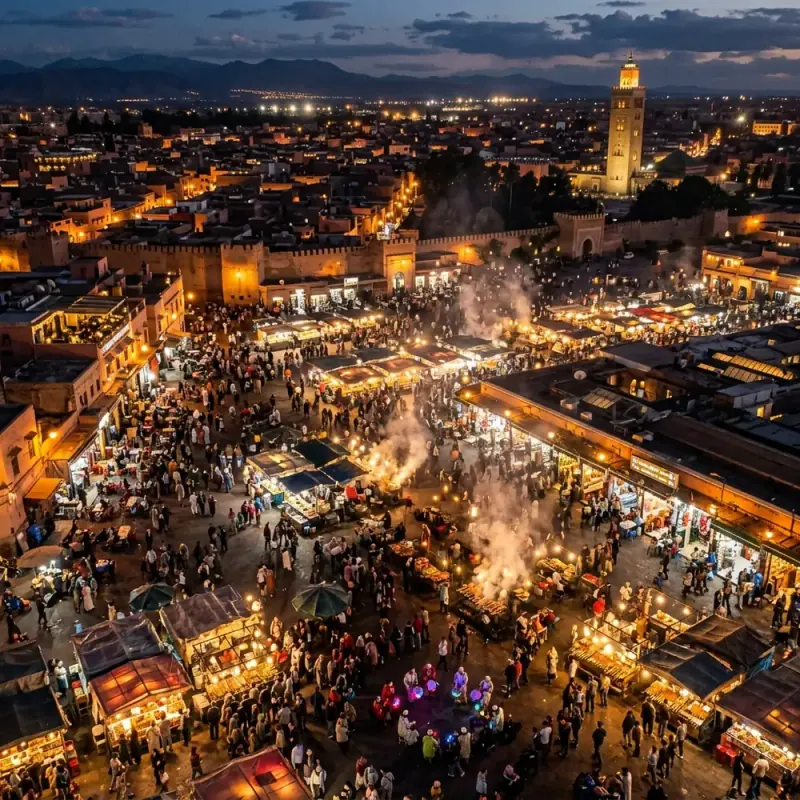
The Magic of Moroccan Ramadan Nights: A adventure of Faith and Flavor
Ramadan in Morocco: A Month of Light, Generosity, and Community
Growing up in Morocco, the first day of Ramadan always felt electric. I remember helping my mother arrange dates on the table while waiting for the cannon fire (Kabor) to echo through the medina. This holy month transforms our entire Kingdom. Our streets slow down during the day, only to ignite with spiritual energy and culinary brilliance at night. For 30 days, we fast from sunrise to sunset, focusing on prayer and charity. But when that cannon finally sounds, our families unite to celebrate the “Ftour” together.
The Ritual of Iftar: The Moroccan Table
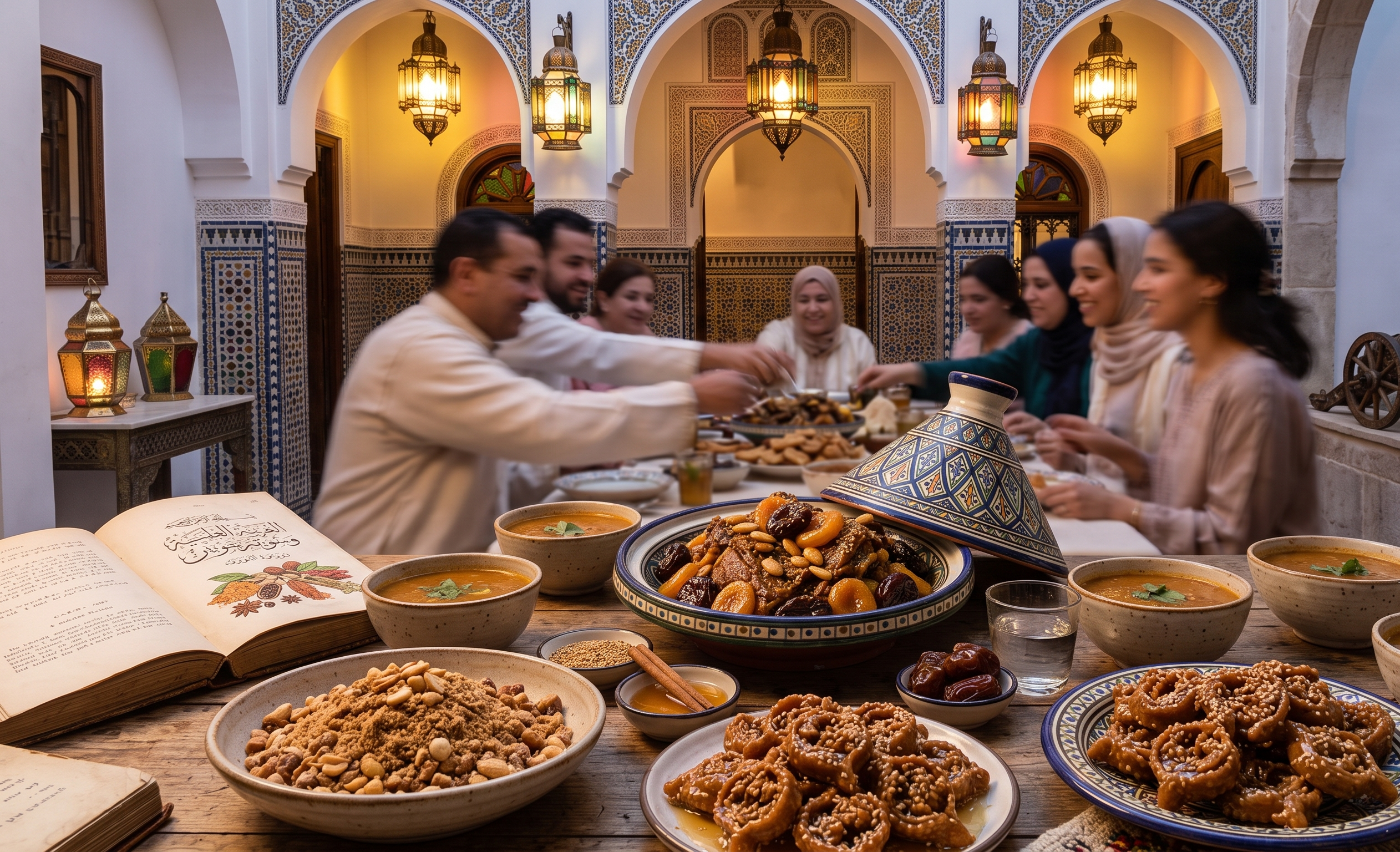
The Moroccan Ftour table is a great piece of balance and tradition. It is designed to replenish the body after a day of fasting while delighting the senses.
- The Foundation: Dates and water are always the first to be consumed, following the tradition of the Prophet.
- Harira: No Ramadan table is complete without this rich, aromatic soup.
- Sweet and Savory: The table offers an incredible harmony of flavors—Chebakia (honey-coated sesame cookies), Sellu (a nutritious blend of toasted flour and nuts), and savory briouats filled with chicken or almond.
- The Family Circle: The most important ingredient of Iftar is not the food, but the presence of family and neighbors.
The Night Alive: Spirituality and Celebration
After the Ftour, the streets of Morocco undergo a magical transformation.
- Tarawih Prayers: The mosques overflow with worshippers for the long evening prayers. The sound of thousands of voices in unison chanting the Quran creates a vibration of peace throughout the cities.
- The “Neffar” and “Messen”: In many traditional neighborhoods, the Neffar (the town crier) still walks the streets before dawn, announcing the Suhoor (pre-dawn meal) with a long trumpet to wake the families.
- Late-Night Souks: Shops and cafes stay open until the early hours of the morning. The medinas become lively hubs of shopping and socializing, with families enjoying the cool night air.
The Spirit of Charity: Tadamun
Ramadan is the month of “Tadamun” (solidarity).
- Public Iftars: Many mosques and charities set up massive long tables in the streets to provide free meals for the needy and for travelers.
- Zakat Al-Fitr: Before the month ends, every family provides a donation of food or money to ensure that everyone in the community can celebrate the Eid.
Tips for Travelers during Ramadan
- Respect the Fast: While tourists are not expected to fast, it is a sign of respect to avoid eating, drinking, or smoking in public during daylight hours.
- Join an Iftar: If you are invited to a family Iftar, say yes! It is the most authentic way to experience Moroccan hospitality.
- Plan Your Day: Banks and shops often have shorter hours. Museums and sites are usually empty and peaceful in the mornings.
- The “Silence”: Experience the 15 minutes before sunset. The streets become eerily quiet as everyone heads home, followed by a burst of life once the fast is broken.
A Month of the Soul
Ramadan in Morocco goes far beyond the absence of food; it’s about the deep presence of spirit and community. It is the time when our “Tamaghrabit” (Moroccan-ness) shines brightest through genuine hospitality and faith. I’d love to hear how you celebrate special spiritual moments in your own culture—what traditions bring your community together?
Frequently Asked Questions (FAQ)
Q1: Can I find food during the day in Ramadan? A: In major cities and tourist hubs, many restaurants remain open to serve travelers. However, smaller local spots in the medina might only open at sunset.
Q2: Is everything closed during Ramadan? A: No, life continues. Schools, offices, and most shops remain open, though many operate on “Ramadan hours” (usually 9 AM to 3 PM without a lunch break).
Q3: When does Ramadan happen? A: Because it follows the lunar calendar, the dates change by about 10-11 days every year. Check the Islamic calendar before planning your trip to see if it coincides with the Holy Month.
Experience the true heart of Moroccan heritage through its culinary traditions. Join us in preserving and honoring these ancestral recipes.
What People Are Saying
No comments yet. Be the first — we'd love to hear from you.
H. Elmrabet
Culturally Verified & Fact-CheckedThe Moroccan Food editorial team brings together native culinary researchers, heritage preservationists, and experienced home cooks across Marrakech, Fes, and Casablanca. Every recipe and cultural guide is reviewed against ancestral oral traditions and authentic regional practices.