Rfissa: The Sacred Spiced Chicken and Trid Stew of Postpartum Healing
archived: false
In the pantheon of Moroccan imperial culinary traditions, no dish carries more cultural reverence, emotional warmth, and medicinal intention than Rfissa (also known in older regional vernacular as Trid). Prepared across the Kingdom to celebrate the third or seventh day following a birth, or served during chilly winter gatherings, Rfissa is a communal masterpiece engineered specifically to comfort, nourish, and restore vitality to women during the postpartum lying-in period.
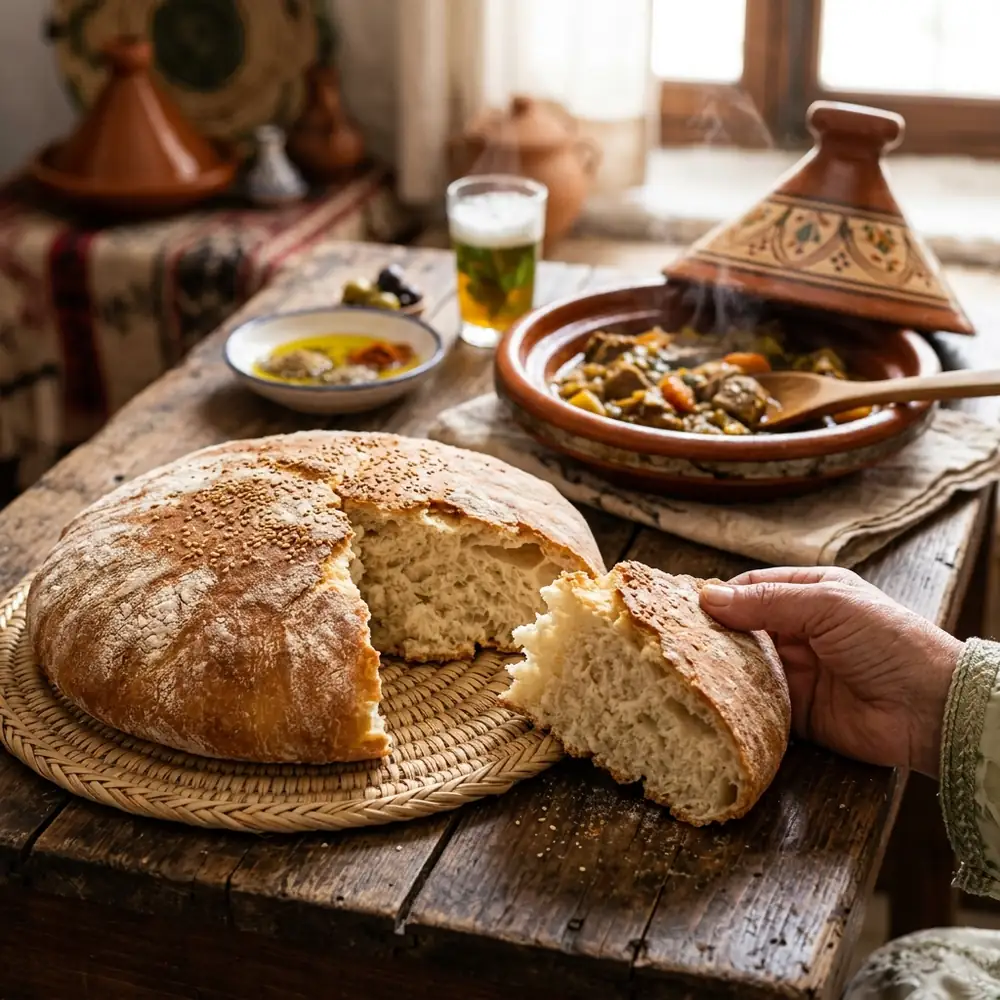
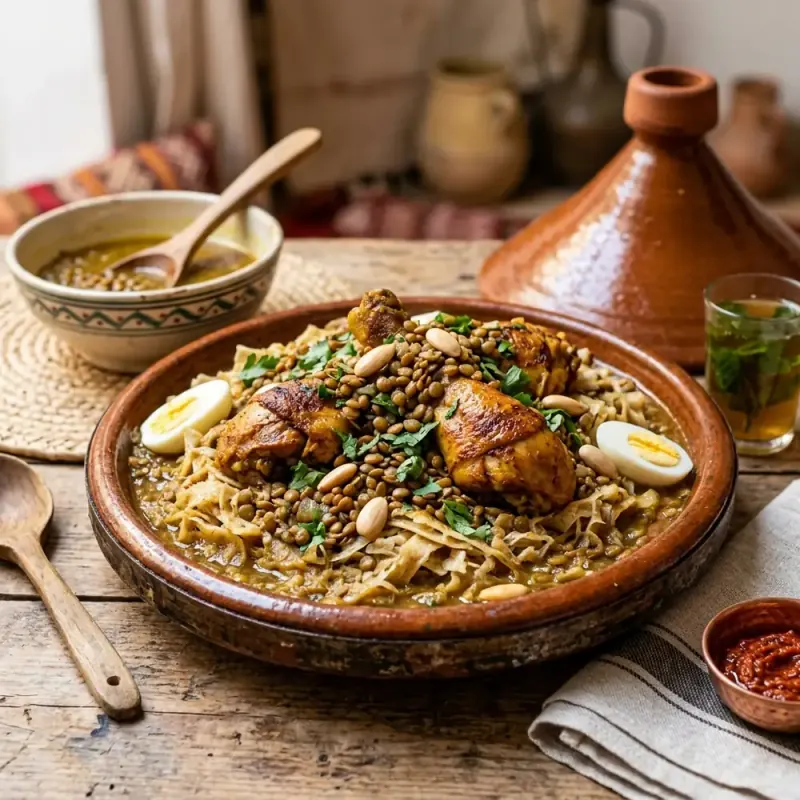
Where couscous represents festive community fellowship and the tagine symbolizes daily domestic balance, Rfissa is an intimate ritual of physical regeneration. Piled high upon a monumental ceramic platter (Gsaa), delicate, paper-thin steamed pastry ribbons (Trid or Msemen) lie drenched beneath a fragrant, golden broth rich with free-range chicken, plump brown lentils, aromatic fenugreek seeds, pure saffron, and aged medicinal spices.
The Historic Lineage: From Pre-Islamic Tharid to Imperial Fez
The culinary ancestry of Rfissa traces back fourteen centuries to Tharid, an Arabian dish composed of thin bread soaked in seasoned meat broth, famously praised in historical records as the most nourishing meal in early Islamic civilization. As Arab dynasties settled into the Maghreb during the eighth and ninth centuries, local Amazigh and Andalusian culinary artists refined this rustic preparation into an elaborate craft.
In the imperial palaces and historic medina mansions of Fez, the crude hearth bread was replaced with Trid (also called Ouraqa), translucent sheets of leavened durum semolina dough stretched until paper-thin and quickly blistered across the convex surface of a reversed clay oven or cast-iron bell (Frah). The paper-thin pastry circles are stacked, tightly rolled like scrolls, and finely sliced into delicate ribbon noodles resembling fresh pasta.
The Sacred Medicinal Triad: Fenugreek, Saffron, and Ras el Hanout
Rfissa is far more than comfort food; it functions as an edible pharmacopeia rooted in Greco-Arabic humoral medicine. Every primary seasoning in the broth serves a deliberate biological purpose:
1. Fenugreek (Helba)
The unmistakable, sweet-nutty maple aroma that fills a Moroccan home during Rfissa preparation comes from fenugreek seeds (Trigonella foenum-graecum). Celebrated for millennia in traditional herbal medicine, fenugreek is a powerful natural galactagogue proven to stimulate breast milk production, stimulate maternal appetite, and assist uterine contraction following labor.
2. Saffron and Turmeric (Za’afran wa Kharqoum)
Threads of authentic Taliouine saffron steeped in warm water provide golden color, anti-inflammatory carotenoids, and a gentle floral perfume, while earthy dried turmeric roots support tissue recovery and digestion.
3. Ras el Hanout and Mssakhn
The spice profile of winter Rfissa is fortified with Mssakhn, a specialized medicinal blend of up to forty-five warming spices including grains of paradise, cubeb, wild cardamom, dried ginger, nutmeg, and ashwagandha roots. These botanicals promote core circulation, warm the internal organs (Tard Al-Bard), and dispel post-labor chills.
4. Smen (Aged Smoked Butter)
A heaping tablespoon of salted fermented farm butter, aged in earthenware jars with mountain oregano (Za’atar), gives the broth its deep, pungent, savory richness that cannot be replicated with ordinary cooking butter.
The Anatomy of the Perfect Rfissa
Creating a genuine Rfissa requires meticulous coordination between the pastry maker and the broth master:
- The Free-Range Chicken (Djej Beldi): Commercial hothouse broilers collapse into mush under long simmering. Authentic Rfissa demands a lean, muscular free-range farm chicken (Beldi), rubbed overnight with a thick paste of crushed garlic, minced ginger, saffron water, ras el hanout, coarse salt, and smen.
- The Aromatic Base: In a large stockpot, the marinated chicken browns gently with thinly sliced yellow onions, olive oil, and smen until the onions begin to caramelize and melt into a silky sauce.
- The Simmer: Lentils (Aads Beldi) and fenugreek seeds (Helba) are added alongside a bouquet of fresh cilantro and flat-leaf parsley tied securely with kitchen twine. Boiling water covers the bird, simmering gently until the chicken meat is meltingly tender and the broth turns into a deeply concentrated, golden nectar (Marqa).
- The Trid Steaming: The shredded trid pastry ribbons are arranged inside a perforated couscous steamer (Keskas) placed atop the bubbling broth for five minutes. The rising herb-scented steam softens the dried pastry ribbons until they turn silky, tender, and warm.
The Assembly and Table Presentation
Plating Rfissa is an art form preserved by elder Moroccan women (Maâllmat).
The warm steamed pastry ribbons are transferred to an enormous painted Fez ceramic platter (Gsaa). The cook ladles several cups of boiling broth across the pastry, gently lifting and folding the ribbons with wooden spoons so every thread absorbs the liquid without dissolving into porridge.
The tender golden chicken is placed triumphantly in the center of the platter. Spoonfuls of cooked lentils, fenugreek, and sweet caramelized onions are mounded atop and around the bird. The perimeter is garnished with soft hard-boiled quail eggs rolled in freshly toasted cumin and nigella seeds, blanched fried sweet almonds, and dried black figs or dates stuffed with walnut halves. Extra piping-hot broth is served in deep bowls alongside the platter, allowing each diner to moisten their portion to their exact preference.
Frequently Asked Questions
Can I make Rfissa with Msemen instead of traditional Trid?
Yes, in modern Moroccan homes, day-old square laminated flatbreads (Msemen) or shredded round crêpes (Melwi) are commonly used instead of rolling paper-thin Trid. Tear or cut the cold Msemen into bite-sized ribbons and steam them thoroughly in a couscous pot before ladling the hot chicken broth over them.
How do you reduce the strong bitterness of fenugreek?
If you are sensitive to the bitter notes of fenugreek (Helba), soak the seeds in cold water overnight, discard the soaking water, and boil them separately in a small saucepan with a ladle of chicken broth and a pinch of sugar or honey before adding them to the main platter as a side garnish rather than boiling them directly in the main stock.
Is Rfissa suitable for guests who are not postpartum mothers?
Absolutely. While Rfissa is inextricably tied to postpartum celebrations and newborn baptisms (Sebou), it is one of Morocco’s most celebrated festive dishes, frequently served during cold winter family reunions, Friday gatherings, and celebrations honoring close friends.
Can Rfissa be made with beef, lamb, or pigeon?
While free-range chicken (Djej Beldi) is the classic standard, traditional variations across Fez, Meknes, and Rabat frequently feature young squab pigeons (Hmam) slow-cooked with saffron, or tender beef shank and lamb shoulder simmered until fall-apart tender.
Experience the true heart of Moroccan heritage through its culinary traditions. Join us in preserving and honoring these ancestral recipes.
What People Are Saying
No comments yet. Be the first — we'd love to hear from you.
Lalla Zineb
Culturally Verified & Fact-CheckedLalla Zineb preserves ancestral imperial recipes from the heart of the Fes medina, honoring slow-cooking methods and ceremonial feast traditions.