The Ritual of the Washbasin (Tass): Washing Hands at the Table
The Ritual of the Washbasin (Tass): Washing Hands at the Table
In Morocco, eating with your hands is not a casual affair; it is an intimate, respected practice governed by strict hygiene. Because the right hand serves as the primary utensil for eating from communal dishes, it must be impeccably clean before it touches the bread.
If you are a guest of honor at a traditional Moroccan dinner, you are not expected to get up and go to the bathroom sink to wash your hands. Instead, the sink comes to you.
The Tass and Brik
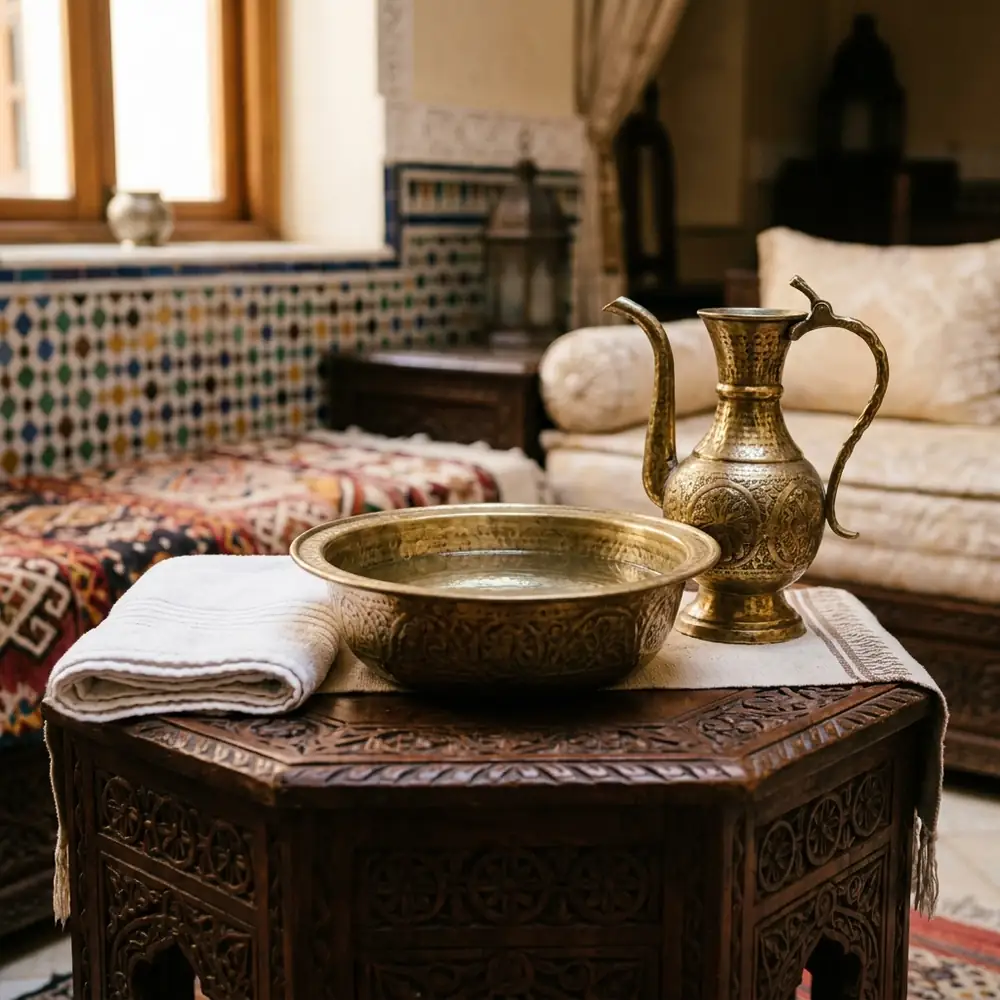
Just before the food is brought out, a younger member of the family or the host will approach the guests bearing a heavy, ornate set of metalware. This is the Tass (the basin) and the Brik (the kettle). They are usually made of engraved silver, brass, or copper.
The host will drape a clean, folded towel over their shoulder or forearm. They will hold the basin beneath the guest’s hands and pour a slow, gentle stream of warm water from the kettle over the guest’s fingers.
The Scented Water
The water in the kettle is rarely just plain tap water. It is almost always infused with a few drops of pure Orange Blossom Water (Maa Zhar) or Rose Water (Maa Werd). As the warm water hits your skin, the floral scent rises, creating a moment of sensory calm before the heavy spices of the meal arrive.
Once your hands are washed, the host will hand you the towel to dry off. This ritual is repeated precisely in reverse at the end of the meal. The Tass and Brik are brought out again, often with a sliver of soap, to cleanse the fingers of olive oil, lamb fat, and the lingering scent of cumin.
This beautiful tradition ensures that the guest is treated like royalty, remaining seated on the low cushions while the hospitality of the house is literally poured over their hands.
Experience the true heart of Moroccan heritage through its culinary traditions. Join us in preserving and honoring these ancestral recipes.
What People Are Saying
No comments yet. Be the first — we'd love to hear from you.
Ghina Mrabet
Culturally Verified & Fact-CheckedThe Moroccan Food editorial team brings together native culinary researchers, heritage preservationists, and experienced home cooks across Marrakech, Fes, and Casablanca. Every recipe and cultural guide is reviewed against ancestral oral traditions and authentic regional practices.