The Andalusian Gardens of Rabat: A Moorish Oasis of Serenity
A Hidden Eden
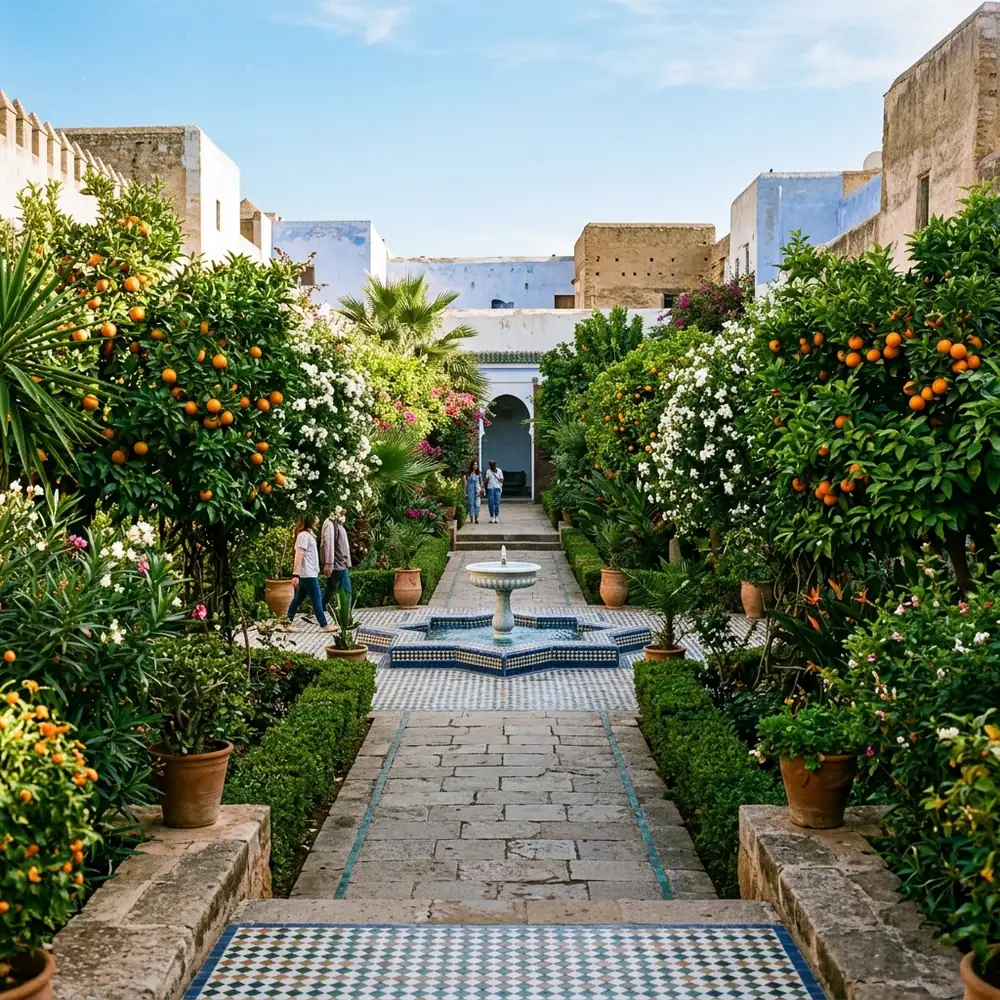
Rabat, the political capital of Morocco, is a city of grand boulevards and monumental architecture. But hidden within the fortress walls of the 12th-century Kasbah of the Udayas lies an unexpected paradise: the Andalusian Gardens. Constructed by the French architect Jean-Claude Nicolas Forestier in the early 20th century, the garden pays flawless homage to the Moorish landscaping traditions of Al-Andalus.
The Geometry of Paradise
Islamic garden design is based on the Quranic concept of paradise (Jannah), strictly ordered and deeply geometric. The Andalusian Garden is divided by intersecting pathways, symbolizing the four rivers of paradise. At the center of these axes, fountains and water channels flow continuously, cooling the air and providing a soothing acoustic backdrop.
A Sensory Experience
The garden is designed to engage all five senses. The visual symmetry is framed by lively bougainvillea, towering cypress trees, and datura. The air is heavy with the intoxicating perfumes of jasmine, bitter orange blossom, and mint. Cats lounge lazily on the warm zellige tiles, while locals and visitors alike sit on the shaded benches, escaping the frantic pace of the modern city outside the Kasbah walls.
The Café Maure
No visit to the gardens is complete without stopping at the adjacent Café Maure. Perched on a cliff overlooking the Bou Regreg river estuary, it is the perfect place to sip a glass of sweet mint tea, nibble on gazelle horns (cornes de gazelle), and reflect on the classic beauty of Moorish design.
Experience the true heart of Moroccan heritage through its culinary traditions. Join us in preserving and honoring these ancestral recipes.
What People Are Saying
No comments yet. Be the first — we'd love to hear from you.
L'Architecte SEO
Culturally Verified & Fact-CheckedThe Moroccan Food editorial team brings together native culinary researchers, heritage preservationists, and experienced home cooks across Marrakech, Fes, and Casablanca. Every recipe and cultural guide is reviewed against ancestral oral traditions and authentic regional practices.