Saffron vs. Safflower: The Fake Red Gold of the Souk
Saffron vs. Safflower: The Fake Red Gold of the Souk
To wander through the lively spice markets of Marrakech or Fes is to walk through a labyrinth of sensory illusions. One of the most famous tourist traps involves towering piles of bright red threads sold at unbelievably low prices, labeled simply as ‘saffron.’ As a traditional herbalist, I must reveal that this is not the prized red gold of Taliouine, but rather Carthamus tinctorius—commonly known as Safflower or ‘false saffron.‘
What is the difference between Saffron and Safflower?
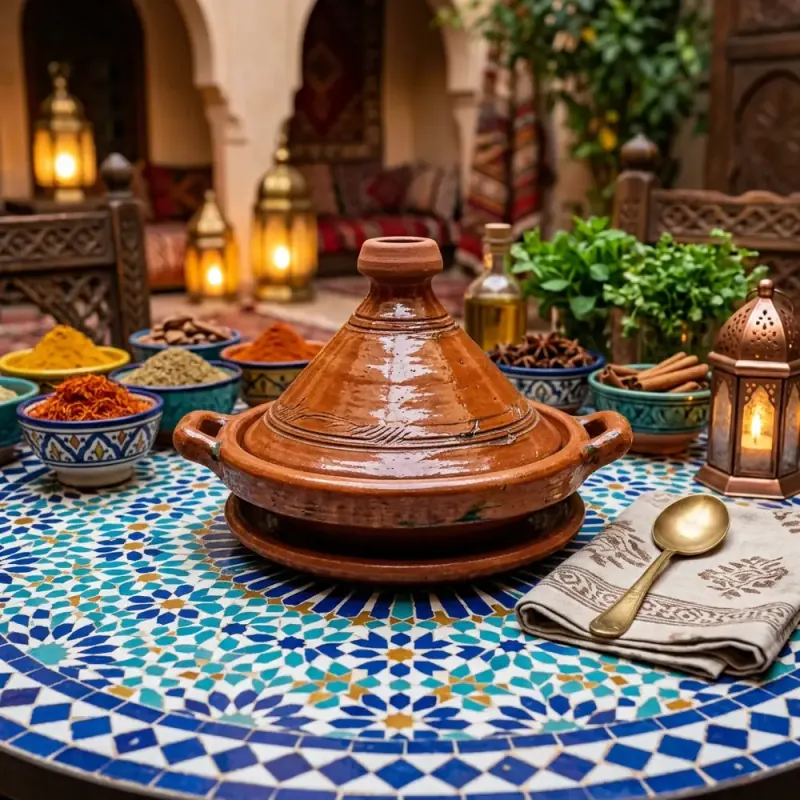
Understanding the distinction is vital, as mixing them up will completely ruin the delicate alchemy of a traditional Moroccan tagine.
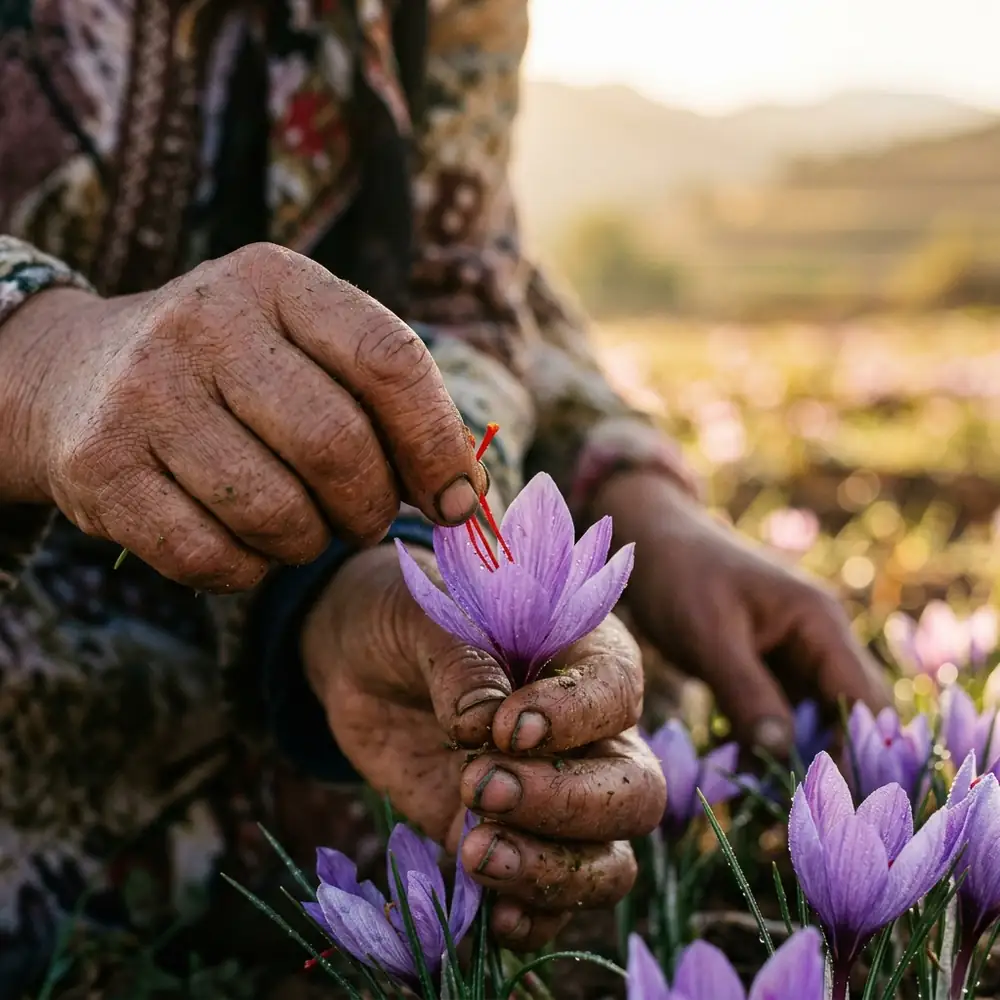
- Botanical Origin: True saffron consists of the delicate, three-pronged stigmas of the Crocus sativus flower. Safflower is the dried, thistle-like petal of an entirely different plant.
- Flavor Profile: Authentic saffron possesses a deep, honey-like, floral, and slightly metallic aroma. Safflower is completely tasteless and odorless.
- Visual Test: Saffron threads are trumpet-shaped at one end and deeply crimson red. Safflower threads are straight, needle-like, and often have a chaotic, yellow-orange hue.
- The Water Test: When soaked in warm water, true saffron will slowly turn the water a brilliant, golden yellow while the thread remains red. Safflower will immediately dye the water a murky, dull red, and the thread itself will turn pale.
The legitimate use of the false gold
Despite its reputation as an imposter, Safflower has a legitimate, historic place in traditional Moroccan herbalism and crafting. Because it is an incredibly cheap and powerful natural dye, our ancestors used it extensively to color wool for carpets and silk for wedding caftans. In the kitchen, poorer families historically used a tiny pinch of Safflower simply to give their stews an appetizing red tint when paprika was unavailable, fully aware it added no flavor.
The apothecary’s warning for buying saffron
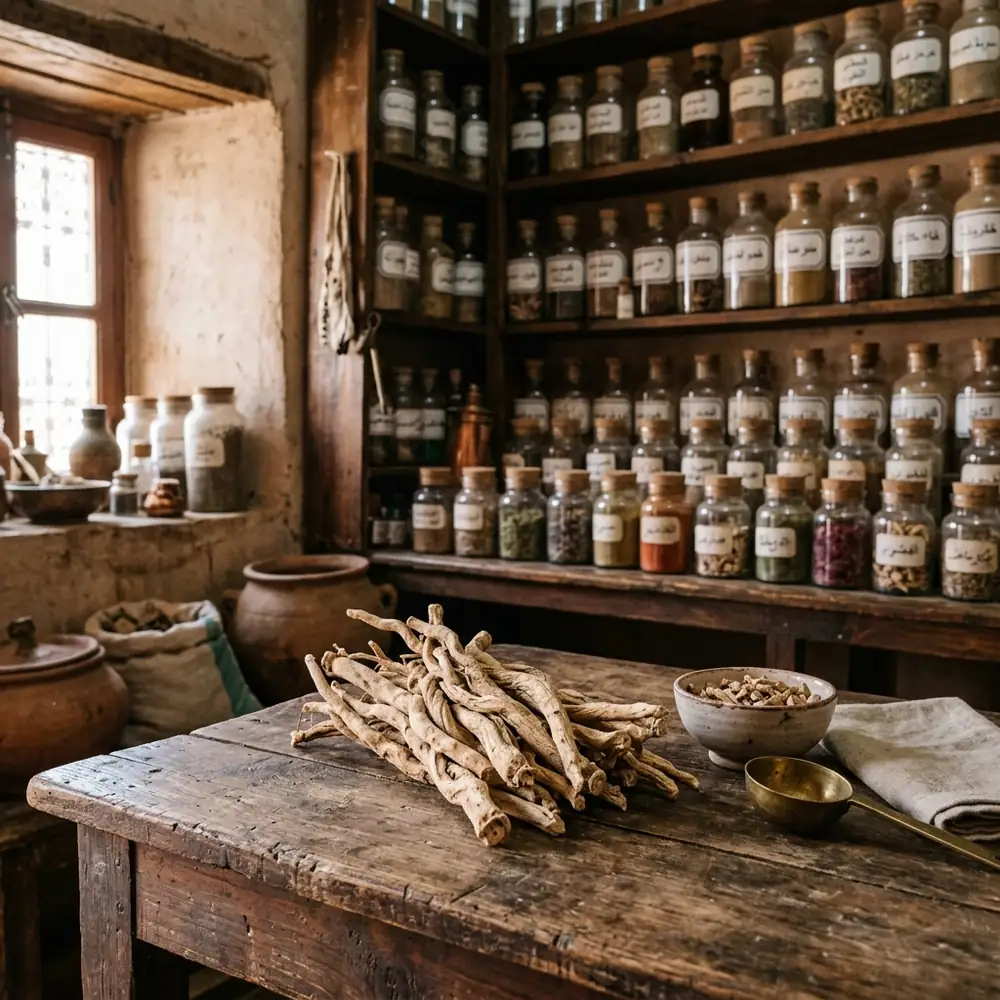
- Never buy saffron that is sold in large, open piles in the market; sunlight and air destroy its essential oils within days. True saffron is always kept in tightly sealed, tiny glass or tin containers behind the merchant’s counter.
- If the price seems like a bargain, it is a fake. The harvesting of true saffron requires huge human labor, making it the most expensive spice by weight in the world.
The Invisible Invitation
The apothecary’s scale is precise, and the true red gold is safely locked away in a glass vial. Do not be deceived by the bright illusions of the main square. Step into the quiet alleys, let us show you the real treasures of the Atlas, and we will share a true golden tea.
Experience the true heart of Moroccan heritage through its culinary traditions. Join us in preserving and honoring these ancestral recipes.
What People Are Saying
No comments yet. Be the first — we'd love to hear from you.
Ghina Mrabet
Culturally Verified & Fact-CheckedThe Moroccan Food editorial team brings together native culinary researchers, heritage preservationists, and experienced home cooks across Marrakech, Fes, and Casablanca. Every recipe and cultural guide is reviewed against ancestral oral traditions and authentic regional practices.