Serghina: The Perfumed Root of the Bride and Ancient Mountain Incense
archived: false
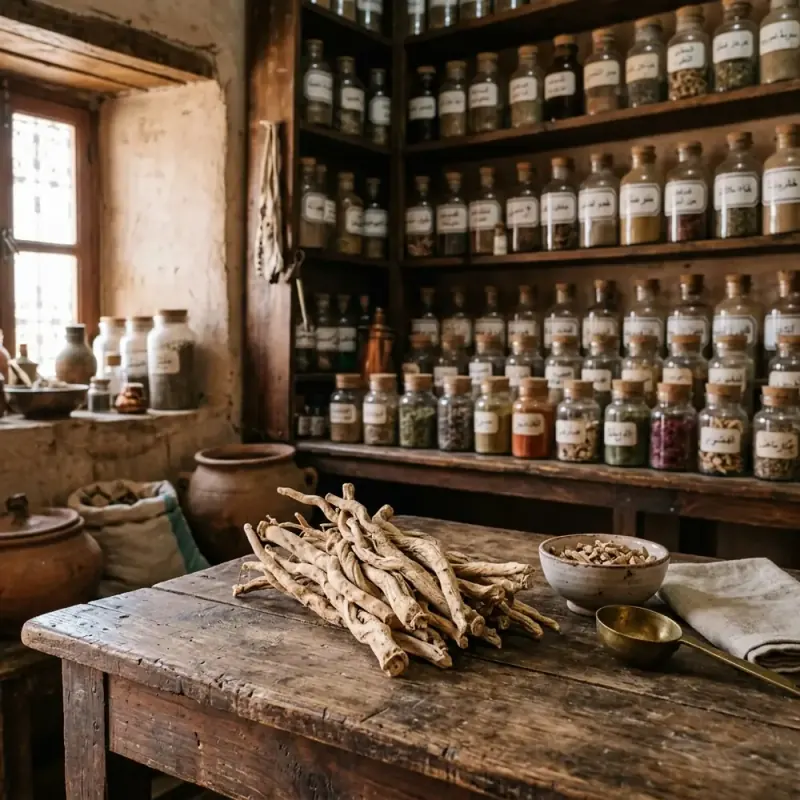
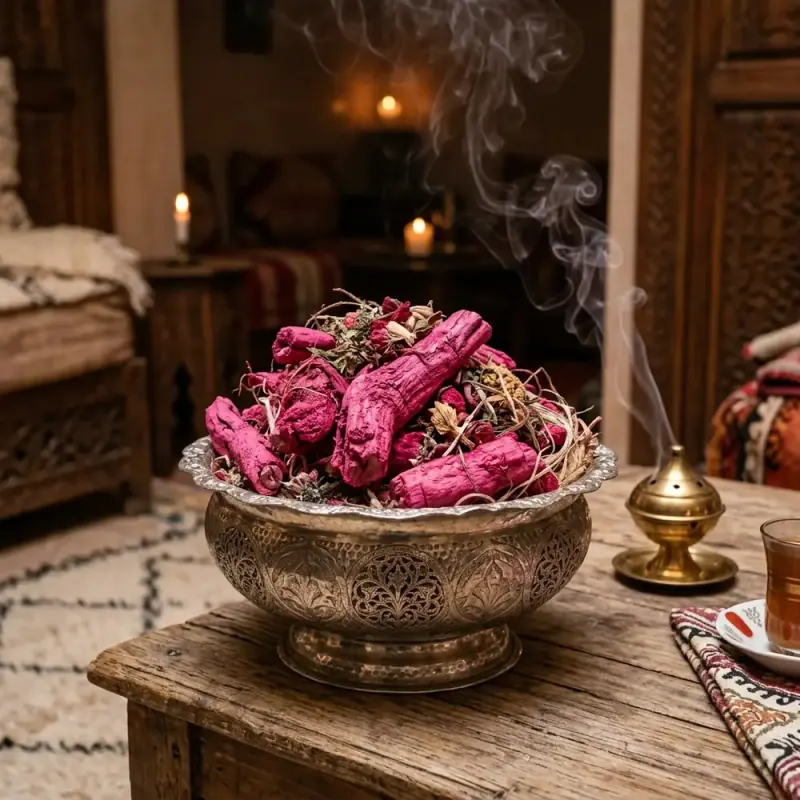
In the herbalist quarters of Moroccan medinas, displayed in colorful mounds alongside sacks of dried roses and lavender buds, you will frequently notice heaps of tangled, knobby, fibrous dried roots dyed in brilliant festive colors: saffron yellow, poppy crimson, and emerald green. In Moroccan Darija and Tamazight, this indigenous botanical treasure is called Serghina (Corrigiola telephiifolia).
While frankincense, myrrh, and agarwood are celebrated across world perfumery, Serghina is uniquely and intensely Maghrebi. For centuries, rural Amazigh women in the High Atlas and Rif mountains have gathered these wild knotweed roots to prepare the sacred incense that perfumes wedding chambers, purifies postpartum homes, and marks festive celebrations across the Kingdom.
Botanical Identity and Mountain Harvesting
Corrigiola telephiifolia is a perennial, procumbent herbaceous plant belonging to the Caryophyllaceae (pink/carnation) family:
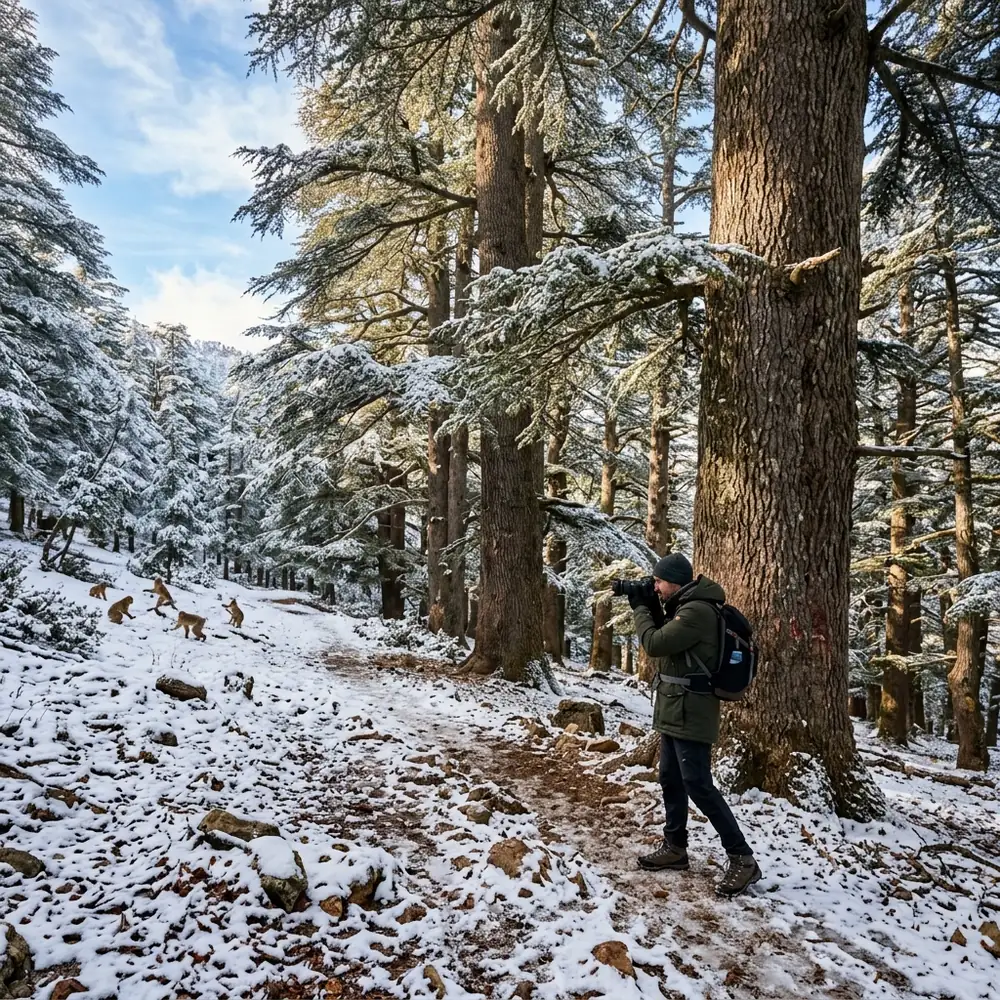
- The Wild Terroir: It grows wild across dry, stony, high-altitude plateaus and rocky mountain slopes between twelve hundred and twenty-two hundred meters elevation in the Atlas and Rif ranges. It thrives in poor, rocky soils exposed to blazing sun and mountain frosts.
- The Knobby Taproot: While the above-ground plant consists of modest trailing stems with tiny white flowers, the prized treasure is the thick, deeply rooted, woody, knobby taproot.
- The Sustainable Harvest: Berber women harvest the roots during early spring before the plant expends energy on flowering. The roots are carefully dug up with small hand trowels, washed in cold mountain streams to remove red clay soil, split into pencil-sized segments, and dried in airy shaded verandas.
The Curing Alchemy: How Raw Root Becomes Fragrant Incense
In its raw, dried state, Serghina possesses a faint, pleasant, woody scent. The transformation into festive incense is an artisanal craft known as Takhdit es-Serghina:
- The Floral Maceration: The dry root segments are placed in large terracotta vessels and steeped for twenty-four hours in pure distilled neroli orange blossom water (Ma Zhar) or Damascus rose water (Ma Ward).
- The Resinous Perfume Infusion: Herbalists incorporate powdered benzoin resin (Jawi), pure musk (Misk), crushed amber crystals, and mastic gum (Meska). The natural porous fibers of the root absorb the liquid aromatics like a sponge.
- The Festive Pigmentation: To visually distinguish their proprietary blends and celebrate festive joy, artisans tint the macerating roots with natural food-safe pigments: golden saffron extract, deep crimson Aker Fassi (poppy powder), or green henna dye.
- The Sun Curing: The saturated roots are spread across clean linen sheets to dry slowly in the warm sun. The exterior hardens, trapping the volatile floral and resinous essences deep within the woody cell walls.
Sacred Functions in Moroccan Life
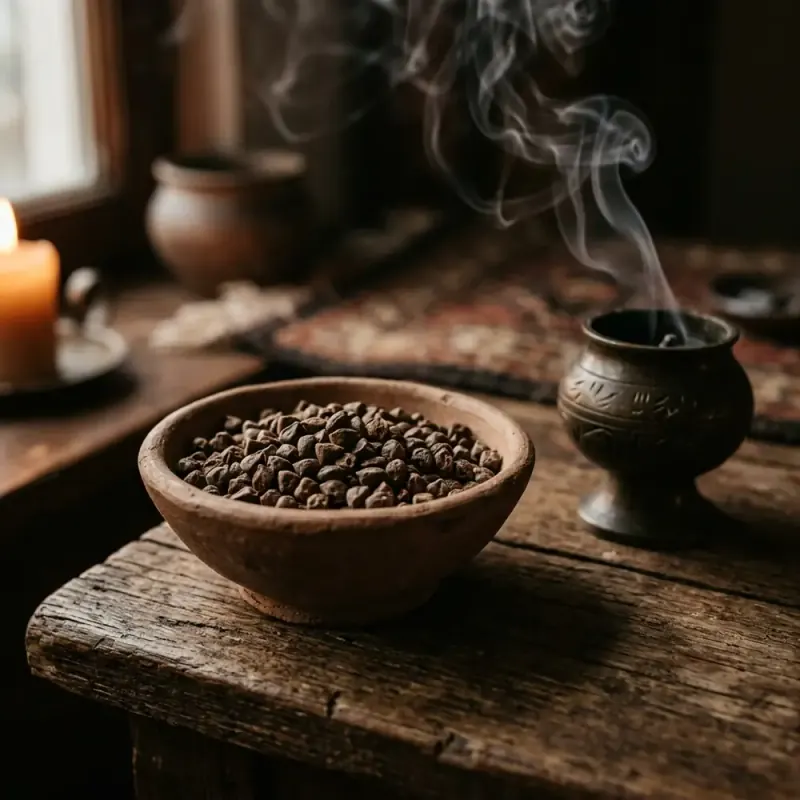
When Serghina is placed atop gentle gray embers inside a traditional charcoal brazier (Majmar), it does not scorch into bitter black smoke. It smolders gently, releasing thick white plumes of sweet, balsamic, honey-floral smoke that serves essential cultural functions:
- The Bridal Chamber (Laylat el-Dakhla): On the wedding night, the bride’s chambers are fumigated with Serghina to soothe nervous anxiety, create a serene atmosphere, and welcome the couple with blessings (Baraka).
- The Postpartum Lying-In: Following childbirth, a mother’s room is cleansed daily with Serghina smoke to dispel dampness, purify the air, and protect the newborn from airborne chill (Al-Bard).
- Hammam Hair Perfume: Following a deep hammam bath, women often sit over a small censer of smoldering Serghina with a dry towel draped over their heads, allowing the warm, fragrant smoke to perfume their damp hair strands with a scent that lingers for days.
Frequently Asked Questions
Can Serghina be used as a personal fragrance without burning?
Yes. Many Moroccan women place dry, cured Serghina root pieces inside linen drawers, wardrobe chests, and woolen rug storage trunks. The roots slowly diffuse a sweet, balsamic, floral aroma that naturally perfumes clothing and protects wool fabrics from moths.
How do I burn Serghina properly at home?
Light a piece of natural hardwood charcoal and let it burn until covered with a thin layer of gray ash (about 10 minutes). Place one or two pieces of Serghina root directly atop the ash. The indirect, gentle heat will cause the root to smolder smoothly without scorching.
What is the difference between Serghina and Louban?
Serghina is an indigenous botanical plant root (Corrigiola telephiifolia) cured with orange blossom water, musk, and resins. Louban (Frankincense) is the raw tree resin harvested from Boswellia trees in the Horn of Africa and Arabia, producing a sharp, lemony, church-incense aroma.
Is the smoke of Serghina safe for pets and young children?
Like all natural incenses, Serghina produces particulate smoke. Always burn Serghina in a well-ventilated room with windows or doors open, move the censer through the room for a few minutes, and avoid leaving smoldering censers unattended near infants or pets.
How do Moroccan women prepare Serghina roots for traditional cosmetic use?
The dried fibrous roots of Corrigiola telephiifolia are washed, soaked in pure orange blossom water (Ma Zhar), dyed with brilliant natural botanical tints, and sun-dried on flat straw trays. When dry, they are ground or gently crushed to release a soft, powdery, honey-vanilla aroma.
What is the cultural role of Serghina during traditional Moroccan wedding rituals?
During the Henné night, small ceramic bowls filled with dyed Serghina roots and cloves are placed around the bride. Burning Serghina root over charcoal perfumes the bridal chamber, symbolizing sweetness, good fortune, and protective blessings for the newly established household.
Experience the true heart of Moroccan heritage through its culinary traditions. Join us in preserving and honoring these ancestral recipes.
What People Are Saying
No comments yet. Be the first — we'd love to hear from you.
Samira
Culturally Verified & Fact-CheckedSamira researches rural foodways and wild mountain herbs across the High Atlas and Rif, championing local farmers and small-scale cooperatives.