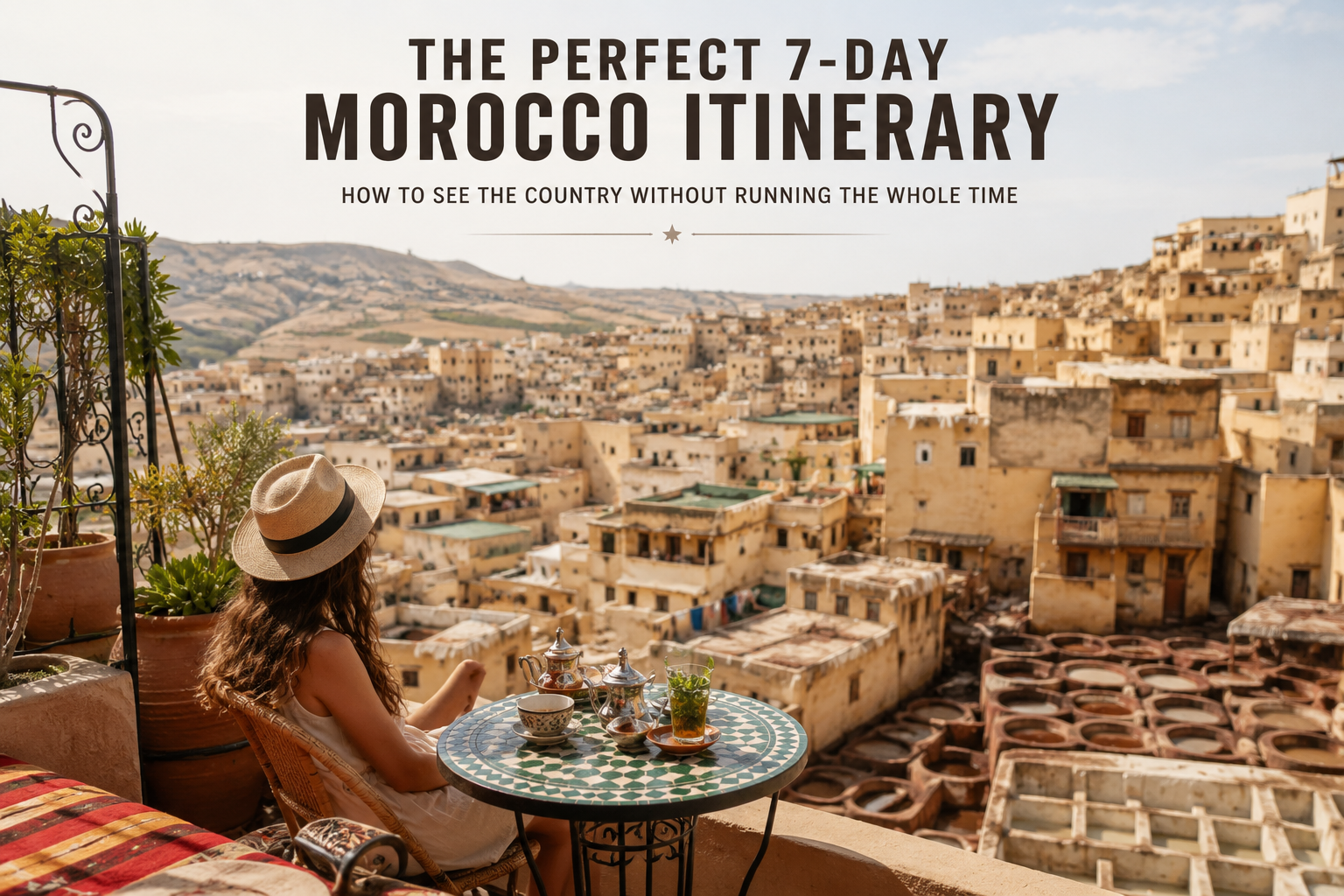
Solo Female Travel in Morocco 2026: Real Safety Tips, What to Wear, and How to Handle Street Harassment
Solo Female Travel in Morocco 2026: Real Safety Tips, What to Wear, and How to Handle Street Harassment
Let me start with the truth nobody in travel blogging wants to say clearly: Morocco is neither the safest nor the most dangerous country you will ever visit as a woman traveling alone. It sits somewhere in the middle of a spectrum, closer to the rewarding end than many people fear, but not so uncomplicated that you should go in completely unprepared. I’ve spent years guiding friends — and strangers — through these medinas, and the best trips I’ve witnessed were all built on honest preparation and genuine curiosity, not fear, not naivety.
So here is what I actually know. Here is what I wish someone had told me before my first solo trip years ago. And here is how to have the adventure that will almost certainly become one of your most vivid memories.
The Reality of Safety in Morocco for Solo Women
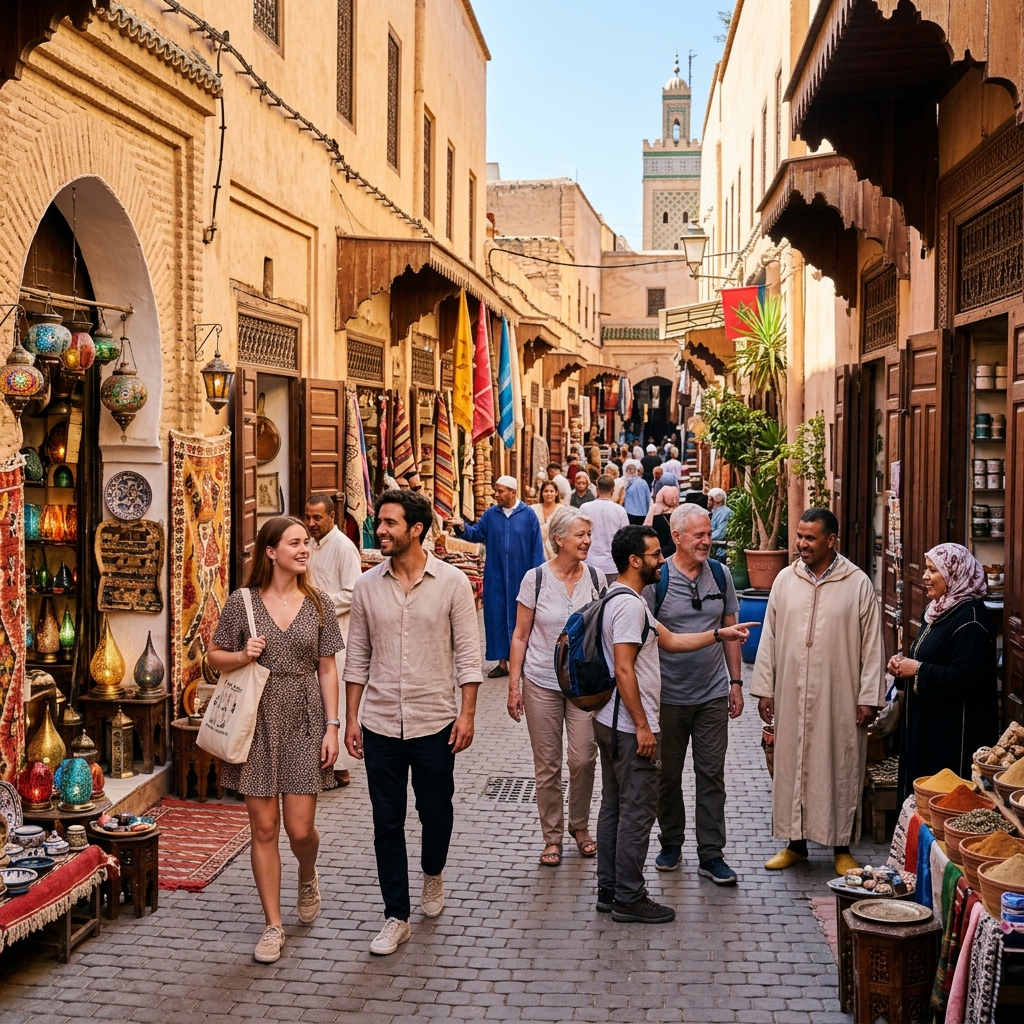
First, let’s clear the air. Morocco is not dangerous in the way that word implies violence or threat of serious harm. Most women who travel here alone do so without incident. The more common issue — and it’s real enough to deserve honest attention — is persistent male attention in certain areas. Unsolicited comments, men following you for a block or two, touts who won’t take a polite no for an answer. In the medinas of Marrakech and Fes especially, this can feel exhausting if you’re not prepared for it.
What still surprises me even today is how dramatically this experience varies depending on where you are in the country. The souks of Marrakech on a busy Saturday afternoon are a completely different world from the sleepy fishing harbor of Essaouira at sunrise, or the quiet Berber villages of the Draa Valley where children wave and grandmothers smile and nobody tries to sell you anything.
The harassment issue is real. It is also manageable. And once you learn to navigate it — and you will — it stops feeling like a threat and becomes, at most, a minor irritant you know how to handle. This guide will give you the actual tools.
What to Wear: The Honest Answer
This is the question everyone asks first, and I understand why. The honest answer is: dress more modestly than you would at home, but you do not need to cover yourself from head to toe or pretend to be someone you’re not.
What works everywhere: loose trousers or long skirts (linen is brilliant in summer), T-shirts or tops that cover your shoulders, a light scarf in your bag — not to wear constantly, but to drape over your shoulders when entering mosques, markets, or older neighborhoods, and closed or sturdy sandals for medina cobblestones.
What works in some places but attracts more attention in others: sleeveless tops (fine in Essaouira, Taghazout, or the beach areas; more conspicuous in Fes medina or rural towns), and shorts above the knee (same rule applies).
You do not need to cover your hair as a non-Muslim foreign woman. Nobody expects it. What matters more is that your shoulders and knees are covered in traditional spaces, and that you project what I’d call ‘purposeful composure’ — moving with confidence, dressing comfortably, not looking lost.
One thing I always tell friends who visit: dress in colors. A beautiful flowing kaftan-style top from the local souk, something in terracotta or deep blue, makes you feel confident and fits right in. It’s not camouflage. It’s pleasure.
Choosing Where to Stay: This Matters More Than You Think
Your accommodation is your sanctuary and your social anchor. As a solo woman, it shapes your whole experience.
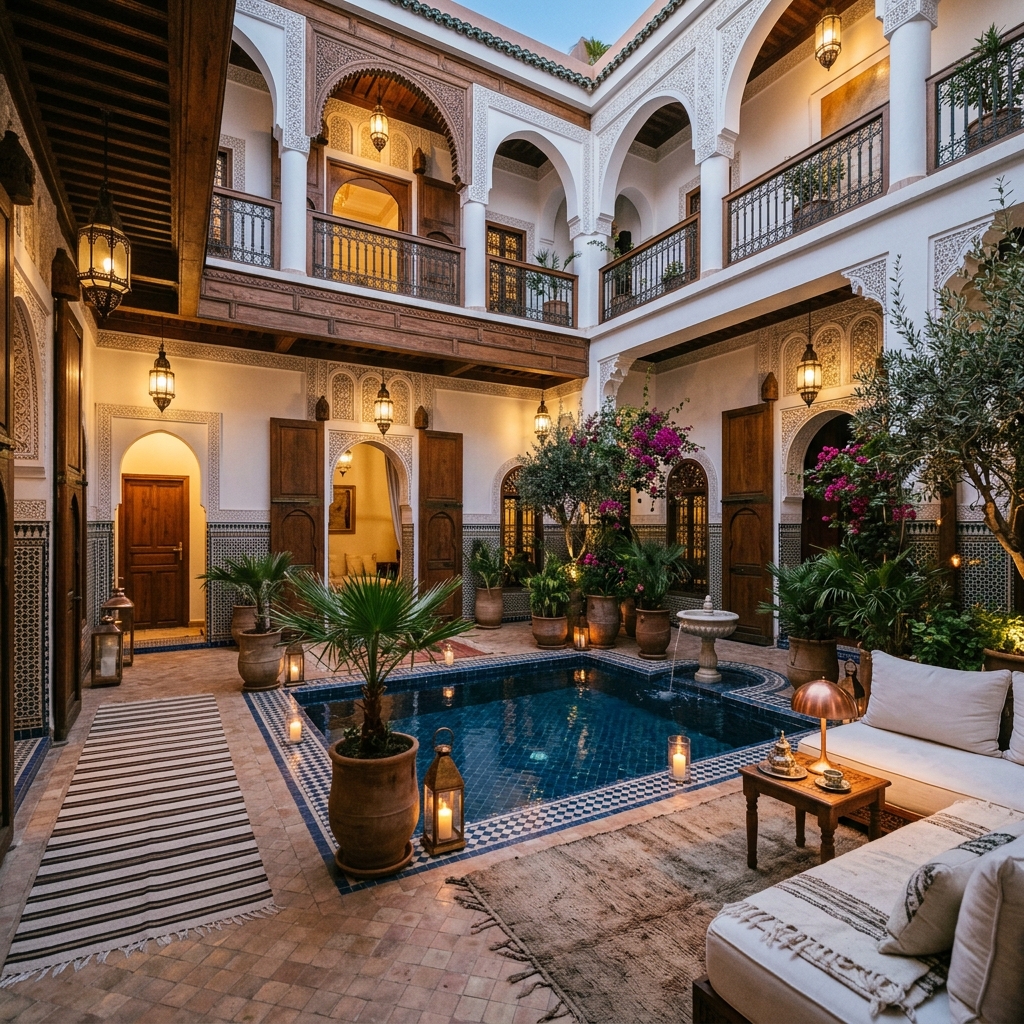
Riads in the medina are the best option for most solo female travelers. A good riad has a secure entrance, staff who know the neighborhood, and other guests you can eat breakfast with, ask questions of, and occasionally explore with. The communal courtyard dinner is one of the great quiet joys of Moroccan travel.
Avoid the very cheapest medina guesthouses unless they have excellent recent reviews specifically from solo women. If you find the medina overwhelming, the Ville Nouvelle areas of Marrakech, Fes, and Casablanca have comfortable, modern hotels where you can decompress between medina excursions.
I’ve always been fascinated by how the right riad can completely change a trip. You come home to a candle-lit courtyard, someone hands you mint tea, and the chaos of the souk feels like a good story rather than an ordeal.
How to Handle Street Attention and Harassment
The confident non-engagement: Keep walking. Eye contact is engagement. A bored, forward-looking expression signals you are not a conversation. This works 80% of the time before anyone even says anything.
The local greeting redirect: If someone addresses you persistently, a brief ‘La shukran’ (No thank you) delivered firmly without slowing down handles most situations. You don’t owe anyone an explanation.
The ‘already going somewhere’ technique: Looking purposeful — walking with a destination in mind, phone down, head up — immediately reduces attention. The people who get followed are usually the people who look lost.
When someone does follow you: Enter a shop, a café, or a hammam. Most Moroccan shop owners and café staff understand the situation immediately and will help you. Women’s solidarity in Morocco is genuinely strong.
What absolutely doesn’t work: Smiling nervously, apologizing, or engaging in long explanations. A kind smile in Morocco reads as encouragement, not politeness. Save your warmth for the people who have genuinely earned it.
The Best Cities for Solo Female Travel — Ranked Honestly
Essaouira is the most relaxed city in Morocco for a solo female traveler, full stop. The Atlantic wind seems to cool everyone down. The artistic community means you’ll meet fascinating people from all backgrounds. Street attention is minimal.
Chefchaouen is almost magical in its tranquility. The blue city’s tourist infrastructure is well-developed, the medina is small enough to feel safe, and the general atmosphere is gentle. Perfect for long solo walks.
Fes medina is the most intensely Moroccan experience — and the one that requires the most navigation confidence. I love Fes deeply. But the medina can feel overwhelming for solo female travelers, especially on the first day. Hire a licensed guide for at least a half-day. It changes everything.
Marrakech is high energy, high tourist volume, high street attention. Not dangerous. Excellent transport, excellent accommodation, world-class food. Just go in knowing what you’re stepping into and you’ll love it.
Practical Logistics That Make Solo Female Travel Smoother
Use InDriver or Careem apps rather than hailing unmarked taxis. The app records your adventure. Morocco’s ONCF trains often have a women-only carriage, usually at the front of the train — use it.
After 9 or 10pm in medina neighborhoods, be more careful. The streets are darker, quieter, and a solo woman walking alone is more conspicuous. Use a ride app rather than walking long distances. Go to a women-only hammam or at a time designated for women — your riad staff will advise.
One Last Thing
Morocco will surprise you. Not necessarily in the ways you feared and not necessarily in the ways you hoped, but in its own deeply human way. You’ll have a conversation in broken French-Arabic-English that will make you laugh for days. You’ll eat the best harira of your life sitting on a plastic chair at a market stall. A woman will invite you for tea and show you her hands painted with henna. A child will ask to practice their English and then sprint away laughing.
None of that shows up in the safety guides. All of it is the reason to go.
Pack thoughtfully, walk confidently, trust your instincts, and go.
Experience the true heart of Moroccan heritage through its culinary traditions. Join us in preserving and honoring these ancestral recipes.
What People Are Saying
No comments yet. Be the first — we'd love to hear from you.
Fatima Zahra Benmoussa
Culturally Verified & Fact-CheckedThe Moroccan Food editorial team brings together native culinary researchers, heritage preservationists, and experienced home cooks across Marrakech, Fes, and Casablanca. Every recipe and cultural guide is reviewed against ancestral oral traditions and authentic regional practices.