The Souss Valley: The Land of Argan, Saffron, and Amazigh Poetry
The Souss Valley: Morocco’s Protected Biosphere
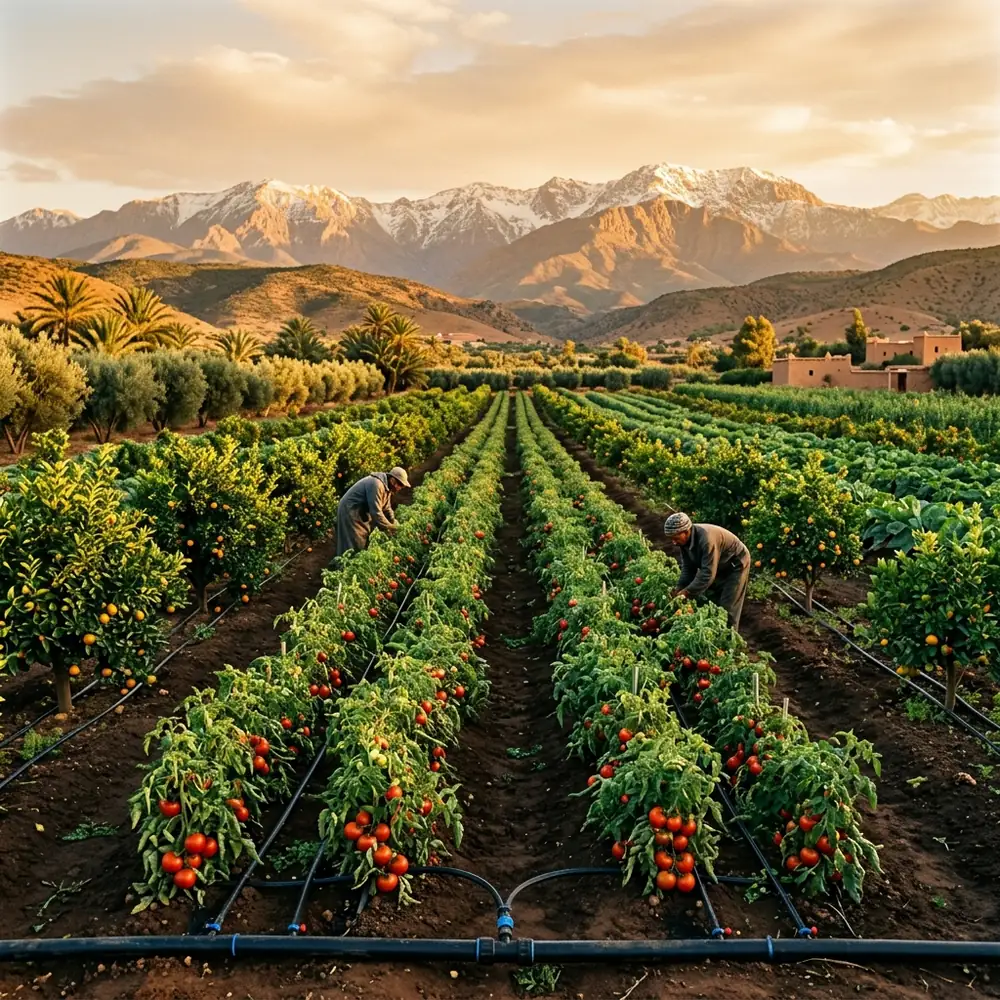
Geographically, Morocco is defined by its mountains. The High Atlas and the Anti-Atlas ranges act as massive stone walls, shielding the interior from the Sahara Desert to the east and south. Cradled between these two ranges, opening westward to the Atlantic Ocean, lies the Souss Valley.
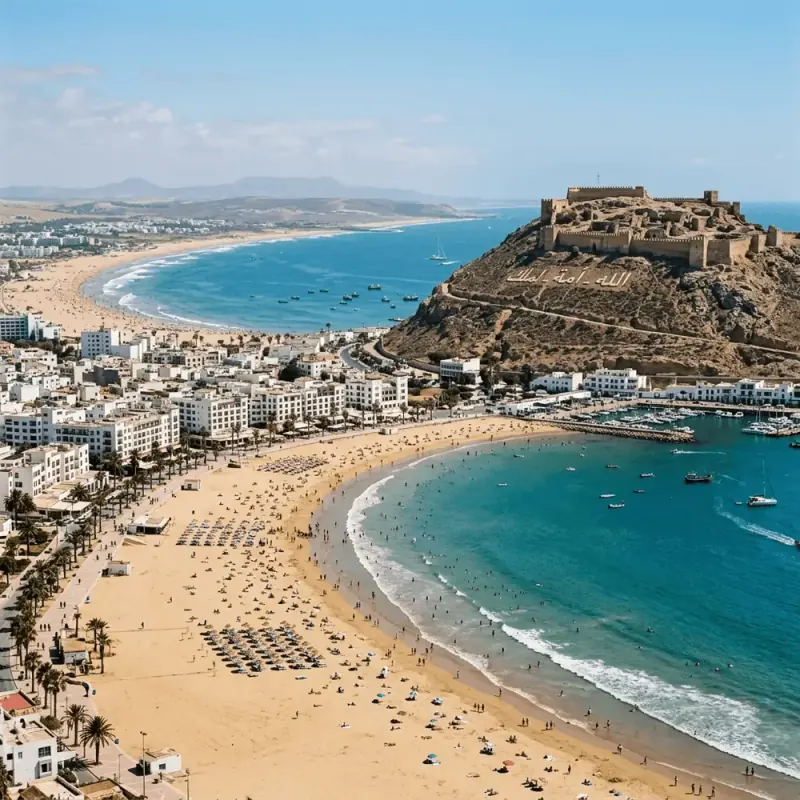
This triangular plain, with the city of Agadir at its coastal apex and Taroudant serving as its historical inland capital, is fundamentally different from the imperial north or the deep desert south. It is an agricultural powerhouse, a unique ecological reserve, and the cultural epicenter of the Chleuh (the Ishelhien) — the Amazigh people of southwestern Morocco.
The Argan Biosphere
The Souss Valley is globally famous for a single, stubborn tree: Argania spinosa.
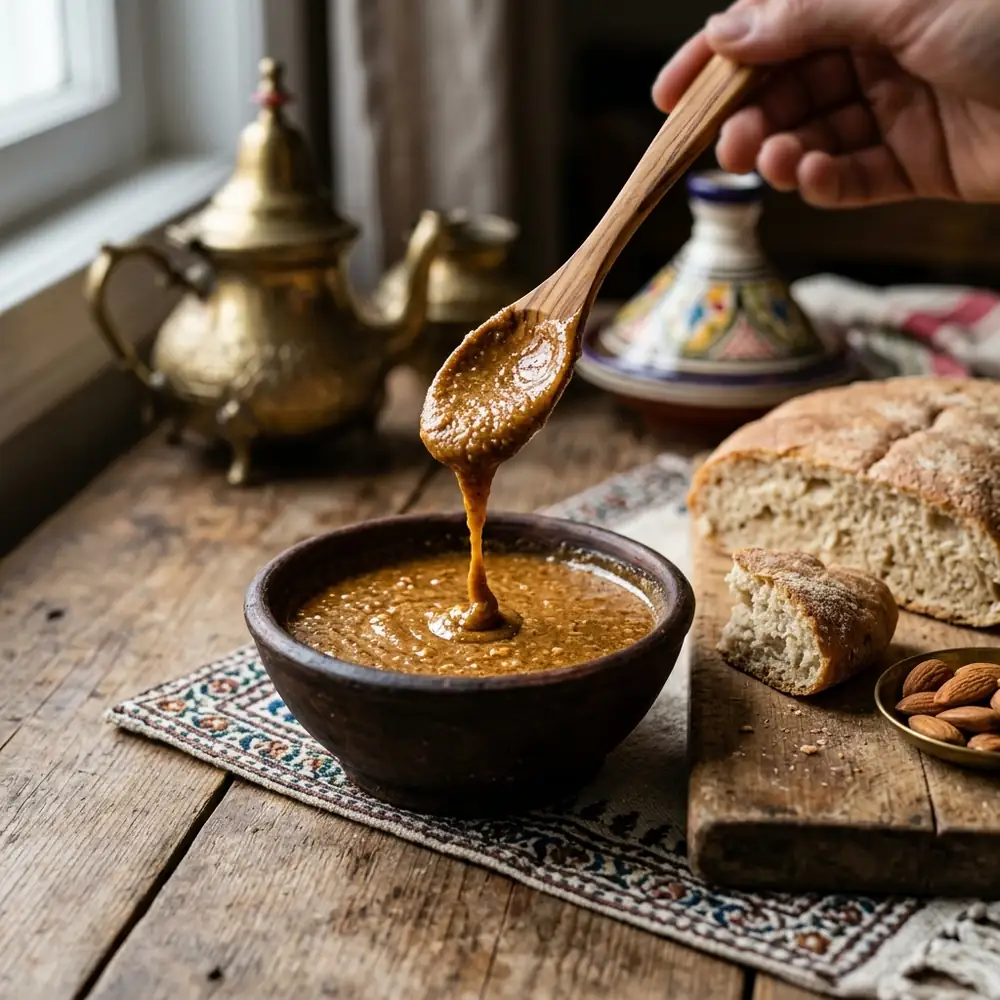
The argan tree is an ecological anomaly. It is a relic species from the Tertiary period that has survived in this specific microclimate because of its extraordinary root system, which reaches incredibly deep to tap subterranean water sources. The tree defines the landscape of the Souss. It prevents desertification, provides the canopy under which local crops are grown, and produces the nut from which argan oil is extracted.
Recognizing its unique status, UNESCO designated the argan-growing region of the Souss as a Biosphere Reserve in 1998. The economy of the valley, particularly for rural women who process the nuts, is completely intertwined with the health of this forest.
Taroudant: The Grandmother of Marrakech
While Agadir is the modern economic engine of the Souss (rebuilt entirely after a devastating earthquake in 1960), the soul of the valley resides in Taroudant.
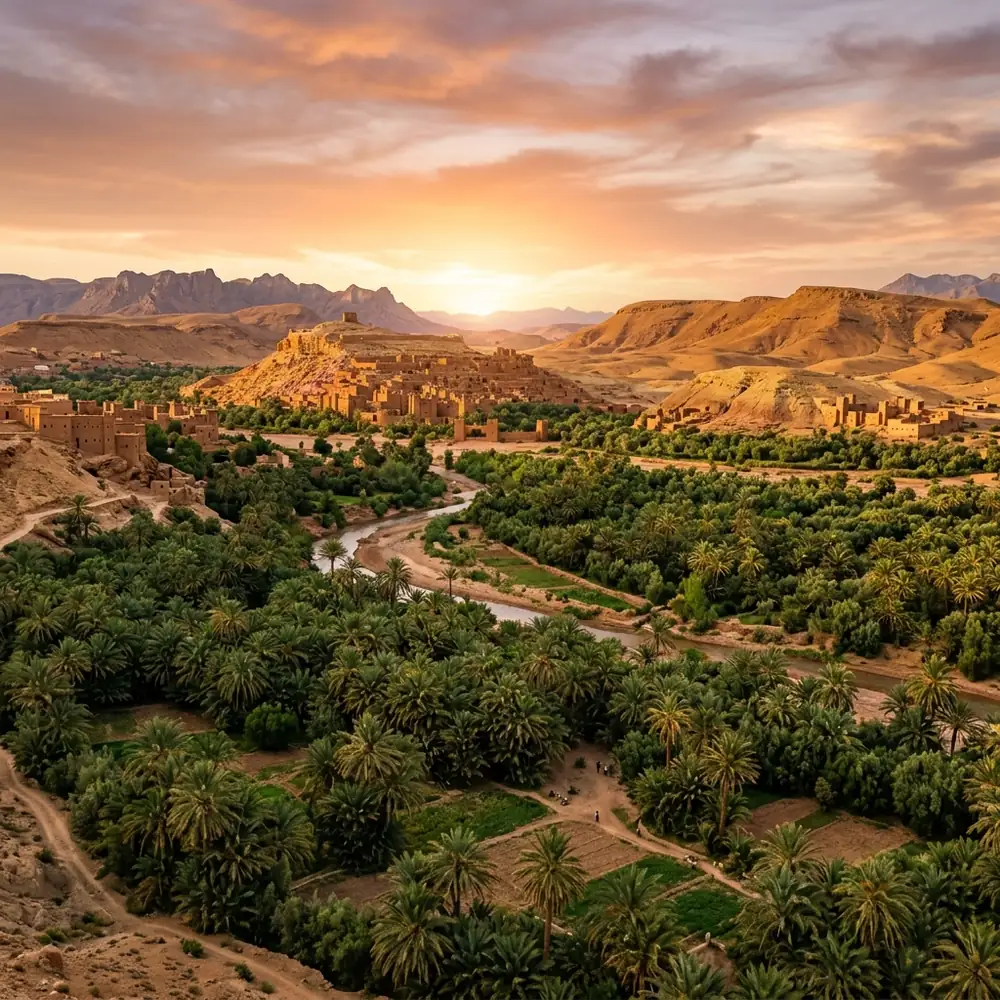
Often called “the Grandmother of Marrakech,” Taroudant is enclosed by perfectly preserved, massive red-mud walls that glow intensely at sunset. It served as a brief capital for the Saadian dynasty in the 16th century before they moved their court to Marrakech. Today, it remains a lively agricultural hub. Its souks are not designed for tourists looking for carpets; they are designed for local farmers buying tools, spices, and the finest local produce.
The Saffron of Taliouine
If you drive east from Taroudant toward the Anti-Atlas mountains, you will reach Taliouine. This small town is the undisputed capital of Moroccan saffron (zafran). The volcanic soil and the specific altitude create perfect conditions for the Crocus sativus flower.
The harvest occurs in late October and early November and lasts only a few weeks. The work is painstaking: the flowers must be picked before sunrise, while they are still closed, to protect the delicate red stigmas from the sun. It takes roughly 150,000 flowers to produce a single kilogram of dried saffron, explaining its status as the most expensive spice in the world by weight.
The Poetry of the Rways
The cultural expression of the Souss is carried by the Rways (singular: Rais for men, Raysa for women). These are the traditional Amazigh poet-singers who travel from village to village, performing at weddings and agricultural festivals.
Accompanied by the ribab (a single-stringed bowed instrument that produces a sharp, distinctive wail) and the loutar (a plucked lute), the Rways sing in Tachelhit. Their songs are not simply entertainment; they are the oral newspaper of the region, carrying news, transmitting moral instruction, and maintaining the historical memory of the Chleuh people in a deeply poetic structure.
The Invisible Invitation
Leave Agadir and drive the route inland toward Taroudant in the late afternoon. The light in the Souss has a specific, hazy gold quality, filtered through dust and the moisture rolling in from the Atlantic. Pull over near an argan grove. The trees are gnarled and thorny, looking ancient and indestructible. You will likely hear the bells of a goat herd before you see them. This is a landscape that has been actively managed and negotiated by the Amazigh people for millennia, striking a perfect, fragile balance between agricultural output and ecological preservation.
SEO Meta Description: Explore the Souss Valley in Morocco. Discover the UNESCO argan biosphere, the red walls of Taroudant, the saffron harvest of Taliouine, and the Amazigh poetry of the Rways.
Experience the true heart of Moroccan heritage through its culinary traditions. Join us in preserving and honoring these ancestral recipes.
What People Are Saying
No comments yet. Be the first — we'd love to hear from you.
Omar Idrissi
Culturally Verified & Fact-CheckedThe Moroccan Food editorial team brings together native culinary researchers, heritage preservationists, and experienced home cooks across Marrakech, Fes, and Casablanca. Every recipe and cultural guide is reviewed against ancestral oral traditions and authentic regional practices.