Rahba Kedima: The Living Spice Market and Ancient Square of Marrakech
archived: false
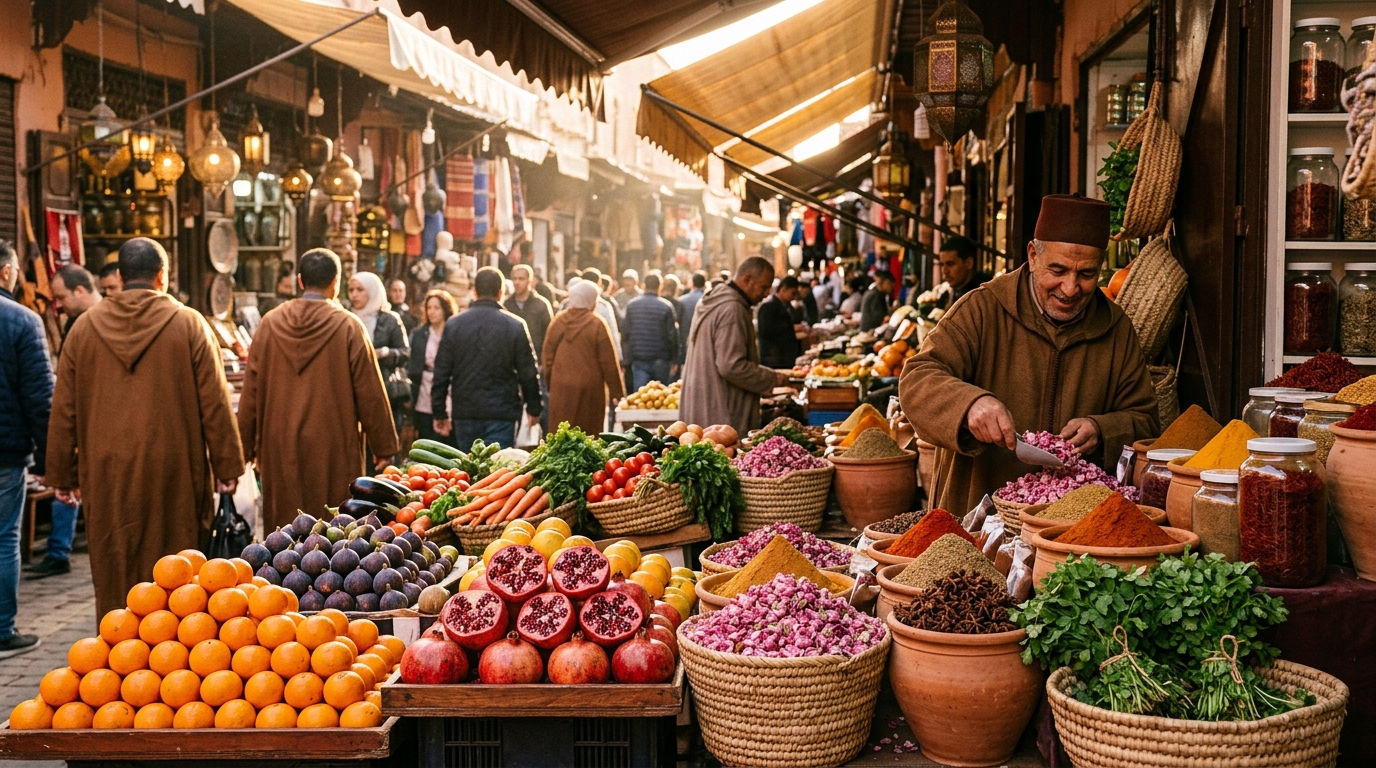
Just a five-minute walk through the covered labyrinth of souks northeast of the world-famous Jemaa el-Fna square lies an open, sunlit cobblestone clearing that pulses with an entirely different kind of energy: Rahba Kedima (literally “The Old Square”, known to international travelers as the Spice Square).
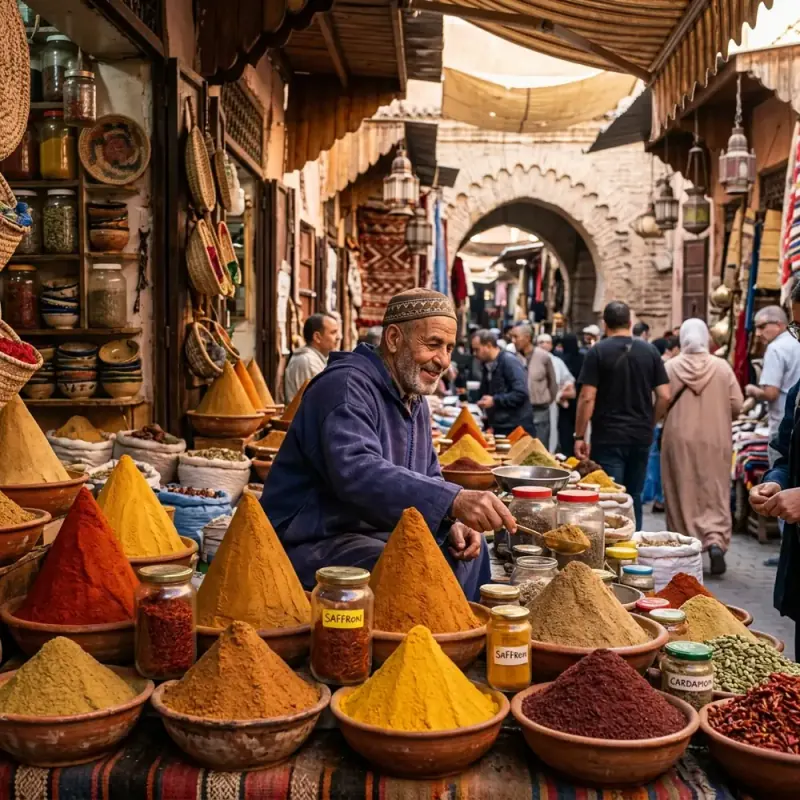
Surrounded by ochre-red adobe facades, rooftop cafe terraces, and covered stalls, Rahba Kedima is one of the oldest public marketplaces in Marrakech. Historically, it served as the city’s primary grain and wool exchange; today, it is the sensory epicentre of Moroccan spice culture, traditional apothecary medicine (Al-Attara), and natural cosmetics.
Walking into the square, your senses are instantly greeted by an intoxicating blend: the earthy, dry heat of stone-ground cumin, the warm, comforting perfume of wild cinnamon, the menthol freshness of mountain spearmint, and plumes of sweet frankincense curling from small ceramic censers.
The Architecture and Layout of Rahba Kedima
Rahba Kedima is laid out in distinct commercial zones that reflect the traditional organization of medina trade:
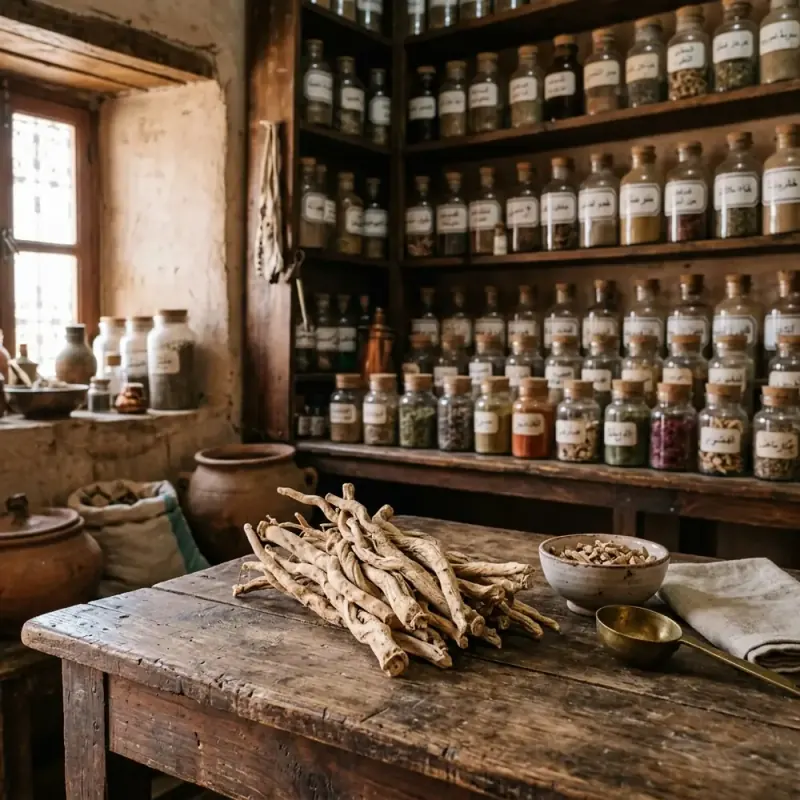
- The Master Apothecaries (Al-Attarine): Lined along the perimeter of the square under covered timber awnings are permanent spice and herbalist shops. Inside, walls are lined from floor to ceiling with hundreds of apothecary glass jars containing whole roots, dried flowers, resin crystals, and pure essential oils.
- The Women’s Rush Weaving Market: Seated on woven palm mats in the center of the square, rural Amazigh women from surrounding Haouz plain villages sell hand-woven palm and raffia goods: colorful bread baskets (Tabaq), wide-brimmed straw sun hats decorated with woolen pom-poms, and flexible market shopping totes.
- The Open Spice Baskets: Before every shopfront stand large woven rush baskets filled with loose raw spices: curled quills of Ceylon cinnamon, whole nutmeg seeds, dried amber ginger roots, dried black lemons, and star anise pods.
What to Look For: Treasures of the Marrakech Herbalist
Navigating the apothecary stalls of Rahba Kedima reveals extraordinary natural beauty and culinary treasures:
- Freshly Ground Ras el Hanout: Watch the master herbalist blend thirty individual whole spices, cubeb pepper, dried rosebuds, mace blades, cardamom, grains of paradise, and ginger, weighed on antique balance scales and ground through a heavy mill directly in front of you.
- Cosmetic and Culinary Argan Oil: Look for certified cold-pressed oils. Culinary argan oil, pressed from toasted nuts, carries a rich, dark amber color and deep roasted hazelnut fragrance; cosmetic argan oil, pressed raw, is pale yellow, light, and virtually scentless.
- Pure Terracotta Aker Fassi: Miniature unglazed clay pots coated with dried crimson poppy petals and pomegranate rinds, ready to be activated with a wet finger as a long-lasting natural matte lip and cheek stain.
- Alum Stone Crystals (Chebba): Jagged translucent white mineral rocks used as natural aftershave styptic blocks and twenty-four-hour hypoallergenic mineral deodorants.
- Volcanic Ghassoul Clay: Slate-like brittle brown clay wafers harvested from the Middle Atlas, prepared with rose water and argan oil for deep skin and hair conditioning.
Insider Rules for Exploring Rahba Kedima
To ensure an authentic, rewarding, and respectful experience in the spice square, keep these practical guidelines in mind:
1. Avoid the Open Decorative Cones
Those stunning, perfectly sculpted geometric pyramids of turmeric, cumin, and paprika sitting open to the street are beautiful for photography, but they sit exposed to desert dust, sun oxidation, and pedestrian traffic all day. Always ask the merchant to take whole spices from sealed glass jars inside the shop and grind them fresh.
2. Take Your Time Over Mint Tea
A reputable herbalist in Rahba Kedima will never rush you. They will invite you to sit on a low wooden bench and pour you a small glass of hot mint tea or spiced herbal infusion. Use this time to ask questions, smell whole botanicals, and learn about their origins.
3. Clear Pricing and Polite Bargaining
In certified traditional apothecaries, prices for spices and oils are often fixed by weight (per 100 grams or per kilogram). When purchasing multiple items or woven handicrafts from the central square, polite bargaining is expected. Maintain a warm smile, propose a counter-offer twenty to thirty percent below the initial quote, and treat the transaction as a friendly social exchange.
Frequently Asked Questions
Is Rahba Kedima safe for solo travelers and photographers?
Rahba Kedima is one of the safest, most welcoming squares in the Marrakech medina. Local merchants are accustomed to international visitors. If you wish to photograph individual artisans or women weaving in the center of the square, always ask polite permission first (“Moumkin soura?”) and offer a modest gratuity of five to ten dirhams as a courtesy.
What is the best rooftop view overlooking Rahba Kedima?
The upper terrace cafes surrounding the square, such as Café des Épices, provide panoramic views overlooking the lively market stalls below, framed against the historic minarets of the medina and the snow-capped High Atlas peaks in winter.
Can I find natural indigo powder in Rahba Kedima?
Yes, authentic herbalists carry pure natural indigo stone (Nila Zarka), a natural blue mineral-botanical pigment harvested in southern Morocco. Pounded into fine blue powder and mixed with yogurt or argan oil, it is a traditional skin-brightening mask used across the Sahara.
How do I get to Rahba Kedima from Jemaa el-Fna?
From Jemaa el-Fna, walk into Souk Semmarine (the main covered commercial thoroughfare). After approximately two hundred meters, turn right at the fork following the signs toward the Rahba Kedima spice market or Café des Épices. The walk takes less than seven minutes.
Experience the true heart of Moroccan heritage through its culinary traditions. Join us in preserving and honoring these ancestral recipes.
What People Are Saying
No comments yet. Be the first — we'd love to hear from you.
Omar
Culturally Verified & Fact-CheckedOmar documents traditional market cookery, communal ovens (ferran), and medina tea culture through firsthand field reporting in Moroccan souks.