The Story of Zaalouk: Why Our Eggplant Salad is Never Served Flat
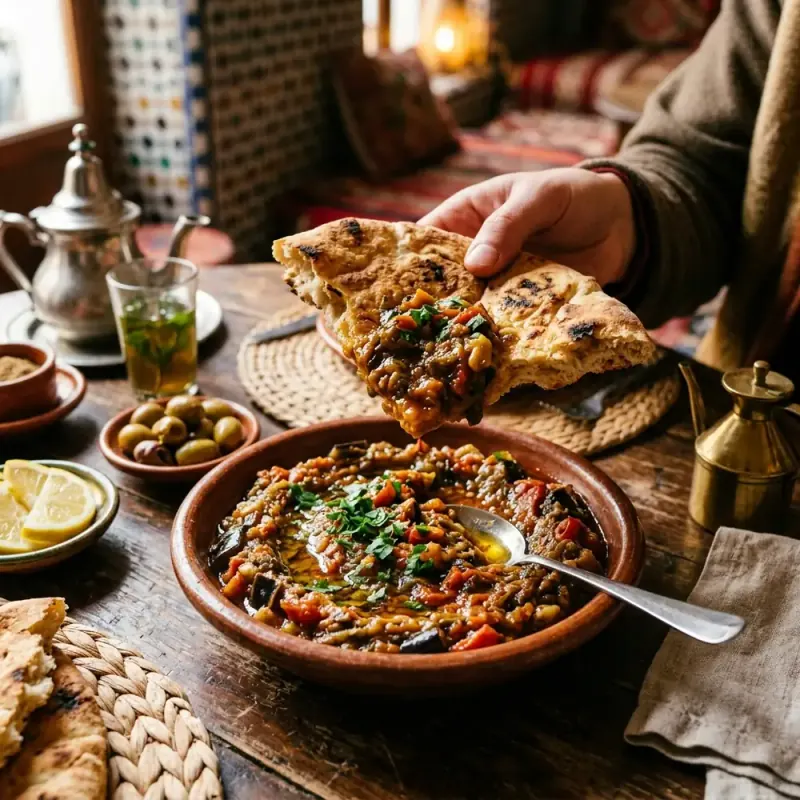
Sit down at a family table in Fes, Marrakech, or Tangier for Friday lunch or a wedding banquet, and you will quickly realize that Moroccan hospitality does not begin with the main tagine. Long before the heavy clay conical lid is lifted to reveal slow-cooked lamb or braised poultry, the table is dressed with an array of small, colorful pottery dishes. These are chladat skhouna, cooked salads served warm or at room temperature.
Reigning supreme at the center of every traditional spread is Zaalouk (زعلوك).
To call Zaalouk an “eggplant dip” is to misunderstand its architecture completely. Unlike Middle Eastern baba ganoush or Greek melitzanosalata, which are whipped into pale, mayonnaise-smooth creams with tahini or yogurt, Moroccan Zaalouk is rustic, chunky, richly stewed, and uncompromisingly savory. It marries the smoky, velvety flesh of charred eggplants with a thick reduction of fresh grated tomatoes, mountains of crushed garlic, sweet paprika, earthy cumin, and generous streams of green, peppery olive oil.
It is never eaten with a fork. Zaalouk is exclusively scooped up with warm chunks of crusty, fire-baked Moroccan bread (khobz ed-dar), turning a humble vegetable into one of the most satisfying mouthfuls in North African gastronomy.
Here is the cultural history of Zaalouk, the crucial cooking techniques that separate watery mush from culinary mastery, and the authentic recipe straight from our family kitchens.
How the Eggplant Conquered the Maghreb
The eggplant (denjal in Moroccan Darija, derived from the Arabic badinjan) is not native to North Africa. Originating in ancient India and Southeast Asia, it was carried westward by Arab traders and botanists along early Islamic trade routes in the eighth and ninth centuries.
When Moorish agronomists developed the sophisticated irrigated garden estates of medieval Andalusia (Al-Andalus), eggplants became a staple of courtly cooking. Following the Andalusian migrations back into northern and central Morocco, particularly into Fes, Tetouan, and Rabat, Moorish culinary techniques fused with indigenous Amazigh (Berber) clay-pot cookery.
In Moroccan Arabic, the word zaalouk colloquially implies a loose mash, a jumble, or an eclectic mixture of cooked vegetables. While modern Moroccan cooks occasionally make Zaalouk using zucchini (zaalouk d’el ghorgette) or boiled cauliflower, the undisputed king of the genre will always remain roasted eggplant.
The Soul of the Dish: Woodsmoke vs. Steam
If you ask ten Moroccan home cooks how to prepare the eggplant for Zaalouk, you will uncover three competing schools of thought. Each method produces a completely different texture and flavor profile:
1. The Charred Flame Method (Denjal M’shawwi), The Gold Standard
This is the ancestral method used by traditional grandmothers. Whole eggplants are placed directly over hot charcoal on an outdoor terracotta brazier (majmar) or directly onto the open blue flame of a modern gas burner. The skin blisters, turns jet black, and cracks open like charcoal embers, while the interior steams in its own juices until completely limp.
When the charred skin is peeled away, the pale, creamy flesh carries an intense, lingering woodsmoke aroma that balances the sweet acidity of the stewed tomatoes. If you want authentic medina restaurant flavor, this is the only method to use.
2. The Oven-Roasted Sheet Pan Method
For cooks cooking for large gatherings or using electric stovetops, eggplants are halved, scored in a deep diamond pattern with a paring knife, brushed liberally with olive oil, and roasted cut-side down on a baking sheet at 220°C (425°F) for 35 to 40 minutes. The flesh caramelizes into a deep golden brown, developing rich, nutty notes, though it lacks the sharp campfire smoke of an open flame.
3. The Steamed or Boiled Method (Denjal M’fawwar)
In everyday weekday cooking, some cooks peel raw eggplants, cut them into cubes, and steam them in the top tier of a couscoussier pot (kesskass) until soft. While this method is fast, it absorbs excess water. An experienced cook who steams eggplant must press the cooked cubes in a fine-mesh colander for 20 minutes to squeeze out the bitter water before adding them to the tomato sauce; otherwise, the Zaalouk will turn watery and dilute the olive oil.
The Anatomy of the Sauce: Grated Tomatoes, Garlic, and Teqliya
While the eggplant provides the body, the sauce provides the soul. The foundation of authentic Zaalouk relies on a classic Moroccan cooking technique called Teqliya (the slow, uncovered reduction of aromatics in oil):
- Fresh Ripe Tomatoes (Never Canned Puree): Canned tomato paste or commercial marinara is strictly forbidden. Authentic Zaalouk demands fresh, sweet plum or vine-ripened tomatoes. The tomatoes are halved horizontally and grated against the large holes of a box grater directly down to the skin, leaving the bitter papery peel behind in your palm.
- Whole Fresh Garlic (Thouma): Zaalouk is not shy about garlic. A standard batch requires at least four to six large cloves. In traditional homes, the garlic is mashed in a heavy brass mortar (mehraz) with a pinch of coarse sea salt and cumin seeds before hitting the hot olive oil.
- Sweet Paprika (Tahmira) and Cumin (Kamoun): Paprika gives the sauce its deep red mahogany hue and gentle sweetness. Cumin provides the earthy, warming backbone that cuts through the rich olive oil.
- The Sauté and Mash (L’farkh): Once the roasted eggplant joins the bubbling tomato sauce, the cook uses the back of a flat wooden spoon (or a metal potato masher) to press and crush the eggplant flesh into the tomatoes over medium heat. It must never be pureed in an electric blender! The texture must remain rustic, showing distinct strands of eggplant and luscious pockets of tomato pulp.
- Cooking to the Oil: The pan must simmer uncovered until all water evaporates completely. You know Zaalouk is finished when you drag a wooden spoon across the center of the pan and the line stays dry for several seconds, with shimmering pools of reddish-orange olive oil separating around the edges.
Master Recipe for Traditional Moroccan Zaalouk
This recipe makes a generous plate for four to six people as part of a traditional salad spread.
Ingredients:
- 2 large purple eggplants (approximately 700 g total)
- 4 medium ripe plum or vine tomatoes (grated, skins discarded)
- 5 cloves fresh garlic, finely minced or pounded
- 60 ml (1/4 cup) high-quality extra virgin olive oil (plus extra for drizzling)
- 1.5 teaspoons sweet Moroccan paprika (tahmira)
- 1 teaspoon ground cumin (kamoun)
- 1/2 teaspoon fine sea salt (adjust to taste)
- 1/4 teaspoon ground cayenne pepper (soudaniya), optional for gentle heat
- 3 tablespoons finely chopped fresh flat-leaf parsley
- 3 tablespoons finely chopped fresh coriander (cilantro)
- 1 tablespoon fresh lemon juice or a slice of preserved lemon peel (l’hamd mssayer), finely diced
Step-by-Step Instructions:
- Char the Eggplants: Place the whole, unpeeled eggplants directly onto the open flame of your gas burner over medium-high heat. Using long metal tongs, turn the eggplants every 3 to 4 minutes. The skin should blister, char completely black, and collapse. The eggplants are done when they feel completely soft and deflated when squeezed with tongs (about 12 to 15 minutes). (Oven Alternative: Roast halved, oiled eggplants cut-side down on a baking sheet at 220°C / 425°F for 35 minutes).
- Steam and Peel: Transfer the charred eggplants immediately into a deep bowl and cover tightly with a plate or kitchen towel for 10 minutes. The trapped steam loosens the burnt skins. Once cool enough to handle, use your fingers or a paring knife to peel away the blackened skin. Do not rinse the eggplant under running water! Rinsing washes away the precious smoky oils. A few tiny flecks of charred skin left behind only enhance the flavor.
- Chop the Flesh: Place the peeled eggplant flesh onto a cutting board and roughly chop it into coarse pieces.
- Build the Tomato Base: In a wide, heavy skillet (preferably cast iron or heavy stainless steel), heat the 60 ml of olive oil over medium heat. Add the minced garlic and cook for 60 seconds until fragrant but not browned. Pour in the grated fresh tomatoes, paprika, cumin, salt, and cayenne.
- Simmer the Sauce: Cook the tomato mixture over medium heat, stirring frequently, for 8 to 10 minutes until the tomatoes break down and the excess water begins to bubble away.
- Combine and Mash: Add the chopped eggplant flesh and half of the fresh parsley and coriander to the skillet. Reduce heat to medium-low. Using the back of a wooden spoon or a potato masher, continuously press, stir, and crush the eggplant into the tomato sauce as it simmers.
- Reduce Until Glossy: Continue cooking uncovered for 10 to 12 minutes, stirring often so the bottom does not scorch. You want all free water to evaporate. When the mixture is thick, glossy, and sizzling in its own olive oil, remove the pan from the heat.
- Finish and Rest: Stir in the lemon juice (or diced preserved lemon peel) and the remaining fresh herbs. Let the Zaalouk sit in the pan for at least 15 minutes before serving. Like many braised vegetable dishes, Zaalouk tastes substantially better once the flavors have had time to settle and marry together.
- Serve: Spoon the warm or room-temperature Zaalouk onto a shallow pottery dish. Drizzle a generous pool of unheated, peppery olive oil across the top and garnish with a lemon wedge or purple cured olives. Serve with crusty bread.
How to Pair and Store Zaalouk
In Morocco, Zaalouk is a versatile staple that fits into almost every dining context:
- With Seafood: It is the classic companion to fried Atlantic sardines, grilled calamari, or baked sea bream in coastal ports like Essaouira and Safi.
- With Charcoal Meats: It cuts through the rich fat of charcoal-grilled lamb brochettes (qotban) and ground kefta patties.
- As a Vegetarian Lunch: Paired with a warm round of semolina bread, a wedge of fresh sheep’s milk cheese, and sweet mint tea, a plate of Zaalouk makes a wholesome, satisfying midday meal.
Storage and Shelf Life:
Zaalouk is one of the few salads that improves with age. Store cooled Zaalouk in a sealed glass container in the refrigerator for up to 5 to 6 days. The garlic mellows, the smoke settles deeper into the tomatoes, and the texture becomes even silkier. Serve it cold straight from the fridge in hot summer months, or warm it gently in a small skillet with a splash of olive oil in winter.
Frequently Asked Questions
Can I freeze homemade Zaalouk?
Yes! Zaalouk freezes exceptionally well because the vegetables have already been thoroughly cooked down and the water content has evaporated. Allow the cooked Zaalouk to cool completely, transfer to freezer-safe glass containers or zip-top bags, and freeze for up to 3 months. Thaw overnight in the refrigerator and reheat in a warm skillet with a fresh drizzle of olive oil.
Why is my Zaalouk bitter?
Eggplants can occasionally carry bitterness, particularly if they are oversized, over-seeded, or harvested out of season. Modern varieties rarely need salting and draining, but if your eggplant feels heavy with dense seeds, sprinkle salt over the chopped flesh and let it sit in a colander for 20 minutes before cooking to draw out any bitter water. Additionally, ensure you do not burn the minced garlic when starting the tomato sauce.
Should Zaalouk be served hot, warm, or cold?
Traditional Moroccan etiquette calls for Zaalouk to be served warm or at pleasant room temperature. Serving it piping hot can mask the subtle floral olive oil and fresh herbs, while serving it refrigerator-cold dulls the aroma of the cumin and roasted smoke. Room temperature allows every spice note to sing clearly.
Can I make Zaalouk without an open gas flame?
Yes. You can achieve fantastic results using your oven’s top broiler. Place whole eggplants on a foil-lined baking sheet directly beneath the broiler element set to high. Turn them every 5 minutes until the skins are completely charred and blackened all around (about 15 to 20 minutes total).
Experience the true heart of Moroccan heritage through its culinary traditions. Join us in preserving and honoring these ancestral recipes.
What People Are Saying
No comments yet. Be the first — we'd love to hear from you.
Chef Rachid
Culturally Verified & Fact-CheckedChef Rachid is a Moroccan culinary specialist with decades of kitchen experience across coastal Morocco, specializing in Atlantic seafood, tagines, and traditional charcoal braising.