Medina Street Food: A Living Culinary Journey Through Moroccan Alleyways
archived: false
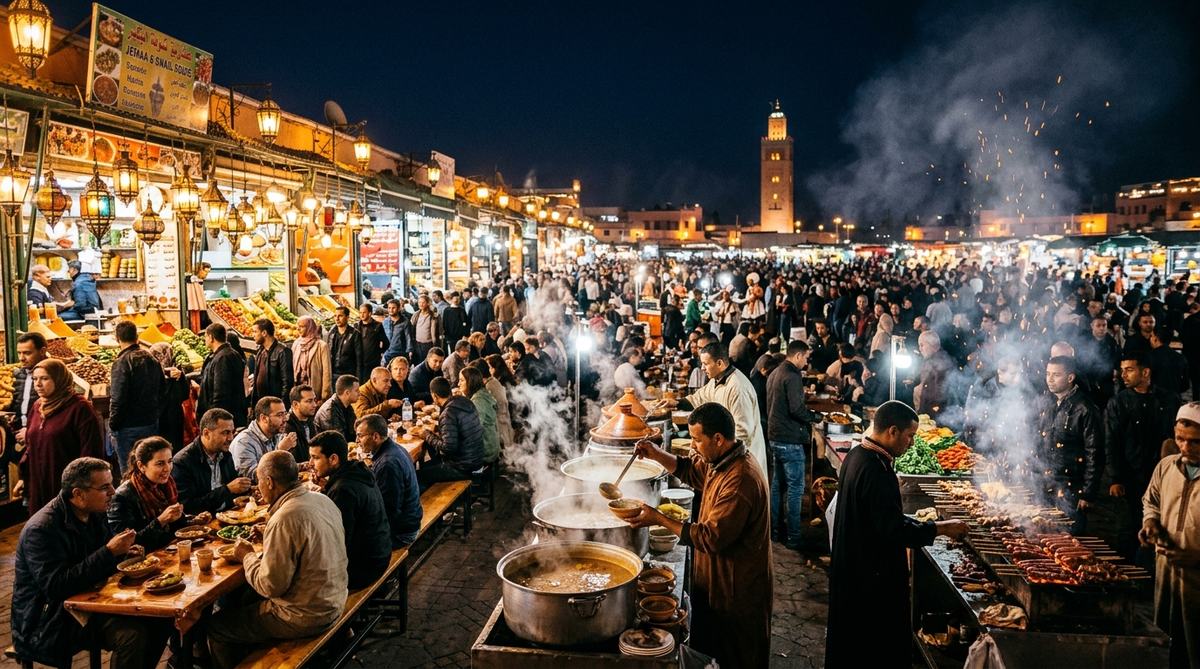
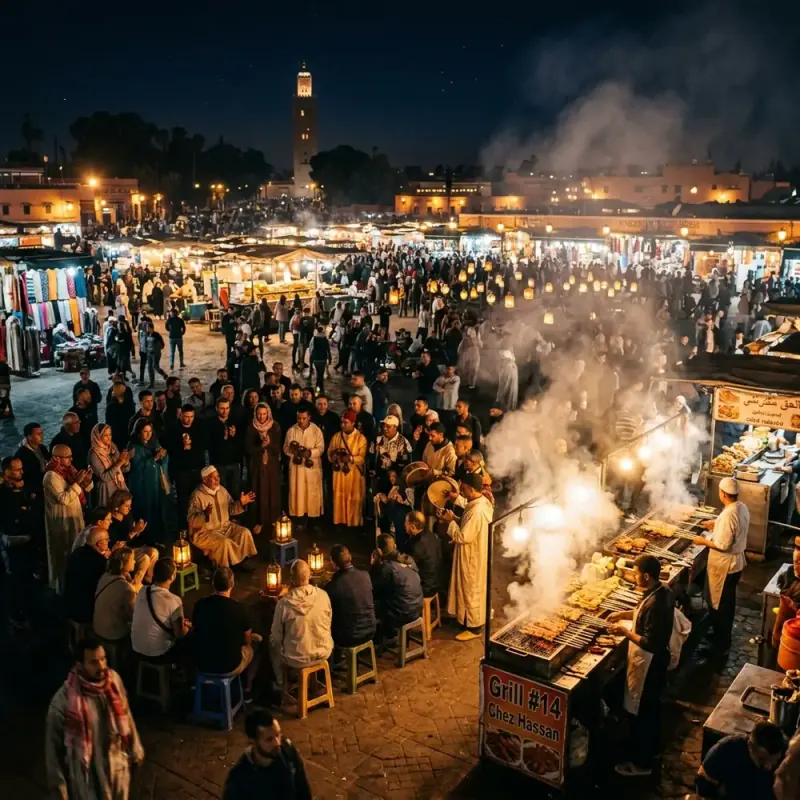
In Morocco, the true gastronomic heartbeat of the nation does not beat in hushed luxury dining rooms or behind palace gates; it thrives out in the open air, along the winding cobblestone alleyways of the ancient medinas. From the smoke-filled culinary stalls of Jemaa el-Fna in Marrakech and the Bab Bou Jeloud approaches in Fez to the Atlantic seafood alleys of Essaouira, Moroccan street food (Makla d’Zanqa) is an authentic, democratic, and deeply satisfying culinary ritual.
Street food in Morocco is never an afterthought or cheap industrial fast food. It is artisanal home cooking moved to the street corner, prepared fresh to order over glowing oak charcoal braziers, in bubbling copper cauldrons, or on blistering cast-iron griddles.
The Morning Street Ritual: Fueling the Medina
Before the souk shops open their heavy wooden shutters, morning workers, craftsmen, and schoolchildren gather around street food masters:
- Bissara and Olive Oil: In northern cities like Tangier, Chefchaouen, and Fez, morning begins at the Bissari. Huge earthenware cauldrons simmer split fava beans with garlic into a thick, velvety green soup. Served in terracotta bowls with a generous lake of peppery, cold-pressed green olive oil, a dusting of ground cumin, and spicy cayenne pepper, scooped with hot crusty bread, Bissara provides hours of sustained physical energy for under ten dirhams.
- The Sfenj Fryers: On corner alleys, master fryers drop rings of wet, long-fermented dough into bubbling vats of oil. The doughnuts (Sfenj) puff up into crisp, airy, golden rings with a chewy interior. Strung together on split palm fronds, they are eaten scorching hot with a dusting of coarse sugar or dunked into hot mint tea.
- Harcha and Msemen: Griddle cooks spread squares of laminated semolina flatbread (Msemen) and crumbly, pan-baked semolina cakes (Harcha) across heavy iron plates, serving them warm with mountain honey, melted butter, and fresh goat cheese (Jben).
Midday and Afternoon Feasts: Smoke and Fire
As afternoon arrives, the aroma of hardwood smoke and toasted spices draws crowds toward neighborhood grill stalls:
- Kefta and Merguez Brochettes: Butchers mince fresh pasture-fed beef or lamb with diced onions, fresh parsley, sweet paprika, and cumin on heavy olive-wood chopping blocks. Skewered on iron rods and grilled over hot oak charcoal embers, the skewers are folded into freshly baked round bread (Khobz) with a pinch of sea salt and grilled sweet onions.
- Maâkouda (Golden Potato Fritters): Boiled mashed potatoes seasoned with garlic, turmeric, cumin, and cilantro, shaped into small cakes, dipped in light batter, and fried golden. Slipped into split bread with spicy harissa, crushed hard-boiled eggs, and chopped parsley, the Sandwich Maâkouda is the legendary student street comfort of Fez and Marrakech.
- Sardines Farcies: In coastal ports, fresh sardines are stuffed with zesty garlic-herb chermoula, dredged in durum semolina, and deep-fried to shatteringly crisp perfection.
The Nocturnal Awakening: Broths and Sweet Finishes
As night descends, specialized nocturnal delicacies emerge:
- Babbouche (Herbal Snail Broth): Giant bubbling cauldrons filled with wild land snails simmered in a dark, restorative broth infused with over fifteen medicinal botanicals: thyme, licorice root, aniseed, bitter orange peel, and dried chili. Diners pluck the snails from shells with wooden toothpicks before drinking the scalding, peppery herbal broth from small bowls to warm the chest and aid digestion.
- Zaazaa (The Medina Loaded Smoothie): Originating in northern Morocco, Zaazaa is an immense layered dessert smoothie: a thick avocado-banana-almond base topped with whipped cream, chocolate sauce, sliced fresh fruits, kit-kat wafers, flan, and toasted nuts, eaten with long spoons as an evening celebration treat.
Frequently Asked Questions
Is it safe to eat street food in Moroccan medinas?
Yes, Moroccan street food is generally very fresh and safe. Follow the universal street food rules: dine where local Moroccan families and workers congregate, choose stalls where food is prepared and cooked thoroughly over high heat directly in front of you, and ensure bread and utensils are clean.
How much does street food cost in Morocco?
Street food in Morocco offers exceptional value. A hearty bowl of Bissara costs 5 to 10 dirhams ($0.50, $1.00 USD); a fresh Sfenj doughnut costs 1 to 2 dirhams; a loaded charcoal kefta sandwich costs 15 to 25 dirhams; and a bowl of snail soup costs 5 to 10 dirhams.
What should I say to order street food in Moroccan Arabic?
Useful phrases include: “Bchhal hadi?” (How much is this?), “Wahed sandwich kefta, afak” (One kefta sandwich, please), “Bla har” (Without spicy chili), or “Zid chwiya d’har” (Add a little chili).
Are vegetarian options available in Moroccan street food?
Yes! Many iconic Moroccan street foods are naturally vegetarian or vegan: Bissara (fava bean soup), fresh Sfenj doughnuts, Harcha and Msemen flatbreads, Maâkouda potato fritters, Tayeb wa Hari (steamed salted chickpeas and fava beans), and fresh seasonal fruit juices.
What are the essential etiquette rules when dining at a Moroccan street stall?
Always eat and accept food with your right hand. Greet the vendor with a warm ‘Salam Alaykum’ before ordering, allow them to finish ladling or plating without rushing, and take your seat on the wooden bench alongside fellow diners. When finished, a courteous ‘Llah ykhelef’ (May God reward and replenish you) expresses sincere gratitude.
How does payment typically work at traditional medina food carts?
Payment is almost always in cash with small coins and bills (Dirhams). You generally pay after you have finished eating, simply telling the vendor what you enjoyed (for example, one bowl of bissara with two pieces of bread). Honesty and mutual respect form the foundation of medina street transactions.
Experience the true heart of Moroccan heritage through its culinary traditions. Join us in preserving and honoring these ancestral recipes.
What People Are Saying
No comments yet. Be the first — we'd love to hear from you.
Omar
Culturally Verified & Fact-CheckedOmar documents traditional market cookery, communal ovens (ferran), and medina tea culture through firsthand field reporting in Moroccan souks.