Sustainable Tourism in Morocco: Responsible Riads, Eco-Lodges, Water Conservation, and Supporting Local Communities
Sustainable Tourism in Morocco: Responsible Riads, Eco-Lodges, Water Conservation, and Supporting Local Communities
I’ve been watching the tourism pressure on Morocco’s most beautiful places increase steadily over the past decade, and the feeling is complicated. More visitors means more income for local families, more visibility for artisans and guides and farmers, more international awareness of Morocco’s extraordinary cultural and natural heritage. It also means more plastic waste in the medinas, more water extracted from already-stressed aquifers for hotel pools, more heritage architecture bought by foreign investors and converted into luxury accommodation that removes it from local access.
These are not simple problems. They don’t have simple solutions. But they do have better and worse responses — and choosing to travel with awareness rather than without it genuinely makes a difference, both in where your money goes and in what experience you carry home.
The Water Crisis: Morocco’s Most Urgent Tourism Issue
Morocco is in a water crisis that deserves far more attention than it typically receives from the international media. Average annual rainfall has declined by approximately 30% since the 1980s. The High Atlas snowpack — which feeds Morocco’s rivers through the spring and summer — is diminishing year by year. Several of the country’s major rivers run dry for significant parts of the year. Agricultural water use, urban growth, and tourism together are drawing on water reserves that simply aren’t being replenished.
For the tourism industry specifically, the issue is acute. Golf courses in Marrakech’s outskirts use extraordinary quantities of water to maintain their greens in a semi-arid landscape. Luxury hotel pools, sometimes filled multiple times per season, represent a significant water draw in areas where local communities experience shortages. Even the traditional hammam — which I love deeply — uses more water than its modern alternatives.
Responsible tourism around water means: choosing accommodations that publish and enforce water conservation policies, avoiding hotels that have pool-filling or golf course irrigation as primary activities in the most water-stressed seasons, and being genuinely thoughtful about personal water use during stays (shorter showers, reusing towels, not requesting ice in restaurants if it’s unnecessary).
Riads: The Good, The Compromised, and The Genuinely Responsible
The riad boom of the 2000s and 2010s transformed Morocco’s tourism accommodation landscape, and not always for the better. The purchase of medina properties by foreign investors — particularly in Marrakech, where hundreds of riads changed hands in a single decade — removed significant quantities of affordable housing stock from Moroccan families and transferred the tourism income from those properties to foreign nationals.
This doesn’t mean staying in a riad is inherently problematic. Many riads are owned by Moroccan families who have used their hospitality business to restore and maintain heritage architecture that would otherwise have deteriorated. The distinction matters:
Moroccan-owned riads: The money you pay stays substantially within Morocco, often within the specific family and neighborhood. Staff are typically hired locally. Food sourcing is often local. The cultural authenticity is generally higher. Ask directly who owns the property — most genuinely Moroccan-owned places are proud of this fact.
Foreign-owned riads: The profits are frequently repatriated. Staff may be paid at lower rates (because the owners set wages according to their home country’s labor market logic, which can go either way). The cultural experience may be curated for tourist expectations rather than reflecting genuine local life.
There are excellent riads in both categories. But if you’re choosing between two options of similar quality and price, ownership origin is a meaningful criterion.
Eco-Lodges and Responsible Accommodation
Beyond the cities, a growing number of genuinely responsible accommodation options have emerged in Morocco’s rural and natural areas.
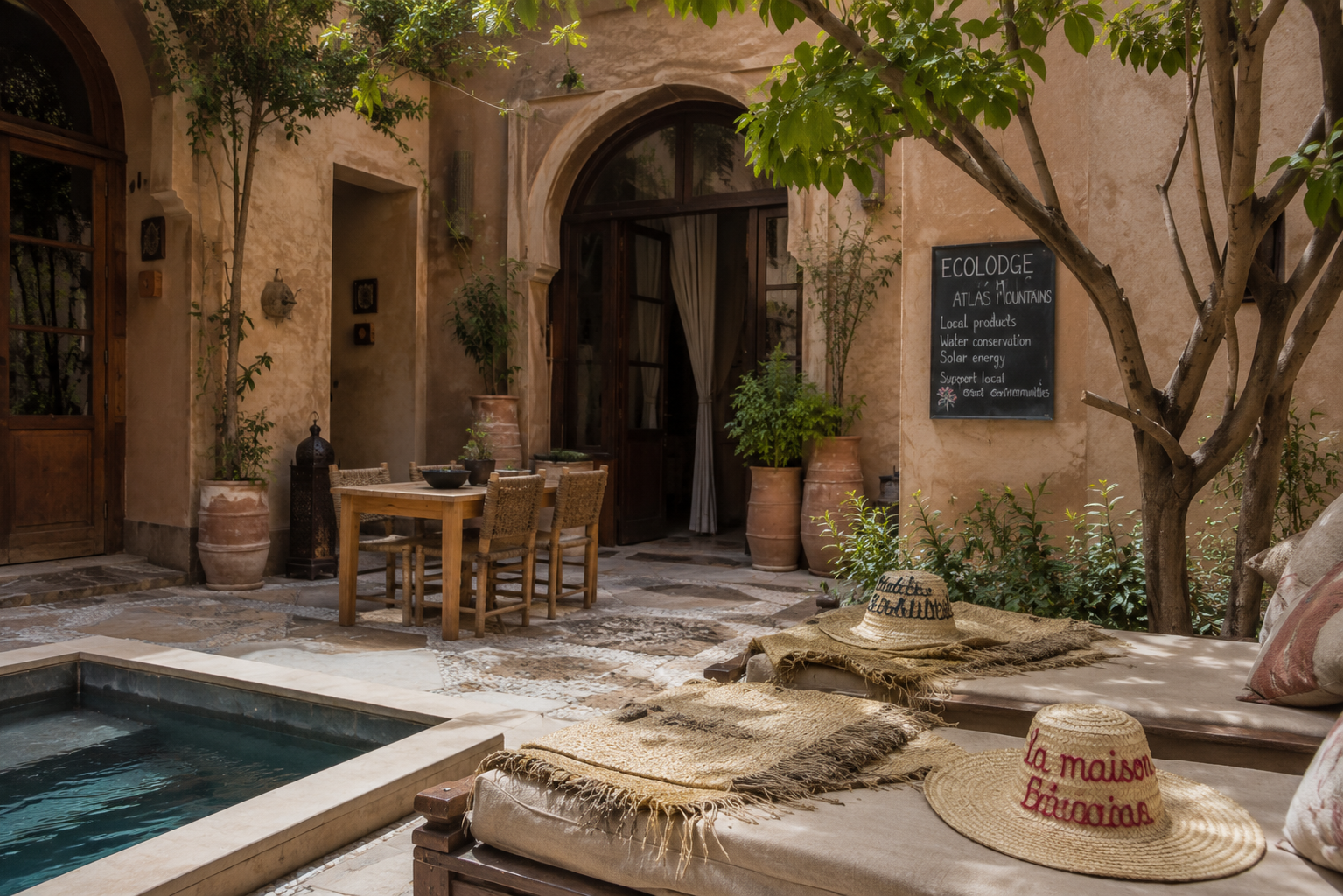
In the Atlas Mountains, several guesthouses and small lodges run by local Amazigh families practice food sourcing from their own gardens and neighboring farms, use solar water heating and lighting, employ local guides exclusively, and contribute a portion of revenues to local school or water projects. These aren’t certified or branded in any consistent way — they’re recognizable by asking the right questions.
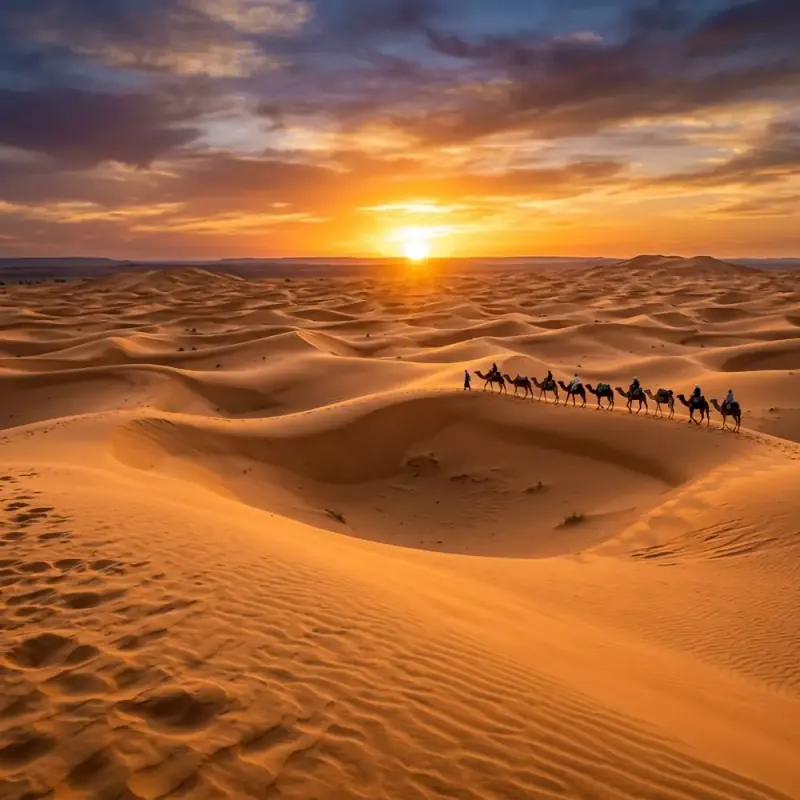
In the Sahara region, the distinction between responsible and irresponsible camps is stark. The responsible camps are typically smaller (under 15 guests), locally owned or locally staffed, use minimal plastic, source their food from nearby towns rather than trucking it from Casablanca, and have explicit policies about not driving vehicles on the dunes.
The irresponsible camps — and they exist in significant numbers near Merzouga — generate enormous quantities of plastic waste that blows into the desert, run generators all night to power air conditioning that defeats the entire purpose of sleeping in the desert, and employ staff from Casablanca rather than the local nomadic Amazigh communities.
The question to ask: ‘Do you drive 4WDs on the dunes?’ If yes, find another camp.
Supporting Local Communities: Where Your Money Actually Goes
The most powerful sustainable tourism choice is not which certification scheme a hotel has — it’s choosing to spend money at places where the economic benefit flows to local people.
Cooperatives are among the most reliable structures for this. Morocco has a well-developed cooperative sector, particularly for argan oil, saffron, pottery, and textile production. Cooperative products cost more than the equivalent from unregulated traders, and the difference goes directly to the women (it’s almost always women’s cooperatives) who produce them. The quality is also typically higher.
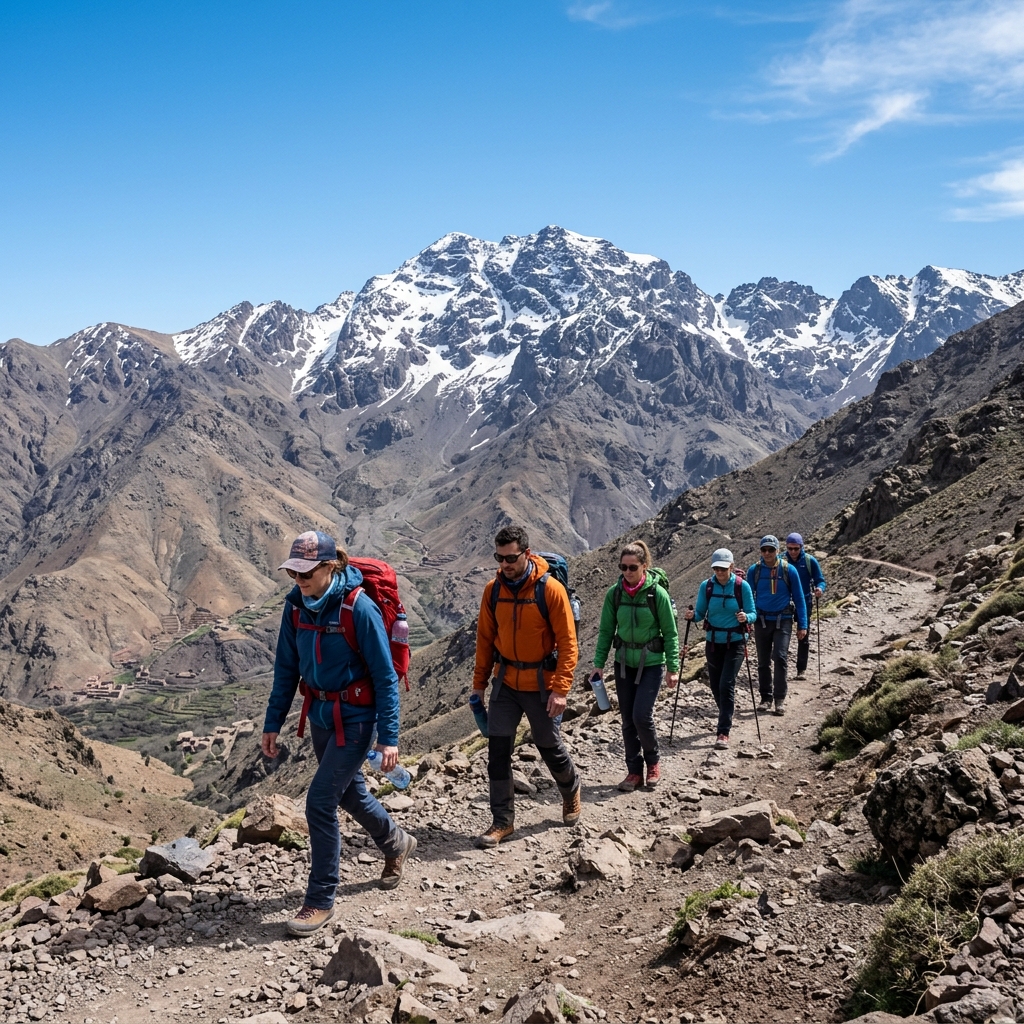
Amazigh village guesthouses and guides: When trekking in the Atlas or visiting rural communities, choosing local guides (rather than guides from Marrakech who drive out to the trailhead) keeps the income in the community. Similarly, eating at local family restaurants rather than bringing supplies from the city, or buying bread from the village oven rather than from a supermarket in the nearest town, are small choices with real local impact.
Street food: One of the most economically direct ways to support local communities. The harira soup stall on the corner of the medina, the briouat stand at the weekly souk, the argan oil seller at the women’s cooperative roadside store — these are businesses run by people for whom every sale matters.
Plastic and Waste: The Honest Situation
Morocco banned single-use plastic bags in 2016 — one of the first African countries to do so. The implementation has been imperfect, but the policy has had measurable impact. In most cities, the plastic bag scourge that was transforming Morocco’s medinas and countryside into fields of white plastic has diminished.
What remains problematic: plastic water bottles (bring a reusable bottle and use water purification tablets or a filter for tap water), plastic packaging around tourist food items, and the waste management infrastructure in smaller towns and rural areas, which often lacks the capacity to process the volume of waste that tourism generates.
Carry a reusable bag. Carry a reusable bottle. Take all your waste out of natural areas. These are small choices that, scaled across millions of visitors, matter.
The Sustainable Tourism Organizations to Know
Responsible Travel Morocco (RTM) certifies accommodations and tour operators according to criteria that include local ownership or local employment, environmental management, and community benefit contribution. Not every good operator is certified, but certification is a useful signal.
The ONMT (Office National Marocain du Tourisme) has increasingly integrated sustainable tourism language into its international marketing strategy. The policy infrastructure is improving, even if implementation varies.
Local organizations: the women’s argan cooperatives of the Souss, the ecological farming cooperative in the Ourika Valley near Marrakech, the traditional pottery cooperative in Safi — these are places where your purchase is directly and unambiguously beneficial. Find them, buy from them, tell other people about them.
The Honest Conclusion
Sustainable tourism in Morocco isn’t about feeling virtuous. It’s about recognizing that the country’s extraordinary beauty — its medinas, its mountains, its desert, its Atlantic coast — is not a fixed quantity that will always be available for visiting. It’s the product of specific ecological, cultural, and economic conditions that tourism itself is changing.
The choice to travel with awareness rather than without it doesn’t require sacrifice. In my experience, the most sustainably-minded travelers have more interesting experiences precisely because they’re engaging with Morocco as a real country rather than a theme park. The Amazigh guesthouse serves better food than the tourist-facing restaurant. The women’s cooperative makes better argan oil than the roadside tourist stall. The local guide knows things about the valley that the Marrakech guide drove up in a Land Cruiser to tell you.
Travel better. Morocco will thank you for it.
Experience the true heart of Moroccan heritage through its culinary traditions. Join us in preserving and honoring these ancestral recipes.
What People Are Saying
No comments yet. Be the first — we'd love to hear from you.
Nadia Chraibi
Culturally Verified & Fact-CheckedThe Moroccan Food editorial team brings together native culinary researchers, heritage preservationists, and experienced home cooks across Marrakech, Fes, and Casablanca. Every recipe and cultural guide is reviewed against ancestral oral traditions and authentic regional practices.