The Sweet and the Savory: Why Moroccan Cuisine Pairs Meat with Fruit
archived: false
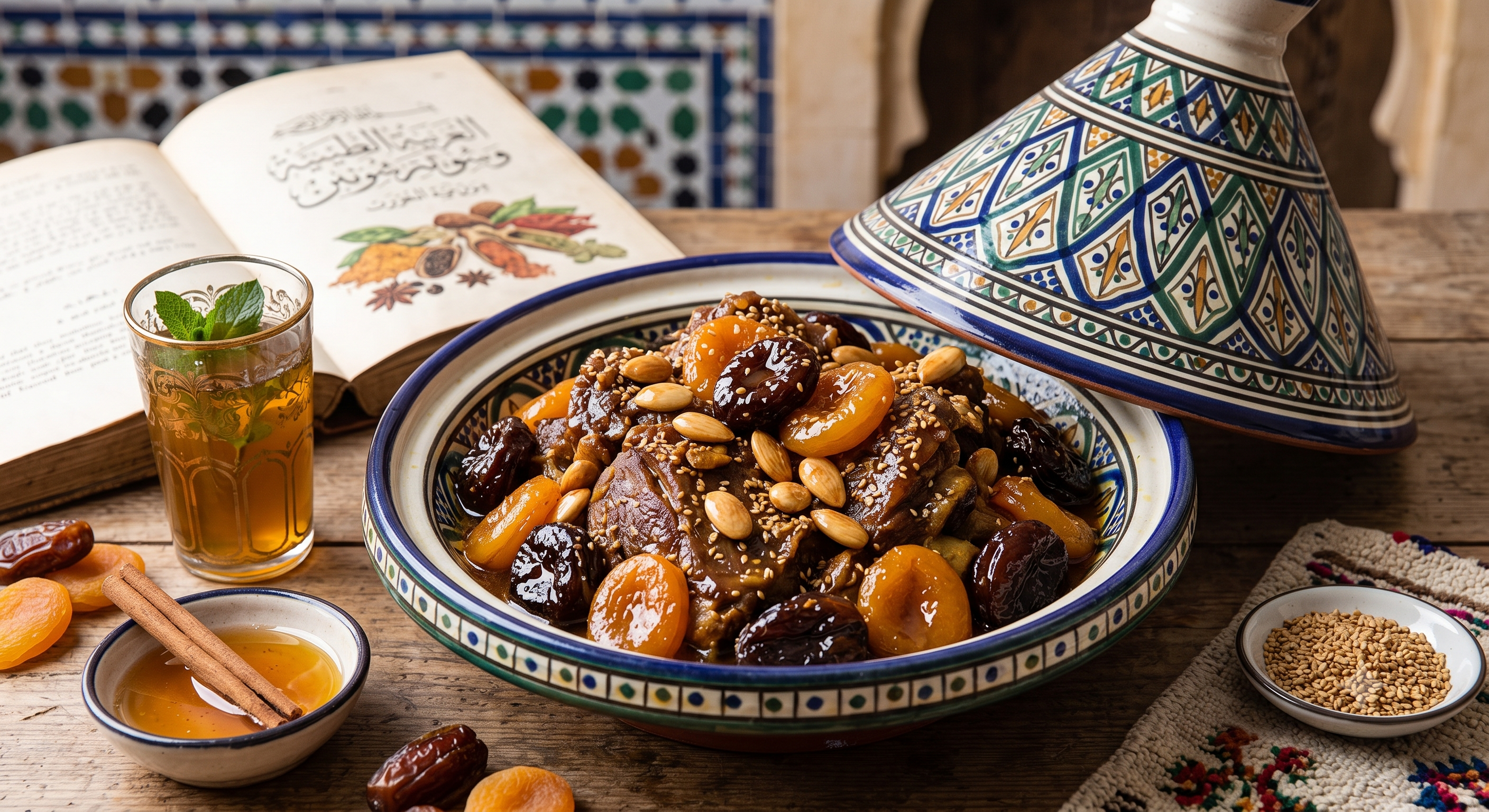
To the uninitiated traveler tasting imperial Moroccan cooking for the first time, one of the most delightful culinary revelations is the sophisticated harmony between savory animal meats and sweet caramelized fruits. From tender lamb shoulder braised with honey-glazed prunes and toasted almonds (Lham bil Barkouk) to spring chicken simmered with saffron, dried apricots, and walnuts, the juxtaposition of sweet and savory (Hlou wa Maleh) defines the height of Moroccan banquet gastronomy.
This flavor pairing is neither random nor a modern fusion experiment. It represents an ancient culinary philosophy rooted in Greco-Arabic medicine, refined across medieval Andalusian palace kitchens, and perfected over a thousand years in the imperial households of Fez, Marrakech, Meknes, and Rabat.
Historical Lineage: From Medieval Baghdad to Moorish Andalusia
The marriage of rich meat and fruit traces its lineage to the golden age of the Abbasid Caliphate in Baghdad during the eighth and ninth centuries. Court physicians and master culinary masters viewed cooking as an applied branch of medicine, operating under Galenic humoral theory:
- Meats like beef and mature mutton were classified as “hot and dry” or heavy on the human constitution.
- Sweet dried fruits, prunes, figs, raisins, and apricots, were classified as “moist and cool,” functioning to temper animal heat and assist digestion.
- Warming aromatic spices, Ceylon cinnamon, saffron, and ginger, acted as digestive bridges, harmonizing the contrasting elements into balanced nourishment.
When the legendary musician and arbiter of taste Ziryab traveled from Baghdad to the Umayyad court of Córdoba in Moorish Spain, he introduced this refined culinary philosophy to the western Mediterranean. Following the Christian Reconquista and the subsequent migrations of Andalusian Muslims and Sephardic Jews to Morocco between the thirteenth and seventeenth centuries, these royal recipes found their permanent sanctuary in the grand riads of Fez and Tetouan.
The Chemistry of Flavor Contrast
In Moroccan imperial kitchens, sweetness is never applied with a heavy hand as in Western barbecue sauces or dessert frostings. It is deployed as a structural counterpoint to rich animal fats and savory umami:
1. The Savory Foundation (Al-Malaqa Al-Malha)
The meat (prime lamb shoulder or beef shank) is first slow-braised with savory foundations: grated yellow onions, minced garlic, ginger, cracked black pepper, turmeric, pure saffron strands, and a bouquet of fresh cilantro. No sugar or fruit enters the pot during this initial braise. The meat must become tender and deeply savory on its own merits.
2. The Fruit Compote (At-Ta’ssil)
Dried fruits like pitted prunes, dried golden apricots, or fresh quince wedges (Sferjel) are cooked separately in a small saucepan with:
- A ladle of the savory meat broth to tie the flavors together.
- Ground Ceylon cinnamon for warm woody fragrance.
- Pure orange blossom water (Ma Zhar) for floral brightness.
- Pure bee honey or coarse sugar, simmered slowly until the fruit plumps up and develops a glistening, mahogany caramel glaze.
3. The Assembly
The sweet caramelized fruits are draped gracefully over the savory meat immediately before serving, then crowned with fried, blanched almonds and toasted sesame seeds. Each mouthful delivers a succession of sensory experiences: the unctuous savory richness of slow-cooked meat, followed by the tart sweetness of the fruit, the crunch of toasted nuts, and the lingering floral perfume of saffron and cinnamon.
The Iconic Sweet-and-Savory Masterpieces
Moroccan culinary literature celebrates several legendary dishes built upon this duality:
1. Lham bil Barkouk (Lamb with Prunes and Almonds)
The quintessential Moroccan wedding dish. Tender chunks of bone-in lamb shoulder melting in a thick onion-saffron sauce, topped with soft, honey-poached prunes (Barkouk), toasted sesame seeds, and golden fried almonds.
2. Pastilla (Bstilla): The Masterpiece of Andalusian Fez
An astonishing pastry pie constructed with paper-thin leaves of Warqa dough. Inside lies a savory filling of shredded squab pigeon or chicken simmered with saffron, onions, and eggs, layered beneath a crunchy bed of crushed toasted almonds, sugar, and cinnamon, baked golden and dusted with powdered sugar. The interplay between crisp buttery pastry, savory poultry, and sweet spiced nuts is universally recognized as one of the great culinary achievements of human history.
3. Tagine of Beef with Caramelized Quince (Sferjel)
A celebrated autumn specialty. Fresh quinces are poached in water, sliced into wedges, carved with decorative diamond incisions, and caramelized in butter, honey, and cinnamon before being nestled alongside braised beef shank. The natural astringency and high pectin content of the quince cuts effortlessly through the rich beef fat.
Frequently Asked Questions
Why are the fruits cooked separately from the meat in authentic Moroccan recipes?
Cooking dried fruits like prunes directly inside the main meat pot would darken the entire sauce to an unappealing black color and turn the savory broth cloyingly sweet. By stewing and glazing the fruit separately in a small saucepan, the meat maintains its clear, golden saffron broth, and diners can balance sweet and savory elements to their personal taste.
What kind of cinnamon is used in authentic Moroccan sweet-and-savory tagines?
Authentic Moroccan cooking relies strictly on Ceylon Cinnamon (Qerfa Beldia), also known as “true cinnamon.” Unlike harsh, spicy Cassia bark commonly sold in Western supermarkets, Ceylon cinnamon has a gentle, sweet, subtle woody aroma that integrates seamlessly with savory meats without overpowering them.
Can fresh fruits be used instead of dried fruits in Moroccan tagines?
Yes. Beyond dried prunes, apricots, and raisins, Moroccan cuisine embraces seasonal fresh fruits: fresh quinces (Sferjel) in autumn, sweet green figs (Karmous) in late summer, and small sweet pears or apples simmered in saffron syrup during winter.
Is sweet-and-savory Moroccan food healthy?
When prepared with wholesome traditional ingredients, grass-fed pasture meats, heart-healthy extra virgin olive oil, fiber-rich whole dried fruits, and antioxidant-loaded spices like turmeric and saffron, these dishes provide balanced, nourishing meals rich in micronutrients and healthy fats.
Experience the true heart of Moroccan heritage through its culinary traditions. Join us in preserving and honoring these ancestral recipes.
What People Are Saying
No comments yet. Be the first — we'd love to hear from you.
Lalla Zineb
Culturally Verified & Fact-CheckedLalla Zineb preserves ancestral imperial recipes from the heart of the Fes medina, honoring slow-cooking methods and ceremonial feast traditions.