The Hidden History of Sweet and Savory: From Andalusia to the Moroccan Feast Table
Why Moroccan Food Puts Sugar in the Lamb: A History Worth Knowing
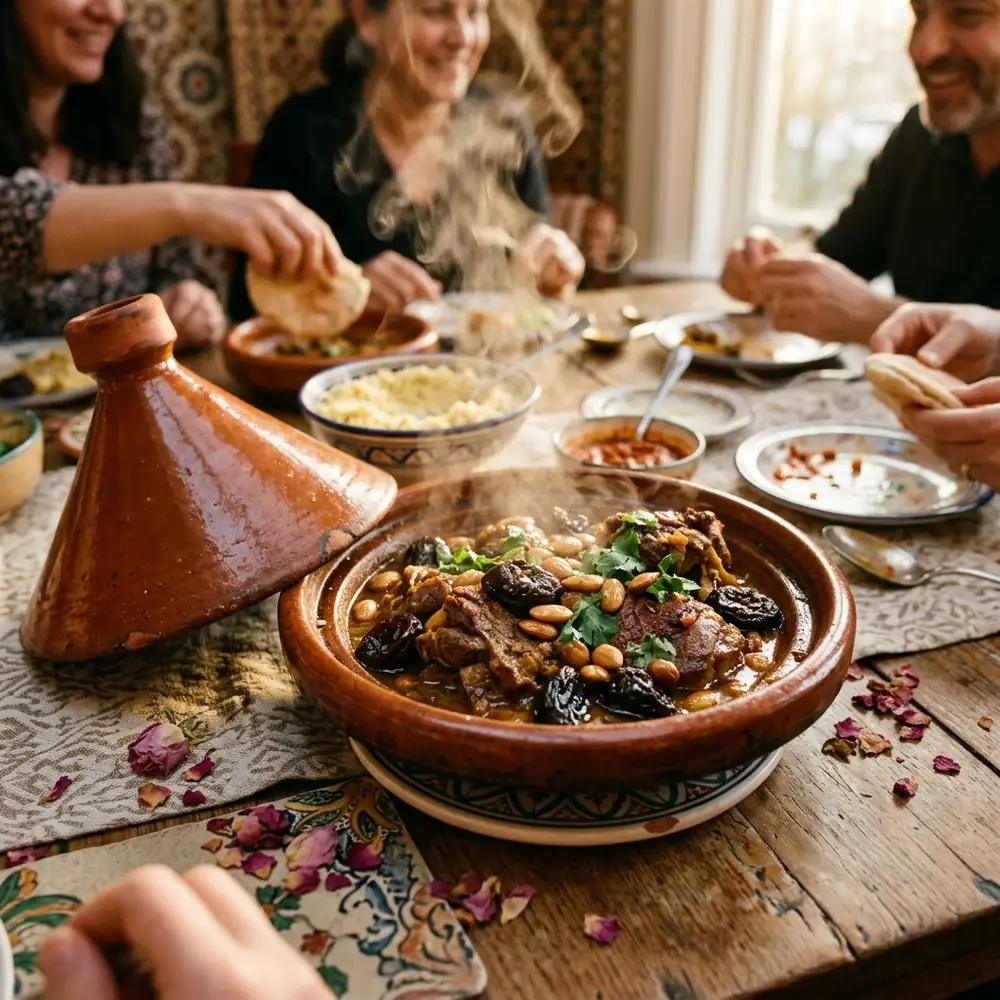
The first time I served a lamb and prune tagine to a French friend, she looked at the bowl with visible suspicion. "But it's sweet," she said, as if I'd committed a culinary crime. "Yes," I said, "and also savory. And that is the point." She ate three portions. She still brings it up years later.
The sweet-savory combination is one of the most divisive things about Moroccan cuisine for people encountering it for the first time. And also, once you understand it, one of the most interesting. Because it didn't arrive by accident. It is the edible inheritance of an 800-year philosophical argument about what food should taste like — an argument that happened in palaces in Baghdad, in courts in Córdoba, and in the kitchens of Fes.
Where Does This Combination Actually Come From?
The story starts in 9th-century Baghdad. The Abbasid caliphate at its height was the most sophisticated urban civilization in the world, with a culinary culture to match. Persian influence — which had a long tradition of combining fruit with meat in complex dishes — merged with Arab, Central Asian, and Mediterranean ingredients to produce a court cuisine of extraordinary complexity. Cookbooks from this period — Kitab al-Tabikh being the most famous — document dishes that are recognizable ancestors of Moroccan food today: meat braised with fruit and honey, poultry with almonds and spice, sweet-sour combinations that don't exist as clearly in any other medieval European tradition.
This culinary tradition traveled west along the routes of Islamic civilization. It arrived in Al-Andalus — Islamic Iberia — in a highly developed form, and the Andalusian court at Córdoba developed it further over several centuries. The 13th-century Andalusian cookbook Manuscrito Anónimo contains recipes that are directly ancestral to modern Moroccan dishes — lamb with prunes, chicken with honey and almond, pastries combining meat with sweet.
Then 1492 happened. Granada fell. The Muslim and Jewish communities of Al-Andalus were expelled or forced to convert. And the largest wave of Andalusian refugees in history arrived in Morocco — in Fes, in Tetouan, in Rabat-Salé — bringing with them not just their belongings and their grief, but their music, their architecture, their craft traditions, and their cooking.
What Did the Andalusian Refugees Bring to Moroccan Cuisine?
The sweet-savory tradition they brought was fully developed, highly refined, and deeply embedded in their culinary culture. It found fertile ground in Morocco, which already had its own spice traditions and agricultural products — saffron, argan oil, preserved citrus, dried fruit — that complemented and extended the Andalusian inheritance.
The specific techniques and combinations that arrived:
- Fruit in braised meat — prunes, dates, apricots, quinces added to slow-cooked lamb or beef, creating a sweet-sour-savory complexity that single-note cooking cannot achieve
- Honey and spice glazes on meat — the M'rouzia, the celebratory honey-and-smen lamb dish of Fes, is directly descended from Andalusian recipes for honey-glazed meats with complex spice blends
- Almonds in both sweet and savory contexts — used in meat dishes for texture and richness as well as in pastries and desserts
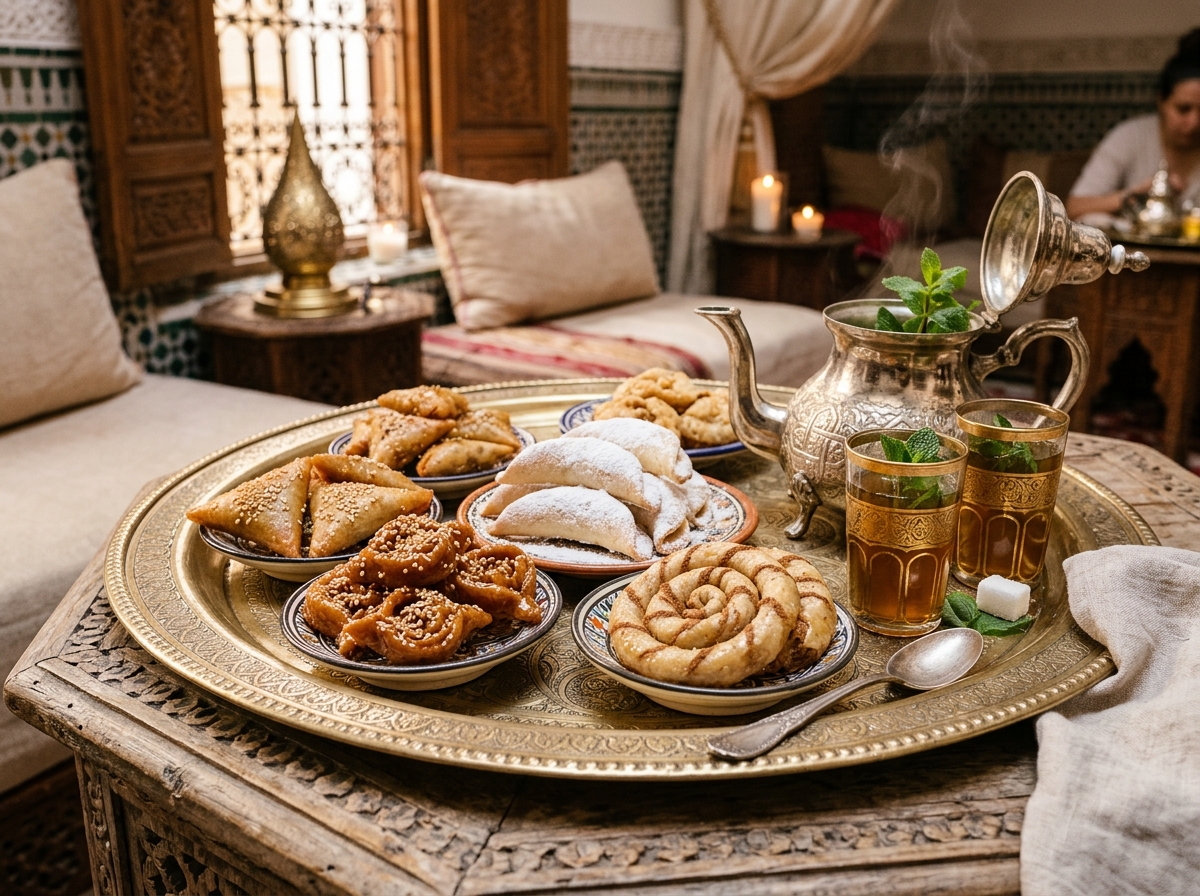
- Bastilla — the pigeon (or chicken) pie with almond cream and powdered sugar on a savory filling, which is perhaps the most explicit expression of the sweet-savory fusion and which Fassi cooks will tell you is the direct descendant of Andalusian cuisine
The Philosophy Behind the Combination
Medieval Islamic culinary philosophy — drawing on Greek humoral theory translated and extended by Arab physicians — understood food as a balancing system. Sweet ingredients were warming and softening; acidic ingredients were sharpening; bitter ingredients were drying; savory flavors were grounding. A sophisticated dish balanced these elements not because balance was aesthetically pleasing but because it was physiologically correct — the meal should leave the body in better equilibrium than it found it.
This is a very different framework from modern Western culinary thinking, which tends to treat sweet and savory as categorically separate. And it produces dishes that, by the logic of that framework, seem strange but, by their own logic, are entirely coherent.
The prune in the lamb tagine is not decoration. It is not a mistake. It is a considered addition that brings sweetness and a slight acidity, that tenderizes the meat through its own pectin content during long cooking, that adds a depth of flavor that the lamb alone — however good — cannot produce. The powdered sugar on the Bastilla is not ironic or avant-garde. It is the correct finishing note in a dish that has been building toward complexity since the first spiced onions went into the pan.
How to Taste This History
Order a lamb and prune tagine in a traditional Moroccan restaurant. Eat slowly. Notice how the sweetness of the prune interacts with the salt of the meat, how the saffron and cinnamon bridge the two elements, how the sauce — which contains both the rendered fat of the lamb and the dissolved sugars of the prune — is something that neither element could produce alone.
That flavor. That precise, complex, impossible-to-categorize flavor. That is what Andalusia tasted like before 1492. It is what the refugees carried north. It is what Moroccan kitchens have preserved, without effort and without ceremony, as the simple way dinner is made.
Experience the true heart of Moroccan heritage through its culinary traditions. Join us in preserving and honoring these ancestral recipes.
What People Are Saying
No comments yet. Be the first — we'd love to hear from you.
Youssef Amazigh
Culturally Verified & Fact-CheckedThe Moroccan Food editorial team brings together native culinary researchers, heritage preservationists, and experienced home cooks across Marrakech, Fes, and Casablanca. Every recipe and cultural guide is reviewed against ancestral oral traditions and authentic regional practices.