Tafraoute and the Anti-Atlas: Morocco's Painted Rocks, Granite Landscapes, and Berber Hiking Trails
Tafraoute and the Anti-Atlas: Morocco’s Painted Rocks, Granite Landscapes, and Berber Hiking Trails
There’s a moment, about twenty minutes outside Tafraoute on the road coming in from Tiznit, when the landscape changes in a way that’s difficult to fully describe to someone who hasn’t seen it. The scrubby plains of the Souss give way to something vast and pink and ancient. The granite boulders begin to appear — first one or two, the size of houses, balanced on hillsides as if placed by a careless giant. Then more. Then everywhere you look: enormous, rounded, rose-colored rocks tumbling across the slopes of the Ameln Valley, framing the small whitewashed villages clustered at the mountain base, with almond trees threading between everything like pale green stitching.
This is the Anti-Atlas. This is Morocco’s geological fever dream, its most otherworldly landscape, and it’s the place I bring people when they tell me they’ve already seen the Sahara and want to be surprised again.
What Is Tafraoute?
Tafraoute is a small Amazigh town — predominantly Tachelhit-speaking — at 1,200 meters altitude in the heart of the Anti-Atlas mountains, about 170 kilometers from Agadir. Its population is modest, its economy largely driven by almond cultivation, argan production, and a slow but steady stream of visitors who arrive for the hiking, the landscape, and a quality of quiet that’s increasingly rare in Moroccan tourism.
The architecture is distinctive: buildings in pale pink and ochre that echo the color of the surrounding rock, many decorated with painted geometric patterns in the Amazigh tradition. The main square is genuinely pleasant — an almond-shaded place where the café chairs face the mountains and time moves at a pace the modern world largely forgot.
What I’ve always been fascinated by here is the fierceness of Amazigh identity. Tafraoute is a place where people have maintained their language, their agricultural practices, their architectural style, and their cultural calendar with remarkable tenacity.
The Painted Rocks of Tafraoute
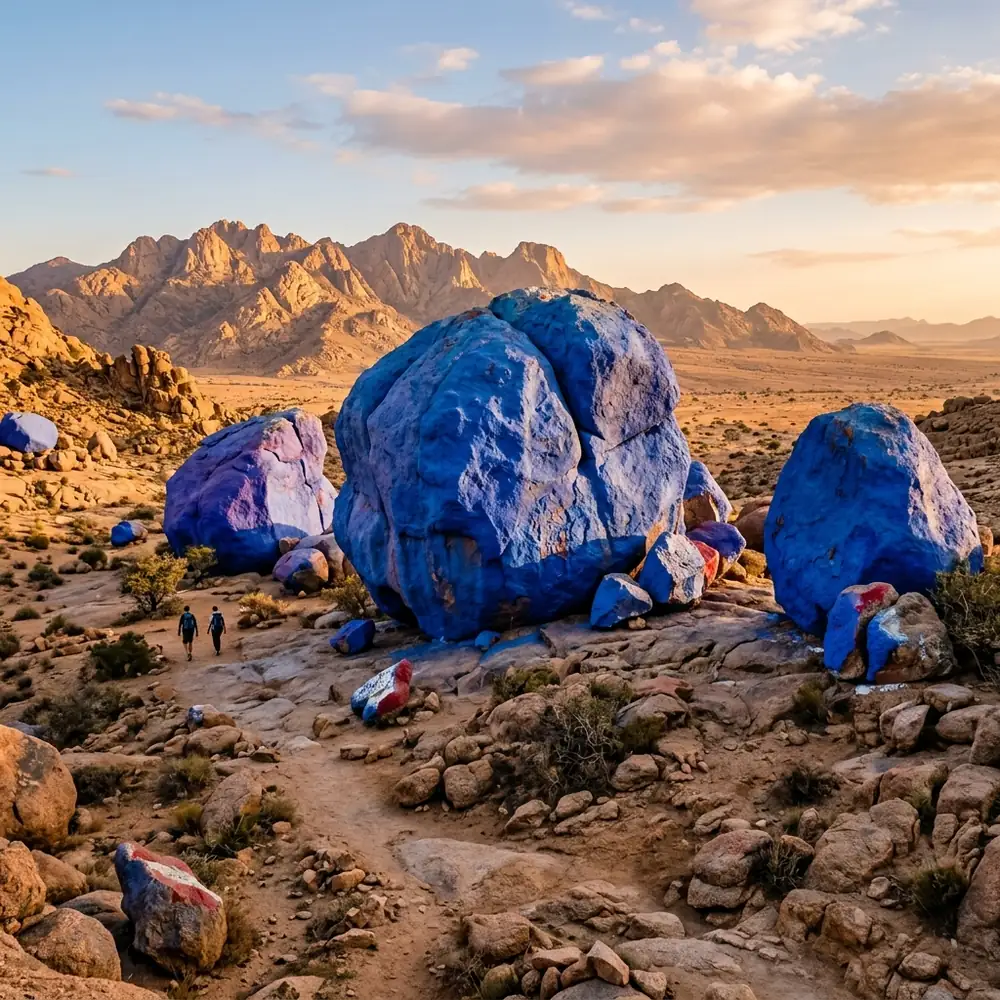
About three kilometers from town, a cluster of extraordinary granite boulders has become the Anti-Atlas’s most famous visual reference: the Rochers Peints, or Painted Rocks. In 1984, Belgian artist Jean Verame received permission from the Moroccan government to paint these ancient formations in vivid blues, purples, and pinks.
The result is deliberately absurd and, depending on your sensibility, either wonderful or horrible. Giant boulders that have sat in this valley for 400 million years suddenly wearing electric blue paint. The paint has faded over four decades into something softer and more integrated than the original. The rocks themselves remain magnificent. And the walk to reach them — through a landscape that looks like the surface of another planet — is worth doing regardless of what you think of the artwork.
Hiking in the Ameln Valley: The Anti-Atlas at Its Best
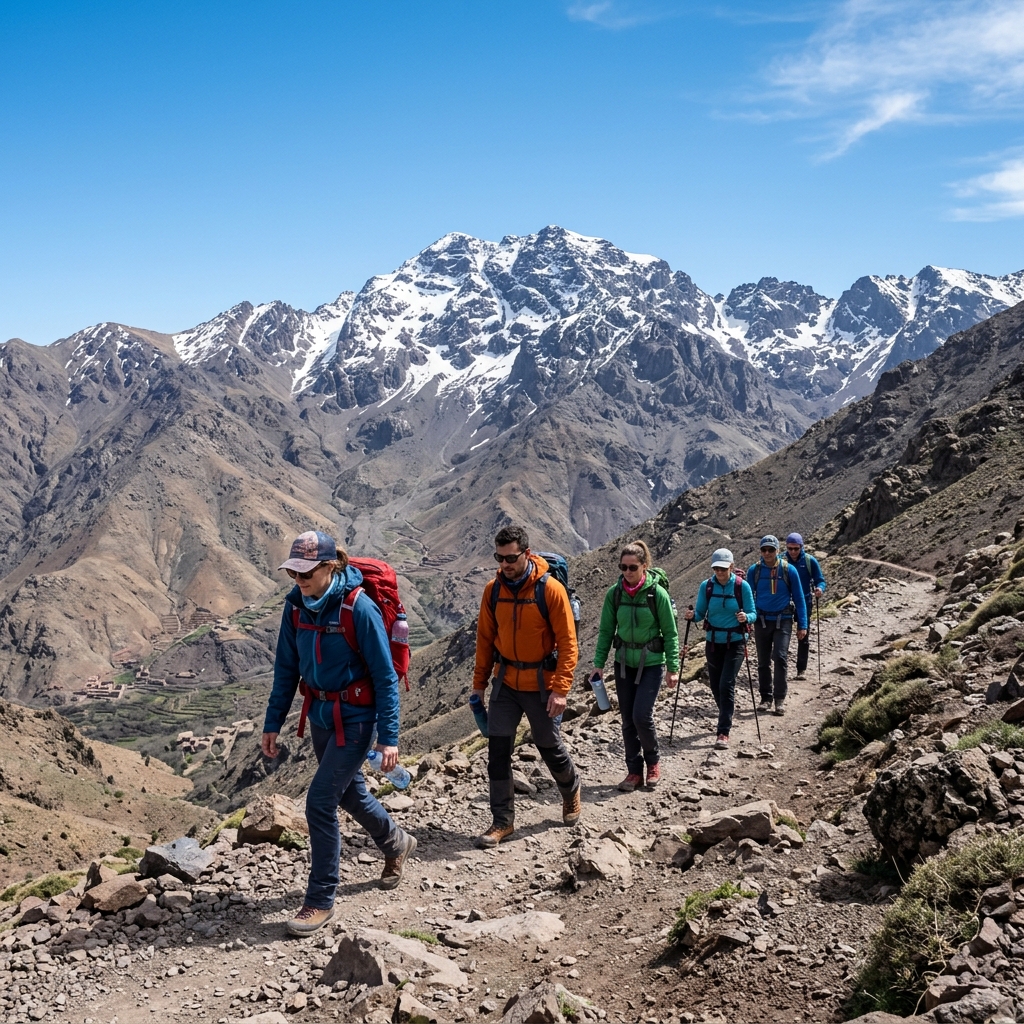
The Ameln Valley, spreading north from Tafraoute, is where the best walking in the region happens. The valley contains 26 small Amazigh villages, most of them accessible on foot, connected by paths that wind between the boulders and almond terraces.
The Ameln Circuit is a classic half-day or full-day loop through several villages, past ancient grain stores (igudaren), and up to viewpoints where the scale of the valley becomes properly visible. The trail requires reasonable fitness and good footwear — the granite is often smooth and can be slippery.
Aguerd n’Ouzrou is the highest point accessible to walkers in the immediate area. The ascent takes about two hours from Tafraoute and the view from the summit — 360 degrees of eroded granite peaks, distant plains — is one of the finest in southern Morocco.
The Anti-Atlas sun is fierce. Bring more water than you think you need, strong sun protection, and a hat that actually covers your face. Start walking early — before 8am ideally.
Almond Blossom Season: The Best Time to Be Here
If you can organize your calendar around one thing, come to Tafraoute in late February. The almond trees that carpet the Ameln Valley floor burst into white and pink bloom before any leaves appear, creating a spectacle so improbable and so beautiful that it’s genuinely hard to process the first time you see it.
The village of Aït Mansour is particularly extraordinary during blossom season — a narrow gorge of rose-red rock through which you walk with almond branches overhead, petals drifting in the wind from the Sahara.
The annual Almond Festival (Moussem des Amandiers) usually takes place in February, coinciding with the blossoms. It includes music, regional food, and a festival atmosphere that’s genuinely local rather than performed for tourists.
Practical Information
Getting there: Tafraoute is most easily reached by car from Agadir (about 3.5 hours through increasingly dramatic mountain scenery) or from Tiznit (about 2 hours). There are CTM and Supratours buses from Agadir, running once daily.
Staying: Several small guesthouses and riads have opened in and around Tafraoute, most of them owner-operated and excellent. Expect to pay 400–800 dirhams per night for something comfortable and characterful.
Eating: Amlou — the extraordinary walnut-argan-honey paste — appears at breakfast everywhere, spread on fresh bread. Lamb tagines slow-cooked with prunes or local honey. Almond milk, thick and cold, served in small glasses.
The weekly souk (Wednesday) is one of the most genuinely agricultural markets in southern Morocco. Farmers come down from the surrounding hills with argan kernels, dried herbs, local honey, fresh cheese from goat’s milk, and handicrafts that have nothing to do with what’s sold in Marrakech’s tourist souks.
One More Reason to Go
The Anti-Atlas sees perhaps 5% of the tourists who visit Marrakech. The infrastructure is modest but sufficient. The landscape is extraordinary. The Amazigh culture is alive and accessible in a way that’s increasingly difficult to find in Morocco’s more-visited regions. The hiking is serious and rewarding. The almond blossom is one of the most beautiful phenomena in North Africa.
And it’s quiet. Genuinely, blessedly quiet. The kind of quiet where you can hear your own thoughts, where the wind through the rocks sounds like music, where you remember why you travel in the first place.
Experience the true heart of Moroccan heritage through its culinary traditions. Join us in preserving and honoring these ancestral recipes.
What People Are Saying
No comments yet. Be the first — we'd love to hear from you.
Youssef Aït Brahim
Culturally Verified & Fact-CheckedThe Moroccan Food editorial team brings together native culinary researchers, heritage preservationists, and experienced home cooks across Marrakech, Fes, and Casablanca. Every recipe and cultural guide is reviewed against ancestral oral traditions and authentic regional practices.