Taghazout: From a Traditional Fishing Village to Global Atlantic Surf Capital
archived: false
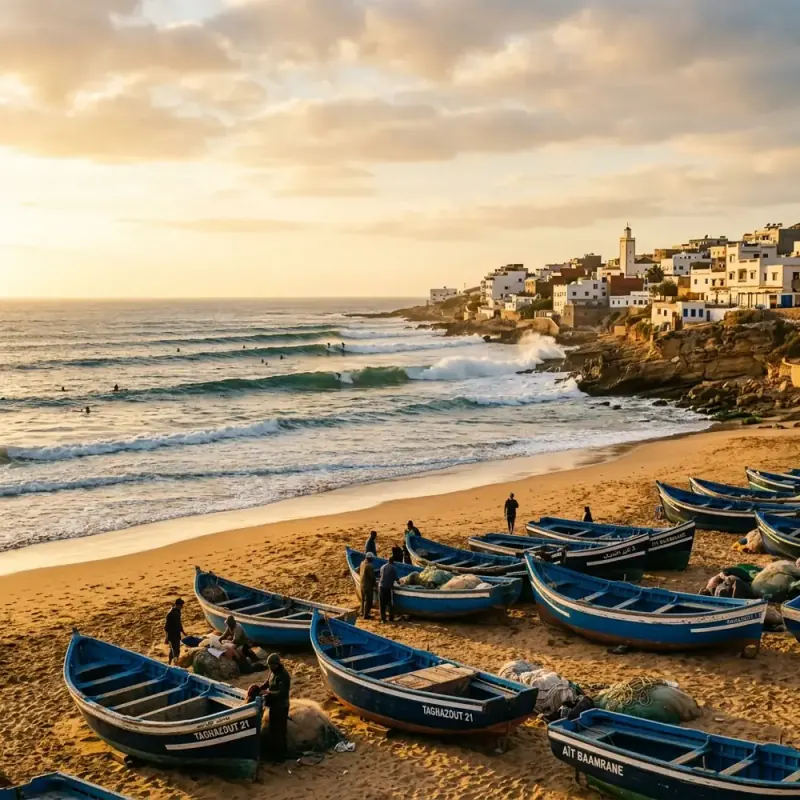
Twenty kilometers north of Agadir, where the arid foothills of the High Atlas tumble directly into the rolling turquoise swells of the Atlantic Ocean, sits the coastal town of Taghazout. Once a quiet, sleepy Amazigh fishing village where wooden blue dories were pulled onto rocky beaches and goats grazed among argan trees, Taghazout has evolved over the past three decades into the premier winter surfing destination in Africa and one of the world’s most celebrated wave-riding meccas.
Yet despite international acclaim, yoga retreats, and modern boutique surf lodges, Taghazout retains its rugged soul: artisanal fishermen still launch through crashing shorebreaks at dawn, medina alleys smell of grilled sardines and woodsmoke, and the daily rhythm is governed entirely by ocean swells, offshore winds, and tidal cycles.
The Geography of Wave Perfection: The Right-Hand Point Breaks
What makes Taghazout unique on the global surf map is its extraordinary coastal geomorphology:
The coastline features a succession of natural limestone and sandstone headlands projecting into the Atlantic. When powerful North Atlantic winter storm swells travel thousands of miles from the Arctic, they wrap around these points, bending and grooming into long, peeling, world-class right-hand point breaks:
- Anchor Point (La Pointe des Ancres): The undisputed king of Moroccan waves. A legendary right-hand point break that breaks over rock shelves and sandbars. On solid winter swells (six to twelve feet), Anchor Point delivers endless, peeling walls with three distinct barrel sections that can run for over five hundred meters all the way into the town bay.
- Killer Point: Named after the pods of Orcas (killer whales) historically spotted cruising offshore in winter, this immense, powerful point break handles heavy swell with deep water takeoffs, offering fast, hollow, adrenaline-pumping walls for advanced surfers.
- Hash Point: A relaxed, fun wave breaking directly in front of the village, ideal for casual afternoon sessions when the tide pushes over the sandbar.
- Panoramas: A friendly, sweeping sand-bottom point break south of town, forgiving enough for intermediate riders practicing cutbacks and beginners catching green waves.
- Devil’s Rock & Banana Beach: Located a few kilometers south in Tamraght, these sandy breaks provide accessible waves for surf schools and beginner lessons.
The Seasonal Rhythm: Winter Swells and Endless Sunshine
The surf season in Taghazout follows clear climatic patterns:
- The Prime Season (October through April): The Atlantic storm track pumps consistent, powerful groundswells toward the Moroccan coast. Combined with light morning offshore winds blowing from the Atlas Mountains and comfortable daytime sunshine (22°C to 26°C), winter in Taghazout offers world-class surfing conditions while Europe freezes.
- The Summer Season (May through September): Swells are smaller and winds lighter, making it ideal for beginner surf lessons, stand-up paddleboarding, sea kayaking, and peaceful beach holidays.
Cultural Heritage: The Fishing Fleet and Coastal Terroir
Taghazout’s identity remains deeply anchored in its Amazigh maritime roots:
- The Morning Beach Launch: At dawn, local fishermen push their heavy blue wooden boats (Floukas) into the surf, casting longlines for wild sea bass, sea bream, and octopus.
- The Village Fish Fry: In the afternoon, small rustic restaurants along the seawall grill the morning catch over open charcoal braziers. Served with crusty bread, a squeeze of fresh lemon, and smoky tomato-garlic chermoula, dining beside the crashing waves is an unforgettable experience.
- The Argan and Amlou Terroir: Taghazout sits at the northern gateway of the Argan forest. Local cafes serve morning bowls of fresh Amlou (toasted almonds stone-ground with pure argan oil and wild honey) paired with warm flatbreads and mint tea, the ultimate high-energy pre-surf breakfast.
The Rise of Sustainable Eco-Tourism: Taghazout Bay
In recent years, the Moroccan government developed Taghazout Bay, a modern, eco-conscious resort zone south of the historic village:
- Features world-class eco-resorts, surf academies, and the Tazegzout 18-hole championship golf course overlooking the ocean cliffs.
- Designed with strict environmental standards: preserving indigenous argan tree groves, operating advanced water desalination and greywater treatment plants, and empowering local Amazigh youth through professional hospitality training.
Frequently Asked Questions
What thickness of wetsuit is needed for surfing in Taghazout?
During the prime winter season (November to March), water temperatures average between 16°C and 18°C (61°F, 64°F). A good 3/2mm sealed wetsuit is ideal, though surfers sensitive to the cold may prefer a 4/3mm suit for long dawn and dusk sessions. In summer, water warms to 20°C, 22°C, requiring only a shorty or boardshorts.
Is Taghazout suitable for complete beginner surfers?
Yes. While famous breaks like Anchor Point and Killer Point are strictly for advanced surfers, neighboring spots like Banana Beach, Panoramas, and Devil’s Rock in Tamraght have gentle, sandy bottoms and forgiving waves ideal for beginners learning with certified instructors.
How do I get to Taghazout from Marrakech or Agadir?
Taghazout is located just forty minutes north of Agadir Al-Massira Airport (AGA), easily reached by pre-arranged taxi transfer or local bus. From Marrakech, the drive takes approximately three hours via the modern A3 toll expressway to Agadir, followed by the scenic coastal road N1.
Are there good activities in Taghazout for non-surfers?
Absolutely! Non-surfers can enjoy cliffside yoga classes, relax on golden beaches, take traditional cooking classes, hike to the emerald natural rock pools of Paradise Valley in the Atlas foothills, or explore the historic ramparts of Taroudant on a day trip.
Experience the true heart of Moroccan heritage through its culinary traditions. Join us in preserving and honoring these ancestral recipes.
What People Are Saying
No comments yet. Be the first — we'd love to hear from you.
Houssam Elmrabet
Culturally Verified & Fact-CheckedHoussam Elmrabet is a Moroccan researcher in territorial marketing and cultural heritage preservation. His work documents regional gastronomic identities, local agricultural heritage, and how ancestral culinary traditions define authentic territorial branding across the Kingdom.