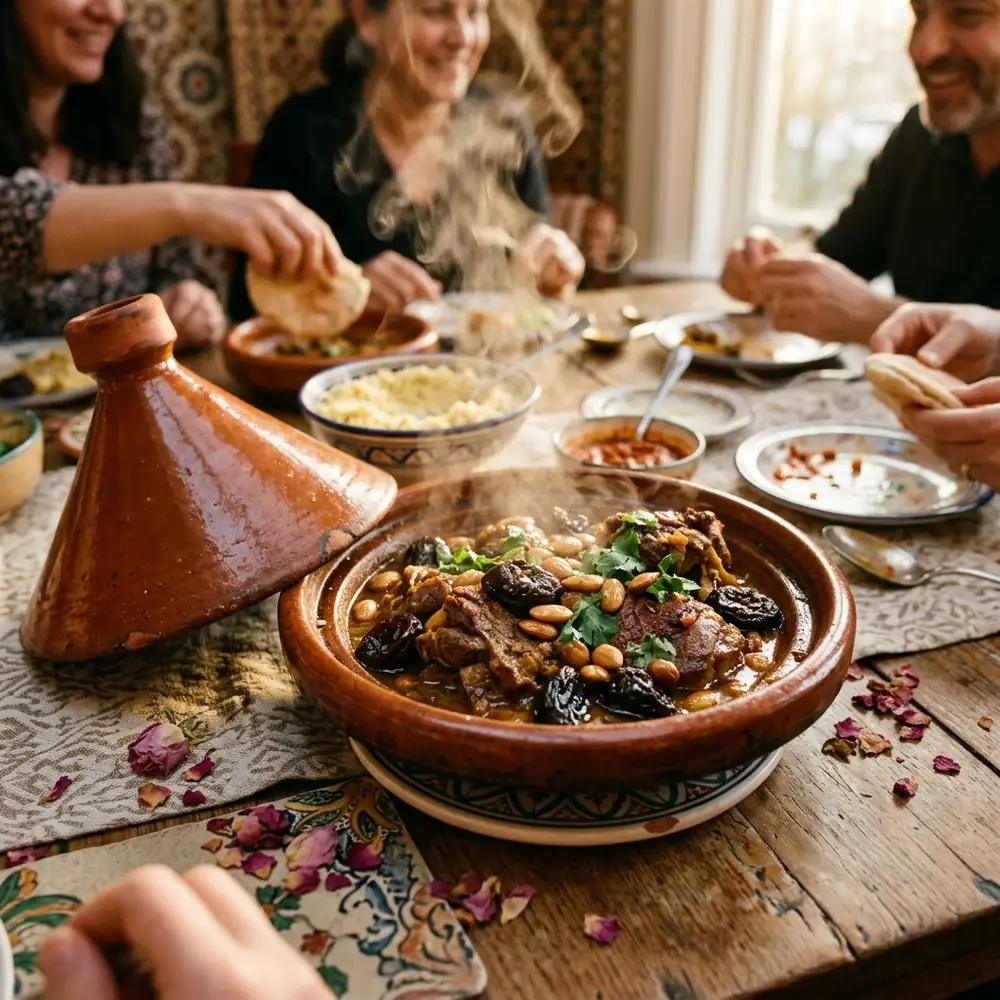
Forget One-Pot Meals: The Tagine Invented Them All 2,000 Years Ago
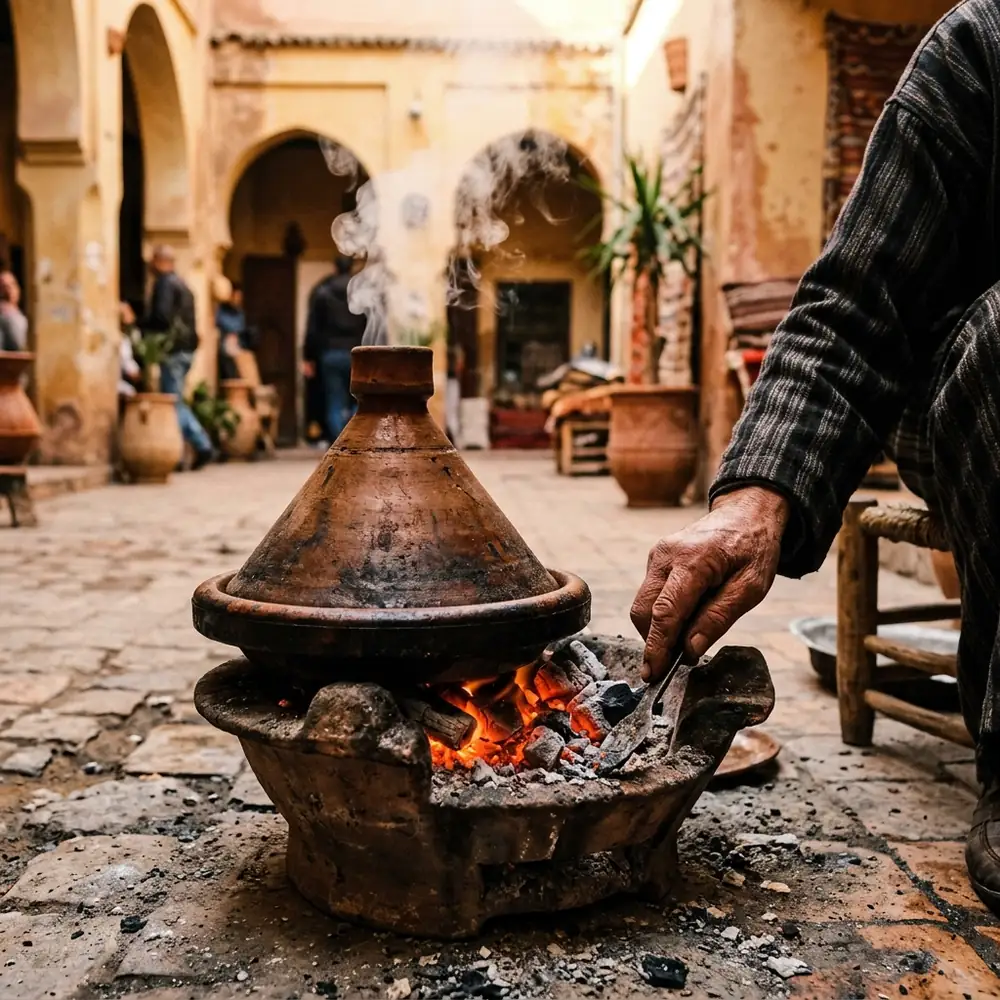
The Original One-Pot: What the Tagine Actually Does and Why Nothing Has Replaced It
The food media has discovered one-pot cooking. Every few years, the concept resurfaces — a book, a trend, a hashtag — all built on the appealing proposition that complex meals can come from a single vessel with minimal cleanup and minimal attention.
Somewhere in the Moroccan countryside, a woman is cooking a tagine on charcoal embers she lit an hour ago and hasn't looked at since. She will check it once more, adjust one thing, and serve it three hours from now. The dish will be extraordinary. She is unaware that she is ahead of a trend.
What the Tagine Actually Is — The Engineering
The tagine is a two-part clay vessel: a wide, shallow base where the food sits, and a conical lid that rises to a point. The cone is not decorative. It is a moisture management system.
As the food in the base heats, moisture evaporates upward into the cone. The cone's surface area cools the steam (particularly at the tip, which is furthest from the heat source), causing it to condense and run back down the inside of the cone walls toward the food. The base never dries out because the cone continuously recirculates the cooking moisture. The food self-bastes. You don't add liquid. You don't stir. You barely intervene.
This is pre-industrial hydrology. The Moroccan tagine is a self-regulating steam environment made from fired earth. It has been in continuous use for at least 2,000 years, almost certainly longer, and no subsequent cooking technology — including the modern pressure cooker, the slow cooker, the Instant Pot, the Dutch oven — has fully replicated what a clay tagine does, particularly with regard to the mineral exchange between clay and food and the specific texture it produces in long-cooked meat.
Why Clay Makes a Difference That Metal Doesn't
Clay is porous. When a clay tagine is new — or improperly "experienced" — it will transfer an earthy taste to the food. This is addressed by the initial seasoning process: soaking the clay in water for several hours, rubbing with oil, and heating slowly several times before using for the first time.
Once properly experienced, the clay contributes something more subtle and positive. The minerals present in clay — calcium, iron, magnesium — are released in trace quantities during cooking. This is not a health claim so much as a flavor observation: food cooked in well-experienced clay has a roundness and depth that food cooked in stainless steel or aluminum does not have. This is documented in sensory evaluation studies, not just in the subjective experience of the person who grew up eating from clay.
Additionally: clay conducts heat slowly and evenly. There are no hot spots that would scorch the bottom of the dish (a significant problem with metal vessels over direct heat). The entire base heats gradually, which is why low, slow cooking is not just possible in a tagine — it is the natural mode.
How to Actually Use a Tagine at Home
The setup is simpler than most Western recipes suggest:
- Build the base first. Sliced onion — a lot of it, more than feels right — goes on the bottom of the cold base. The onion both prevents the meat from sticking and becomes the sweet, collapsed foundation of the sauce.
- Add the meat. For lamb: bone-in shoulder, neck, or ribs. Place on the onion bed.
- Season with oil, spices, and aromatics. A generous pour of olive oil, saffron dissolved in a small amount of warm water, ginger, cumin, salt, pepper. Toss everything to coat. Preserved lemon wedges and olives go in now if using.
- Add no water. None. The onion will release moisture. The meat will release moisture. The cone will recirculate it. Trust the vessel.
- Seal. Apply low heat. Over a diffuser ring on a gas burner (to spread heat evenly), or on a tagine stand over charcoal. Start with medium-low heat. Once you hear the faintest sound of simmering — not bubbling, simmering — reduce to the lowest possible setting.
- Wait. For bone-in lamb: 2.5 to 3 hours minimum. Check once at the halfway point. Add a small splash of water only if the base has completely dried, which it shouldn't have.
The result — if the heat was low enough and the time was long enough — is meat that has become part of its sauce, sauce that is thick and intensely flavored without any reduction or thickening, vegetables that have not fallen apart but have softened into perfect texture. Everything in its right place, cooked by nothing more than sealed steam and time.
Adapting the Tagine Principle to Modern Kitchens
You don't have to own a clay tagine to apply these principles, though owning one changes the experience noticeably. A heavy cast-iron Dutch oven, lidded tightly, over the lowest possible heat, approximates the moisture-recirculation principle of the tagine. The same base-building process — onion, oil, spice, meat, no additional liquid — applies.
What you lose with metal is the clay's even heat distribution and the mineral exchange. What you keep is the fundamental technique: slow, sealed, steam-based cooking that requires no attention, produces deeply flavored food, and uses one vessel from start to finish.
The trend will come around again in a few years. The tagine will still be there.
Experience the true heart of Moroccan heritage through its culinary traditions. Join us in preserving and honoring these ancestral recipes.
What People Are Saying
No comments yet. Be the first — we'd love to hear from you.
Ahmed Boukhari
Culturally Verified & Fact-CheckedThe Moroccan Food editorial team brings together native culinary researchers, heritage preservationists, and experienced home cooks across Marrakech, Fes, and Casablanca. Every recipe and cultural guide is reviewed against ancestral oral traditions and authentic regional practices.