Taktouka: The Roasted Pepper Salad Every Moroccan Mother Perfects
archived: false
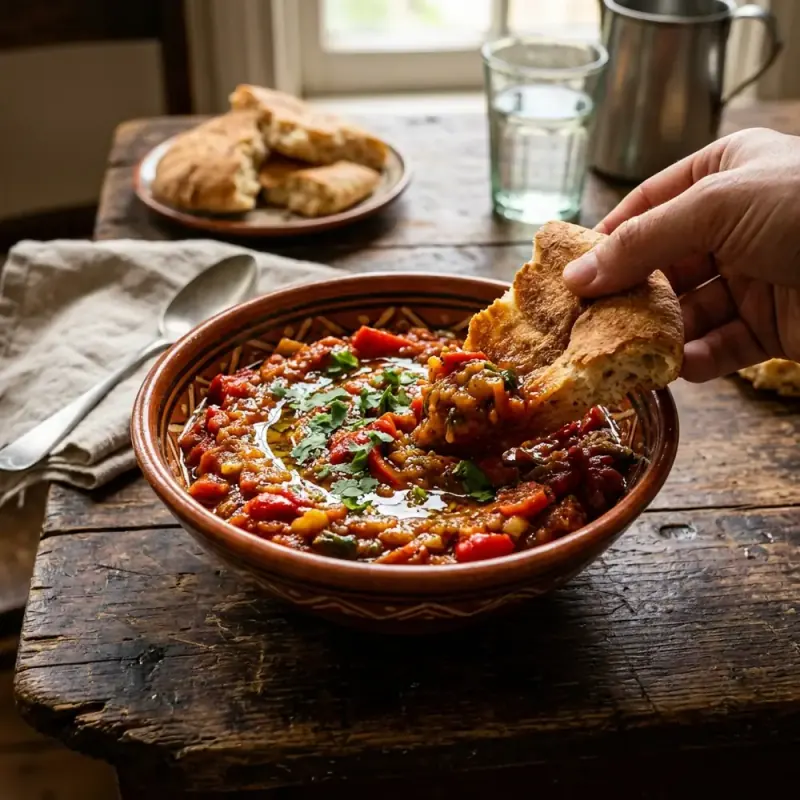
In every Moroccan household, from the Mediterranean shores of Tangier to the oases of Zagora, a meal rarely begins without an array of warm and chilled cooked vegetable salads (Saladat Dafe’a). Among these ancestral appetizers, Taktouka reigns supreme alongside Zaalouk. A fragrant, jammy reduction of fire-roasted sweet bell peppers, ripe tomatoes, crushed garlic, and golden olive oil, Taktouka embodies the rustic brilliance of Moroccan home cooking.
The name itself stems from the Moroccan Arabic verb Tak-tak, meaning to chop, pound, or crush finely. Unlike modern western dips processed into smooth purees with mechanical blades, authentic Taktouka demands texture: tender, diced ribbons of roasted pepper melting gently into crushed simmered tomatoes, leaving distinct bites of smoky sweetness on the palate.
The Fire-Roasting Foundation: Where Flavor Begins
The undeniable soul of Taktouka lies in roasting the peppers over direct flame. Skipping this foundational step in favor of boiling, steaming, or raw sautéing results in a bland, watery stew lacking depth.
In Moroccan kitchens, peppers are charred using time-tested methods:
1. Direct Majmar Charcoal Roasting
The traditional method employs a small clay brazier (Majmar) filled with hot oak charcoal embers. Whole green and red bell peppers are set directly on the grill iron or straight atop the coals. The radiant heat blisters the thick waxy skins within minutes, imbuing the sweet flesh with an earthy woodsmoke aroma that defines authentic rural cooking.
2. The Gas Flame Technique
In modern medina apartments, cooks place whole peppers directly over the open blue flame of the gas burner, turning them every ninety seconds with metal tongs until every square centimeter turns jet-black and blistered.
3. The Steaming Chamber Secret
The moment the peppers are uniformly charred, they must never be rinsed under cold tap water. Water washes away the delicate volatile roasting oils that contain the smoke flavor. Instead, hot charred peppers are transferred immediately into an airtight container or clean pot covered with a tight lid for ten minutes. The trapped residual steam gently loosens the charred skin from the underlying flesh, allowing you to peel the charred paper-thin skin away cleanly using only your bare fingers or the back of a paring knife.
Choosing the Proper Peppers and Tomatoes
Achieving the proper sweet-acid balance depends on seasonal produce selection:
- Green Bell Peppers: Provide sharp, vegetal bite and pleasant slight bitterness that offsets rich olive oil.
- Red and Yellow Peppers: Add natural fruit sugars and deep ruby coloring to the final reduction. A 50/50 ratio of green to red peppers creates the benchmark Moroccan color harmony.
- Roma or Plum Tomatoes (Maticha Toulia): Dense, fleshy tomatoes with low water content and minimal seeds are essential. Watery hothouse tomatoes dilute the pan sauce and prolong cooking unnecessarily.
- Fresh Garlic (Touma Beldia): Crushed fresh purple-skinned Moroccan garlic cloves, pounded in a brass mortar with coarse sea salt, release allicin without turning harsh.
The Chemistry of Slow Reduction: From Tomato Sauce to Jam
Taktouka is not a quick stir-fry; it is a slow confit. The magic unfolds in three distinct stages over a heavy-bottomed clay tagine or seasoned cast-iron skillet:
- The Tomato Compote Stage: Peeled, seeded, and diced tomatoes enter the skillet with minced garlic, extra virgin olive oil, sweet Moroccan paprika (Tahmira), ground cumin (Kamoun), and sea salt. The mixture simmers over medium-low heat until the tomatoes break down completely into a thick, bubbling red base.
- The Marriage of Pepper and Tomato: The hand-diced roasted peppers join the skillet. Stirring with a flat wooden spatula (Moughrfa), the cook gently presses the peppers into the tomato compote, allowing the juices to mingle.
- The “Dghmira” Reduction: The flame is lowered to a gentle murmur. The pan cooks uncovered for twenty to twenty-five minutes, stirred frequently to prevent scorching. The dish is complete only when all free water has evaporated and glossy droplets of spice-tinted olive oil separate cleanly around the edges of the pan (Waqfa f’Zitha). At the very end, freshly chopped flat-leaf parsley and cilantro are folded through for fresh herbaceous aroma.
Serving Etiquette and Pairing
In Morocco, Taktouka is never eaten with forks or spoons; it is scooped using warm wedges of crusty, round aniseed bread (Khobz Beldi). The bread acts as an edible utensil, allowing diners to pinch up ribbons of pepper and tomato sauce from communal ceramic shallow dishes.
Taktouka serves versatile roles at the Moroccan table:
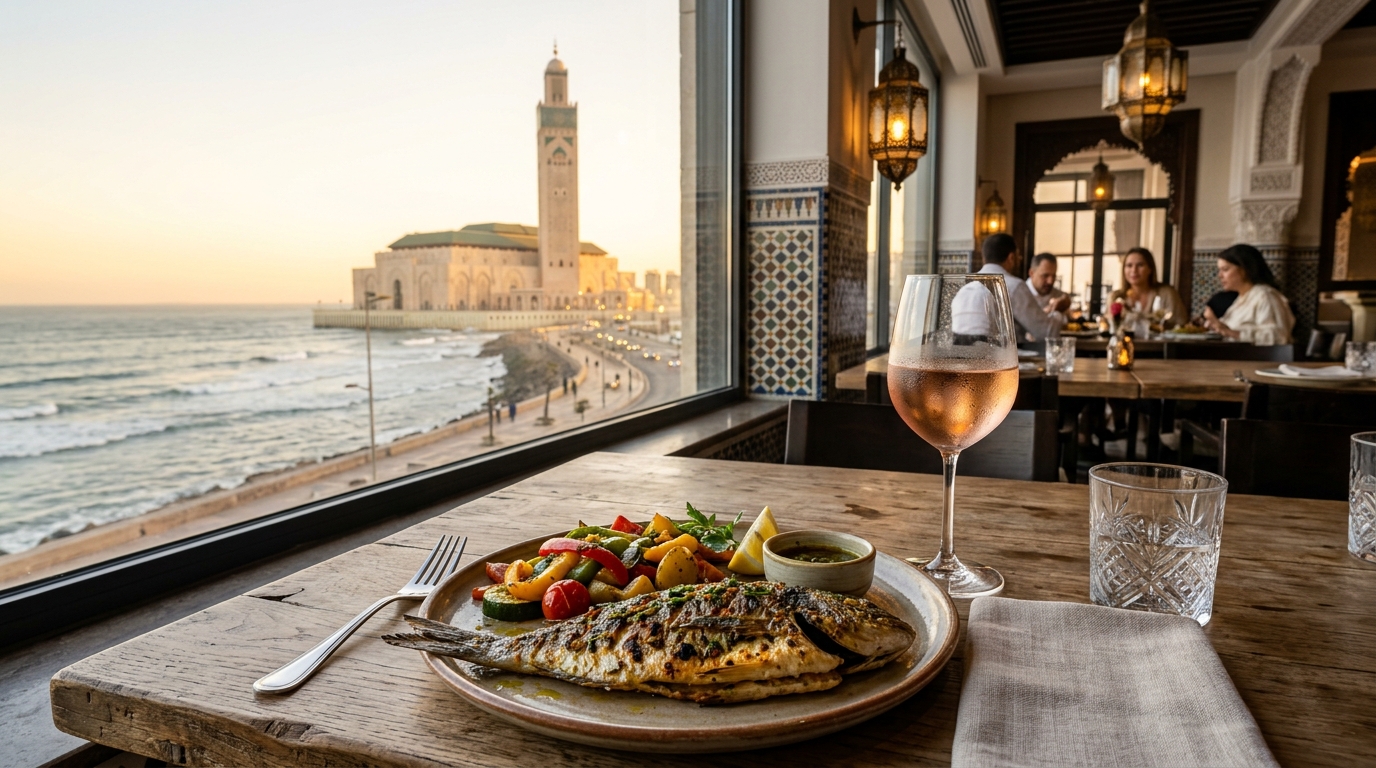
- Alongside Fried Atlantic Fish: In coastal cities like Essaouira and Safi, hot Taktouka is the quintessential accompaniment to crispy fried sardines dusted with cumin and semolina.
- With Grilled Charcoal Meats: The bright acidity of Taktouka cuts effortlessly through the rich rendered fat of charcoal-grilled lamb chops (Kotlette) and spiced ground kefta skewers.
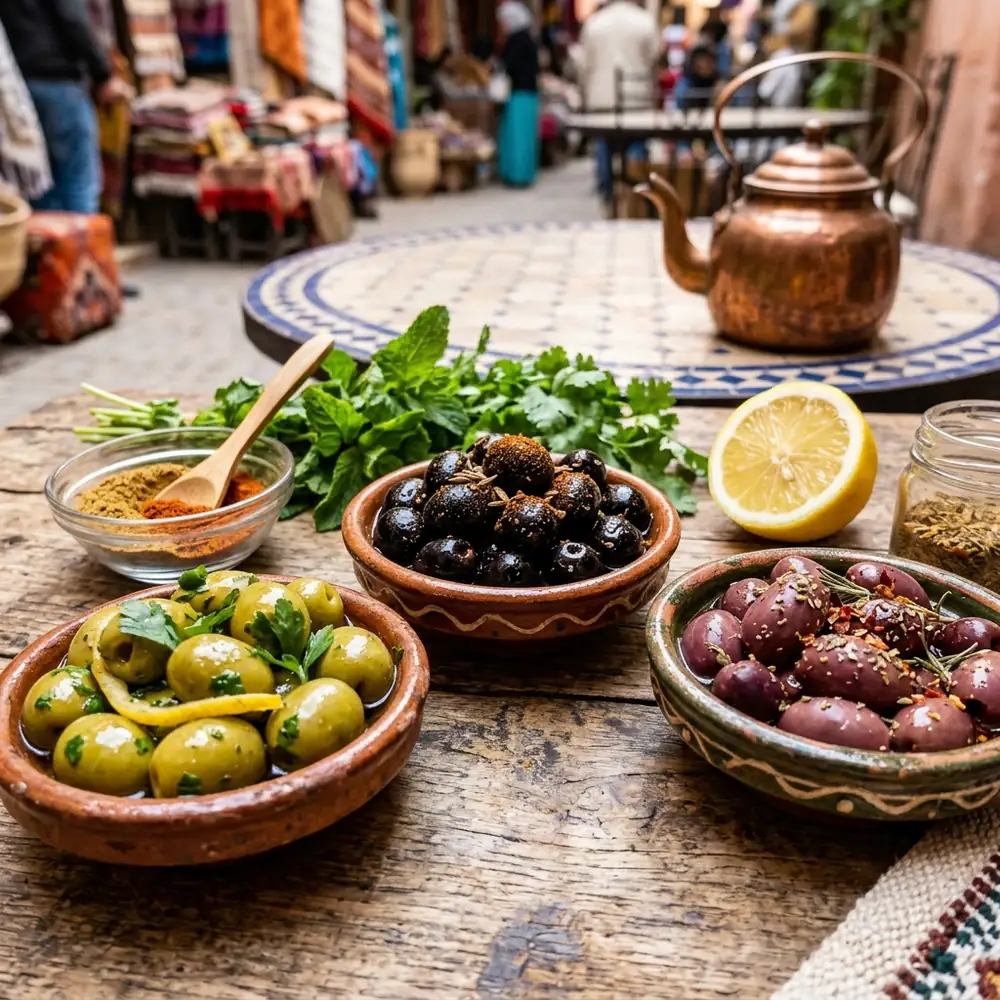
- In a Mezze Spread: Served warm or at room temperature alongside Zaalouk, marinated purple olives, and stewed spiced carrots (Zrodia Mchermla).
Frequently Asked Questions
Can I prepare Moroccan Taktouka ahead of time?
Yes, Taktouka is one of those remarkable dishes that tastes even better the next day. As it rests in an airtight glass container in the refrigerator, the roasted pepper oils, garlic, and cumin integrate deeply into the tomato compote. It keeps safely chilled for up to five days. Bring it back to room temperature or warm it gently in a skillet before serving.
Why is my Taktouka watery instead of thick and jammy?
A watery Taktouka happens when tomatoes are not properly cooked down or the pan is removed from the heat too early. Always simmer uncovered over low heat until all liquid evaporates and pure golden olive oil visibly pools along the edges of the skillet. Using fleshy Roma tomatoes also prevents excess moisture.
Can I make Taktouka spicy?
Authentic Taktouka leans sweet, smoky, and savory rather than fiery. However, many families add a subtle warm kick by folding in a half-teaspoon of authentic Moroccan Harissa paste or finely dicing a single fire-roasted green chili pepper (Felfla Harra) alongside the sweet bell peppers.
What is the difference between Taktouka and Zaalouk?
While both are beloved cooked Moroccan salads prepared with stewed tomatoes, garlic, cumin, and olive oil, their core vegetable differs completely: Taktouka is made with fire-roasted bell peppers, whereas Zaalouk is made with charred or steamed eggplant (Badenjan).
Experience the true heart of Moroccan heritage through its culinary traditions. Join us in preserving and honoring these ancestral recipes.
What People Are Saying
No comments yet. Be the first — we'd love to hear from you.
Chef Rachid
Culturally Verified & Fact-CheckedChef Rachid is a Moroccan culinary specialist with decades of kitchen experience across coastal Morocco, specializing in Atlantic seafood, tagines, and traditional charcoal braising.