The Moroccan Tea Ritual: Maghrebi Mint, Brass Berrad, and Sacred Hospitality
archived: false
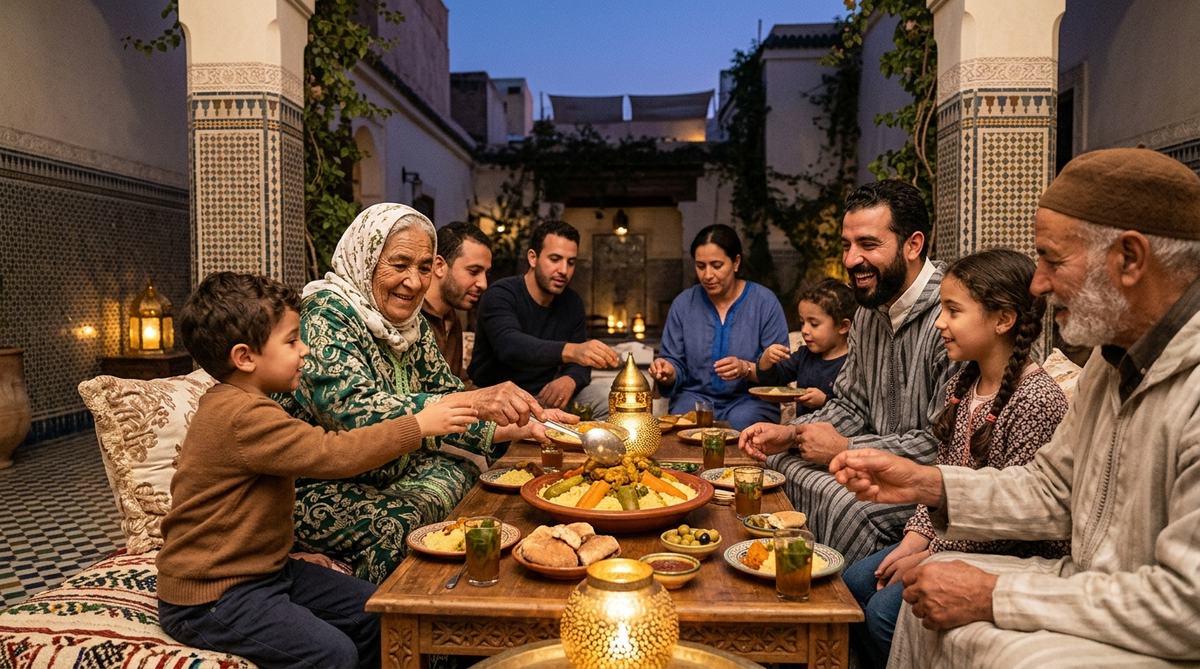
In Morocco, tea is never merely a beverage; it is an institution, a social contract, and an artistic performance. Known across the Maghreb as Atay (or playfully nicknamed Berber Whiskey), sweet Moroccan mint tea serves as the universal gesture of welcome extended to every guest who crosses a home threshold, enters an artisan workshop, or seals a commercial transaction in the medina.
To refuse a freshly poured glass of tea in Morocco is to reject the goodwill of your host. From the most modest mud-brick shepherd home in the High Atlas to the marble-paved salons of imperial Rabat, the tea ceremony (Tafricha) unfolds with patient grace, transforming humble dried green tea leaves into an elixir of community connection.
The Surprising Global Lineage: How Green Tea Reached Morocco
While mint tea feels timeless, its history in Morocco spans fewer than two centuries. Before the mid-nineteenth century, Moroccans brewed infusions of wild indigenous herbs like pennyroyal (Fliou), wormwood (Shih), and wild mountain sage (Salmia).
The turning point occurred during the Crimean War (1853 to 1856). When British merchant shipping routes through the Baltic Sea were blockaded by military conflict, British traders found themselves stranded with immense stockpiles of Chinese green gunpowder tea (Zhu Cha). Seeking alternative markets, merchants sailed into the Atlantic ports of Tangier and Mogador (Essaouira).
Moroccan city merchants embraced the small, tightly rolled green tea pellets. When brewed in hot water and combined with wild local spearmint (Mentha spicata) and solid sugar cones (Soukkar Qaleb), the drink took the country by storm. Within decades, Chinese gunpowder tea had integrated completely into daily Moroccan life, establishing trade routes that make Morocco the largest importer of Chinese green tea in the world today.
The Tools of the Ritual: The Ceremonial Tea Tray
The Moroccan tea ceremony requires specialized hardware polished to perfection:
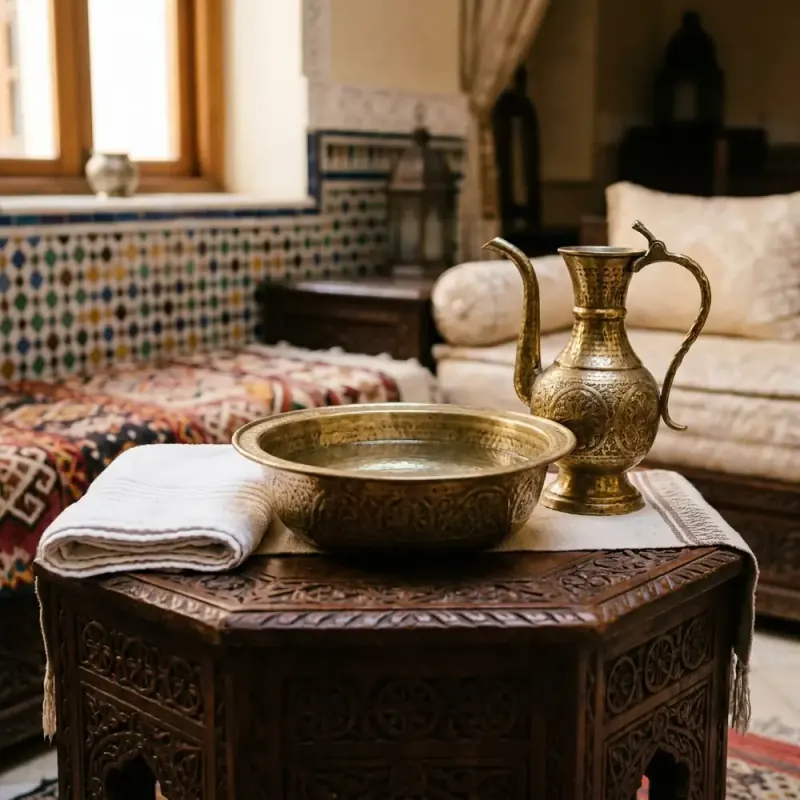
- The Berrad (Teapot): A bulbous teapot forged from nickel-plated copper, brass, or stainless steel. It features an elongated, gracefully curved S-shaped pouring spout engineered to produce a smooth, concentrated jet of liquid from remarkable heights without splashing.
- The Siniya (Serving Tray): A round, three-legged polished brass or silver tray hand-engraved with intricate arabesques and geometric motifs.
- The Rebbaya (Sugar and Herb Boxes): Matching silver canisters holding chunks of sugar, dried tea leaves, and aromatic blossoms.
- The Keessan (Tea Glasses): Small, thin glass tumblers decorated with colorful enamel filigree, gold rims, or floral patterns. Glasses are chosen over ceramic mugs because transparency allows guests to admire the amber clarity and frothy crown of the brew.
The Sacred Botanical Garden: Mint and Its Seasonal Companions
While spearmint is the heart of the drink, an authentic Moroccan tea maker alters the herbal blend to match seasons and temperatures:
1. Nana Beldia (Moroccan Spearmint)
The benchmark mint. True Moroccan Nana Beldia from the Meknes or Sais valley possesses crinkled, deep green leaves with an intoxicating sweet fragrance free from the aggressive medicinal menthol of peppermint.
2. Chiba (Absinthe / Wormwood)
As autumn arrives and winter rains descend, spearmint loses its sweetness. Moroccan tea makers replace or balance mint with Chiba (Artemisia absinthium). Bitter, intensely aromatic, and warming, Chiba dispels winter chills, soothes throat irritations, and stimulates cold-weather digestion.
3. Regional Herb Additions
- Louiza (Lemon Verbena): Added in late evening to induce calm and restful sleep.
- Timija (Wild Water Mint): Sourced from mountain riverbeds in the High Atlas, carrying an earthy, herbal sweetness.
- Zhar (Orange Blossom Water): A few drops distilled into the pot during wedding banquets and festive feasts.
The Choreography: Brewing the Perfect Pot of Atay
In a traditional household, tea is prepared at the table before seated guests by the head of the household or an honored elder. The ritual follows four strict stages:
Stage 1: The Soul Wash (Tchilla)
Two rounded tablespoons of gunpowder green tea are scooped into the cold teapot. A splash of boiling water is poured in, swirled gently for twenty seconds, and poured out into a clear glass. This first golden liquid contains the delicate initial essences and is preserved on the tray.
A second splash of boiling water enters the pot, swirled vigorously, and discarded down the drain. This crucial washing step purges bitter dust and excess tannins from the processed tea pellets. The preserved first extract is then poured back into the pot.
Stage 2: The Infusion and Sweetening
Fresh, thoroughly washed stems of spearmint are packed tightly into the pot until the leaves reach the rim. Large chunks of rock sugar (Soukkar Qaleb) are pressed down on top of the herbs. Freshly boiling water fills the teapot to the brim.
Stage 3: The Marriage over Fire (Tashkhina)
Unlike western tea, which steeps off the heat, the Moroccan Berrad is returned to a low charcoal burner or gas flame for one to two minutes. This brings the tea back to a gentle boil, forcing the sugar to melt rapidly and caramelizing slightly against the metal walls while extracting sweet essential oils from the mint stems without boiling them into bitterness.
Stage 4: The Aeration Pour (Al-Raghwa)
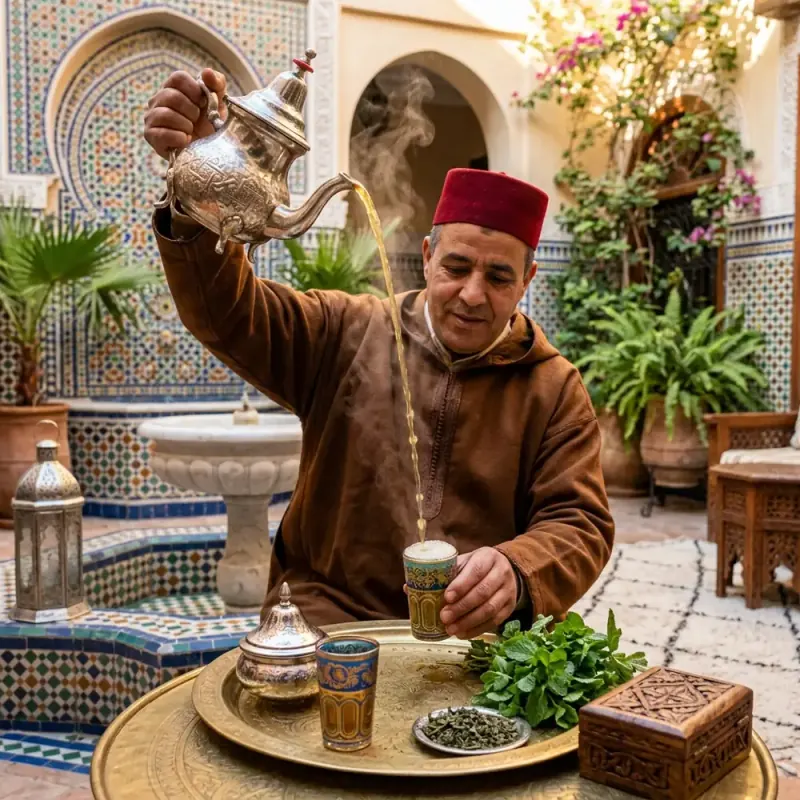
The tea maker lifts the teapot high above the tray, often up to half a meter in the air, and pours a steaming stream into a glass, then pours the glass back into the teapot. This step is repeated three times.
This pouring serves three scientific purposes:
- It dissolves and homogenizes the sugar throughout the pot without using a stirring spoon.
- It cools the boiling liquid down to a comfortable drinking temperature.
- The high pour forces atmospheric air into the liquid, oxygenating the brew and crowning each glass with a dense, velvet froth known as the Rezza (the turban). A glass served without a frothy crown is considered an embarrassing failure of hospitality.
Frequently Asked Questions
Why do Moroccans pour tea from so high in the air?
Pouring from a height aerates the hot tea, softening bitter tannins and releasing the volatile aromatic oils of the fresh mint into the room. Most importantly, it creates the essential frothy foam crown (Raghwa or Rezza) on the surface of the glass, which indicates a masterfully prepared tea and protects the liquid from surface dust.
Is Moroccan mint tea always heavily sweetened?
Traditionally, yes. Sugar is considered a symbol of abundance and hospitality (Hlaoua). However, modern Moroccans are increasingly conscious of dietary sugar intake. It is completely acceptable to request tea without sugar (Atay bla Soukkar) or with moderate sugar (Mqwassas) when ordering in cafés or visiting friends.
What kind of tea leaves are used to make authentic Moroccan tea?
Authentic Moroccan mint tea is always brewed with Chinese green gunpowder tea (Grade 3505 or Temple of Heaven). The leaves are rolled into tiny, hard, round pellets that unfurl slowly in boiling water, releasing a brisk, smoky flavor that stands up firmly to sweet mint and intense sugar.
Can Moroccan mint tea be made with dried mint?
Fresh spearmint (Nana Beldia) is universally preferred for its fresh perfume and sweet taste. However, in cold winter climates where fresh mint is unavailable, Moroccans often use dried wild herbs like Chiba (wormwood), dried wild pennyroyal (Fliou), or dried lemon verbena (Louiza).
Experience the true heart of Moroccan heritage through its culinary traditions. Join us in preserving and honoring these ancestral recipes.
What People Are Saying
No comments yet. Be the first — we'd love to hear from you.
Omar
Culturally Verified & Fact-CheckedOmar documents traditional market cookery, communal ovens (ferran), and medina tea culture through firsthand field reporting in Moroccan souks.