Tetouan: The "White Dove" and the Andalusian Soul of the North
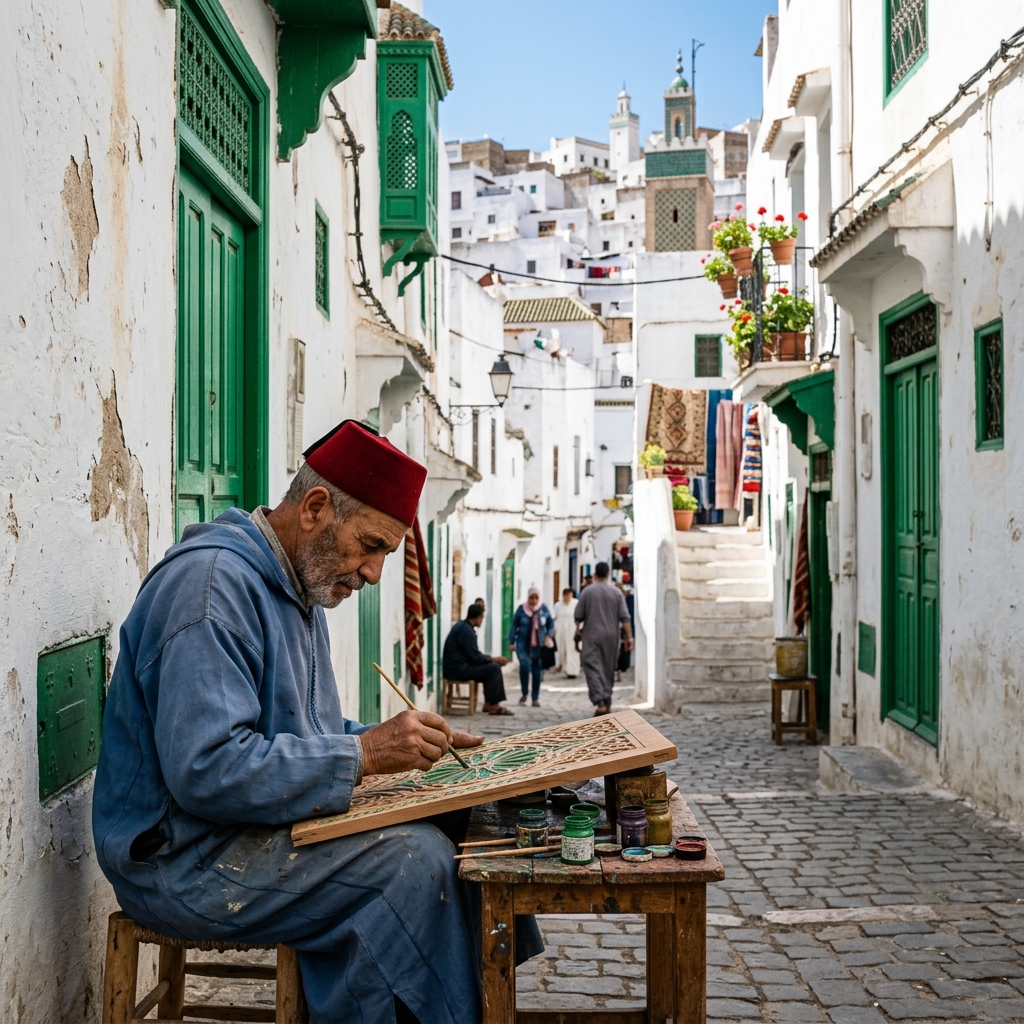
Tetouan: Where Moroccan Art and Andalusian History Embrace
I vividly recall my first stroll through the pristine alleys of Tetouan, holding my father’s hand as we admired the green-and-white mosaics. Perched on the slopes of the Martil valley against the dramatic backdrop of the Rif mountains, Tetouan is known as the “White Dove.” Unlike its lively neighbor Tangier, Tetouan offers a more refined, academic, and deeply Andalusian atmosphere. It is a city of artists, poets, and craftsmen who have kept the flame of Al-Andalus alive for over five centuries.
A UNESCO World Heritage Medina
The medina of Tetouan is one of the most authentic in Morocco, largely untouched by modern tourism.
- The Seven Gates: Access the medina through its magnificent gates like Bab Er-Rouah to enter a world of Andalusian palaces with tiled patios and intricate wood carvings.
- The Ensanche: The “New City” built during the Spanish protectorate. Its wide avenues and white-and-green buildings make it one of the most beautiful examples of Spanish colonial architecture in the world.
The School of Fine Arts: A Mediterranean Beacon
Tetouan is the intellectual heart of the Moroccan North.
- The Art Academy: Founded in 1945, the National Institute of Fine Arts in Tetouan is the most prestigious art school in the country, fostering a unique style that blends traditional motifs with modern abstraction.
- The School of Traditional Arts (Dar El Hanaa): Located in a stunning 19th-century palace, this school preserves the ancestral skills of embroidery, zellige, and inlaid wood.
The Culture of the North: From Music to Gastronomy
The identity of Tetouan is a refined mix of Arab, Berber, and Spanish influences.
- Ghirnata Music: Tetouan is one of the three historical centers of Andalusian music in Morocco, with orchestras that are world-renowned for their precision and soul.
- Tetoani Cuisine: Try the Pastilla with Pigeon (a sweet-and-savory great piece) or the local Zaalouk of Tetouan, which has a distinct smoky flavor from the mountain eggplants.
Tips for Travelers in Tetouan
- The Royal Palace: The square outside the Royal Palace (Place Moulay El Mehdi) is the heart of city life, perfect for people-watching and enjoying a mint tea.
- Hiking in the Rif: Tetouan is the perfect base for exploring the Rif mountains or the nearby Mediterranean beaches of Cabo Negro and Martil.
- Shopping for Embroidery: Look for the “Tetouan Stitch” (Ghorza), a unique flat embroidery style that is highly prized for traditional linens.
The Spirit of the Dove
Tetouan is a city of peace and precision. It reminds us that our history is a dialogue between two continents. I invite you to wander its white alleys and let the Andalusian music guide your steps.
Frequently Asked Questions (FAQ)
Q1: Why is Tetouan so white? A: Following the tradition of Andalusia, painting the houses white helps reflect the intense Mediterranean sun and gives the city its clean, uniform, and iconic look.
Q2: Is Spanish still spoken in Tetouan? A: Many older residents and shopkeepers still speak Spanish fluently, and the influence of Spanish culture remains very visible in the city’s architecture and social life.
Q3: Is the medina of Tetouan safe for independent walking? A: Yes, it is very safe and much easier to navigate than the medina of Fes. The residents are proud of their home and generally very helpful to visitors.
Experience the true heart of Moroccan heritage through its culinary traditions. Join us in preserving and honoring these ancestral recipes.
What People Are Saying
No comments yet. Be the first — we'd love to hear from you.
H. Elmrabet
Culturally Verified & Fact-CheckedThe Moroccan Food editorial team brings together native culinary researchers, heritage preservationists, and experienced home cooks across Marrakech, Fes, and Casablanca. Every recipe and cultural guide is reviewed against ancestral oral traditions and authentic regional practices.