The True History of the Moroccan Tagine
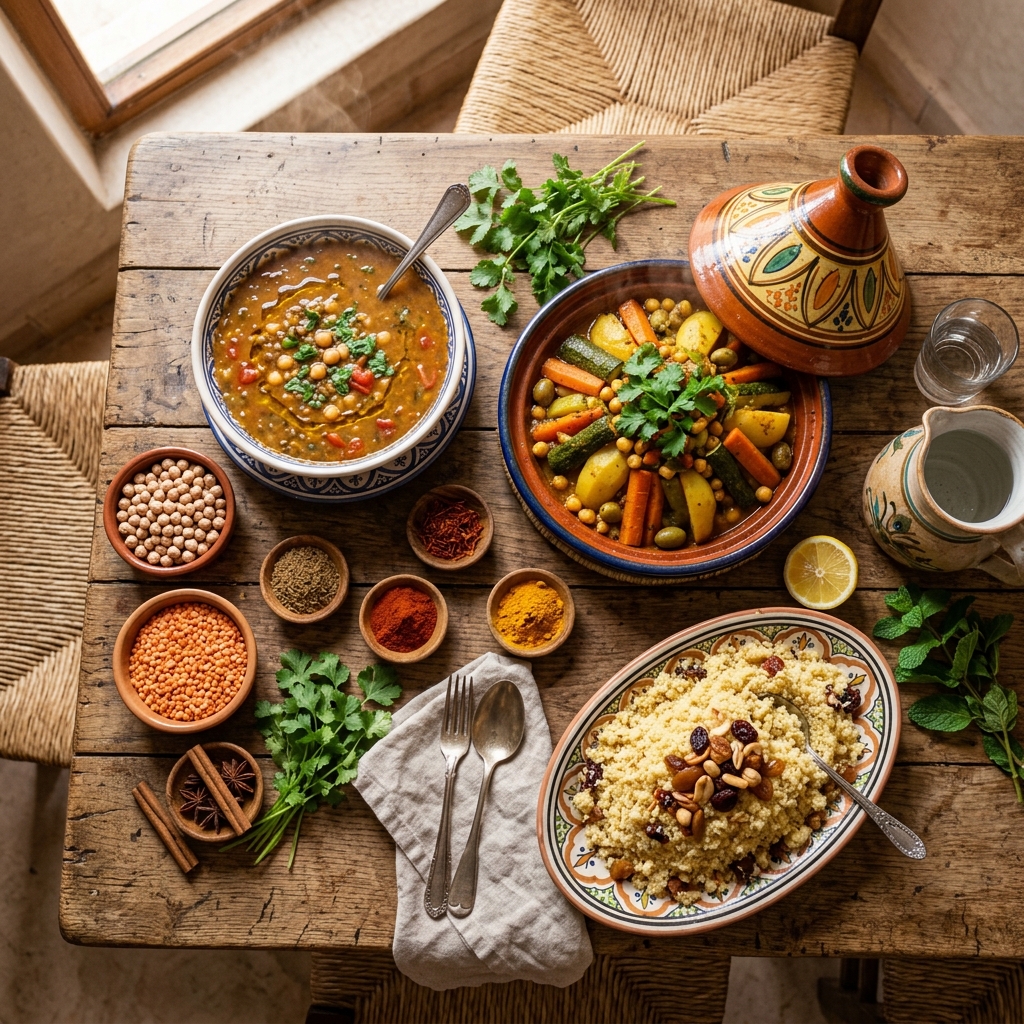
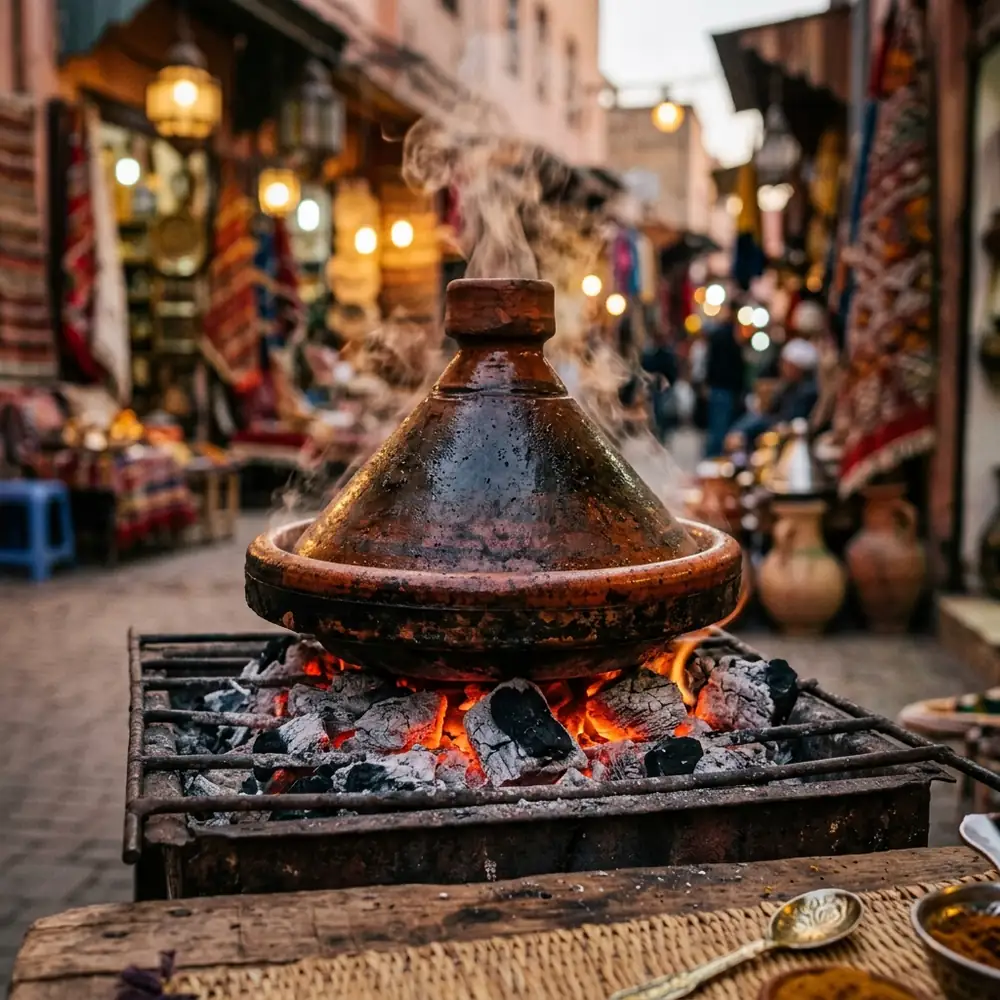
Looking for the origins of the world’s most famous slow-cooking vessel? The Moroccan tagine is a brilliant, conical clay oven invented by the indigenous Amazigh people centuries before modern slow cookers existed. Discover how this rustic terracotta pot revolutionized North African cuisine and eventually conquered the imperial courts.
In our Kingdom, the cooking pot is just as special as the food inside it. Long before the grand palaces of Fes were built, our nomadic ancestors mastered the art of cooking over open desert fires. They passed down the exact dimensions of this clay great piece to ensure not a single drop of precious moisture was lost to the heat. Let me tell you a secret: a meal cooked in metal will never possess the earthy, smoky soul of true unglazed clay.
How does the conical lid of the tagine work?
The towering lid acts as a closed-loop condensation chamber that constantly bastes the meat in its own aromatic juices.
- Moisture retention: Steam rises from the boiling stew, hits the cooler upper walls of the cone, and drips back down.
- Tough cuts tenderized: This constant, low-temperature basting breaks down the toughest cuts of beef and lamb until they melt.
- No added water: The ingredients cook almost entirely in their own natural fats and the oils of the marinade.
What is the difference between Berber and Imperial tagines?
Rustic mountain tagines focus on hearty simplicity, while the imperial recipes introduced complex sweet-and-savory flavor profiles.
- The Amazigh original: Built on a base of heavy root vegetables, robust olive oil, and simple, warming cumin.
- The Andalusian upgrade: The royal courts added luxurious saffron, caramelized dried fruits, and toasted almonds.
- The presentation: Imperial dishes are carefully arranged in symmetrical crowns, eating with the eyes first.
Imagine the lid being lifted at a low, round table in the High Atlas Mountains. A cloud of ginger and saffron steam hits your face, re <truncated 50010 bytes> a* translates literally to “the buried one” in Arabic, referencing both its cooking method and its surprising interior.
- The hidden filling: To the naked eye, the finished product looks like a massive, plain, round loaf of crusty bread. The rich meat filling is completely hidden inside.
- The ash burial: Traditionally, the raw, stuffed dough is placed on the hot sand, covered with a layer of protective stones or metal, and buried entirely under glowing campfire ashes.
- The smoky crust: The fierce, dry heat of the desert fire bakes the dough rapidly, creating a blackened, heavily blistered crust that carries the distinct flavor of woodsmoke.
What goes into the fierce Saharan filling?
The interior of the bread is an exercise in intense, concentrated flavor, designed to provide massive energy to desert travelers.
- The spiced meat: Finely chopped beef or lamb is mixed aggressively with large amounts of beef suet (chehma) to keep the interior incredibly moist during the fierce bake.
- The crunchy contrast: Whole, toasted almonds or walnuts are thrown into the meat mixture, providing a loud, unexpected crunch against the soft dough.
- The herbs and eggs: Heaping handfuls of fresh cilantro, diced onions, and wedges of hard-boiled eggs complete the heavy, deeply savory interior.
Imagine sitting by a crackling fire in the dunes of Merzouga under a blanket of stars. A nomadic guide brushes the hot ashes away, pulling a massive, blackened disc of bread from the earth. He cuts it open, and the steam releases an intoxicating wave of toasted almonds, spiced beef fat, and cumin. Our deserts are harsh, but our fires are generous; come taste the buried treasure of the Sahara.
Meta Description: Uncover Medfouna, the famous “Berber Pizza” of the Moroccan Sahara. Discover how this massive flatbread is stuffed with spiced meat and traditionally baked in hot desert ashes.
Experience the true heart of Moroccan heritage through its culinary traditions. Join us in preserving and honoring these ancestral recipes.
What People Are Saying
No comments yet. Be the first — we'd love to hear from you.
Diafa Editor
Culturally Verified & Fact-CheckedThe Moroccan Food editorial team brings together native culinary researchers, heritage preservationists, and experienced home cooks across Marrakech, Fes, and Casablanca. Every recipe and cultural guide is reviewed against ancestral oral traditions and authentic regional practices.