The Valley of Roses: How to Visit Morocco's Most Fragrant Place During the May Harvest
The Valley of Roses: How to Visit Morocco’s Most Fragrant Place During the May Harvest
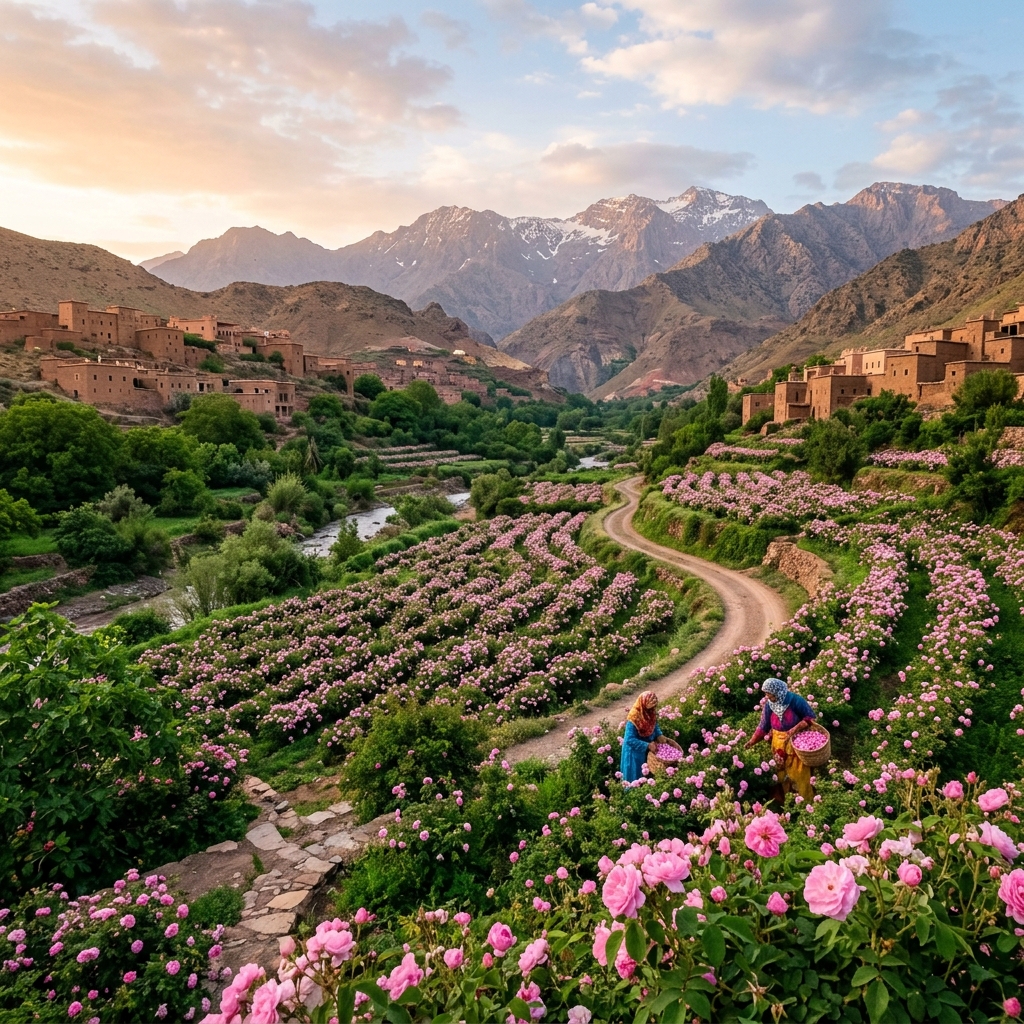
There is a very specific smell that you encounter on the road between Boumalne Dades and Kelaat M’Gouna in late April and early May. It is the smell of rosa damascena — the Damascene rose — and it comes at you in waves as you drive through the valley, carried on the morning air from the hedgerows of pink-red bushes that line the riverbanks.
You smell it before you see it.
The Valley of Roses (Vallée des Roses) is one of Morocco’s least-visited genuinely extraordinary places — partly because it sits on the road to the Sahara and people tend to drive through rather than stop, and partly because its season is short.
Where Is the Valley of Roses?
The valley follows the Dadès River — a tributary of the Draa — between the towns of Boumalne Dades and Kelaat M’Gouna, approximately 200km east of Ouarzazate.
The rose-growing area is concentrated around Kelaat M’Gouna (also written M’Goun or M’Gouna), a small town at the intersection of the rose trade and the Amazigh tribal territory of the M’Goun massif. The Mgoun peak (4,071m) looms above the valley — it is the second-highest peak in Morocco and the most challenging high-altitude trek in the country.
The broader region sits along the southern flank of the High Atlas, where the mountains meet the pre-Saharan zone. The result is a microclimate that suits the Damascene rose perfectly: cold, dry winters; warm, rain-free springs; and soil that is rocky, well-drained, and mineral-rich.
The Rose: Its History Here
The Damascene rose was brought to this valley centuries ago — most accounts say by Arab traders returning from the Levant, though exactly when is debated. What is certain is that it has been cultivated here for several hundred years, and the valley’s rose oil has become one of Morocco’s distinct agricultural products.
Rosa damascena is not grown for its appearance primarily. It is grown for its essential oil, used in:
- High-end perfumery (French luxury houses including some of the most famous names in Paris source Moroccan rose oil)
- Rosewater (distilled, sold locally and internationally)
- Cosmetic creams, soaps, and lotions produced by local cooperatives
The oil concentration is extraordinary: it takes approximately 3.5–4 tonnes of rose petals to produce 1 litre of pure rose essential oil. A litre of Moroccan rose oil sells for 5,000–8,000 USD on the international market.
The Harvest: What Actually Happens
Harvest season runs from late April through mid-May, peaking around the first two weeks of May. The precise timing varies by 1–2 weeks from year to year depending on spring temperatures.
The roses must be picked at exactly the right moment — when the blossom is fully open but before it begins to wilt. This window is short, sometimes just a few days per rose bush.
The picking happens at dawn. Literally. Local women and girls begin harvesting by 5am, before the heat of the day begins to diminish the petals’ oil content. By 9 or 10am, the harvest of that day is complete.
If you want to see the harvest in action, you need to be in the valley at dawn. Not at 9am when the tour groups arrive from Ouarzazate.
The Rose Festival (Festival des Roses)
The annual festival in Kelaat M’Gouna typically runs over a long weekend in May, timed to coincide with peak harvest. It includes:
- Procession and election of a Rose Queen
- Music and traditional Amazigh dance performances
- A souk selling rose products (rosewater, oil, soaps, cosmetics)
- Camel and horse displays
The festival attracts significant crowds — both Moroccan visitors from the cities and a growing number of international tourists. Accommodation books up quickly in Kelaat M’Gouna and Boumalne Dades for festival dates. Book at least 4–6 weeks in advance if planning around the festival.
Outside the Festival: Why the Valley Is Worth It Year-Round
The roses bloom in May. The valley exists year-round. And frankly, outside festival season it is a more peaceful and intimate experience.
The Dades Gorge (15km north of Boumalne) is one of Morocco’s most dramatic geological features — narrow canyon walls of red rock, some sections barely wide enough for two vehicles to pass. The road continues through the gorge into the High Atlas foothills.
Trekking into the Mgoun massif — accessed from Kelaat M’Gouna — is one of Morocco’s most rewarding multi-day mountain walks. The circuit around the Mgoun peak takes 5–7 days and passes through remote Amazigh villages where French is rarely spoken and tourism infrastructure is minimal. A guide and mules are essential.
The Skoura palm grove (30km west toward Ouarzazate) contains one of the largest palm groves in Morocco, scattered with old kasbahs including the well-preserved Kasbah Amerhidil.
Getting to the Valley of Roses
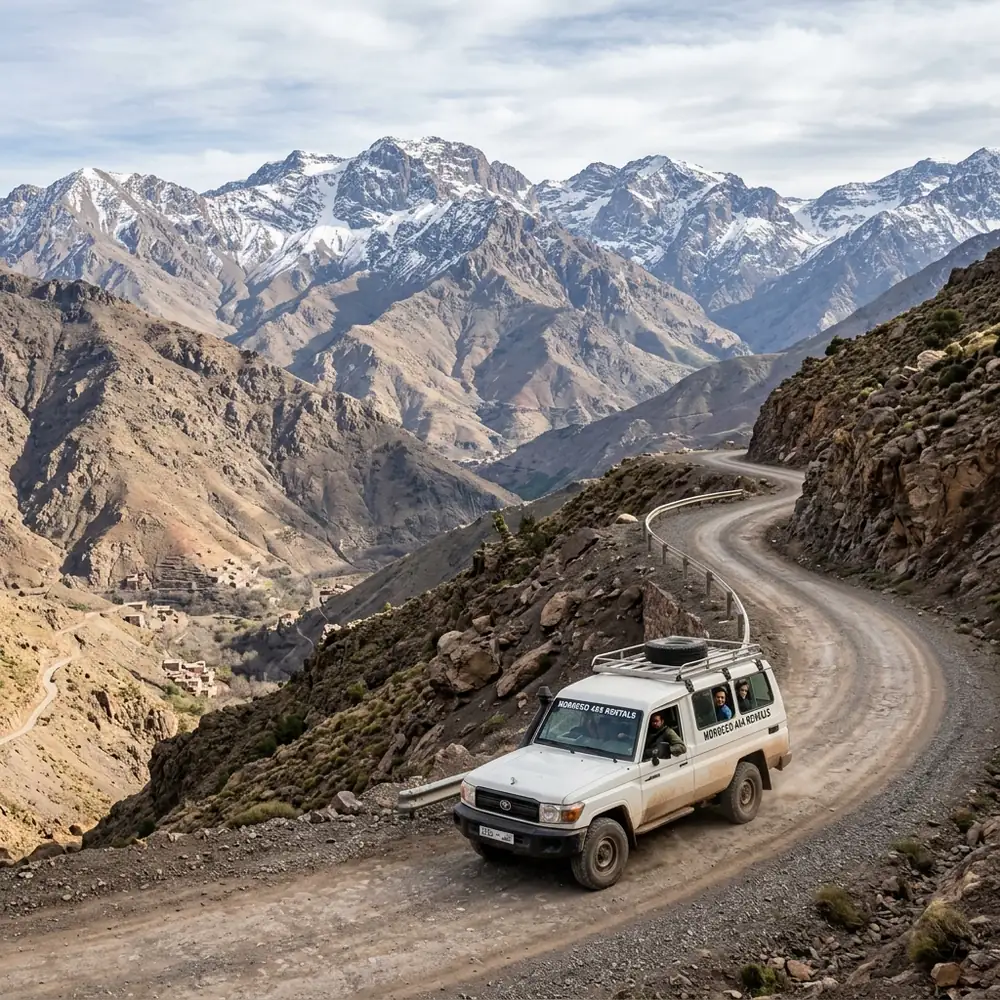
From Ouarzazate: 200km east on the N10, through Boumalne Dades (about 2.5–3 hours). The road is excellent.
From Marrakech: 340km via Ouarzazate (about 4.5–5 hours total). This is the classic “rose valley + Sahara” route — Marrakech, over the Tizi n’Tichka pass, Ouarzazate, rose valley, continue to Merzouga.
By public transport: CTM buses and shared grand taxis connect Ouarzazate to Boumalne Dades regularly. From Boumalne, further shared taxis cover the final 25km to Kelaat M’Gouna.
Where to Stay
In Kelaat M’Gouna: A handful of guesthouses and small hotels. Nothing luxurious, but comfortable and authentic. Prices outside festival season: 200–400 MAD/night including breakfast.
In Boumalne Dades: More options, including some mid-range hotels with good gorge views.
The experience: For the harvest dawn visit, staying in the valley itself (not Ouarzazate) is essential. The 4:30am alarm is much more manageable when your riad is 200m from the rose hedgerows.
Frequently Asked Questions
What are the exact harvest dates each year? Late April to mid-May, varying by 1–2 weeks depending on that year’s spring temperatures. Local guesthouses and the Kelaat M’Gouna municipality post updates. A Facebook search for “Festival des Roses Kelaat M’Gouna” in March or April will give you that year’s dates.
Can I buy pure rose oil at the valley? Yes. Both at the festival market and from local cooperative shops year-round. Prices are significantly lower than in European shops for the same quality. Beware of very cheap “rose oil” sold at roadside stalls — at those prices it is almost certainly diluted.
Is the valley accessible in winter? Yes. The road is open year-round. Winter temperatures in the valley are cold (below zero at night) but not extreme. The landscape is starkly beautiful without the roses.
How long should I spend in the valley? Two nights minimum: one to rest after the drive, one early morning for the harvest. Add a day for the Dades Gorge and you have a very satisfying three nights.
Experience the true heart of Moroccan heritage through its culinary traditions. Join us in preserving and honoring these ancestral recipes.
What People Are Saying
No comments yet. Be the first — we'd love to hear from you.
The Moroccan Editorial Team
Culturally Verified & Fact-CheckedThe Moroccan Food editorial team brings together native culinary researchers, heritage preservationists, and experienced home cooks across Marrakech, Fes, and Casablanca. Every recipe and cultural guide is reviewed against ancestral oral traditions and authentic regional practices.